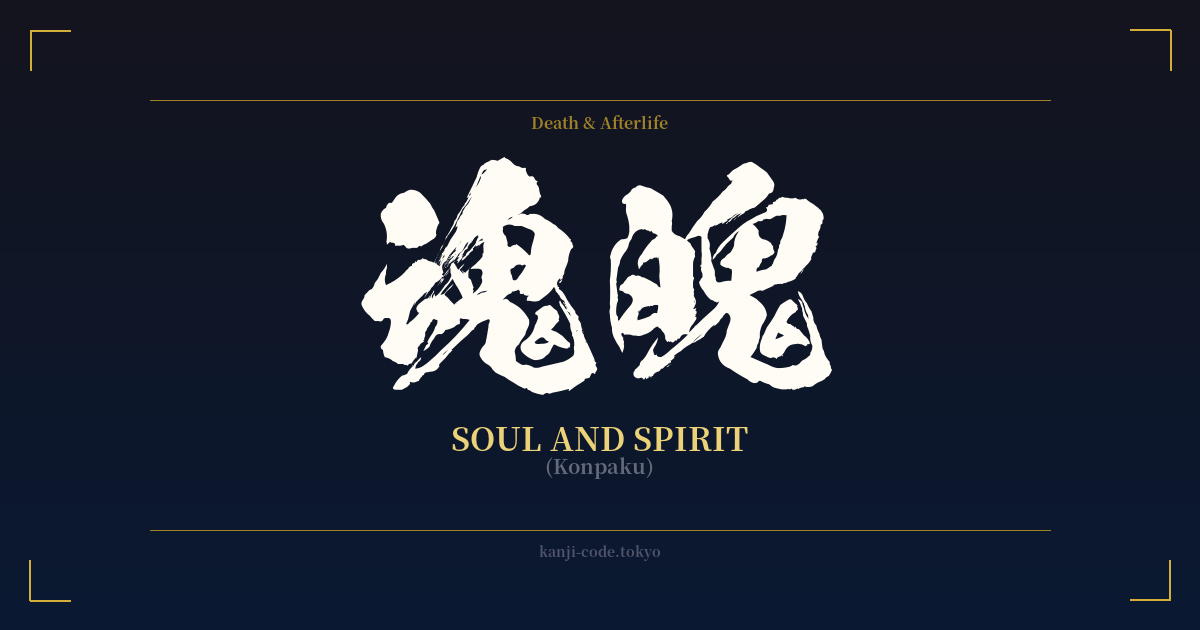
✍️ 魂魄 (Konpaku) — Cultural Context
The word 魂魄 (Konpaku) delves into a fascinating and ancient understanding of the soul, rooted in Chinese Taoist philosophy and later adopted into Japanese spiritual thought. It is not just a single word for 'soul' but a compound term that describes its dual nature: the ethereal, heavenly soul and the corporeal, earthly soul.
This concept splits the essence of a living being into two distinct parts. The first part, 魂 (Kon), is the spiritual or celestial soul. It is associated with consciousness, intellect, personality, and the mind. This is the 'yang' aspect of the spirit, the part that is believed to ascend to the heavens or the spirit world after death. It is the non-physical essence that animates our thoughts and dreams.
The second part, 魄 (Paku), is the corporeal or terrestrial soul. It is intrinsically linked to the physical body, governing vital functions, instincts, and bodily energy. Considered the 'yin' aspect, the 魄 remains with the physical form after death. It is believed to slowly dissipate as the body decays, eventually returning to the earth from which it came.
This dualistic view profoundly shaped traditional Japanese perspectives on life, death, and the afterlife. Funerary rites and ancestor veneration practices were often designed to pacify both aspects of the soul, ensuring the 魂 could travel peacefully to the next world while the 魄 rested with the body without becoming a restless spirit. The idea was to maintain harmony between the spiritual and physical realms even after death.
While the more common word for soul, 魂 (tamashii), is used in everyday language, 魂魄 (Konpaku) is reserved for more philosophical, religious, or literary contexts. It evokes a deeper, more technical understanding of spiritual anatomy. You might encounter this term in discussions of folklore, in Buddhist or Shinto texts, or in modern fiction like anime and manga (such as Bleach), where the nature of souls is a central theme.
Ultimately, 魂魄 represents the complete soul, the union of mind and body, heaven and earth, within a single individual. It speaks to a holistic worldview where the spiritual and the physical are not separate but are two halves of a whole, intrinsically bound together throughout life.
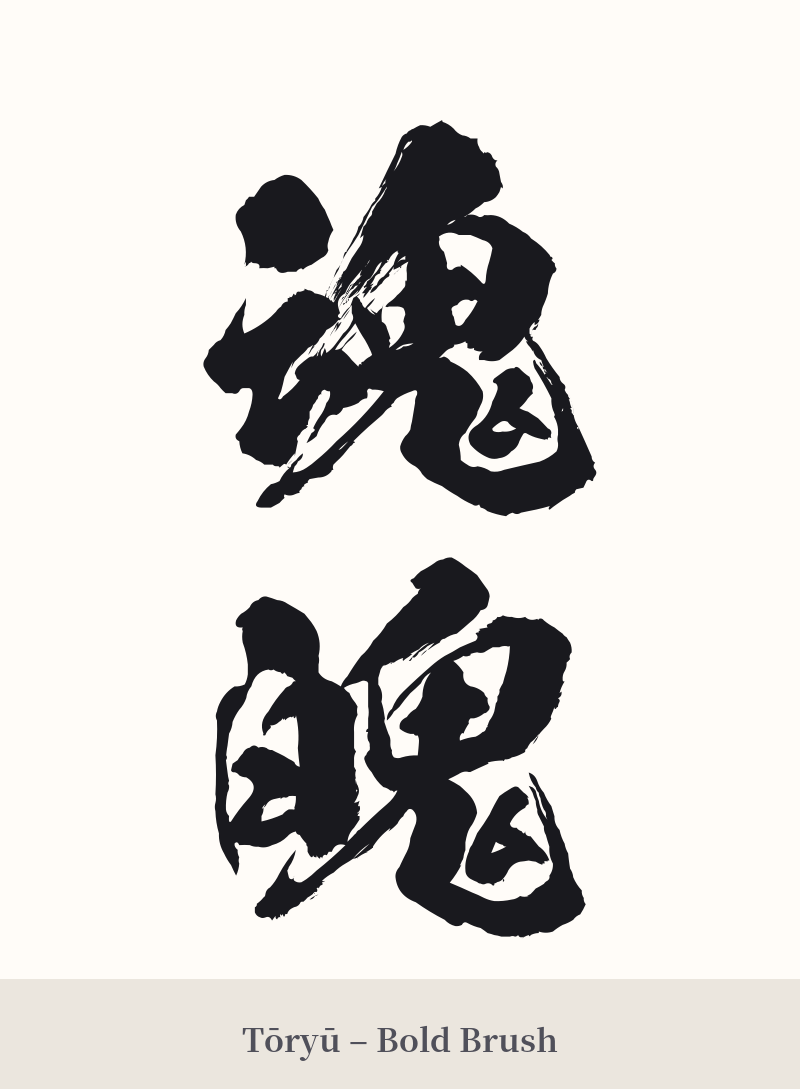
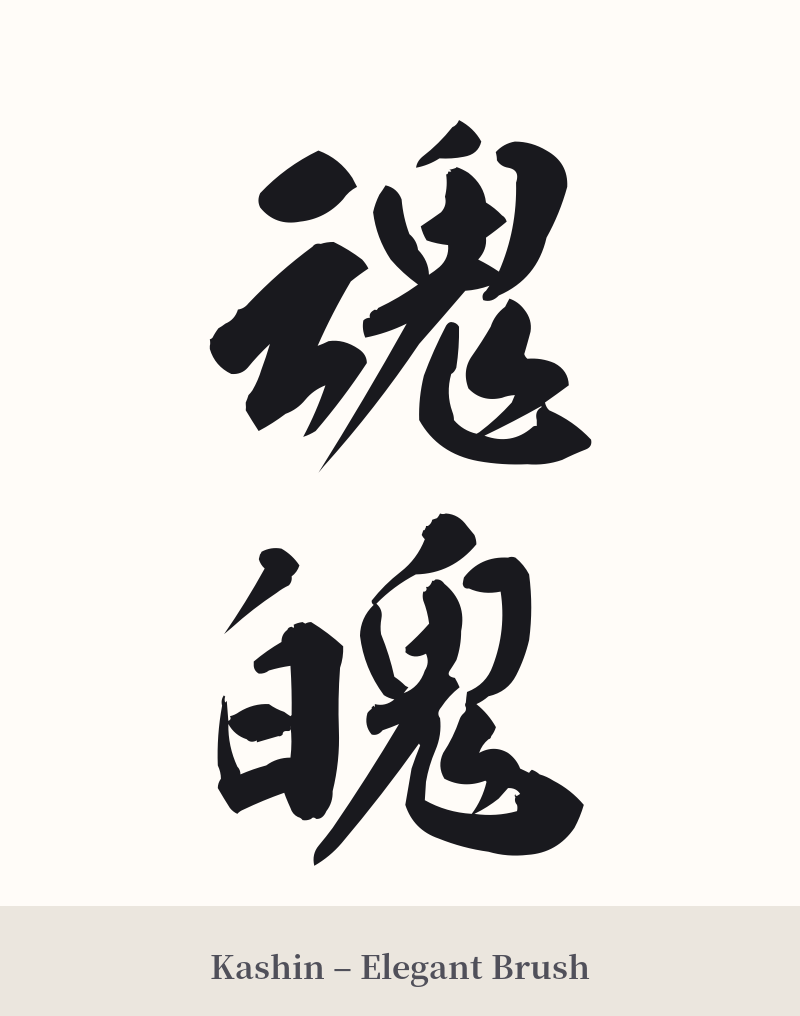
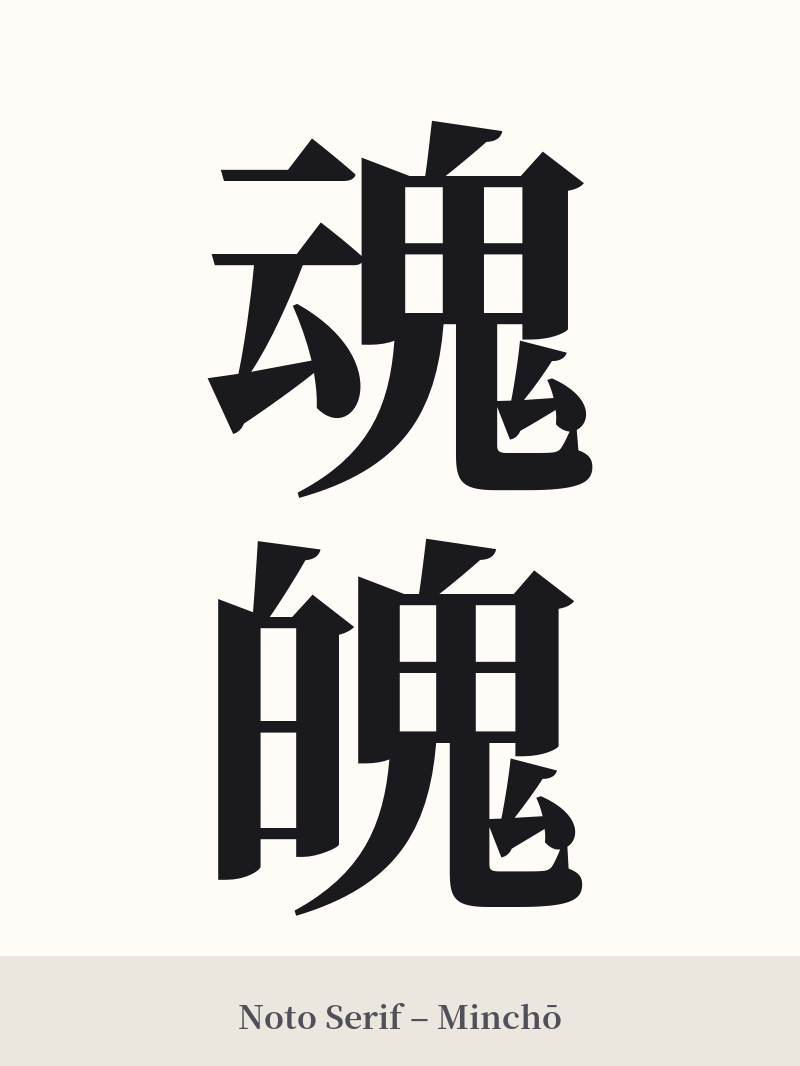
🖌️ Font Styles for 魂魄
The same kanji can look dramatically different depending on the calligraphy style. Choose a font that matches the mood you want for your tattoo or design.
🎨 Tattoo Suitability
📐 Tattoo Design Guide
The dualistic nature of 魂魄 offers rich creative possibilities for a tattoo. Its vertical orientation is classic and visually striking.
– Placement: A vertical design along the spine, forearm, or calf allows the characters to flow naturally. For a horizontal placement, the back of the neck or across the chest can create a strong, centered look.
– Font Style: An energetic brush script (gyosho or sosho) can capture the spiritual, flowing nature of the 'Kon' (魂). A more solid, ancient-feeling block script (kaisho or tensho) can ground the design, reflecting the earthly 'Paku' (魄).
– Visual Tips: Consider a design that plays with the duality. You could have the top character, 魂, rendered in a slightly lighter or more ethereal style, while the bottom character, 魄, is darker and more solid. Surrounding the kanji with elements like wisps of smoke ascending from the top and roots descending from the bottom can further emphasize the heaven-and-earth theme.
Comments