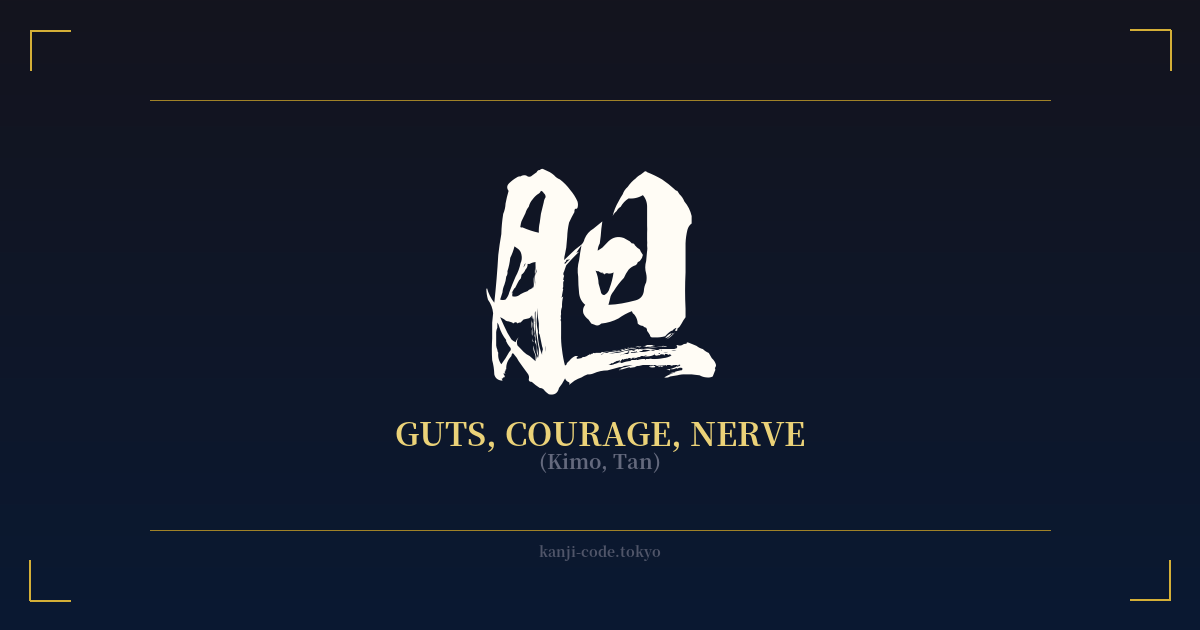
✍️ 胆 (Kimo, Tan) — Cultural Context
The Japanese kanji 胆 (kimo) offers a fascinating window into how culture maps abstract concepts onto the physical body. On the surface, its meaning is simple: the gallbladder. Yet, its true power lies in its profound metaphorical extension to mean courage, nerve, and guts.
This connection is not arbitrary. It stems from ancient East Asian medicine and philosophy, where specific organs were believed to be the seats of different emotions and spiritual qualities. While the heart (心, kokoro) was associated with the mind and broader emotions, the abdomen (腹, hara) was seen as the center of true power and intuition. Within this framework, the gallbladder, or 胆 (kimo), was specifically designated as the source of decisiveness, bravery, and the fortitude to act.
This belief is deeply embedded in the Japanese language. The common phrase 「肝が据わる」 (kimo ga suwaru), literally "the guts are settled," describes someone who is calm, unflappable, and courageous in the face of danger. Conversely, 「落胆する」 (rakutan suru), "to be discouraged," literally means "to have one's gallbladder fall." These expressions show that courage isn't just a mental state; it's a visceral, physical quality centered in the gut.
Another popular cultural touchstone is the 「肝試し」 (kimodameshi), or "test of guts." This is a common summertime activity, akin to a dare, where people (often young) visit supposedly haunted places like cemeteries or abandoned buildings at night to prove their bravery. It's a playful yet direct invocation of the kanji's core meaning.
In the context of the samurai, possessing 'kimo' was essential. It was the inner grit that allowed a warrior to face death with composure. This wasn't reckless bravado, but a deep, centered strength. This idea contrasts with the Western romantic notion of courage often being located in the "heart." In the Japanese view, the belly and its organs are the true locus of power and stability, a concept that also informs martial arts and meditation practices centered on the 'hara.'
Therefore, 胆 is more than just a character for courage. It represents a specific kind of courage: one that is innate, primal, and seated deep within one's physical being. It is the quiet, unshakeable nerve that allows one to withstand pressure and act decisively, not from intellect alone, but from the very core of their existence.
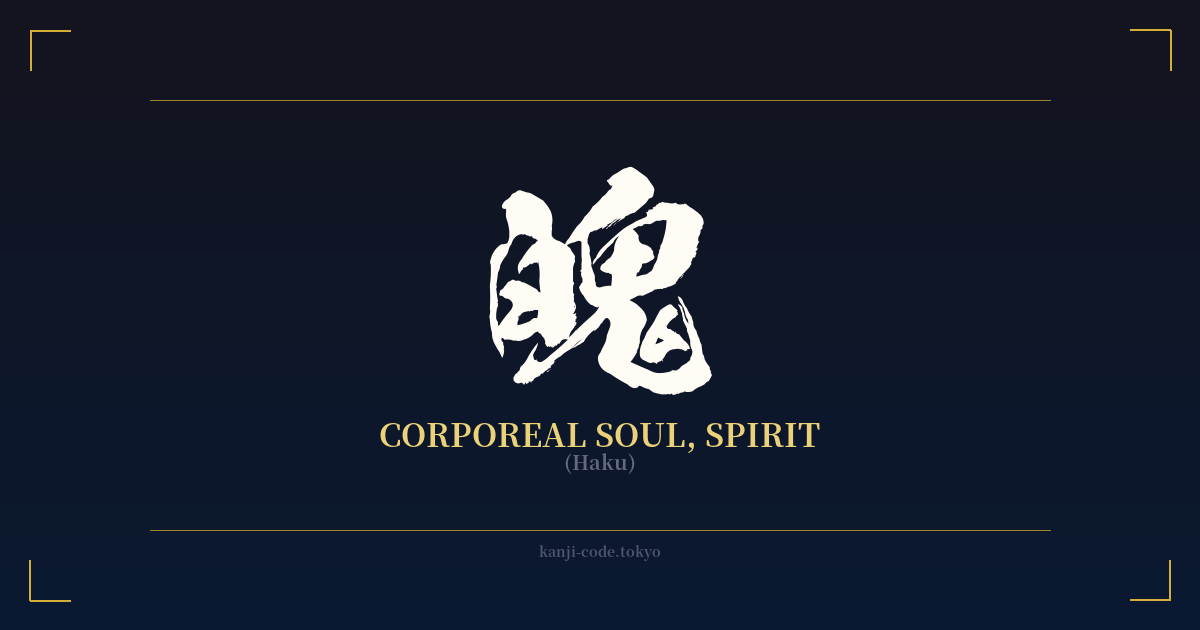
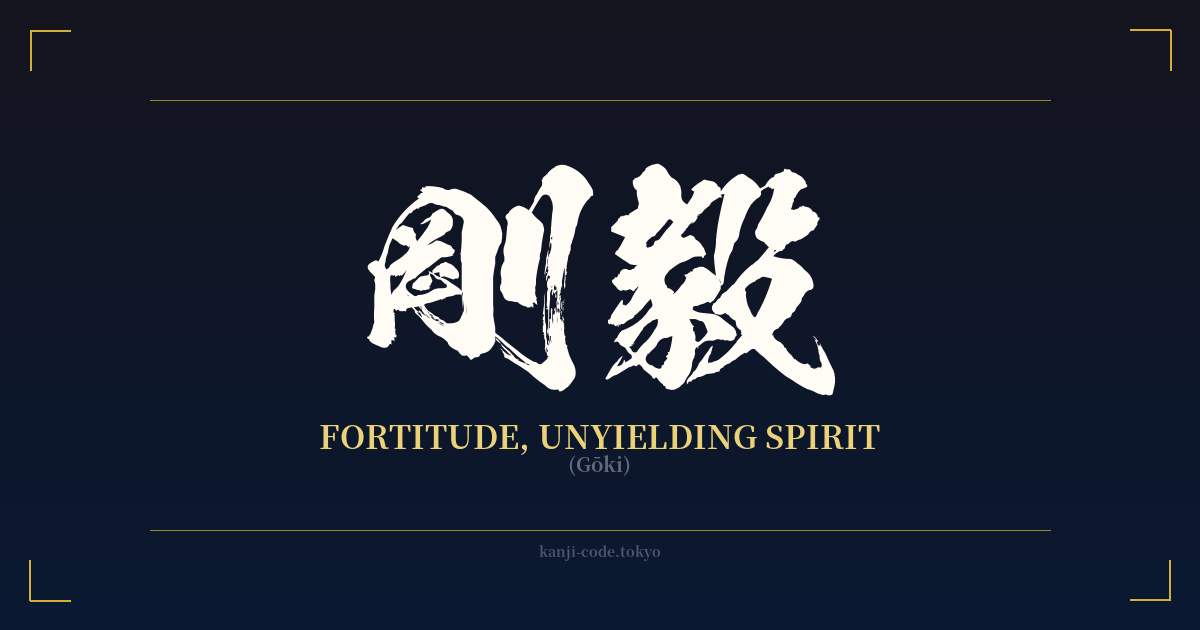
🖌️ Font Styles for 胆
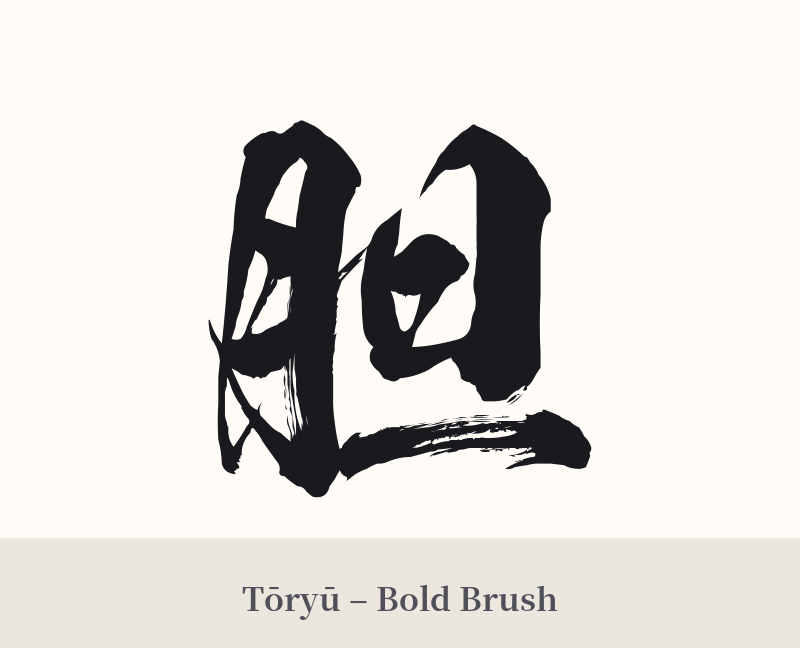
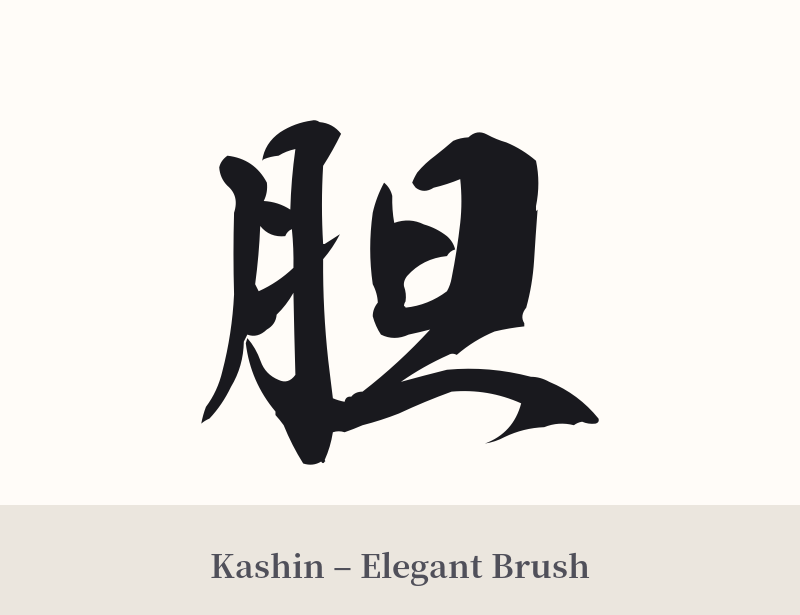
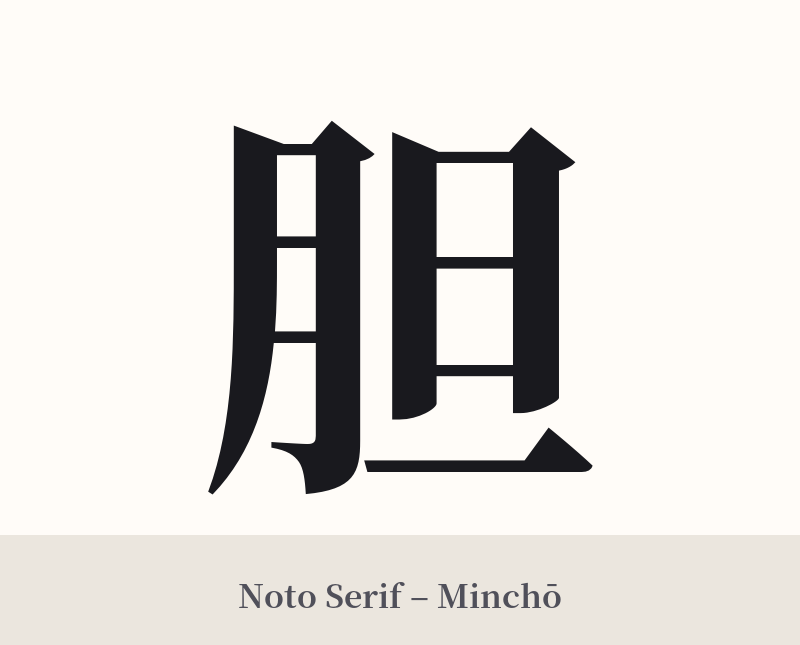
The same kanji can look dramatically different depending on the calligraphy style. Choose a font that matches the mood you want for your tattoo or design.
🎨 Tattoo Suitability
📐 Tattoo Design Guide
The kanji 胆 (kimo) carries a sense of grounded, internal strength, and your design choices can help amplify this feeling.
– Placement: Consider placements that align with the body's core or centers of strength. The inner forearm, calf, solar plexus, or the upper back just below the neck are all excellent choices. These locations reinforce the idea of a deep, internal power.
– Style: A bold, confident script is ideal. A strong Kaisho (block) script conveys stability and structure. For a more dynamic and visceral feel, a thick, powerful Shodo (calligraphy) brushstroke style would be perfect, evoking the raw energy of 'guts.' A semi-cursive Gyosho script can offer a balance between readability and artistic flair.
– Visual Tips: While 胆 stands well on its own, it can be integrated into a larger piece. Pairing it with a symbol of steadfastness, like a rock or a simple Enso circle, can highlight the 'unshakeable' aspect of its meaning. Avoid overly delicate or ornate styles, as they can conflict with the kanji's core concept of raw nerve and fortitude.
Comments