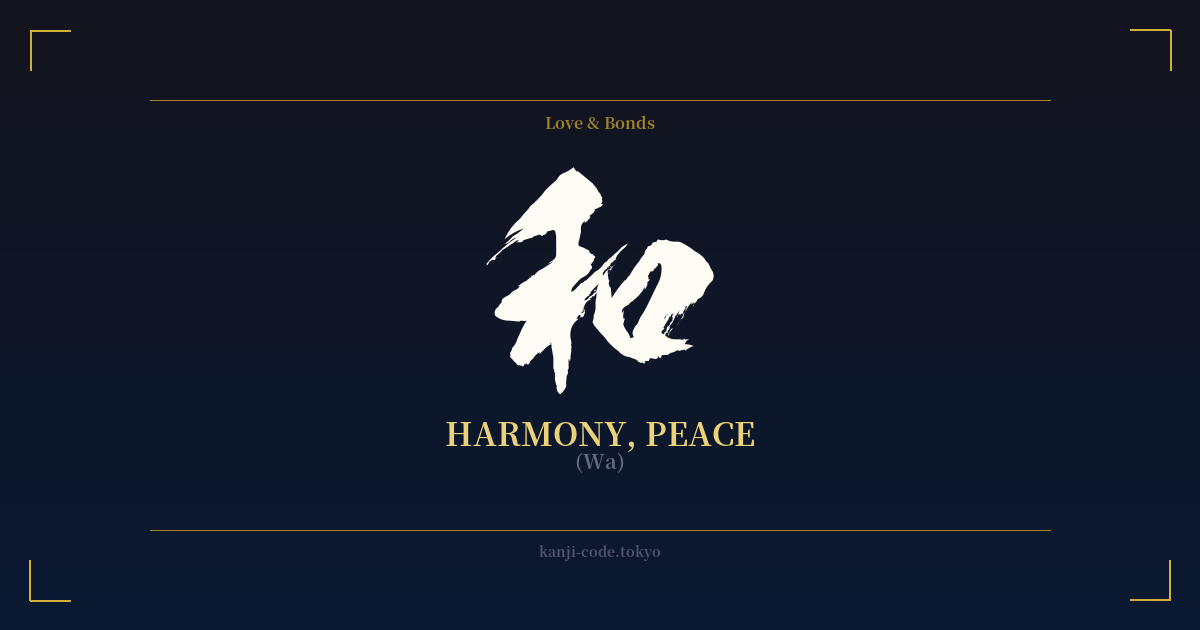
✍️ 和 (Wa) — Cultural Context
The kanji 和 (Wa) is one of the most significant and nuanced characters in the entire Japanese language. While often translated simply as 'harmony' or 'peace,' its meaning runs far deeper, touching the very core of Japanese identity, philosophy, and social structure.
Historically, 和 is tied to the ancient name for Japan, 大和 (Yamato). This association makes the character a symbol not just of a concept, but of Japan itself. It embodies the spirit and ideals that the nation has, at least aspirationally, held for centuries. This connection is fundamental to understanding its weight.
The most famous expression of this ideal comes from Prince Shōtoku's 17-article constitution, established in 604 AD. The very first article states, “和を以て貴しと為す” (Wa o motte tōtoshi to nasu), which translates to “Harmony is to be valued.” This edict set the tone for Japanese society, emphasizing the importance of group cohesion, consensus, and avoiding open conflict. It established 'Wa' as a foundational principle for social and political life.
In a social context, 'Wa' is the unspoken agreement to prioritize the good of the group over individual desires. It’s the reason for the emphasis on teamwork, politeness, and indirect communication in Japanese culture. Decisions are often made through a process of consensus-building (nemawashi) to ensure everyone is on board and harmony is maintained. This can be a source of great strength and unity, but also a source of social pressure to conform.
Beyond society, 'Wa' permeates Japanese aesthetics and arts. It is the balance sought in ikebana (flower arranging), the tranquility in a Japanese garden, and the quiet understanding in the tea ceremony. It's a key component of the 'wabi-sabi' worldview, which finds beauty in imperfection and transience. Even in martial arts like Aikido, the goal is not to crush an opponent but to harmonize with their energy and redirect it, a physical manifestation of 'Wa'.
In modern Japanese, 和 has also taken on the meaning of 'Japanese-style.' It acts as a prefix in words like 和食 (washoku – Japanese food), 和服 (wafuku – Japanese clothing), and 和室 (washitsu – Japanese-style room). In this sense, 'Wa' is a cultural identifier, distinguishing things that are quintessentially Japanese from foreign imports. It is a single character that encapsulates a philosophy, a national identity, and a cultural aesthetic.
🖌️ Font Styles for 和
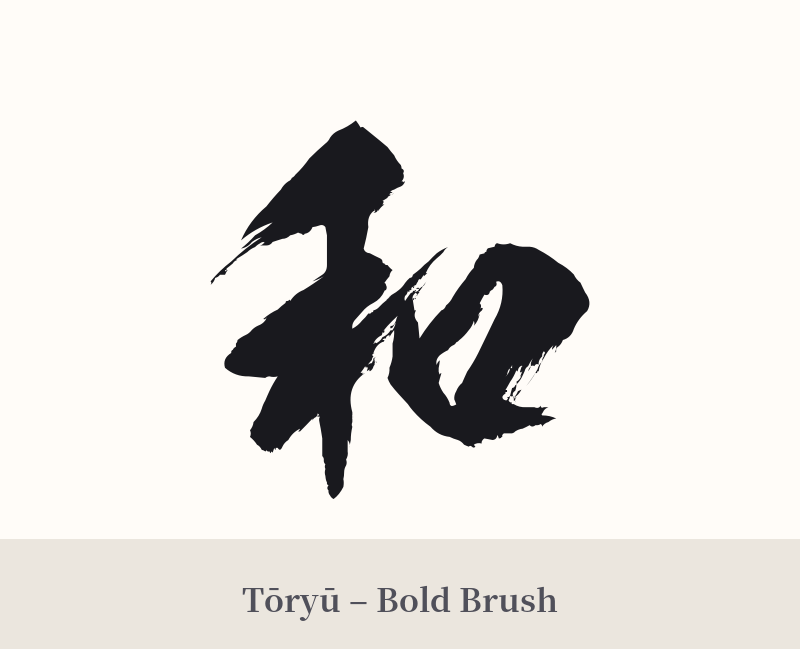
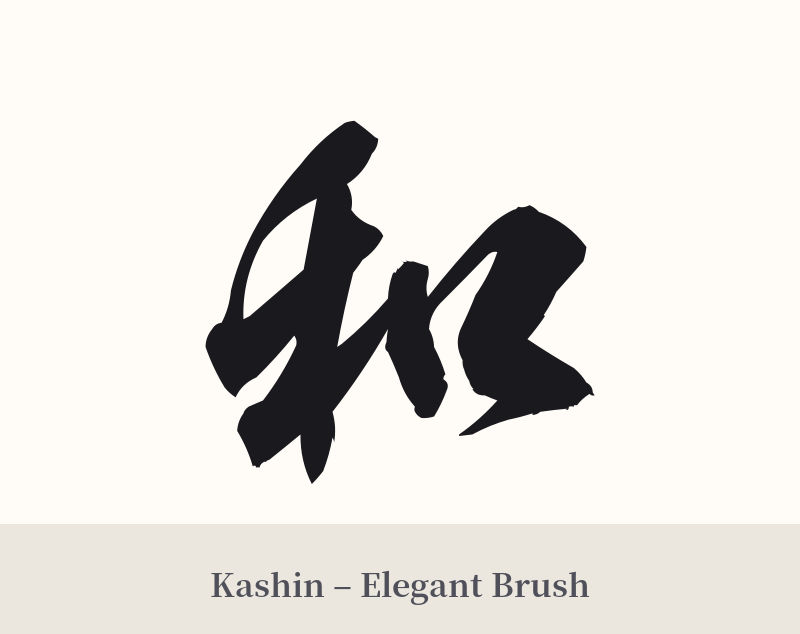
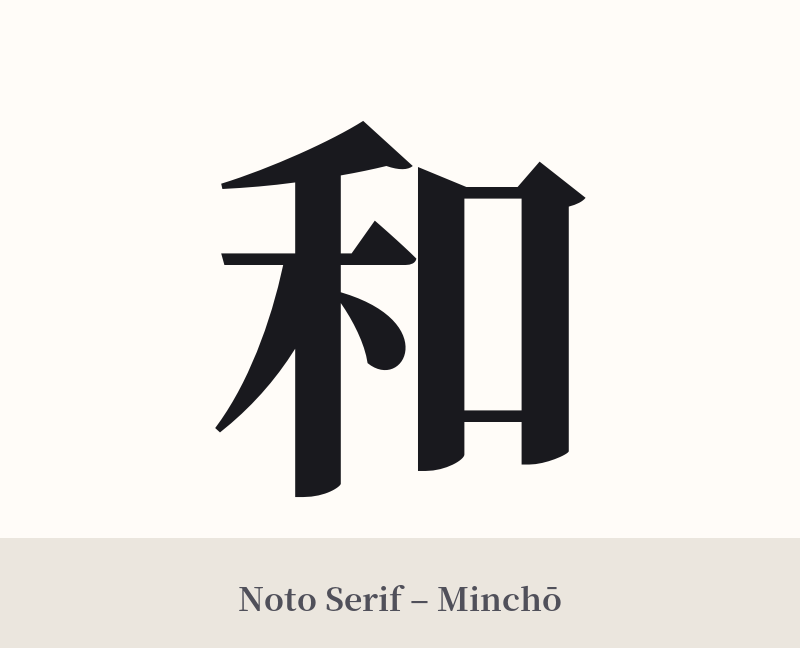
The same kanji can look dramatically different depending on the calligraphy style. Choose a font that matches the mood you want for your tattoo or design.
🎨 Tattoo Suitability
📐 Tattoo Design Guide
The kanji 和 (Wa) is beautifully balanced, making it versatile for many tattoo designs. Its clean lines and philosophical depth allow it to work both as a standalone piece and as part of a larger composition.
– Placement: For a subtle and personal statement, consider the inner wrist, behind the ear, or on the ankle. For a more prominent display, the forearm, calf, or shoulder blade provides a great canvas that allows the character's form to be appreciated.
– Style: A traditional Kaisho (block) script will give it a strong, clear, and timeless feel. For a more fluid and artistic look, a Gyosho (semi-cursive) or Sosho (cursive) style can capture the feeling of flowing harmony. These styles often look best when done by an artist with experience in Japanese calligraphy.
– Visual Elements: While 和 is powerful on its own, it can be paired with other symbols of peace and Japan. Consider integrating it with an Ensō (Zen circle) to represent enlightenment and the universe, a lotus flower for purity, or gentle waves to evoke a sense of calm. A small, red artist's seal (hanko) can also be added as a classic accent.
Comments