✍️ 俳句 (Haiku) — Cultural Context
The word 俳句 (Haiku) represents one of Japan's most famous cultural exports: a short, three-phrase poem that captures a fleeting moment in time. While many know the 5-7-5 syllable structure, the true essence of haiku lies much deeper, rooted in centuries of Japanese aesthetics, philosophy, and a profound connection to the natural world.
Originally, these short verses were the opening stanza, or hokku, of a longer collaborative poem called haikai no renga. This form of poetry was often lighthearted and witty. It wasn't until the Meiji period in the late 19th century that the poet and critic Masaoka Shiki championed the hokku as a standalone poetic form and coined the modern term "haiku" by combining parts of the old phrases: <u>hai</u>kai no hok<u>ku</u>.
At the heart of traditional haiku is the kigo (季語), or "season word." This is a word or phrase that anchors the poem in a specific time of year, connecting the human experience to the cyclical rhythms of nature. Words like "cherry blossoms" (sakura) evoke spring, "cicada" (semi) signals summer, "red leaves" (momiji) suggest autumn, and "snow" (yuki) points to winter. This requirement fosters a deep sense of observation and presence.
Another crucial element is the kireji (切れ字), or "cutting word." This is a special grammatical particle that creates a pause or a juxtaposition, often dividing the poem into two distinct parts. It creates a space for the reader's imagination to fill, implying a relationship between the two images without explicitly stating it. This art of suggestion, rather than direct statement, is a cornerstone of Japanese aesthetics.
The most celebrated master of this form is Matsuo Bashō (1644-1694), whose work elevated haiku from a playful pastime to a serious art form infused with Zen Buddhist principles. His famous poem about a frog jumping into an old pond is a perfect example of capturing a moment of stillness, sound, and profound insight.
To appreciate haiku is to appreciate the beauty in simplicity, the significance of a single moment, and the interconnectedness of all things. It is a literary discipline that doubles as a spiritual practice, encouraging us to look closely at the world around us and find poetry in the everyday.
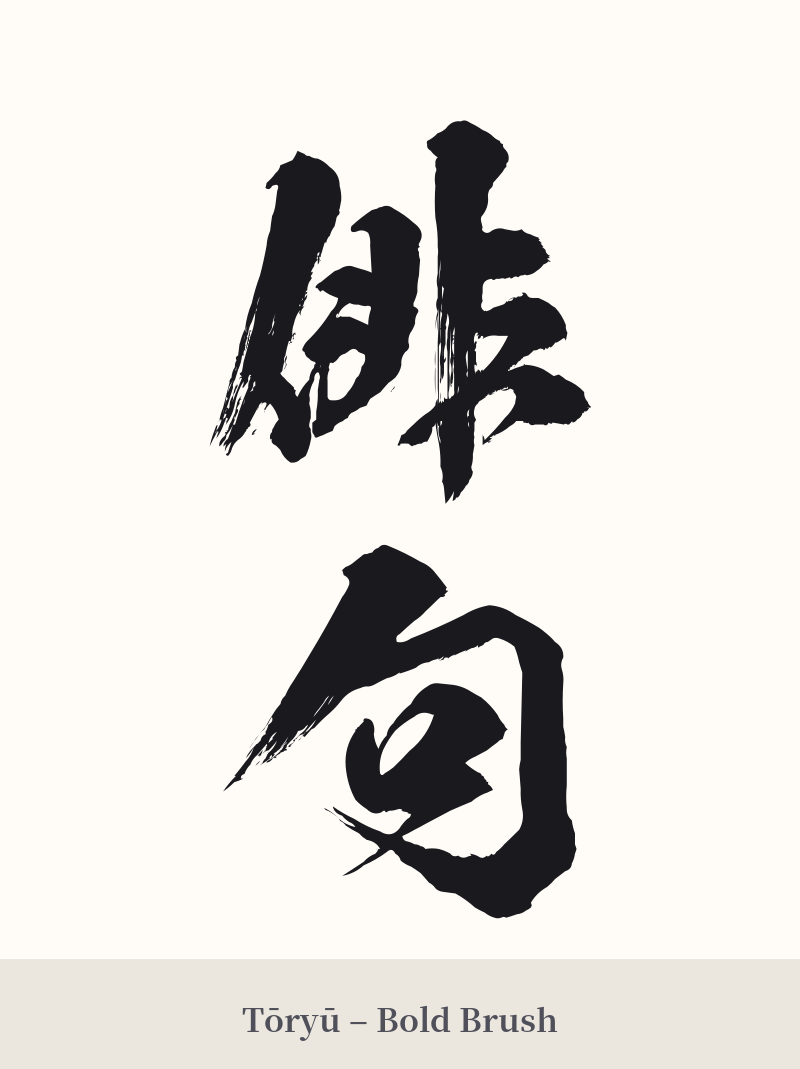
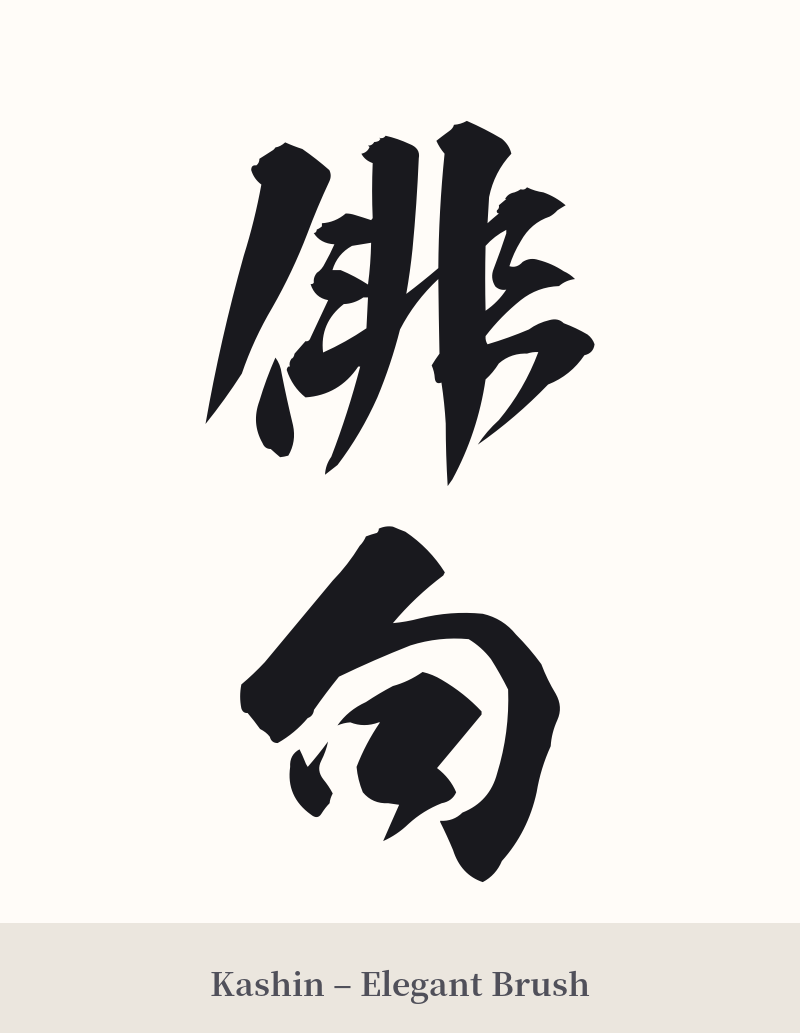
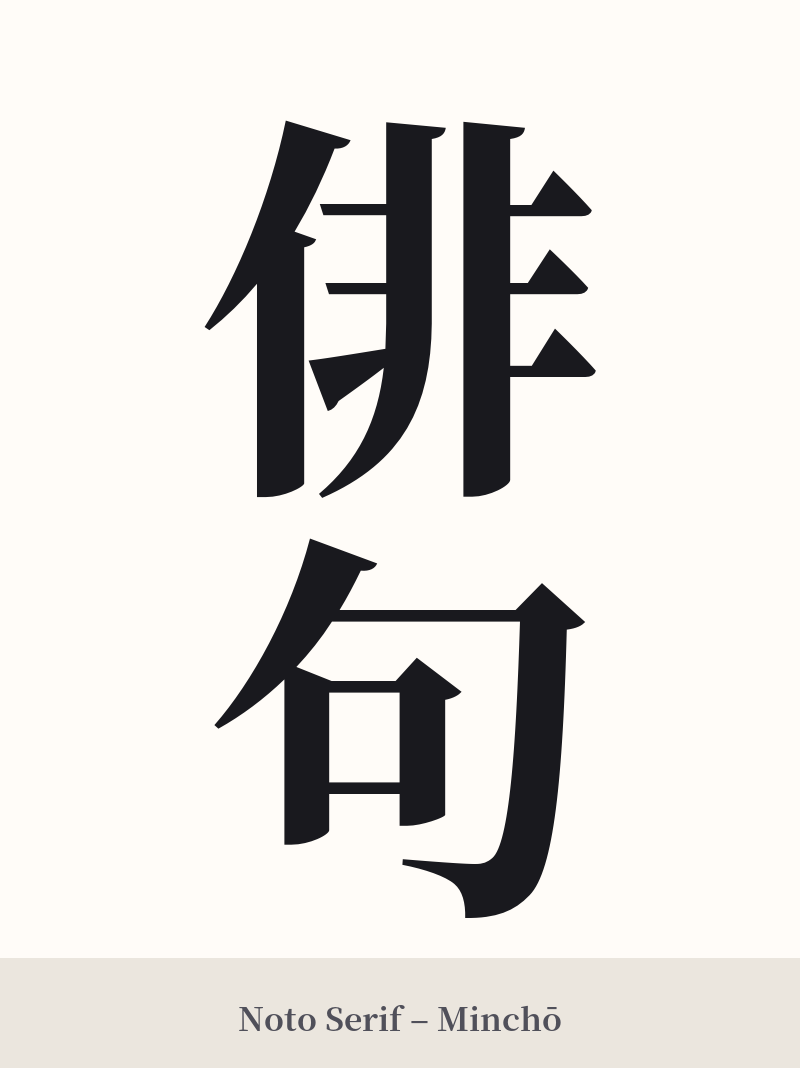
🖌️ Font Styles for 俳句
The same kanji can look dramatically different depending on the calligraphy style. Choose a font that matches the mood you want for your tattoo or design.
🎨 Tattoo Suitability
📐 Tattoo Design Guide
A 俳句 (Haiku) tattoo is a tribute to art, nature, and mindfulness. The design should reflect this elegance and subtlety.
– Placement: Vertical alignment works beautifully on the forearm, calf, or along the spine, echoing traditional Japanese calligraphy. For a horizontal design, the chest, upper back, or across the ribs are excellent choices.
– Font Style: A flowing, semi-cursive script like gyōsho can capture the artistic and spontaneous nature of poetry. For a more classic and dignified look, a crisp mincho typeface is ideal. Avoid overly aggressive or blocky fonts that clash with the word's refined meaning.
– Visual Elements: Consider pairing the kanji with a simple, related image that acts as a kigo (season word). A single cherry blossom petal, a dragonfly, a crescent moon, or a maple leaf can add a layer of narrative and personal significance to the design. This creates a visual poem on your skin.
Comments