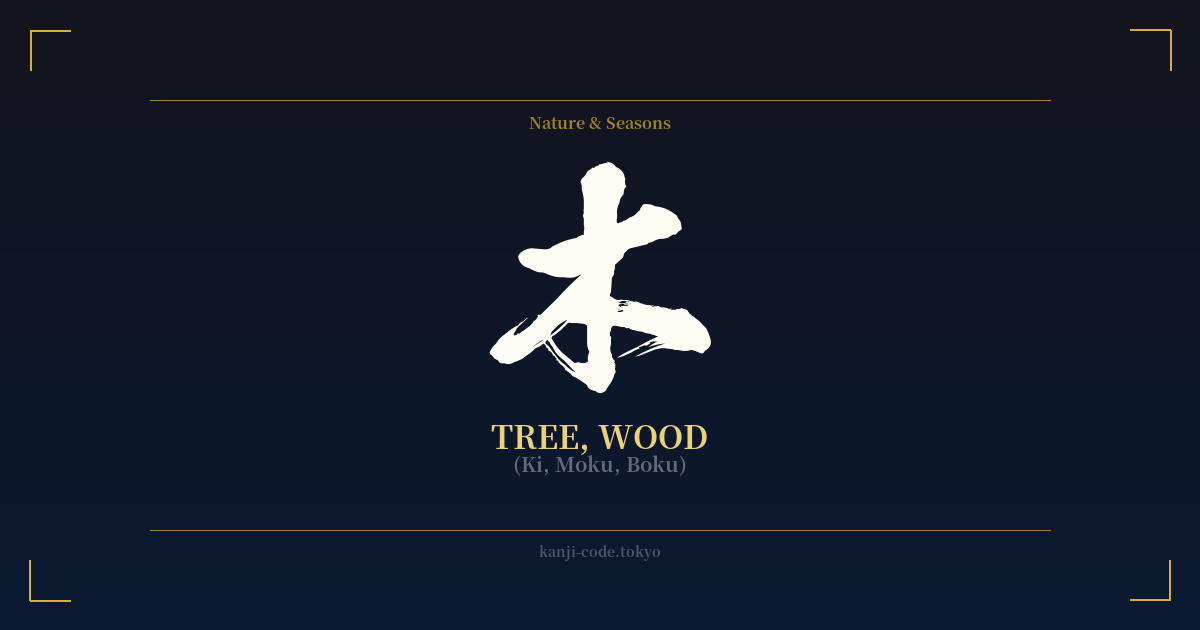
✍️ 木 (Ki, Moku, Boku) — Cultural Context
The kanji 木 (ki) is one of the most fundamental and evocative characters in the Japanese language. Its origin is a pure pictograph, a simple drawing of a tree with a trunk, branches reaching upward, and roots extending downward. This elegant form captures the essence of what it represents: a living entity connecting the heavens and the earth.
In Japanese culture, trees hold immense spiritual significance, a belief deeply rooted in Shintoism, the indigenous faith of Japan. Sacred trees, known as shinboku (神木), are often found on the grounds of shrines, encircled by a shimenawa rope to signify their divine nature. It is believed that kami, or gods, descend into these trees, making them objects of worship and reverence. This belief also gives rise to the concept of kodama (木霊), spirits that are thought to inhabit older trees, a theme frequently explored in Japanese folklore and animation.
Beyond its spiritual role, wood as a material is the backbone of traditional Japanese aesthetics and architecture. From the intricate joinery of temples and shrines, built to withstand earthquakes without a single nail, to the refined art of woodworking (mokkō), the respect for wood is palpable. The character 木 is a constant reminder of this relationship between humanity and the natural world, emphasizing sustainability, craftsmanship, and the beauty of organic materials.
Philosophically, 木 embodies concepts of growth, resilience, and stability. A tree weathers storms, grows steadily toward the sun, and provides shelter and life to other beings. This makes it a powerful symbol for personal development, perseverance, and being grounded. The modern Japanese practice of shinrin-yoku (森林浴), or "forest bathing," further highlights this connection, promoting spending time among trees as a way to heal both mind and body.
As a foundational element, 木 serves as a radical (a component part) in countless other kanji, literally building the vocabulary of the natural world. Two 木 characters together form 林 (hayashi, a grove), and three create 森 (mori, a forest). It is a part of characters for specific trees like 桜 (sakura, cherry blossom) and 松 (matsu, pine), as well as items made from wood, such as 机 (tsukue, desk). This elemental nature solidifies its status as a cornerstone of the written language and the cultural concepts it describes.
🖌️ Font Styles for 木
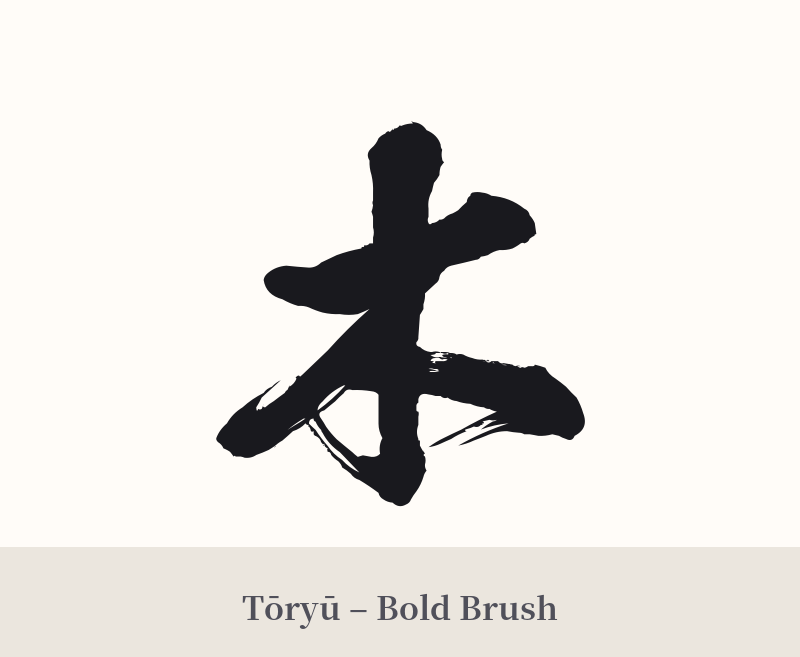
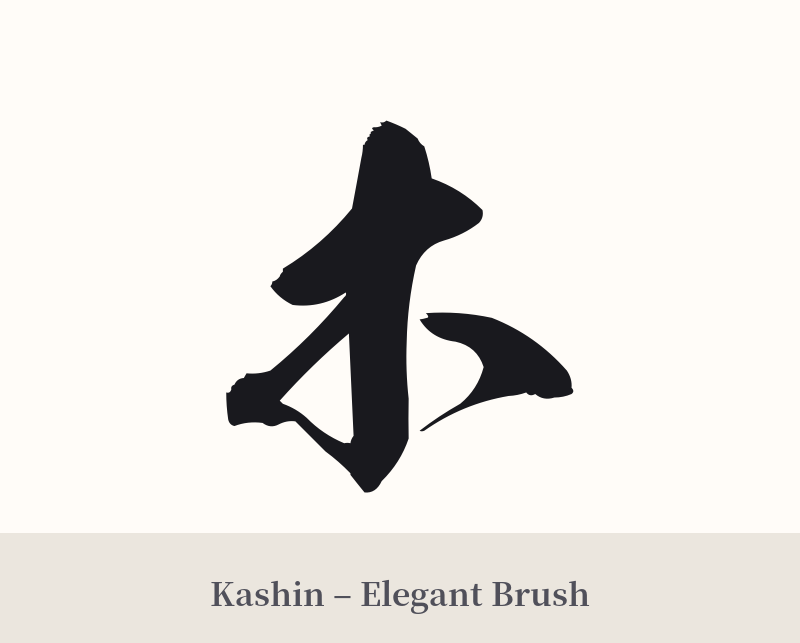
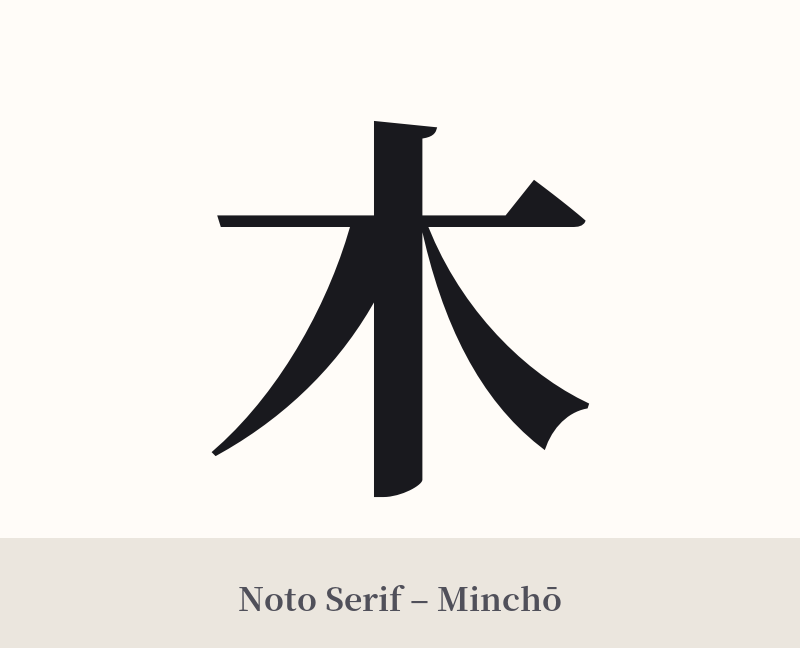
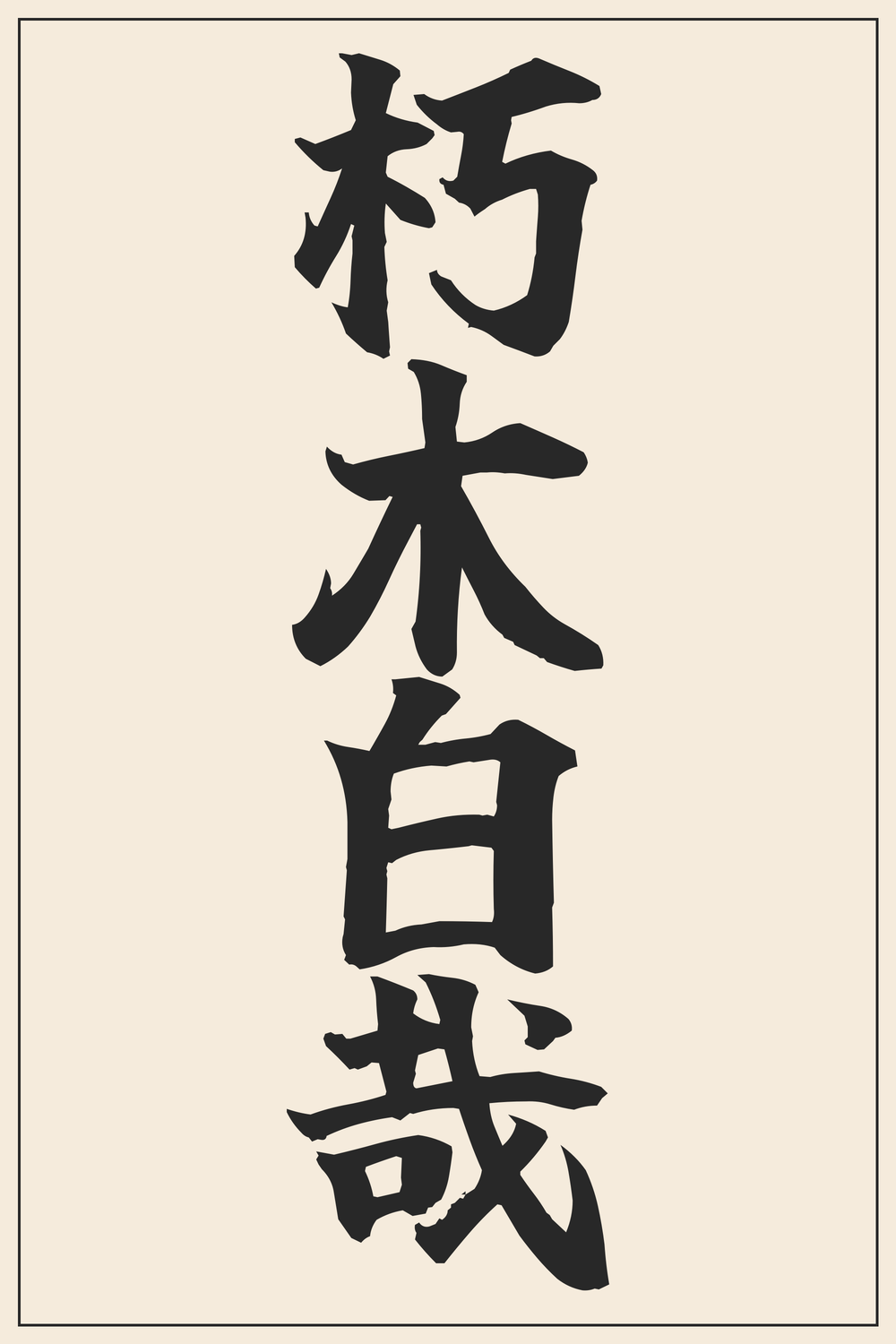
The same kanji can look dramatically different depending on the calligraphy style. Choose a font that matches the mood you want for your tattoo or design.
🎨 Tattoo Suitability
📐 Tattoo Design Guide
The simple elegance of 木 allows for a wide range of tattoo designs and placements. Its symmetrical and balanced form works well in many contexts.
– Placement: For a design emphasizing growth and stability, the spine is an excellent choice, mirroring the trunk. The forearm or calf provides a great vertical canvas. For a more subtle piece, the back of the neck or behind the ear works well.
– Font Styles: A bold, expressive shodō (calligraphy) brushstroke can capture the raw, organic energy of a tree. Conversely, a clean, minimalist font with thin lines can highlight its simple elegance and modern appeal.
– Visual Tips: Consider integrating 木 with other elemental kanji like 水 (water), 火 (fire), or 土 (earth). Placing it within an ensō (Zen circle) can symbolize the cycle of life and enlightenment. For a larger piece, you could depict the character itself as if it were made of wood grain or have its strokes transform into actual branches and roots.
Comments