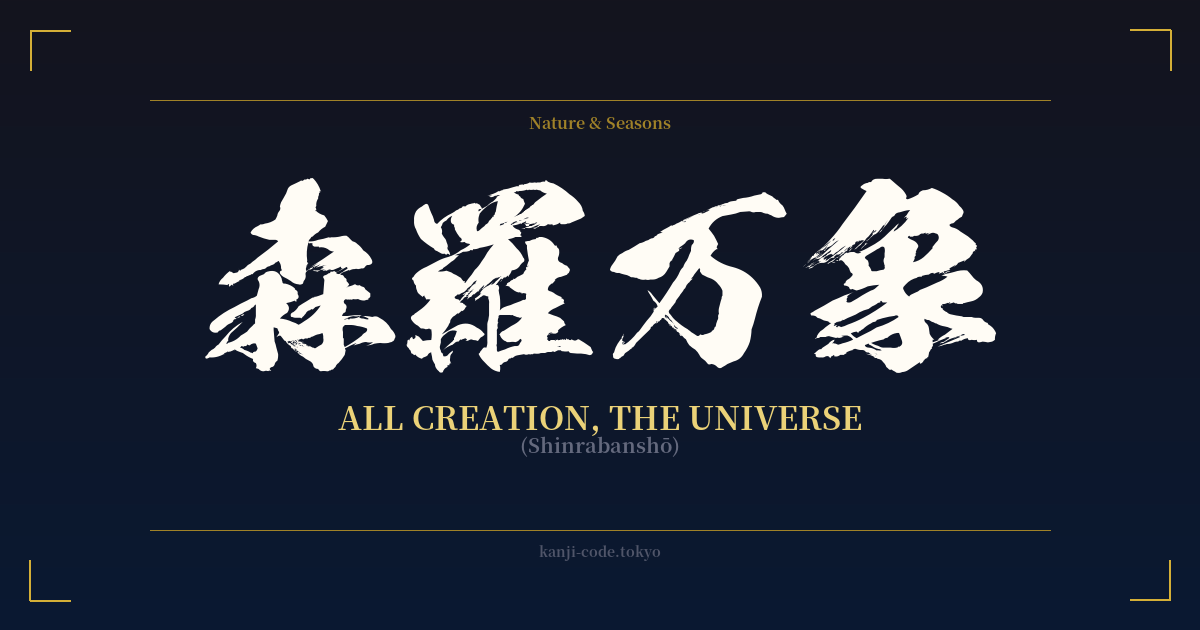
✍️ 森羅万象 (Shinrabanshō) — Cultural Context
森羅万象 (Shinrabanshō) is a magnificent four-character idiom, known as a 'yojijukugo,' that encapsulates the entirety of existence. It translates to concepts like 'All Creation,' 'the Universe,' or 'all things in nature.' However, its meaning goes deeper than a simple inventory of objects; it speaks to the vast, interconnected web of all phenomena, from the smallest speck of dust to the most distant star.
The term has deep roots in Buddhist philosophy. It reflects the belief that everything in the cosmos is part of a single, unified whole, constantly in flux. It’s not just about the physical world but also encompasses all events, forms, and appearances. It is the sum total of everything that is, was, and will be, perceived and unperceived.
The first two characters, 森羅 (Shinra), literally mean 'forest' and 'spread out like a net.' This creates a powerful image of countless trees standing together, yet interconnected, as if caught in a vast, invisible web. It suggests density and infinite variety.
The last two characters, 万象 (Banshō), mean 'ten thousand phenomena.' In Japanese culture, 'ten thousand' (万) is a poetic number used to signify 'countless' or 'everything.' 'Phenomena' (象) refers to all forms, shapes, and events that manifest in the world. Together, they represent the endless variety of things that make up reality.
While a term like 宇宙 (Uchū) refers more scientifically to the physical space of the cosmos, Shinrabanshō carries a more philosophical and poetic weight. It invites contemplation of one's place within this grand, intricate system. It’s a reminder of the beauty in both the infinite complexity and the underlying unity of the universe.
This expression is frequently found in Japanese literature, art, and even modern pop culture, where it's used to evoke a sense of awe and epic scale. It represents a worldview that sees nature not as something to be conquered, but as a vast, living entity of which humanity is just one small, but integral, part.
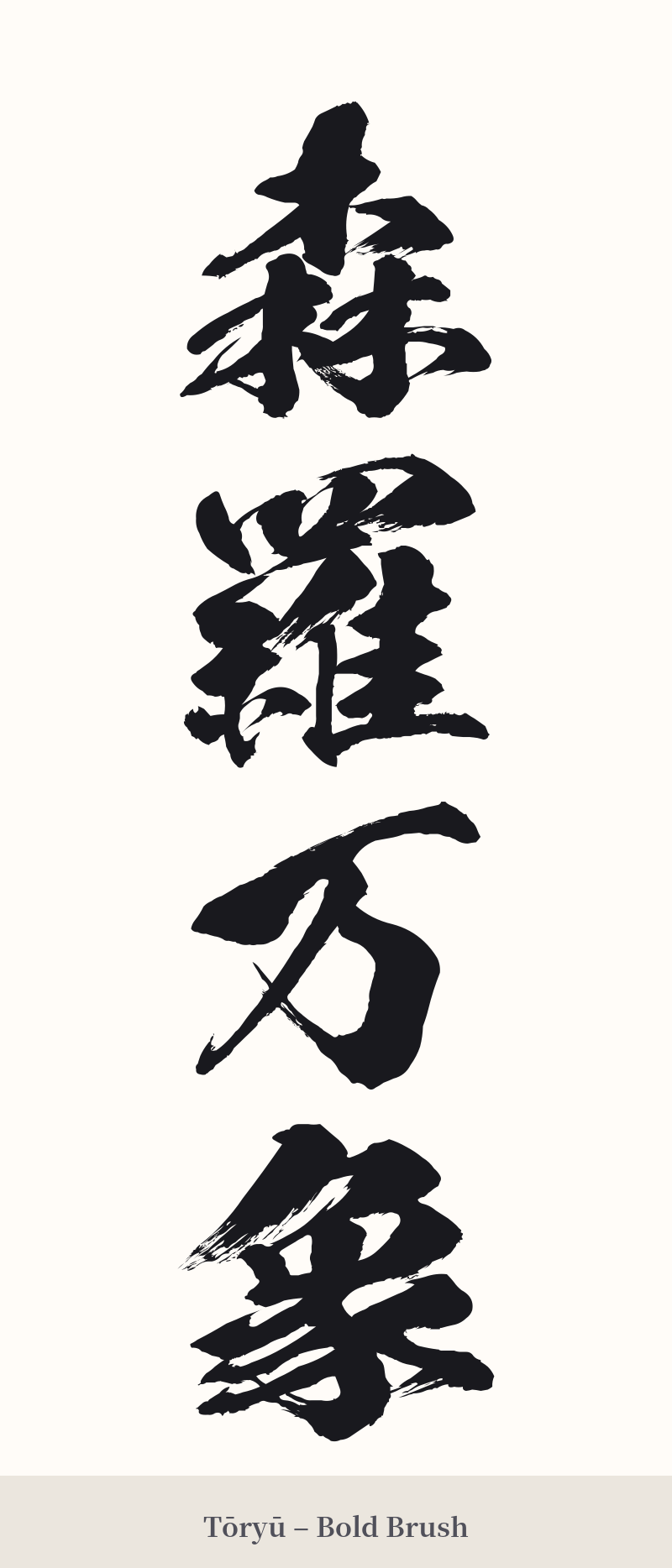
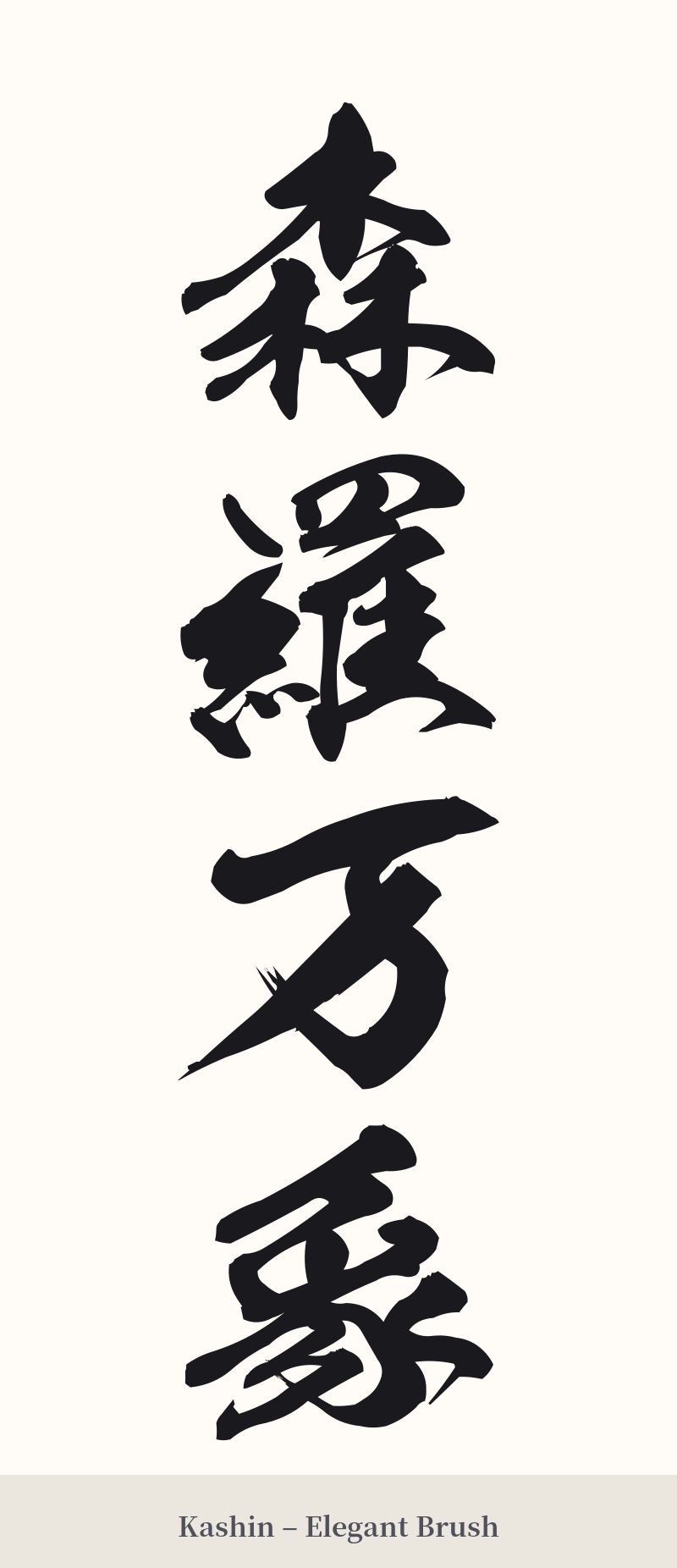
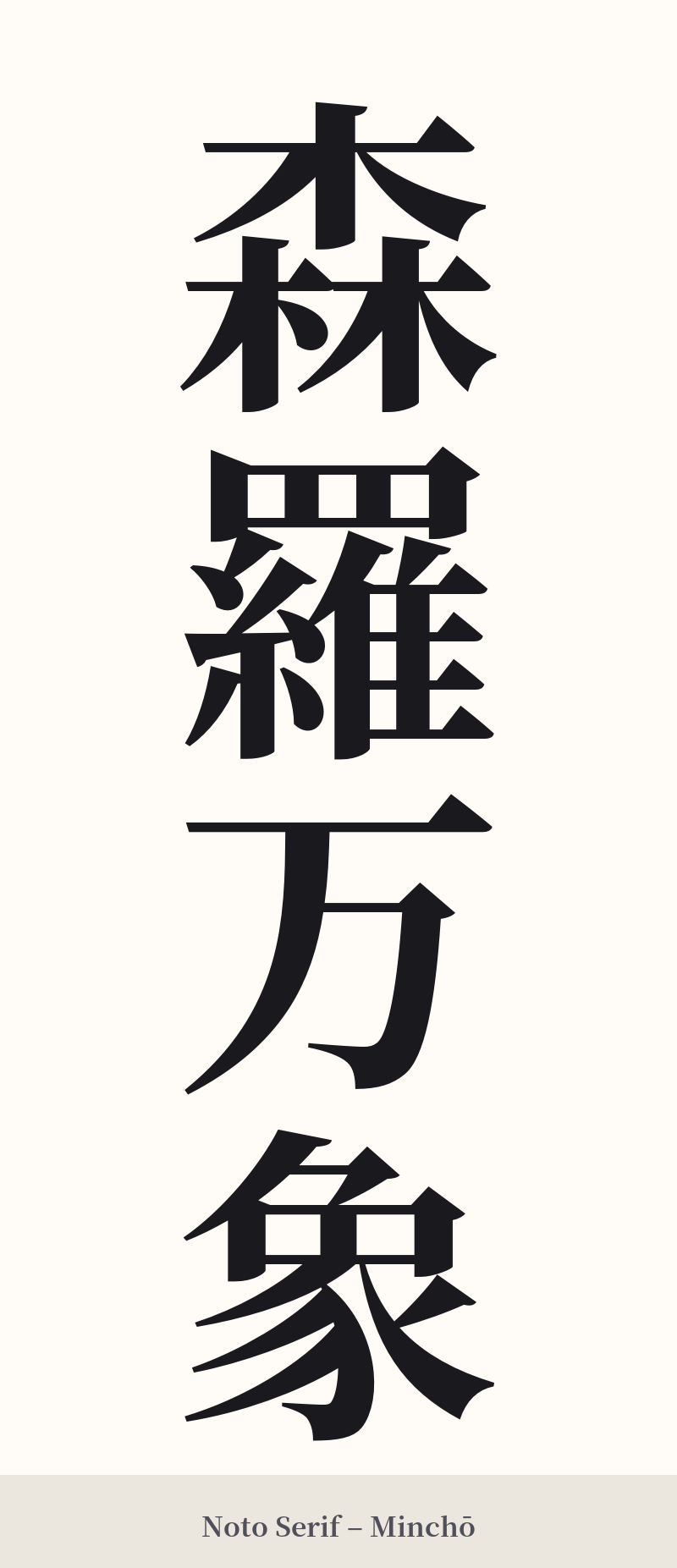
🖌️ Font Styles for 森羅万象
The same kanji can look dramatically different depending on the calligraphy style. Choose a font that matches the mood you want for your tattoo or design.
🎨 Tattoo Suitability
📐 Tattoo Design Guide
As a four-character idiom (yojijukugo), 森羅万象 is traditionally written vertically. This makes it an excellent choice for a tattoo along the spine, forearm, or calf, where its length can be showcased.
– Placement: A vertical column along the spine creates a powerful, central statement. The inner forearm or the side of the leg also provide great canvases that complement its linear form.
– Font Style: A dynamic, semi-cursive calligraphy script (gyōsho) can capture the flowing, interconnected feeling of the universe. For a more solid and impactful look, a bold, angular block script (kaisho) emphasizes the grandeur and permanence of creation.
– Visual Elements: Consider integrating the kanji with imagery that reinforces its meaning. A Zen ensō circle behind the characters can symbolize the totality and cyclical nature of the universe. Fading the kanji into a nebula, a forest silhouette, or a subtle wave pattern can also visually connect the word to its profound meaning.
Comments