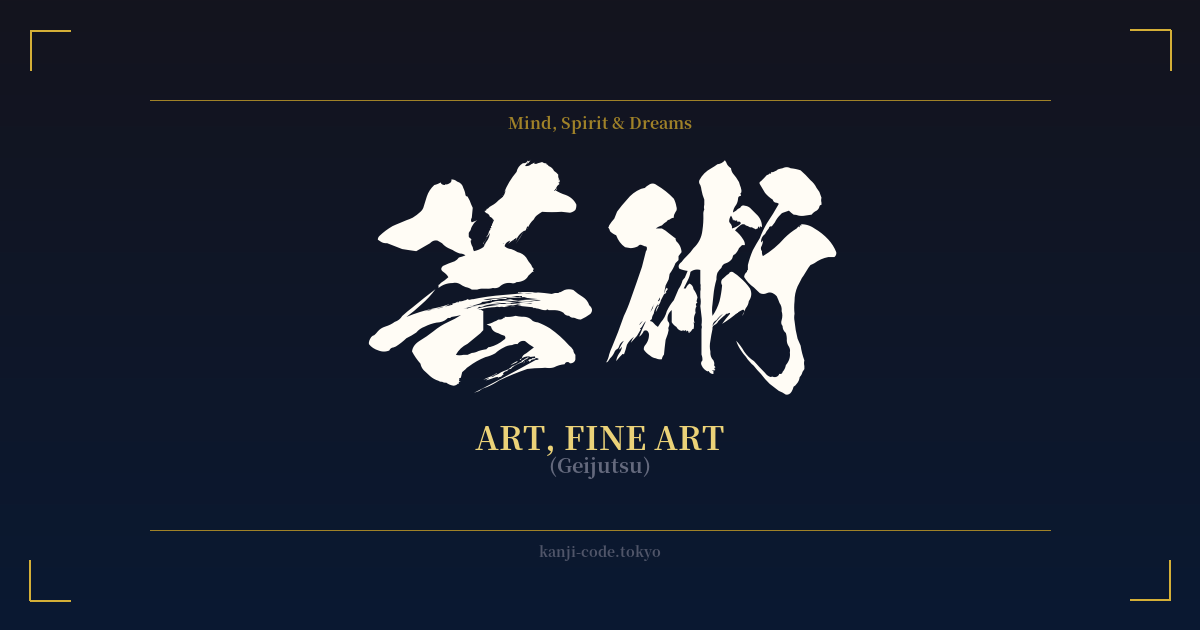
✍️ 芸術 (Geijutsu) — Cultural Context
芸術 (Geijutsu) is the Japanese word for 'art' or 'fine art'. It represents the pinnacle of human creativity, skill, and expression, encompassing everything from painting and sculpture to music and literature. While the concept of art is universal, the word Geijutsu itself offers a fascinating window into Japan's cultural evolution.
The term is a combination of two characters: 芸 (gei), meaning 'technique, craft, or performance,' and 術 (jutsu), meaning 'skill, method, or art.' Together, they signify not just a creative act, but one that is built upon a foundation of immense skill and disciplined practice. This reflects a core value in Japanese aesthetics: the idea that true artistry is born from the fusion of inspiration and rigorous training.
Interestingly, Geijutsu is a relatively modern term. It was coined during the Meiji Period (1868-1912) as a translation for the Western concept of 'fine art.' Before this, Japan had different ways of categorizing creative pursuits. Many were understood through the concept of 芸道 (Geidō), or 'the way of the arts.' Geidō included practices like 書道 (Shodō, calligraphy), 茶道 (Sadō, tea ceremony), and 華道 (Kadō, flower arrangement), which were seen as paths to spiritual enlightenment as much as artistic disciplines.
The creation of the word Geijutsu helped Japan integrate with the global art world, providing a term that corresponded to Western museum and gallery culture. It separated art made for aesthetic appreciation (Geijutsu) from traditional crafts (工芸, Kōgei) and martial disciplines (武術, Bujutsu). While a master swordsman possesses incredible 'jutsu' (skill), his practice is Bujutsu, not Geijutsu.
Today, Geijutsu is used in the same way 'art' is in English. You'll see it in the names of art museums (美術館, Bijutsukan), universities, and discussions about both contemporary and classical works. For anyone who dedicates their life to a creative passion, whether as a profession or a personal calling, Geijutsu is a word that resonates deeply. It embodies the relentless pursuit of beauty, the mastery of technique, and the profound human need to express the inexpressible.
🖌️ Font Styles for 芸術
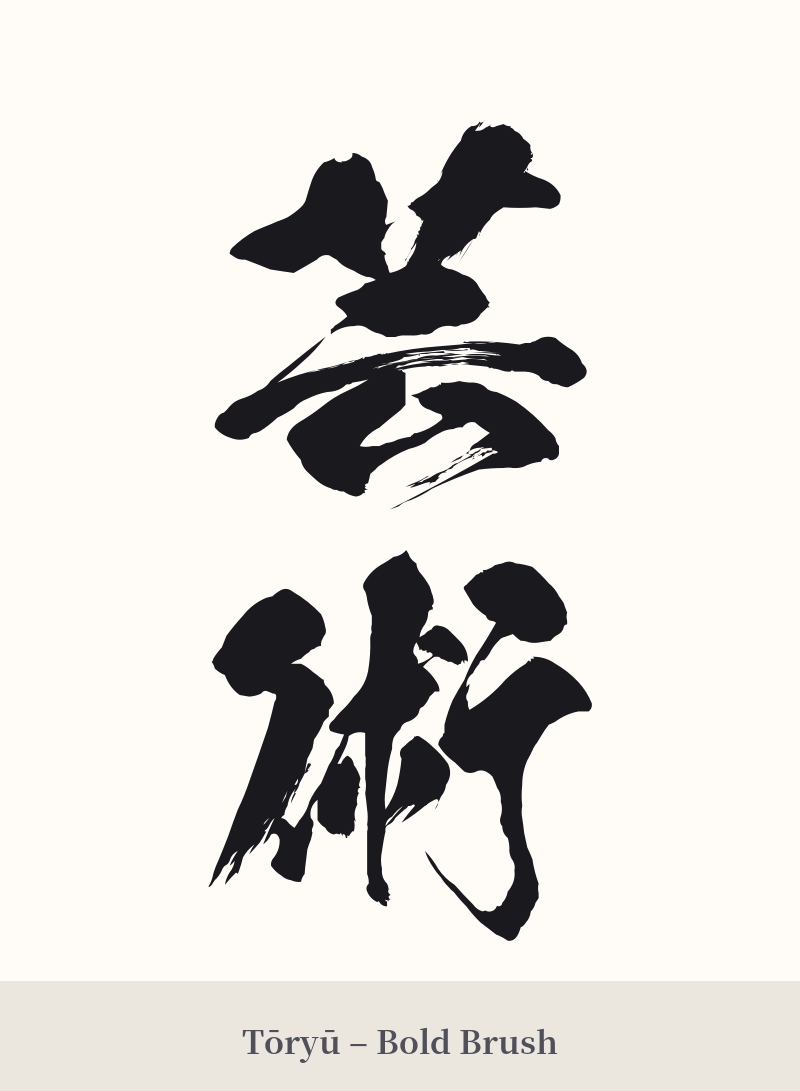
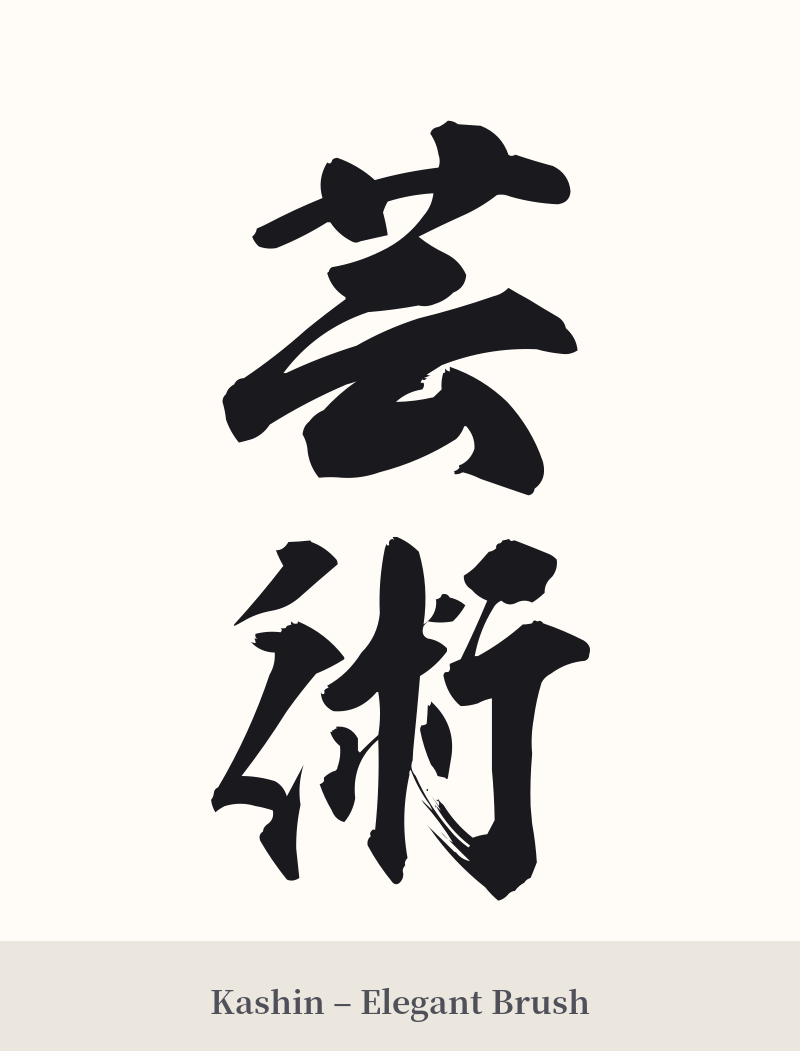
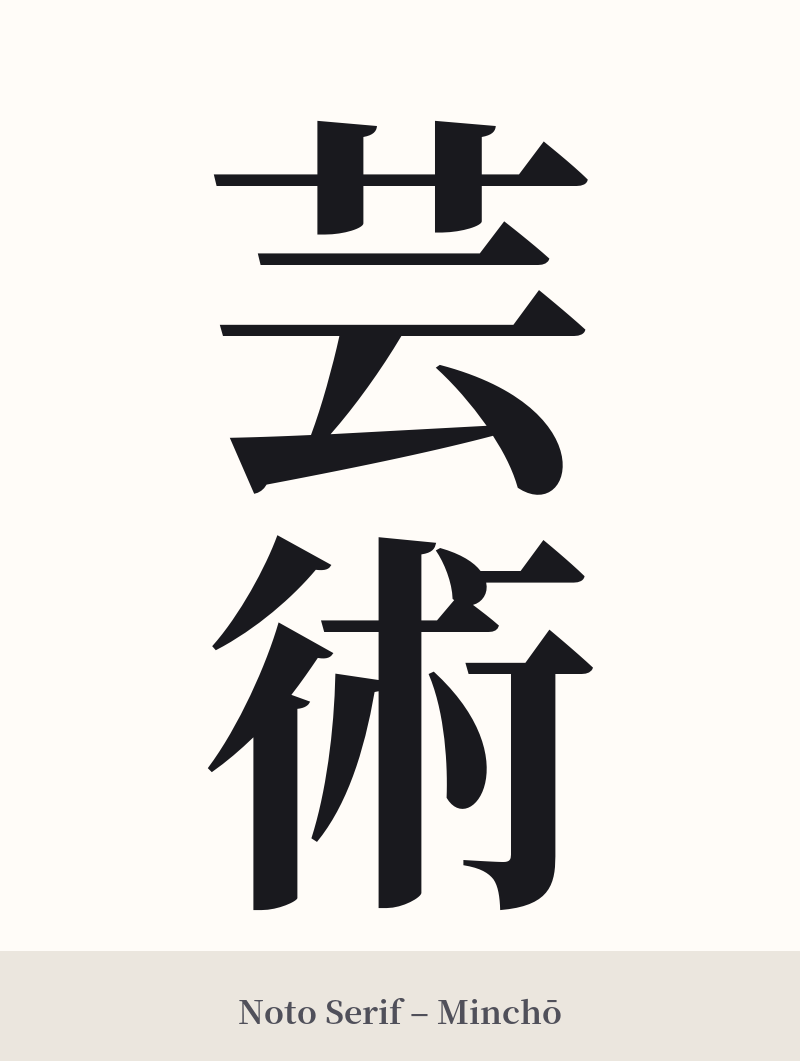
The same kanji can look dramatically different depending on the calligraphy style. Choose a font that matches the mood you want for your tattoo or design.
🎨 Tattoo Suitability
📐 Tattoo Design Guide
For a 芸術 (Geijutsu) tattoo, both orientation and style offer different expressive possibilities.
– Placement: A vertical orientation is classic and looks powerful running down the forearm, calf, or along the spine. Horizontally, it fits well across the chest, upper back, or on the inner bicep.
– Font Style: To emphasize the creative and fluid nature of art, a semi-cursive (gyōsho) or full-cursive (sōsho) calligraphy style is highly recommended. These styles have dynamic brush strokes that feel alive. For a design that highlights the 'skill' and 'discipline' aspect of the word, a clean, architectural kaisho (block) script would be very effective.
– Visual Tips: Consider integrating the kanji with a visual element that represents your personal art form. A watercolor splash behind the characters, a single enso circle encompassing them, or subtle imagery like musical notes or a camera lens can personalize the design and add another layer of meaning.
Comments