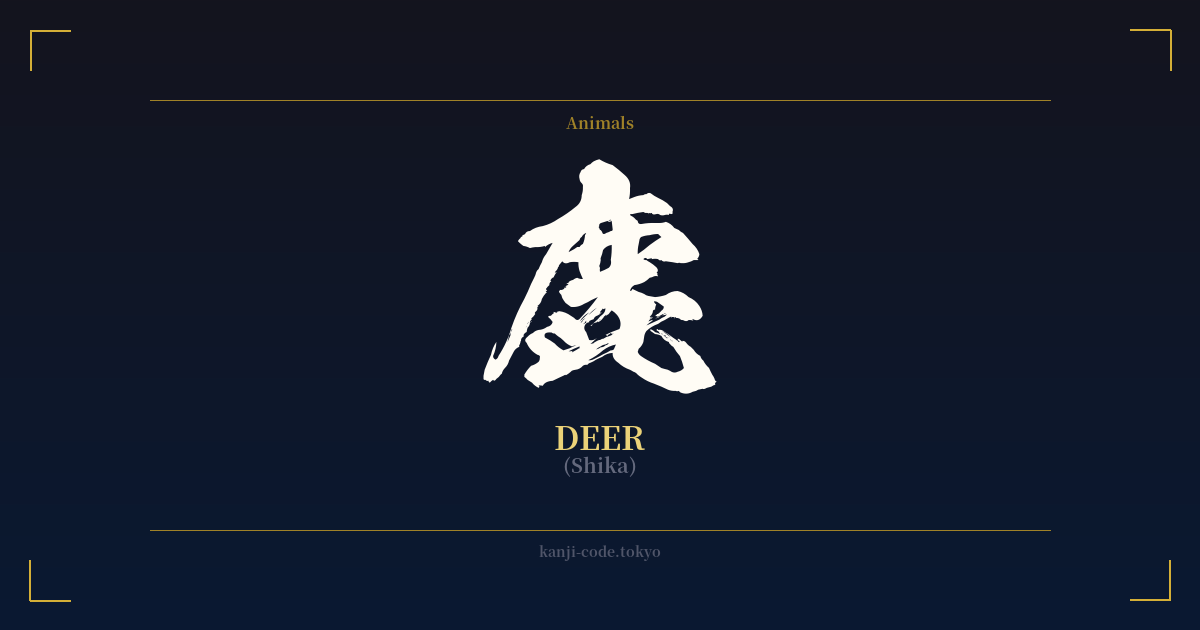
✍️ 鹿 (Shika) — Cultural Context
In Japan, the deer, or 鹿 (Shika), is far more than just a graceful animal of the forest. It is a creature steeped in centuries of spiritual significance and cultural symbolism, embodying a unique duality of gentle wildness and divine connection.
The most powerful association is with Shinto, Japan's indigenous religion. Deer are widely regarded as messengers of the gods (kami). This belief is most famously embodied in the city of Nara, Japan's first permanent capital. According to legend, the deity Takemikazuchi arrived in Nara riding a great white deer to establish the Kasuga Grand Shrine. This divine journey sanctified the entire deer population of the area.
To this day, the deer of Nara Park are considered sacred and are designated as national treasures. They roam freely, interacting with millions of tourists who bow to them and offer special crackers. This living spectacle is a direct continuation of a belief that has shaped the landscape and culture of the city for over a thousand years. Seeing the kanji 鹿, many Japanese people will immediately think of Nara's revered and friendly deer.
Beyond its divine role, the deer is also a prominent symbol of autumn. In classic Japanese poetry and art, the lonely cry of a stag in the mountains is a poignant motif used to evoke the melancholic beauty and transience of the season, a concept known as 'mono no aware'. It is frequently depicted alongside maple leaves (momiji), creating a quintessential image of Japanese autumn.
Interestingly, the kanji 鹿 also appears in the common word 馬鹿 (baka), meaning 'fool' or 'idiot'. The word literally combines the characters for 'horse' (馬) and 'deer' (鹿). The popular origin story, though likely apocryphal, traces back to a Chinese prime minister who pointed at a deer and called it a horse to test which officials were sycophantic enough to agree with him. This adds a fascinating, albeit unrelated, linguistic layer to the character's history.
Ultimately, the kanji 鹿 represents a harmonious blend of nature, spirituality, and gentle strength. It is a symbol of the untamed wilderness, but also a trusted link to the sacred realm.
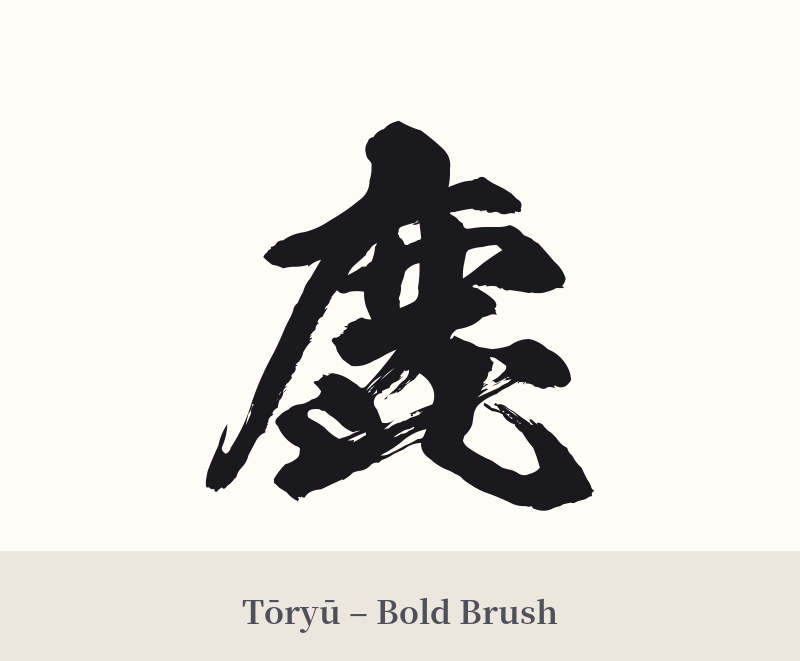
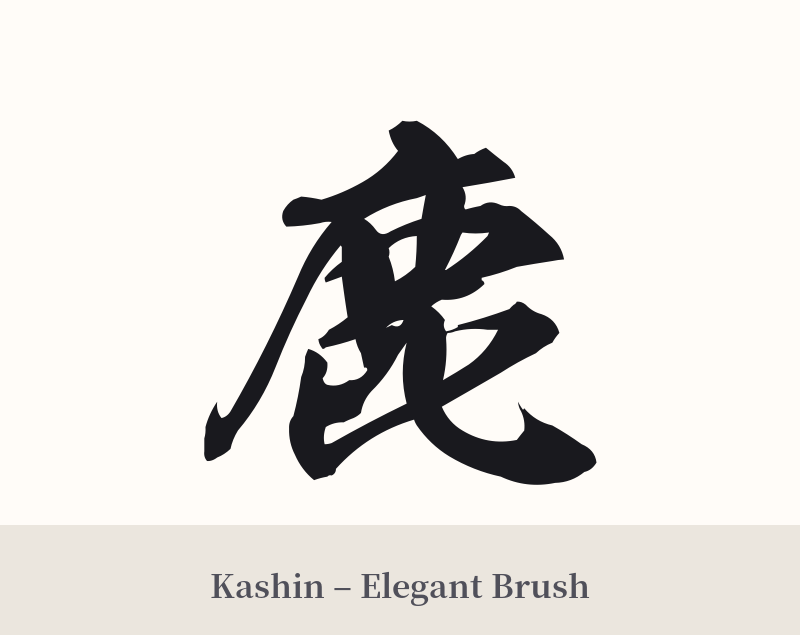
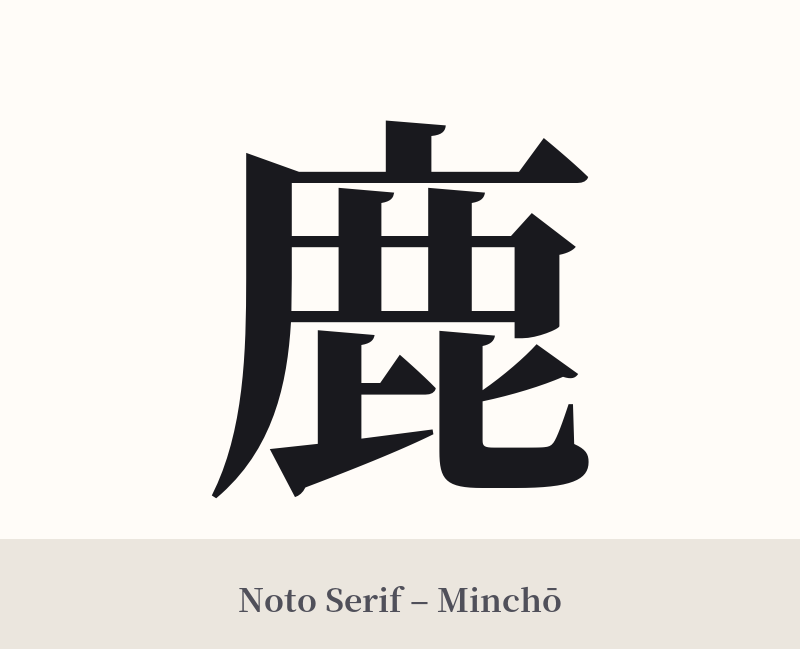
🖌️ Font Styles for 鹿
The same kanji can look dramatically different depending on the calligraphy style. Choose a font that matches the mood you want for your tattoo or design.
🎨 Tattoo Suitability
📐 Tattoo Design Guide
The kanji 鹿 (Shika) offers wonderful versatility for a tattoo design, suiting both bold and subtle aesthetics.
– Placement: For a standalone piece, consider areas that compliment its elegant, slightly vertical structure. The forearm, calf, or the back of the shoulder blade are excellent choices. It can also work as a smaller, more discreet tattoo on the wrist or ankle.
– Style: A traditional calligraphy (shodō) style with dynamic brushstrokes can emphasize its cultural and historical weight. Alternatively, a clean, minimalist design with sharp lines can highlight its modern, symbolic appeal.
– Pairings: To deepen the narrative, consider pairing 鹿 with other symbolic elements. Adding red or orange maple leaves (momiji) immediately evokes the feeling of autumn. Placing it near a simple rendering of a torii gate can visually connect it to its sacred, Shinto-related meaning.
Comments