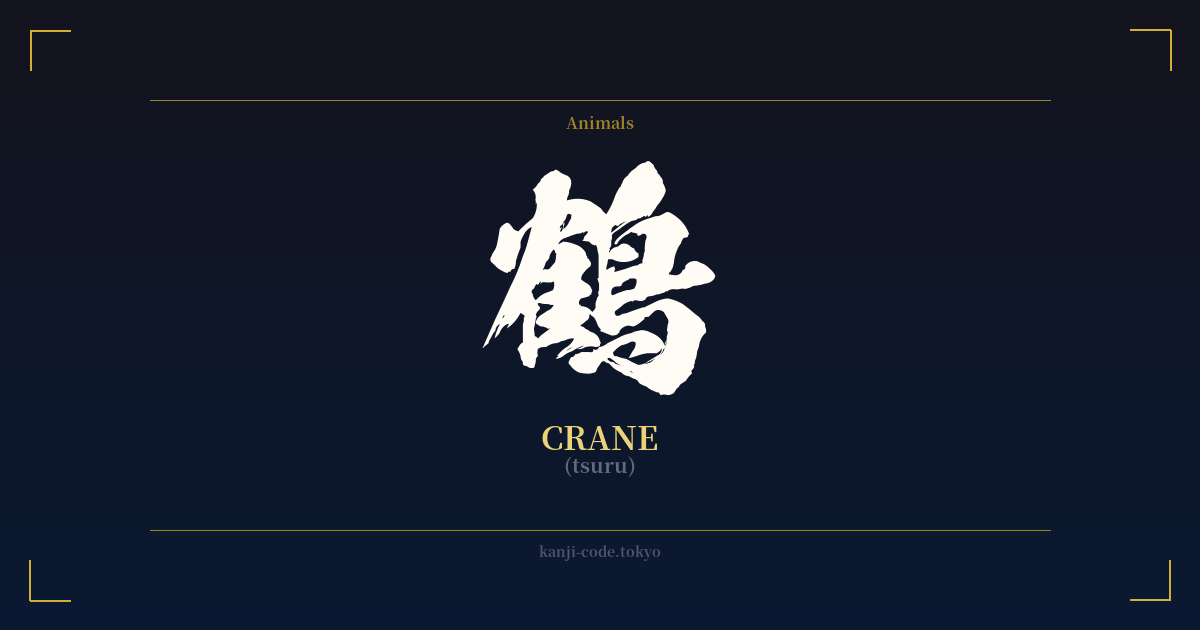
✍️ 鶴 (tsuru) — Cultural Context
In the pantheon of sacred Japanese creatures, the crane, or 鶴 (tsuru), holds a place of profound reverence and beauty. It is far more than just a bird; it is a powerful symbol woven into the very fabric of Japanese culture, art, and spirituality, representing longevity, good fortune, and unwavering peace.
The most famous association is with long life, captured in the ancient proverb, "Tsuru wa sen nen, kame wa man nen" (鶴は千年、亀は万年), which translates to "A crane lives for a thousand years, a turtle for ten thousand." This phrase cements the crane's status as a harbinger of longevity and enduring health, making its image a popular gift for elders and a common motif in celebrations of long life.
Beyond longevity, the crane is a symbol of good luck and happiness. Cranes are believed to be monogamous, mating for life, which has made them a powerful emblem of marital fidelity and bliss. As such, the crane motif is ubiquitous at weddings, appearing on invitations, decorations, and the bride's traditional wedding kimono (uchikake) to bless the couple with a long and happy union.
The crane's connection to peace was powerfully immortalized through the story of Sadako Sasaki and the tradition of senbazuru (千羽鶴), or one thousand origami cranes. According to legend, folding one thousand paper cranes grants a wish. Sadako, a young victim of the atomic bombing of Hiroshima, folded cranes in the hospital, wishing for world peace. Her story transformed the senbazuru from a personal wish into a global symbol of peace and hope, with strings of colorful paper cranes now decorating monuments and temples across Japan.
Artistically, the crane is a favored subject. Its graceful form and striking colors—the red-crowned crane (tanchōzuru) being the most iconic—have inspired countless sumi-e (ink wash paintings), screen paintings, and textile designs for centuries. Its elegant dance is seen as a form of natural poetry, a performance that captures the serene and refined beauty that is so central to Japanese aesthetics. This single character, 鶴, carries the weight of these thousand-year-old stories, hopes, and artistic traditions.
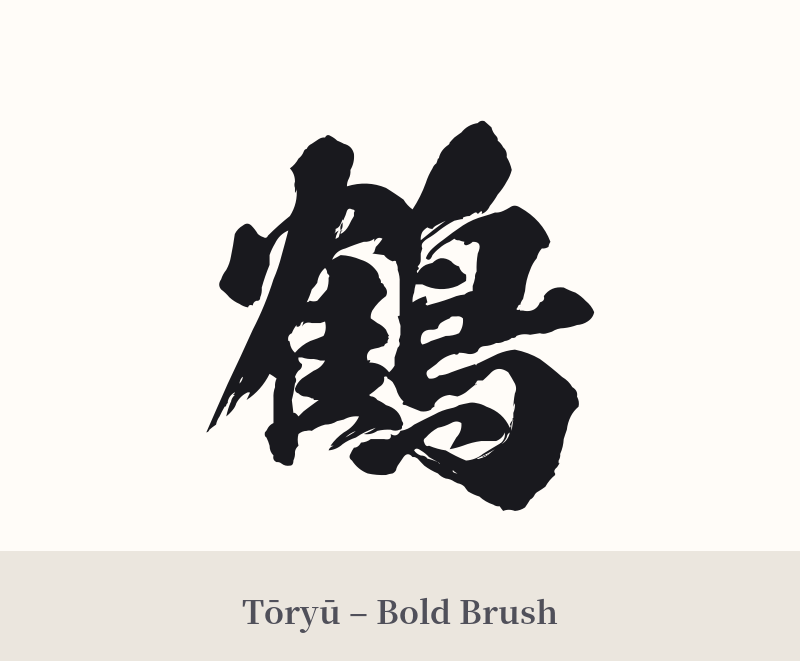
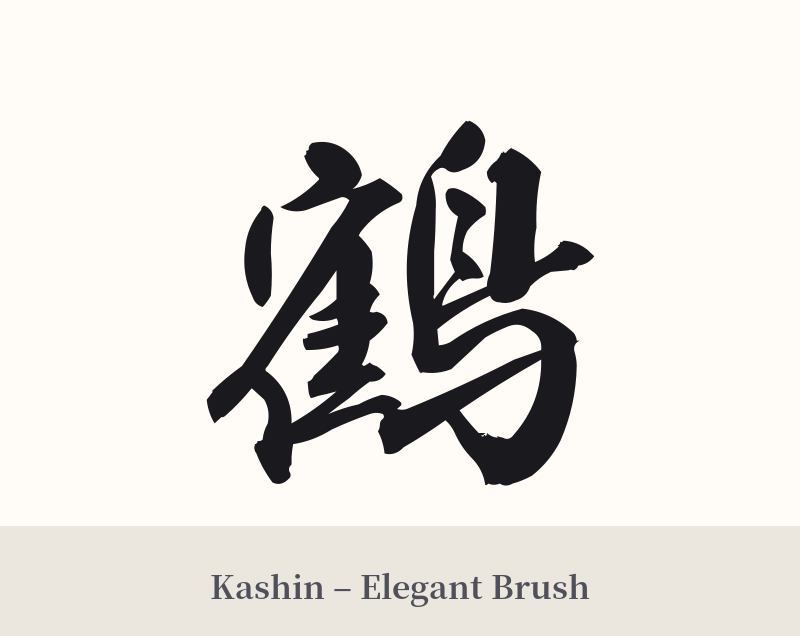
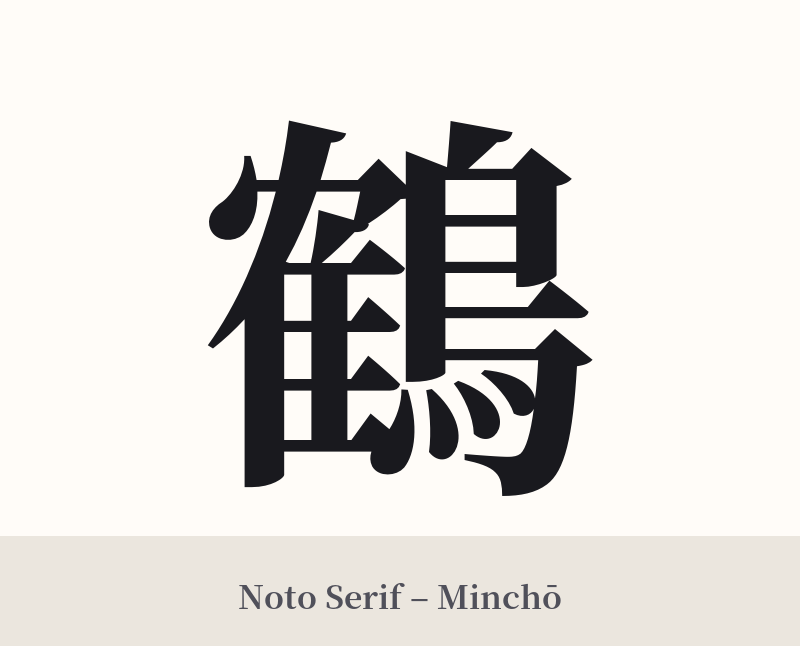
🖌️ Font Styles for 鶴
The same kanji can look dramatically different depending on the calligraphy style. Choose a font that matches the mood you want for your tattoo or design.
🎨 Tattoo Suitability
📐 Tattoo Design Guide
The elegance of the 鶴 kanji lends itself to designs that emphasize grace and flow. Its complexity demands careful consideration of placement and style to ensure its beauty is fully realized.
– Placement: Choose areas with enough vertical or horizontal space to accommodate the character's detail. The calf, forearm, upper back, or along the ribs are excellent choices. Avoid small, cramped areas where the strokes could merge.
– Style: A dynamic, semi-cursive calligraphy style (gyōsho) can capture the bird's graceful movement. For a more traditional and formal look, a classic Mincho or Kaisho script, executed with precision, highlights its structural beauty. Pairing the kanji with a minimalist illustration of a crane in flight or a single red circle (representing the sun or the red crown of the tanchō crane) can create a stunning visual narrative.
– Visual Elements: Consider incorporating other auspicious symbols that complement the crane's meaning. Pine trees (matsu) and bamboo (take) are classic pairings that also symbolize longevity and resilience. A background of gentle waves or clouds can add a sense of celestial peace to the design.
Comments