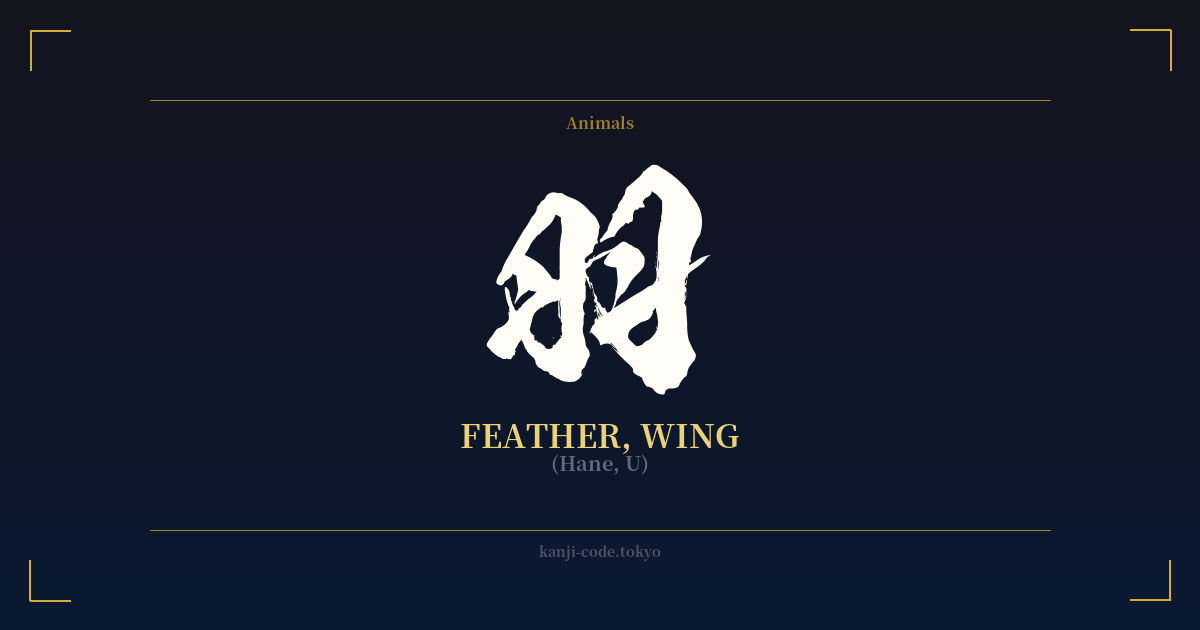
✍️ 羽 (Hane, U) — Cultural Context
The kanji 羽 (hane) is a beautiful and evocative character, capturing the essence of lightness, freedom, and the natural world. Its origins are pictographic, derived from an ancient drawing of two wings, which is still visible in its symmetrical form. This simple, six-stroke character holds a dual meaning that is fundamental to its cultural significance: it represents both a single 'feather' and a 'wing'.
In Japanese culture, 羽 is deeply connected to the idea of flight, not just in the physical sense but also metaphorically. It symbolizes soaring aspirations, breaking free from constraints, and spiritual ascension. This imagery is prevalent in Japanese art and literature, where a single falling feather might signify a message from the heavens, a fleeting memory, or the gentle passing of time. Birds, and by extension their feathers, are often seen as messengers connecting the earthly and celestial realms.
This connection to the divine is also seen in mythological figures. The Tengu (天狗), a famous creature from Japanese folklore, is a protective yet sometimes mischievous mountain spirit often depicted with a crow's beak and a pair of wings. The presence of 羽 in their being ties them to this power of flight and otherworldly nature.
Historically, feathers held a place of honor among the samurai class. The 'Takanoha' (鷹の羽), or hawk feather, was a particularly popular motif for family crests (kamon). Crossed hawk feathers, known as 'chigai takanoha', became one of the most widely used crests, symbolizing martial prowess, authority, and the swiftness of a bird of prey. This imbues the character with a sense of strength and nobility.
An interesting linguistic quirk is the use of 羽 as a counter, 'wa' (わ), for birds and, surprisingly, rabbits. The story goes that during periods when Buddhism forbade the consumption of four-legged animals, rabbits were humorously reclassified as 'birds' by counting them with the same counter, allowing them to be eaten. This tidbit reveals how language and culture can creatively adapt to social rules.
From its use in the name of Tokyo's Haneda (羽田) Airport, literally 'feather field', to its role in the sport of badminton (the shuttlecock is called a 'hane'), this kanji remains a graceful and ever-present part of the Japanese landscape.
🖌️ Font Styles for 羽
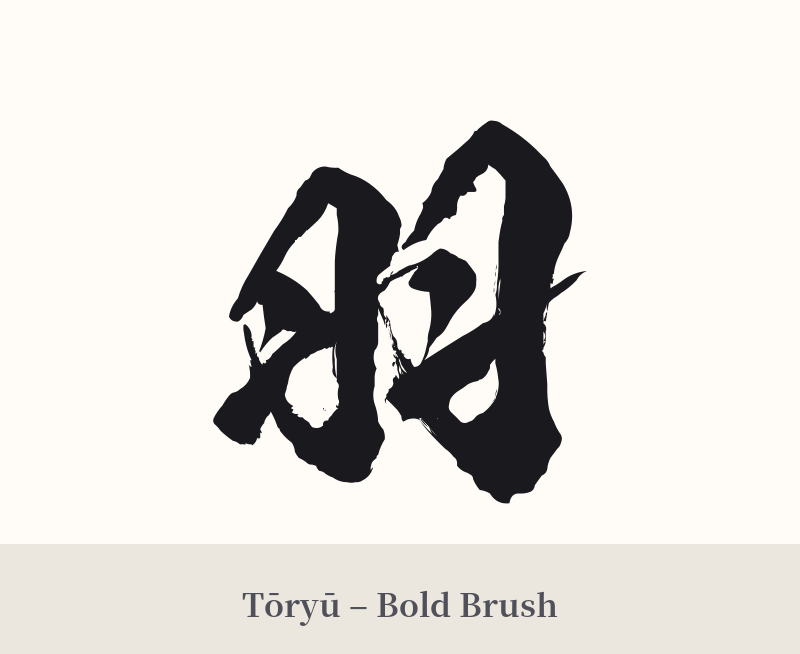
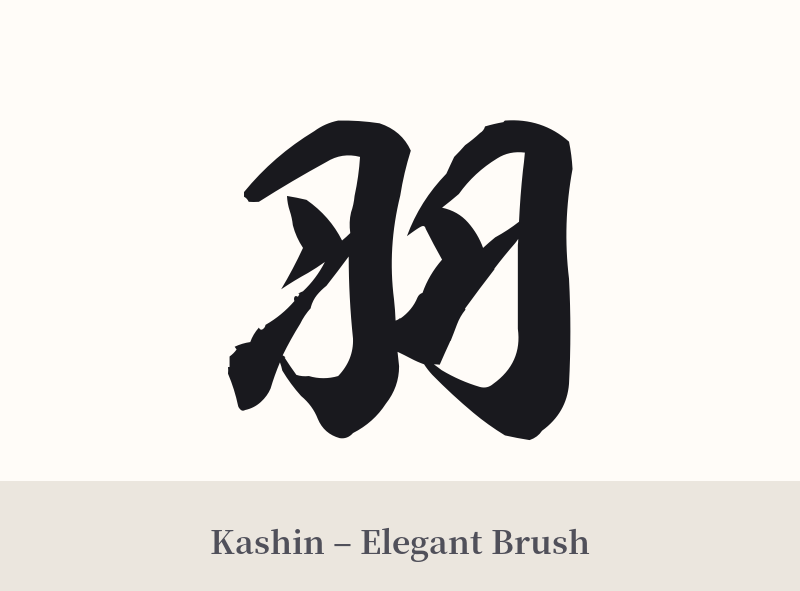
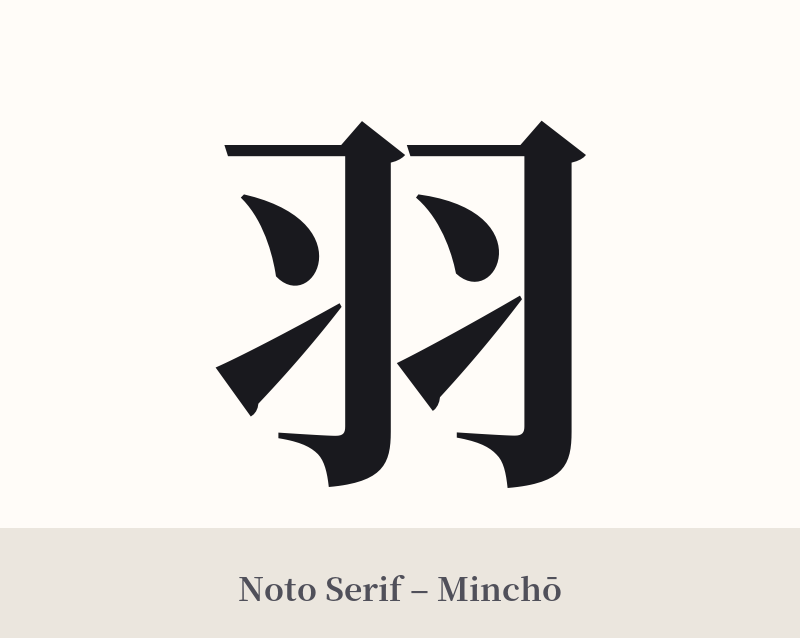
The same kanji can look dramatically different depending on the calligraphy style. Choose a font that matches the mood you want for your tattoo or design.
🎨 Tattoo Suitability
📐 Tattoo Design Guide
The elegant and simple form of 羽 (hane) lends itself well to a variety of tattoo designs. Its inherent vertical symmetry makes it visually pleasing and balanced.
– Placement: For a subtle, delicate statement, consider placing it on the wrist, ankle, behind the ear, or on the collarbone. For a design that more directly evokes the idea of flight, the shoulder blade or the back is a powerful choice, as if it were a budding wing.
– Style: A fine-line, minimalist style perfectly complements the kanji's meaning of lightness and delicacy. Alternatively, a dynamic shodō (calligraphy) brushstroke style can add a sense of movement and energy, as if the feather is caught in the wind.
– Visual Tips: This kanji works beautifully on its own. You could also incorporate it into a larger piece, such as having it drift down from an illustrated bird or angel wing. While not a standard word, tattooing a pair, 羽羽, side-by-side can create a beautiful symmetrical design representing a pair of wings.
Comments