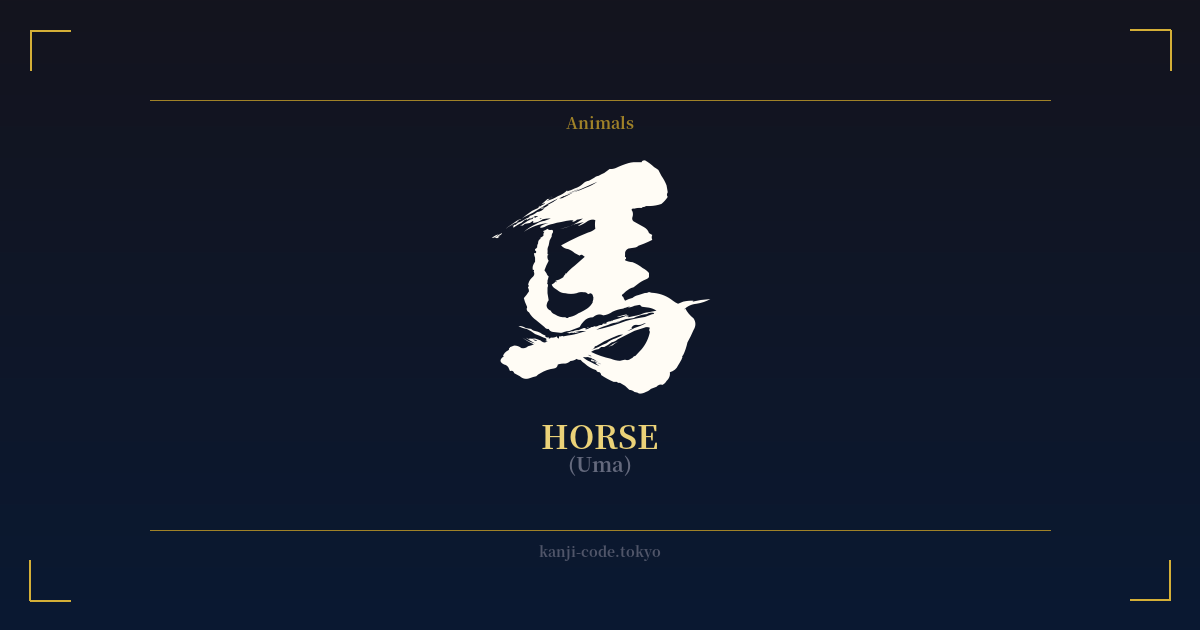
✍️ 馬 (Uma) — Cultural Context
The kanji 馬 (Uma) is far more than a simple character for 'horse'; it is a powerful symbol deeply embedded in the heart of Japanese culture, history, and spirituality. Its very form is a window into the past, originating as a pictograph that clearly depicted a horse with its flowing mane, distinct head, and four legs. Over centuries, these lines were stylized into the elegant and dynamic character known today, yet it retains the primal energy of the creature it represents.
In Japan's indigenous Shinto religion, horses are considered sacred messengers and mounts for the gods (kami). Many prominent shrines maintain stables for a 'sacred horse' (神馬, shinme), which is treated with reverence. This belief gave rise to the tradition of offering 'ema' (絵馬) – literally 'picture horses'. In ancient times, live horses were donated to shrines to curry favor with the deities. As this became impractical, people began offering wooden plaques with pictures of horses instead. Today, people write their wishes and prayers on ema plaques of all designs, but the name itself is a testament to the horse's historical spiritual importance.
No discussion of the horse in Japan is complete without the samurai. For these elite warriors, the horse was an indispensable partner in battle, a symbol of status, and a companion bound by loyalty. The art of Japanese horsemanship and mounted archery (流鏑馬, Yabusame) became a disciplined ritual that showcased the profound bond between rider and steed. The horse represented speed, power, and the warrior's ability to charge into the fray, becoming an extension of the samurai's own spirit and ambition.
This rich history is reflected in the Japanese language through numerous proverbs and expressions. A famous example is "人間万事塞翁が馬" (Ningen banji saiō ga uma), which translates to "All human affairs are like the old man's horse at the frontier." It tells a story of an old man whose horse runs away (bad luck), then returns with a fine mare (good luck), after which his son breaks his leg falling from the new horse (bad luck), which ultimately saves him from being drafted into a deadly war (good luck). The proverb teaches that fortune is fickle and one should not be quick to judge events as purely good or bad.
From its role as a divine messenger and a warrior's companion to its place in the zodiac and everyday language, the kanji 馬 captures a legacy of nobility, strength, and untamed spirit. It is a symbol that gallops through Japan's history, carrying with it tales of gods, warriors, and the unpredictable nature of life itself.
🖌️ Font Styles for 馬
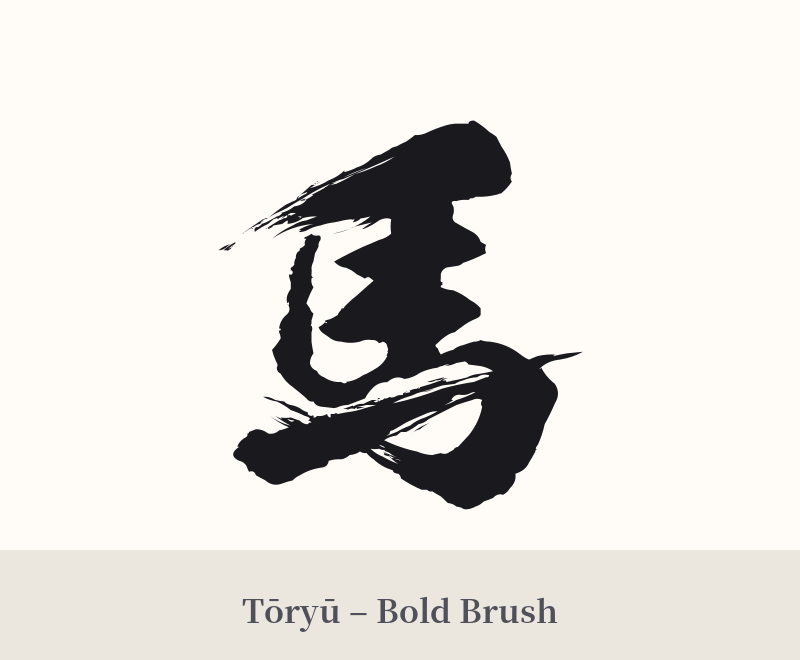
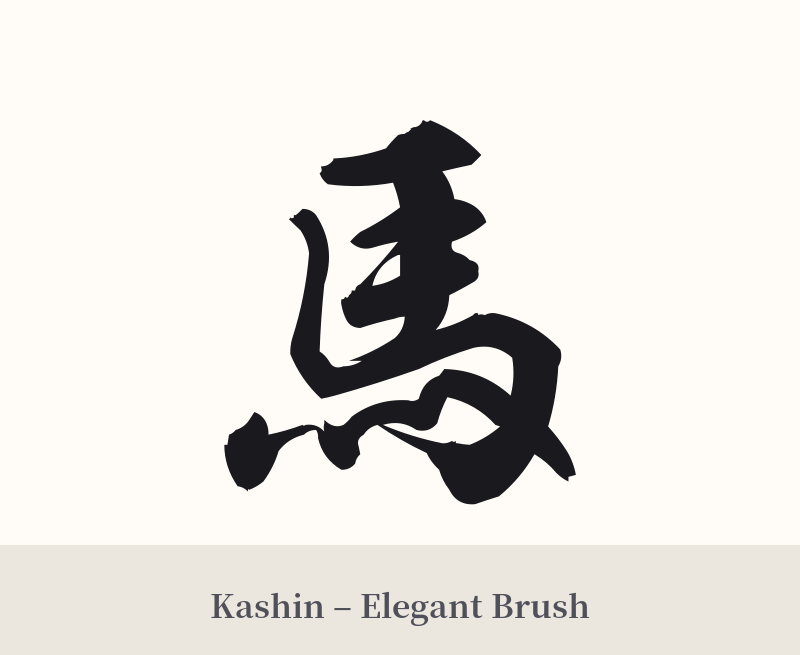
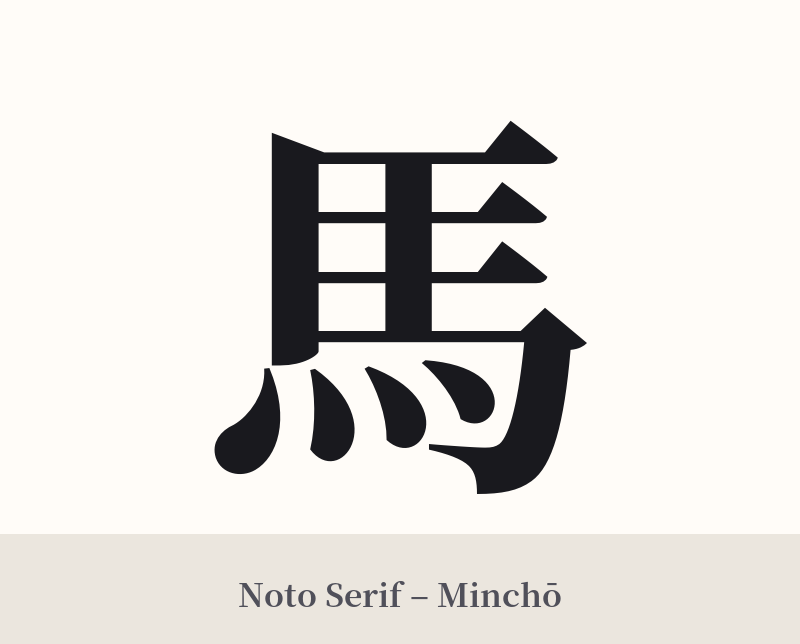
The same kanji can look dramatically different depending on the calligraphy style. Choose a font that matches the mood you want for your tattoo or design.
🎨 Tattoo Suitability
📐 Tattoo Design Guide
The kanji 馬 is visually dynamic and offers great flexibility for a tattoo design. Its strong vertical and horizontal strokes evoke a sense of power and motion.
– Placement Suggestions: The character's balanced shape works well in many areas. For a powerful statement, consider the forearm, calf, or shoulder blade where its form can be appreciated. A vertical placement along the spine or back of the arm can emphasize its flowing, energetic lines.
– Font Style: Avoid simple, blocky computer fonts. This kanji truly shines in a calligraphy (shodō) style. A rough, energetic brushstroke script (sōsho) can capture the horse's wildness and speed, while a more deliberate, classic script (kaisho) can emphasize its nobility and strength. Adding ink splatters or fading brush tails can enhance the feeling of movement.
– Visual Combinations: While 馬 is powerful on its own, it can be combined with other elements to add layers of meaning. Pairing it with wind or cloud motifs can represent freedom and swiftness. Combining it with cherry blossoms can create a poignant image of the samurai spirit—powerful yet ephemeral.
Comments