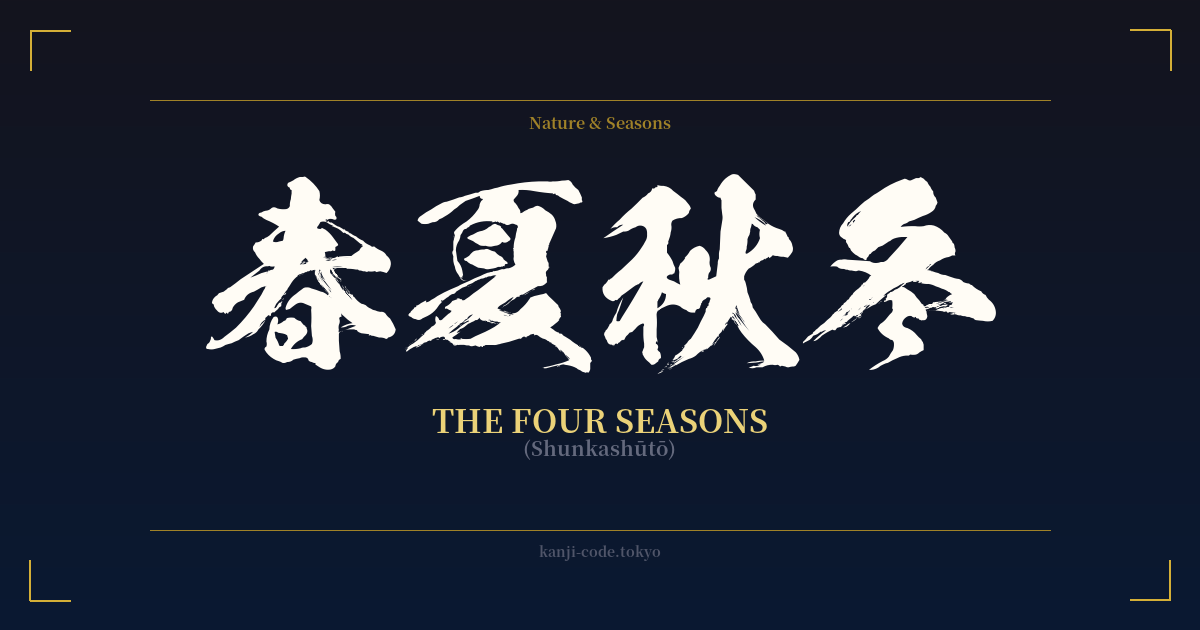
✍️ 春夏秋冬 (Shunkashūtō) — Cultural Context
春夏秋冬, read as Shunkashūtō, is the Japanese word for the four seasons: Spring, Summer, Autumn, and Winter. More than just a simple list, this four-character compound, or yojijukugo, encapsulates a core pillar of Japanese culture and aesthetic sensibility. It represents the relentless, beautiful, and cyclical passage of time, a concept deeply woven into the nation's art, literature, and daily life.
In Japan, the transition between seasons is not a subtle shift but a celebrated event that dictates everything from cuisine to festivals and even the greetings used in letters. Each season carries its own distinct mood and imagery. Spring (春) is synonymous with the ephemeral beauty of cherry blossoms (sakura), a time of renewal and new beginnings. Summer (夏) brings vibrant festivals (matsuri), fireworks (hanabi), and a sense of energetic, verdant life.
Autumn (秋) is a time for contemplation, marked by the stunning colors of maple leaves (momiji) and the crisp air of the harvest. It often carries a gentle melancholy, a beautiful sadness for the passing of the year. Finally, Winter (冬) represents stillness, quiet endurance, and the stark beauty of snow-covered landscapes. It is a time for introspection before the cycle begins anew.
This deep appreciation for the seasons is closely tied to Shinto beliefs about the divinity of nature and Buddhist teachings on impermanence (無常, mujō). The constant change of Shunkashūtō is a powerful reminder that nothing lasts forever, encouraging an appreciation for the present moment—a concept also found in the phrase 一期一会 (ichigo ichie), or "one time, one meeting." The four seasons serve as a living metaphor for the stages of human life: birth, growth, maturity, and decline, leading to rebirth.
This phrase appears frequently in poetry, proverbs, and art. It can describe someone who has experienced the full breadth of life or simply evoke the beauty of the natural world. To understand Shunkashūtō is to understand a fundamental aspect of the Japanese worldview: a deep reverence for nature and an acceptance of its beautiful, unending cycles.
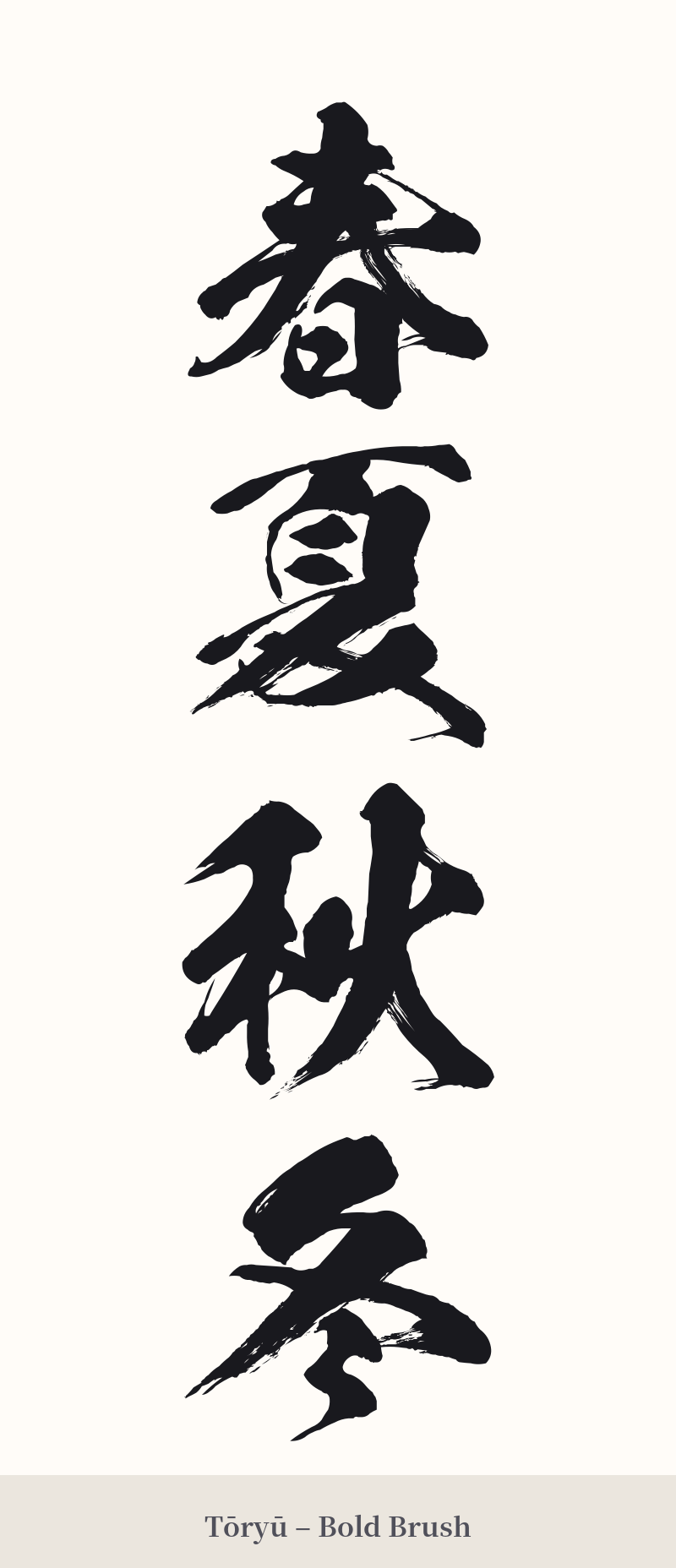
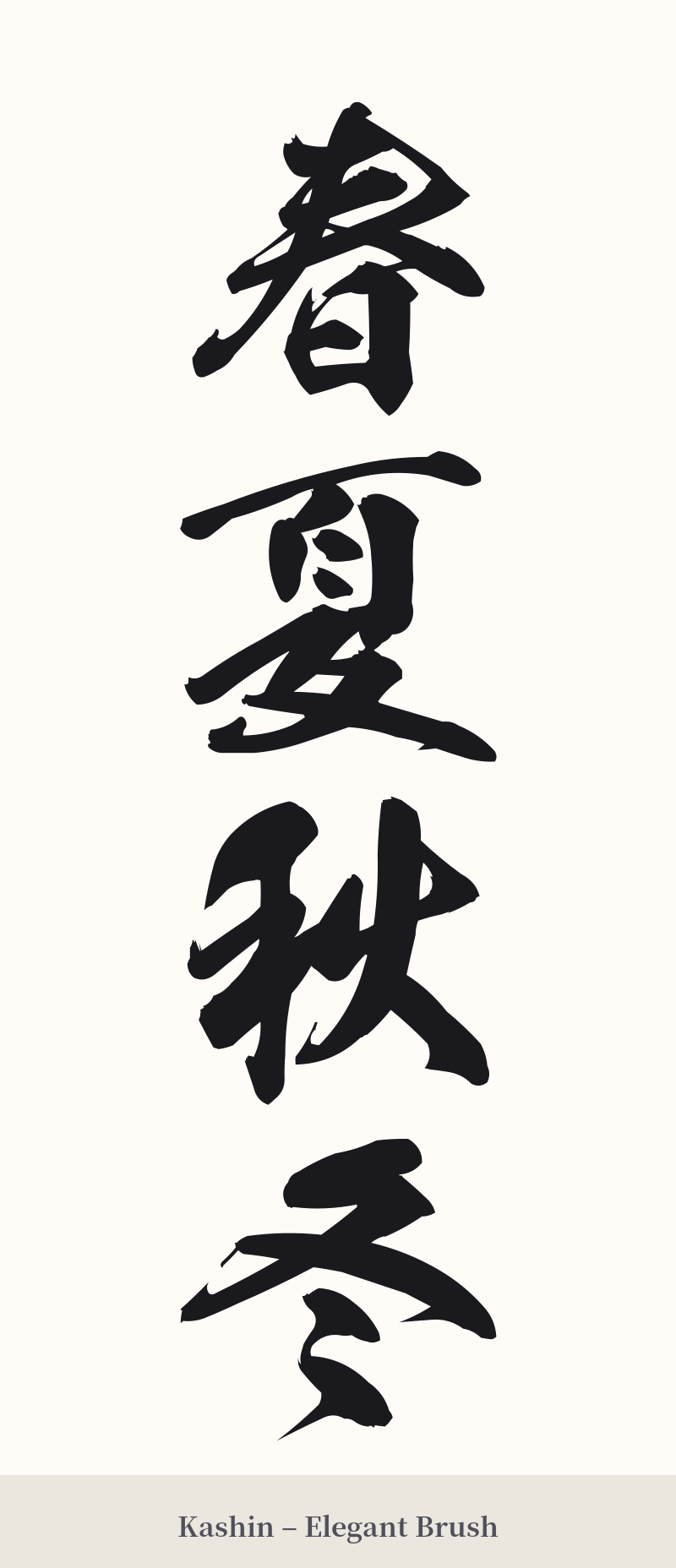
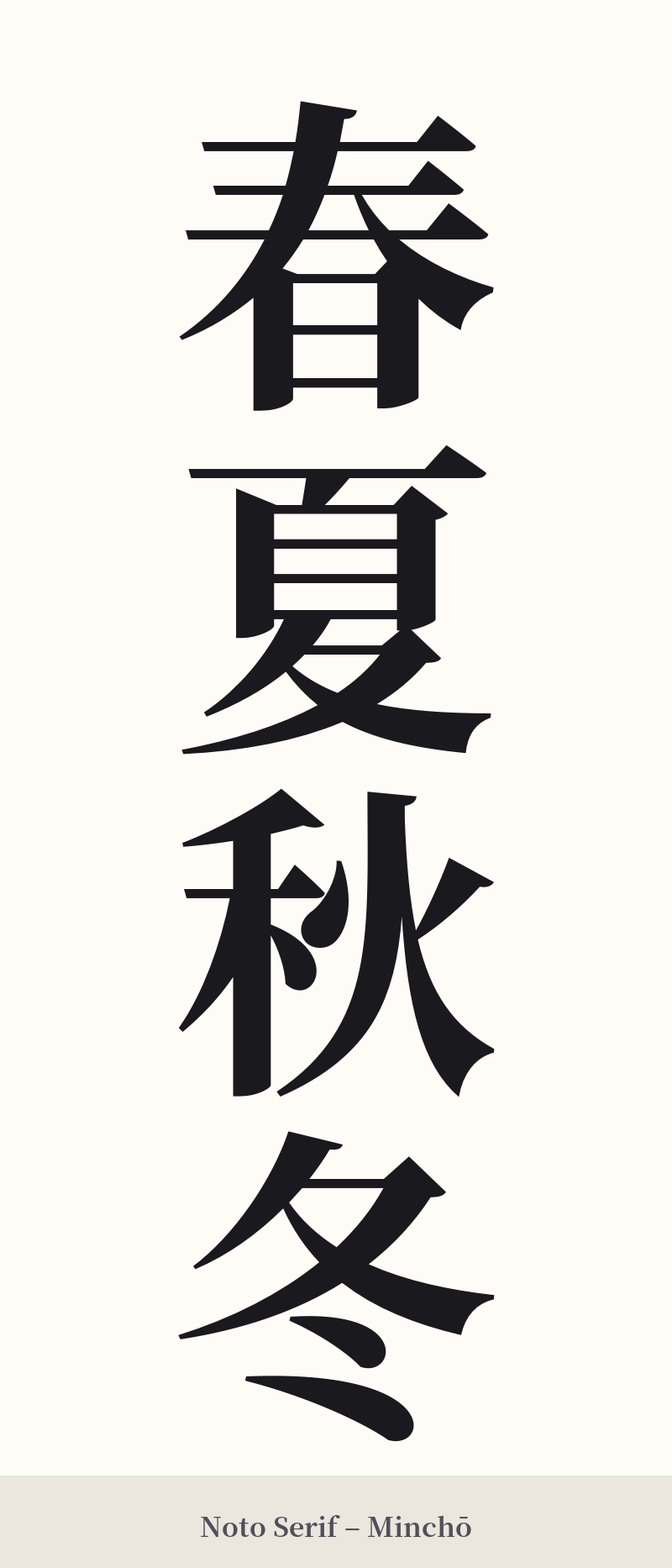
🖌️ Font Styles for 春夏秋冬
The same kanji can look dramatically different depending on the calligraphy style. Choose a font that matches the mood you want for your tattoo or design.
🎨 Tattoo Suitability
📐 Tattoo Design Guide
For a 春夏秋冬 tattoo, the arrangement and style are key to conveying its profound meaning.
– Placement: A vertical orientation is the most traditional and aesthetically pleasing for a four-character compound. This looks particularly striking along the spine, forearm, or calf. A horizontal placement can also work well across the chest or upper back.
– Font Style: Calligraphic scripts are highly recommended. A semi-cursive style (Gyosho) offers a balance of legibility and artistic flow, while a full cursive script (Sosho) can create a dynamic, expressive piece. For a more modern and bold statement, a clean block script (Kaisho) is an excellent choice.
– Visual Tips: Consider incorporating small, subtle symbols of each season next to its corresponding kanji. For example, a single cherry blossom petal by 春 (Spring), a small wave or sun ray by 夏 (Summer), a maple leaf by 秋 (Autumn), and a snowflake by 冬 (Winter). This can visually enhance the theme without cluttering the design.
Comments