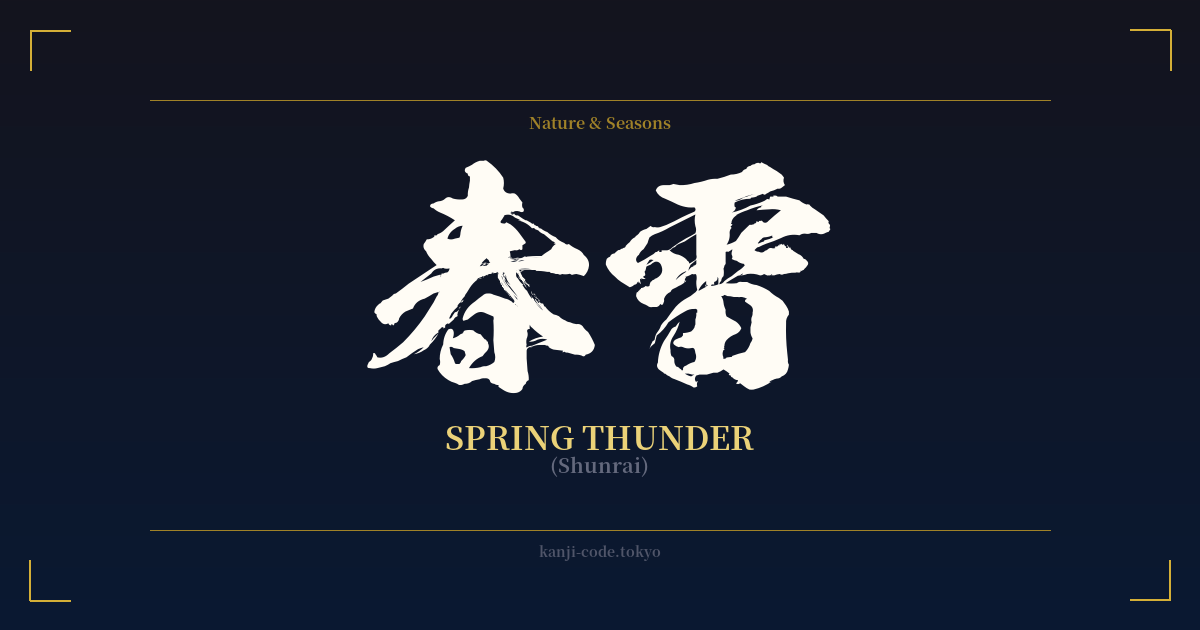
✍️ 春雷 (Shunrai) — Cultural Context
春雷 (Shunrai) is a word that resonates with the deep connection Japanese culture has with the changing seasons. Literally translating to 'Spring Thunder,' it refers to the first thunderclaps of the year, those that roll across the sky as winter finally gives way to spring. This isn't just a weather report; it's a profound seasonal marker, a 'kigo' (season word) used in haiku and other poetry to evoke a specific time and feeling.
The sound of Shunrai is seen as nature's alarm clock. It's the dramatic announcement that the dormancy of winter is over. In ancient agricultural society, this thunder was believed to awaken the insects hibernating in the ground, a phenomenon called 'keichitsu' (啓蟄), which literally means 'the awakening of hibernating insects.' This event signals that the soil is warming and ready for planting, marking a crucial moment in the agricultural calendar.
Beyond its literal and agricultural significance, Shunrai carries powerful symbolic weight. It represents a sudden awakening, a burst of energy, and the start of new life. It’s the force that shakes the world from its slumber, heralding a period of growth, vitality, and renewal. The thunder is not destructive; rather, it is life-giving, a jolt of energy that sets everything in motion. This makes it a potent metaphor for personal transformation, a sudden breakthrough, or the beginning of a new chapter in one's life after a period of stillness or hardship.
In literature and art, Shunrai is often used to create a dramatic mood. It can symbolize a sudden, pivotal event or a passionate, burgeoning emotion. The contrast within the word itself—the gentle, hopeful promise of 'Spring' (春) combined with the raw, untamed power of 'Thunder' (雷)—captures a beautiful duality. It is the harmony of creation, where a gentle season is ushered in by a powerful, startling force. This blend of softness and strength gives Shunrai its unique poetic power and enduring appeal in Japanese aesthetics.
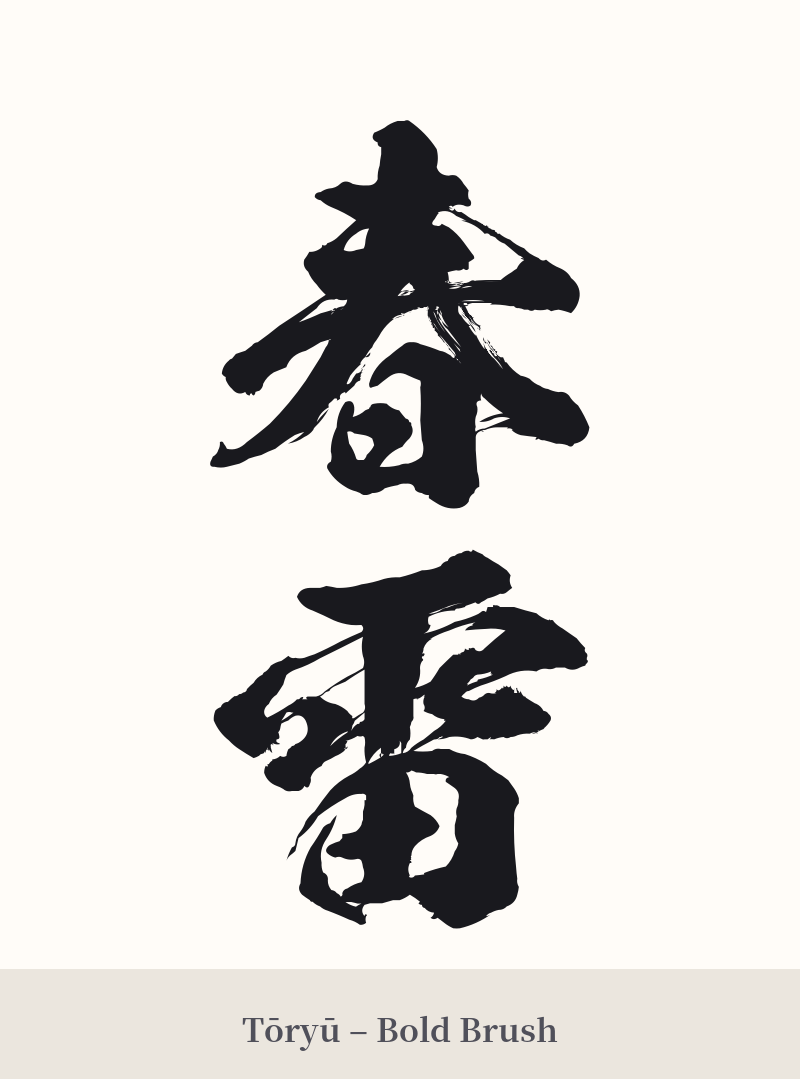
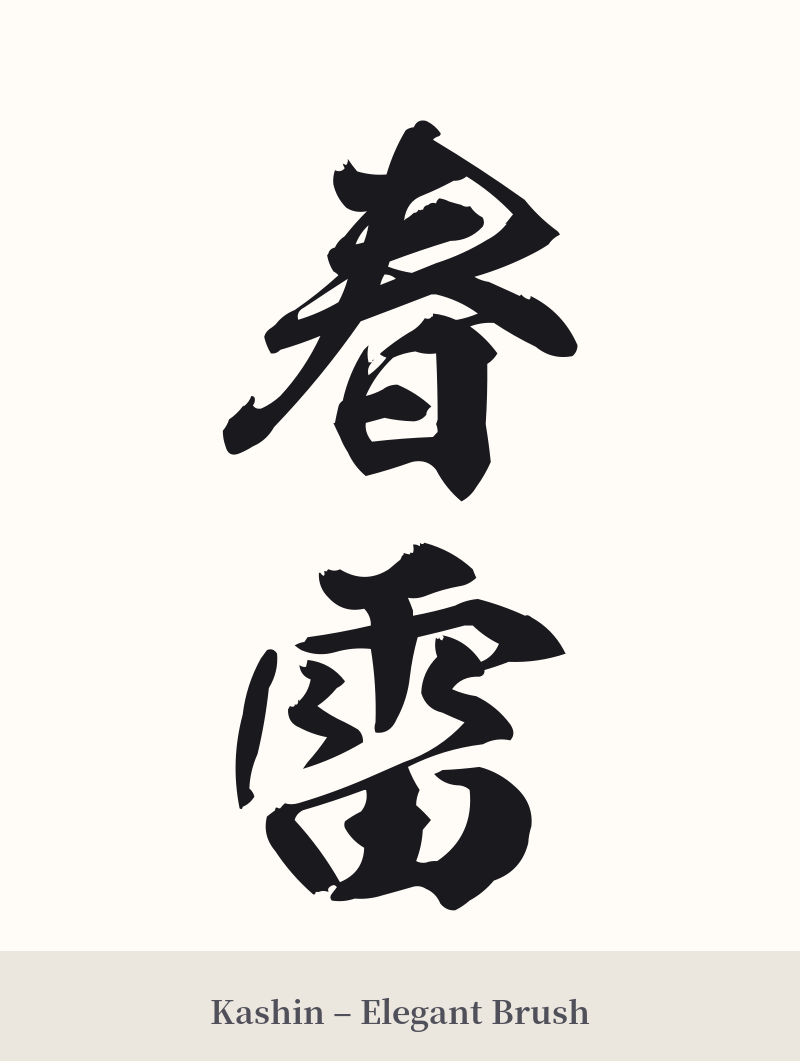
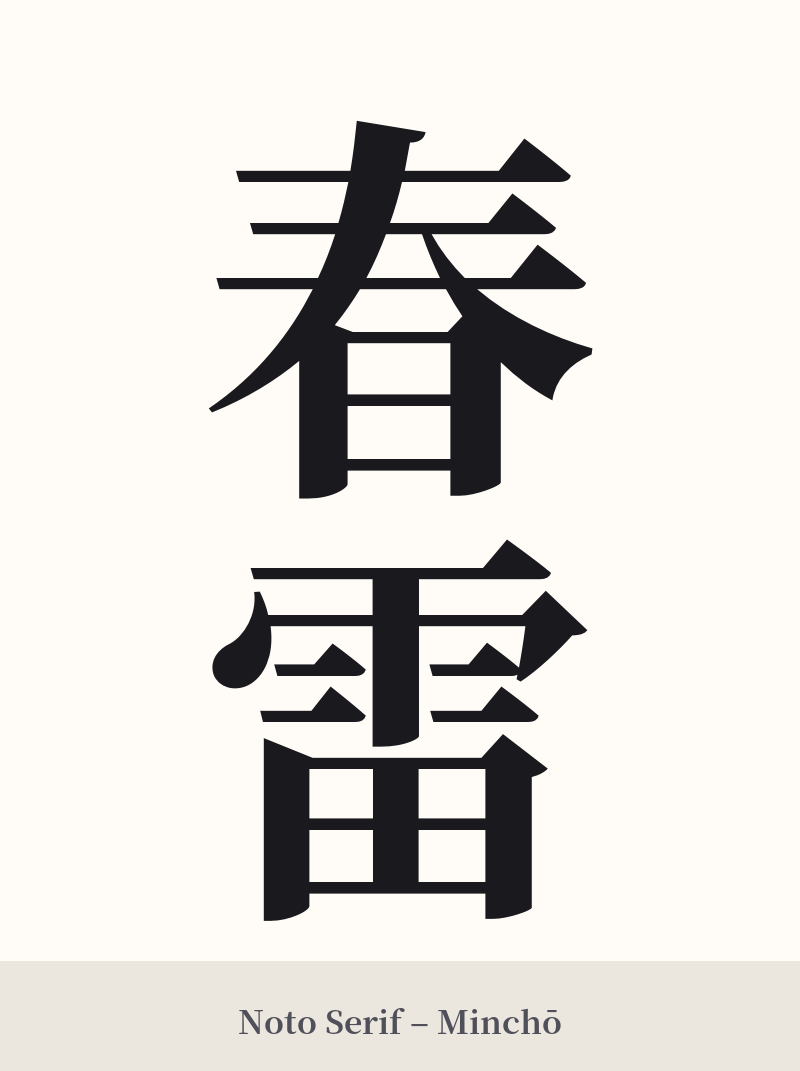
🖌️ Font Styles for 春雷
The same kanji can look dramatically different depending on the calligraphy style. Choose a font that matches the mood you want for your tattoo or design.
🎨 Tattoo Suitability
📐 Tattoo Design Guide
A tattoo of 春雷 (Shunrai) offers a blend of elegance and power, making it a versatile design choice. Its meaning lends itself to both bold and subtle interpretations.
– Placement: For a vertical design, the spine, forearm, or calf are excellent choices, allowing the characters to flow downwards. For a horizontal arrangement, the upper back, chest, or across the ribs can create a strong, grounded statement.
– Font Style: The choice of calligraphy style can dramatically alter the feeling. A dynamic, semi-cursive style like Gyosho can capture the energy and movement of thunder. For a more aggressive and powerful look, a bold, blocky Kaisho script emphasizes the strength of the characters. A flowing, cursive Sosho script can give the design an artistic, abstract feel, like a flash of lightning itself.
– Visual Elements: Consider integrating subtle imagery. You could have the characters being swept by a gust of wind carrying cherry blossom petals, visually linking the thunder to the season. Another powerful pairing is with a dragon (龍), a creature mythical associated with storms and thunder, or incorporating abstract lightning bolt motifs into the strokes of the kanji themselves.
Comments