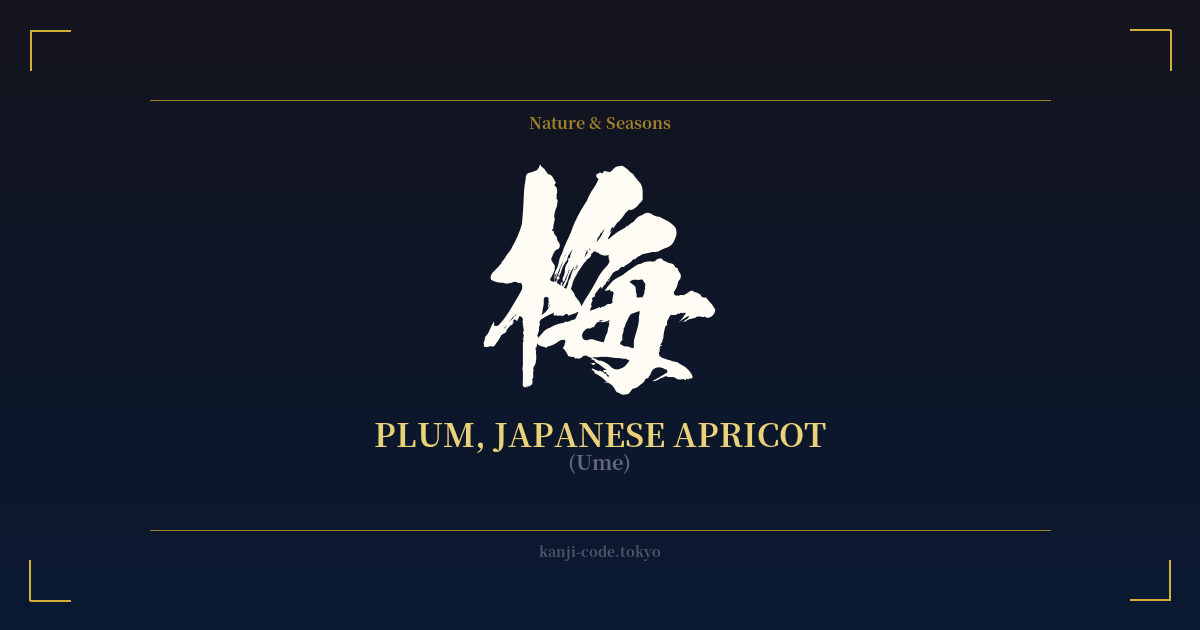
✍️ 梅 (Ume) — Cultural Context
The kanji 梅 (Ume) represents the Japanese plum or apricot, but its meaning transcends the literal fruit or flower. In Japanese culture, the Ume is a powerful and cherished symbol of resilience, elegance, and the promise of renewal. It is celebrated as the first flower to bloom, often while snow still blankets the ground, heralding the end of winter and the imminent arrival of spring.
This ability to blossom in the harshest conditions has cemented its reputation as a symbol of perseverance and fortitude. Unlike the ephemeral Sakura (cherry blossom), which represents the beautiful transience of life, the Ume embodies the strength to endure hardship and emerge with grace. Its fragrance is said to be a reward for those who brave the cold to witness its beauty.
The plum blossom holds a significant place in East Asian art and literature, having been introduced to Japan from China. It is one of the "Three Friends of Winter" (松竹梅, Shōchikubai), alongside the Pine (Matsu) and Bamboo (Take). This trio represents the virtues of longevity, flexibility, and perseverance, respectively. The Ume, blooming steadfastly in the cold, completes this powerful triumvirate of endurance.
Historically, the Ume was deeply admired by scholars and poets. The famous Heian period scholar Sugawara no Michizane, later deified as Tenjin, the god of learning, had a profound love for plum blossoms. Legend says his favorite plum tree flew from Kyoto to his place of exile in Kyushu to be with him. Because of this association, Ume blossoms are often planted at Tenjin shrines and have become symbols of academic success and protection from evil.
The influence of Ume extends into daily life and cuisine. The sour, pickled fruit, known as umeboshi, is a staple in Japanese meals and is revered for its health benefits. Umeshu, a sweet plum liqueur, is a popular traditional drink. These culinary uses ground the poetic symbolism of the Ume in the tangible, everyday experience of Japanese culture, making it a symbol that is both seen and tasted, both admired from afar and consumed for strength.
🖌️ Font Styles for 梅
The same kanji can look dramatically different depending on the calligraphy style. Choose a font that matches the mood you want for your tattoo or design.
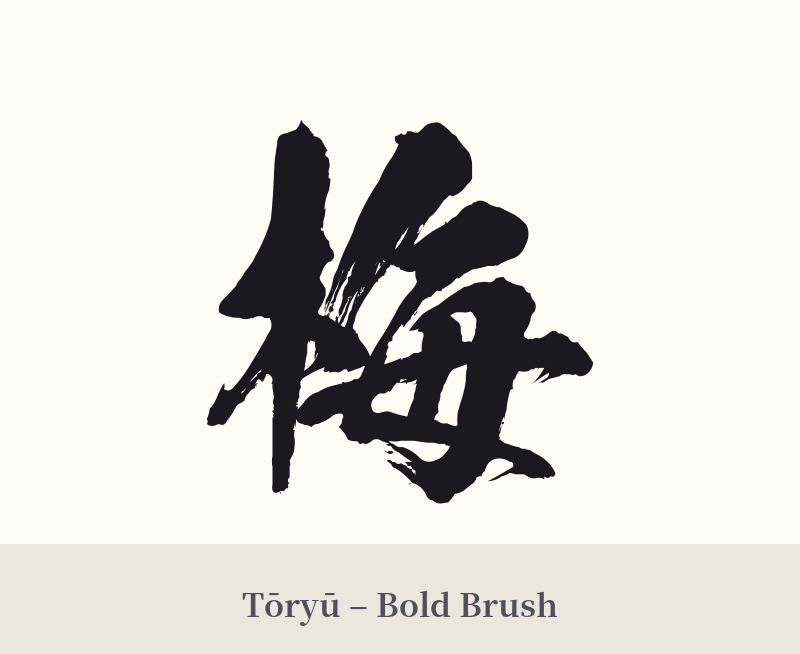
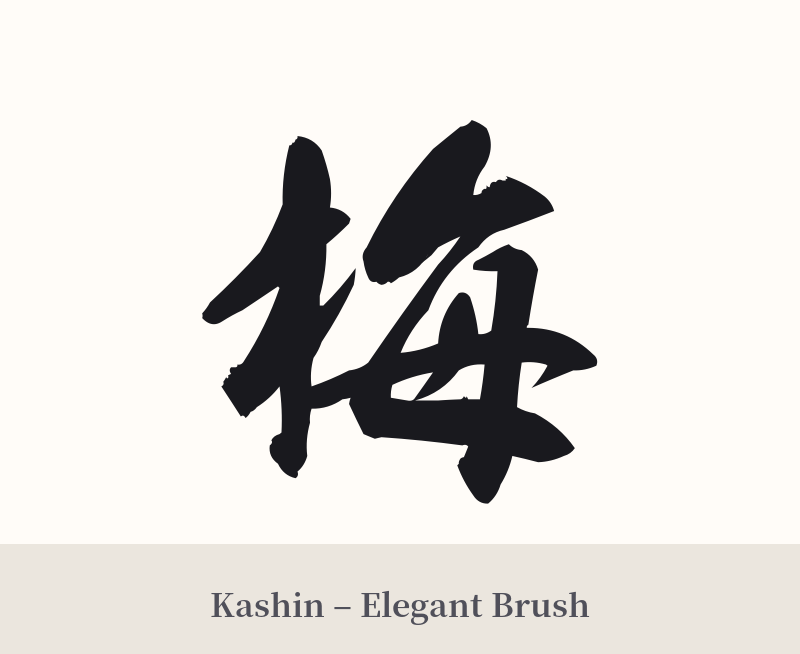
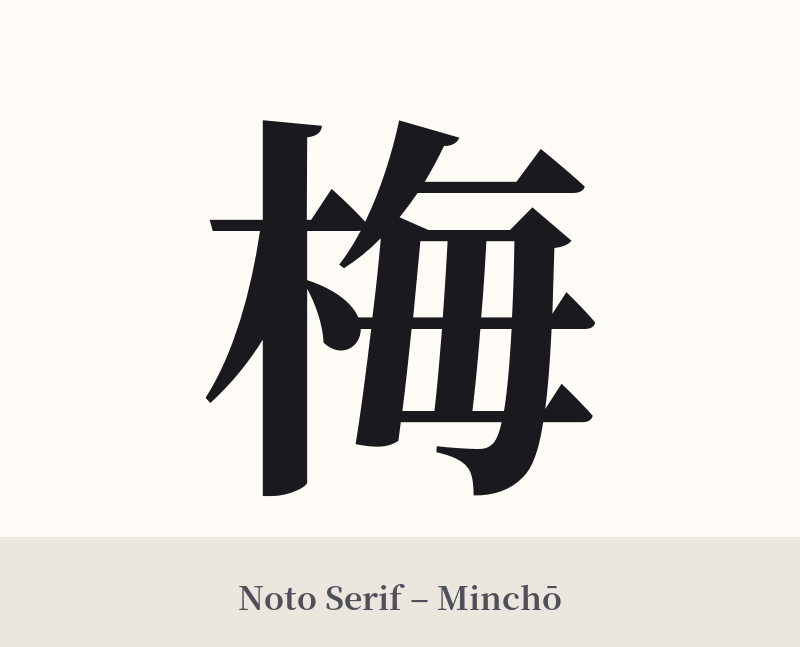
🎨 Tattoo Suitability
📐 Tattoo Design Guide
The kanji 梅 (Ume) offers wonderful versatility for a tattoo design, balancing visual elegance with profound meaning.
For placement, its vertical balance makes it suitable for areas like the forearm, the back of the neck, or the calf. A smaller rendition can be placed discreetly on the wrist or behind the ear. For a more dramatic statement, it can be integrated into a larger piece along the ribs or spine.
– Font Style: A traditional calligraphy (Shodō) style, such as Gyōsho (semi-cursive) or Kaisho (block script), emphasizes its cultural roots and artistic heritage. A minimalist, single-stroke interpretation can highlight its structural form in a modern way.
– Visual Pairings: Consider incorporating traditional artistic elements associated with Ume. A common and beautiful pairing is with a nightingale (uguisu), the bird said to sing among its branches. Adding a dusting of snow on the character or branches reinforces its symbolism of resilience and blooming in winter. A crescent moon can also create a serene and poetic scene.
Comments