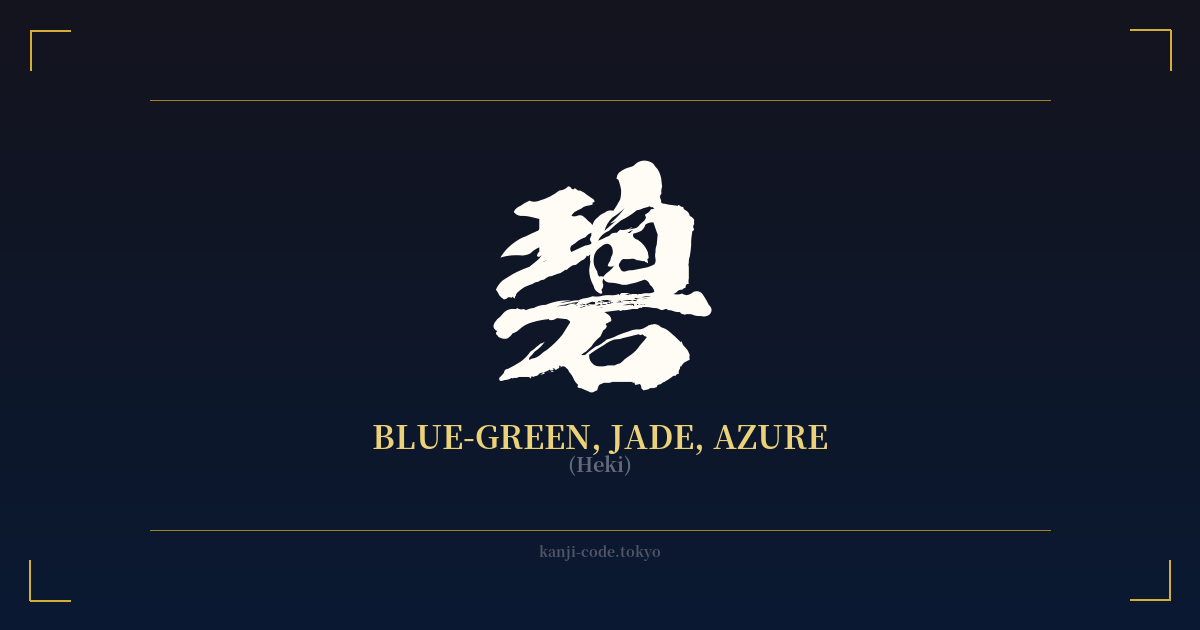
✍️ 碧 (Heki) — Cultural Context
The kanji 碧 (heki) is one of the most poetic and evocative characters in the Japanese language, capturing a specific and beautiful slice of the color spectrum. It doesn't just mean 'blue' or 'green'; it describes the deep, lustrous, and translucent quality of a color that lies somewhere between the two—think of the rich hue of a polished jade stone, the profound blue-green of a deep, clear ocean, or the vibrant color of a kingfisher's wings.
The character's origin story is written directly into its components. It is composed of 王 (king, but often a variant of 玉, meaning jade or gem), 白 (white), and 石 (stone). Together, they paint a picture of a precious, whitish-blue-green stone. This directly links 碧 to jade (翡翠, hisui), a gemstone deeply revered in East Asian cultures for its beauty, durability, and perceived spiritual properties of protection and purity.
Unlike the more common characters for blue (青, ao) and green (緑, midori), 碧 is primarily found in literary, artistic, and poetic contexts. Where 'ao' can describe anything from a blue sky to a green traffic light, 'heki' is reserved for moments of profound and striking beauty. A poet might write of the 碧空 (hekikū), an intensely clear azure sky, or the 碧海 (hekkai), a vast, deep jade-colored sea. This usage gives the character an air of elegance, tranquility, and profound natural beauty.
This specificity makes 碧 a powerful symbol. It represents not just a color, but a feeling—a sense of serene depth, clarity, and preciousness. It speaks to a pristine, almost idealized vision of nature, untouched and perfect. To choose this kanji is to choose a word that values nuance and artistry over common utility. It embodies a deep appreciation for the subtle beauty found in the natural world, from the quiet depths of the water to the endless expanse of the sky.
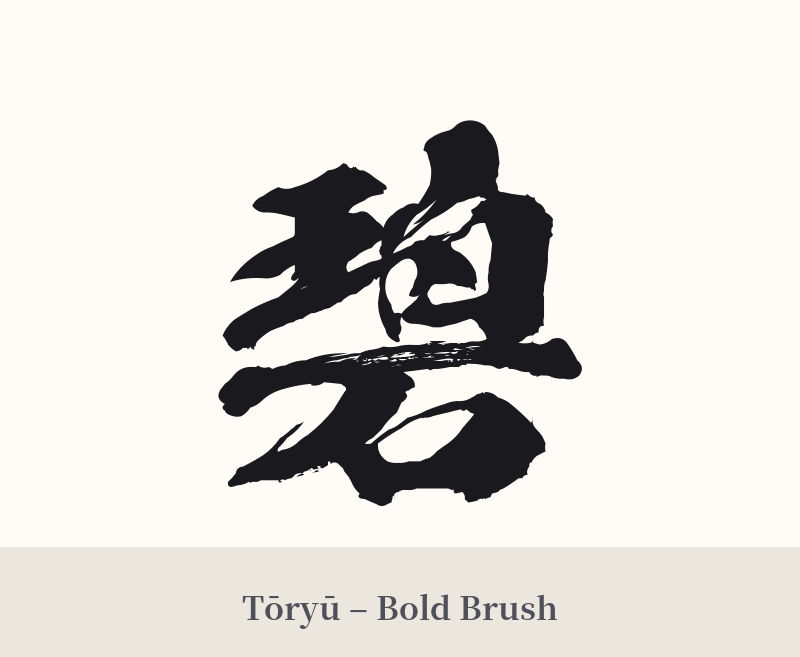
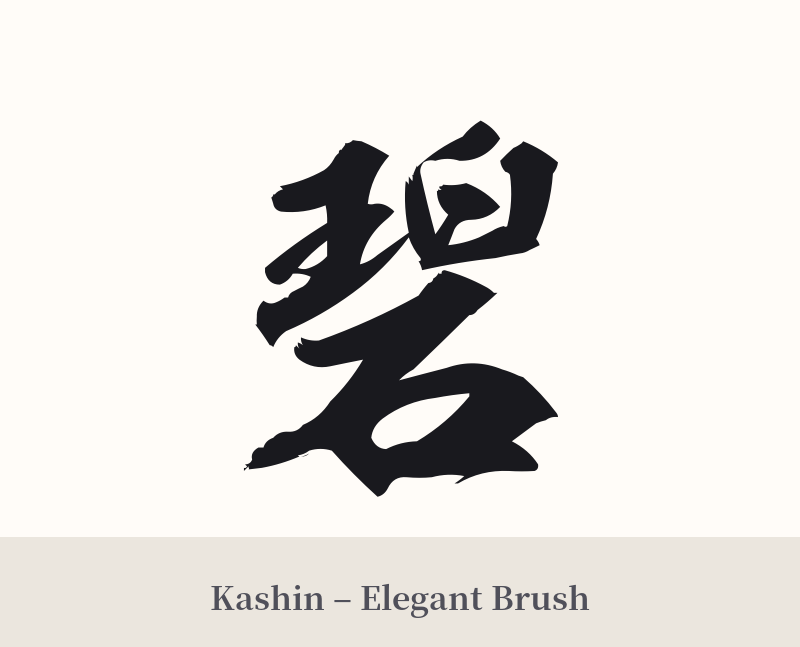
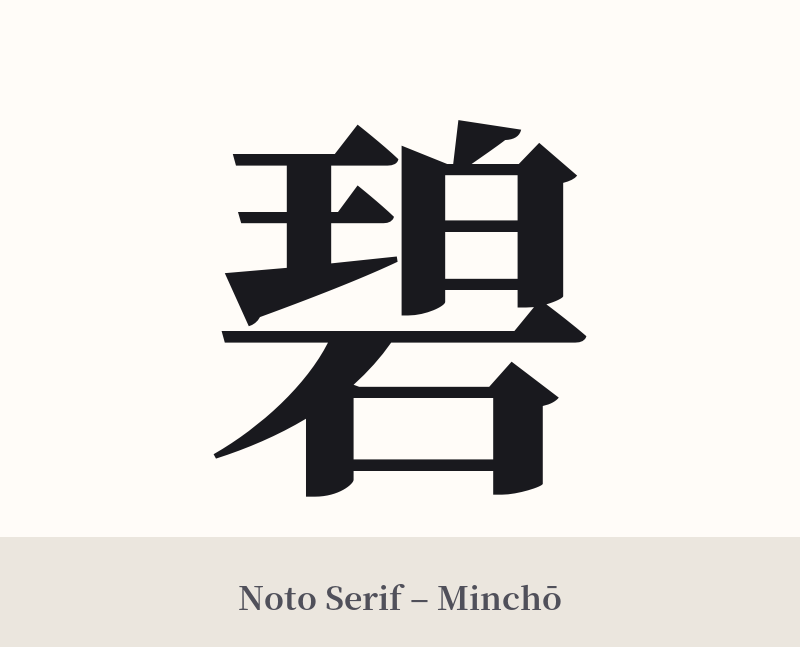
🖌️ Font Styles for 碧
The same kanji can look dramatically different depending on the calligraphy style. Choose a font that matches the mood you want for your tattoo or design.
🎨 Tattoo Suitability
📐 Tattoo Design Guide
The elegant and poetic nature of 碧 lends itself well to thoughtful tattoo designs.
– Placement: Consider areas that allow for a clean, vertical presentation, such as the inner forearm, the calf, or along the spine. For a more subtle placement, the back of the neck or behind the ear can work well, though the character's details may be lost if too small.
– Font Style: A flowing, calligraphic script like Gyosho (semi-cursive) or the more abstract Sosho (cursive) can beautifully capture the kanji's artistic and natural feel. For a more modern and crisp look, a sharp Mincho (serif) font is an excellent choice, emphasizing its gem-like precision.
– Visual Tips: To enhance the meaning, consider incorporating a watercolor background with shades of deep teal, azure, and jade green bleeding out from the character. It could also serve as the centerpiece of a larger design featuring elements it represents, such as a koi swimming in deep water, a kingfisher, or a subtle jade-colored lotus flower.
Comments