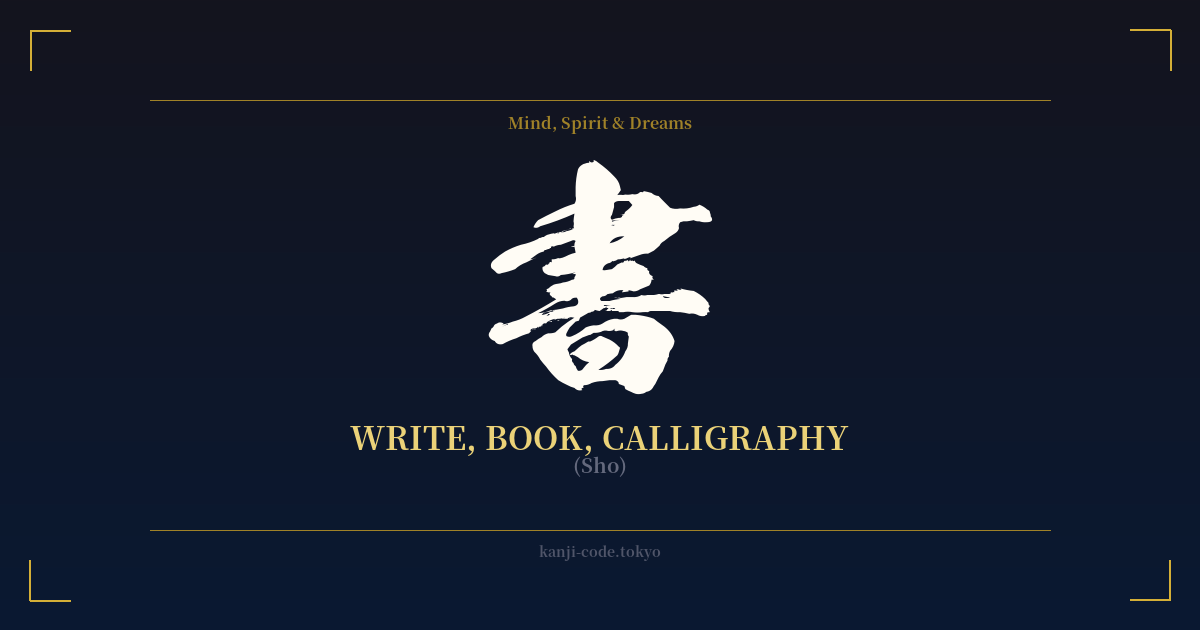
✍️ 書 (Sho) — Cultural Context
The kanji 書 (Sho) is a cornerstone of Japanese culture, embodying far more than its literal translations of 'to write' or 'book.' It represents the entire universe of the written word, from sacred scriptures and historical chronicles to personal letters and the sublime art of calligraphy.
Historically, the character’s form is a pictogram, believed to depict a hand holding a brush (聿) above a mouth or a stylized inkstone (曰), capturing the fundamental act of recording words and ideas. This simple origin story belies the immense cultural weight the character carries in Japan and across East Asia.
Writing was not merely a tool for communication; it was an art form and a path to self-cultivation. This philosophy is crystallized in the practice of Shodō (書道), 'The Way of the Brush.' Shodō is not just about producing beautiful, legible characters. It is a meditative discipline deeply intertwined with Zen Buddhism, where the calligrapher strives for a state of 'mushin' or 'no-mind.' Each stroke is a reflection of the artist's spirit at that exact moment—unrepeatable and pure. The movement of the brush, the control of the breath, and the focus required are all part of a holistic practice aimed at harmonizing mind, body, and spirit.
The tools of Shodō, known as the 'Four Treasures of the Study' (文房四宝), are the brush (筆, fude), ink (墨, sumi), paper (紙, kami), and inkstone (硯, suzuri). Each is revered, and masters spend lifetimes perfecting their use. The quality of the ink, the texture of the paper, and the spring of the brush all contribute to the final work of art.
Beyond the art gallery, 書 is a part of everyday life, forming words essential to knowledge and learning. You see it in 書店 (shoten, bookstore), 図書館 (toshokan, library), and 教科書 (kyōkasho, textbook). It signifies documents, certificates, and the very foundation of recorded knowledge.
To carry the kanji 書 is to honor the power of the written word—its ability to preserve history, convey complex emotions, and serve as a medium for artistic and spiritual expression. It is a symbol of intellect, art, and the quiet, focused discipline required to create something of lasting value.
🖌️ Font Styles for 書
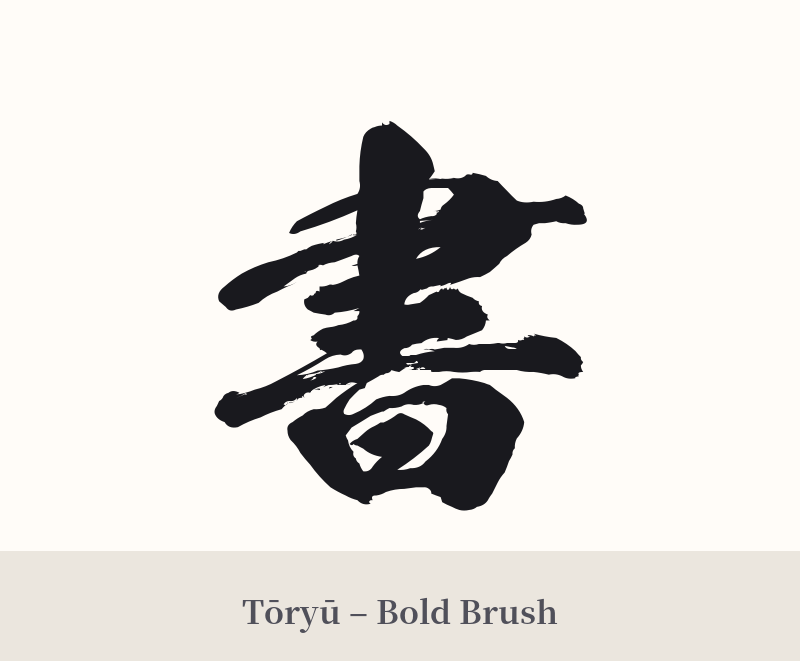
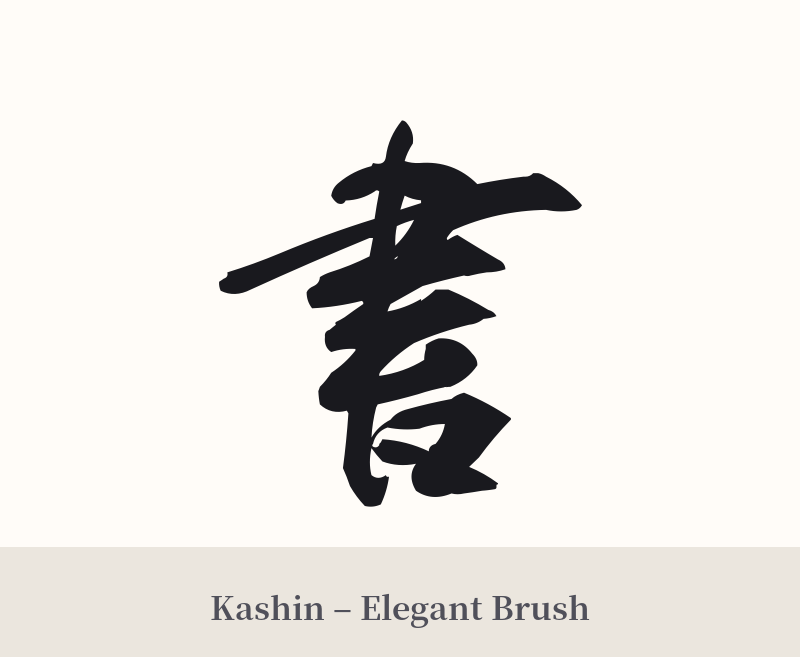
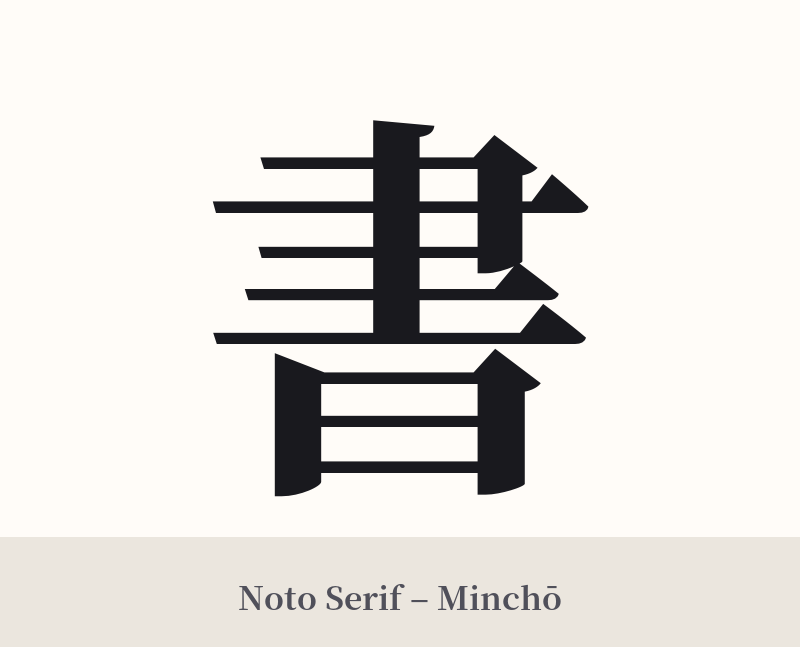
The same kanji can look dramatically different depending on the calligraphy style. Choose a font that matches the mood you want for your tattoo or design.
🎨 Tattoo Suitability
📐 Tattoo Design Guide
The kanji 書 offers wonderful versatility in tattoo design, but the style choice is paramount to its meaning.
– Font Style: The distinction between a 'printed' look and a 'hand-brushed' look is crucial. For an artistic, spiritual meaning, a calligraphic style like Gyōsho (semi-cursive) or Sōsho (fully cursive) is ideal. These styles emphasize movement and emotion. For a meaning tied to knowledge or literature, a more formal Kaisho (block) style can work, but avoid default computer fonts which can look cheap.
– Placement: This character's vertical balance makes it well-suited for the forearm, calf, or along the spine. It also works beautifully on the back of the shoulder, where it can be rendered with dynamic, sweeping brush strokes.
– Visual Embellishments: Consider adding elements that enhance the calligraphic theme. A subtle splash of black or red ink, as if from the brush, can add energy. Placing the kanji within an Ensō (Zen circle) reinforces the meditative aspect. Adding a small, red artist's seal (hanko) design near the character is a classic touch that completes the 'work of art' feel.
Comments