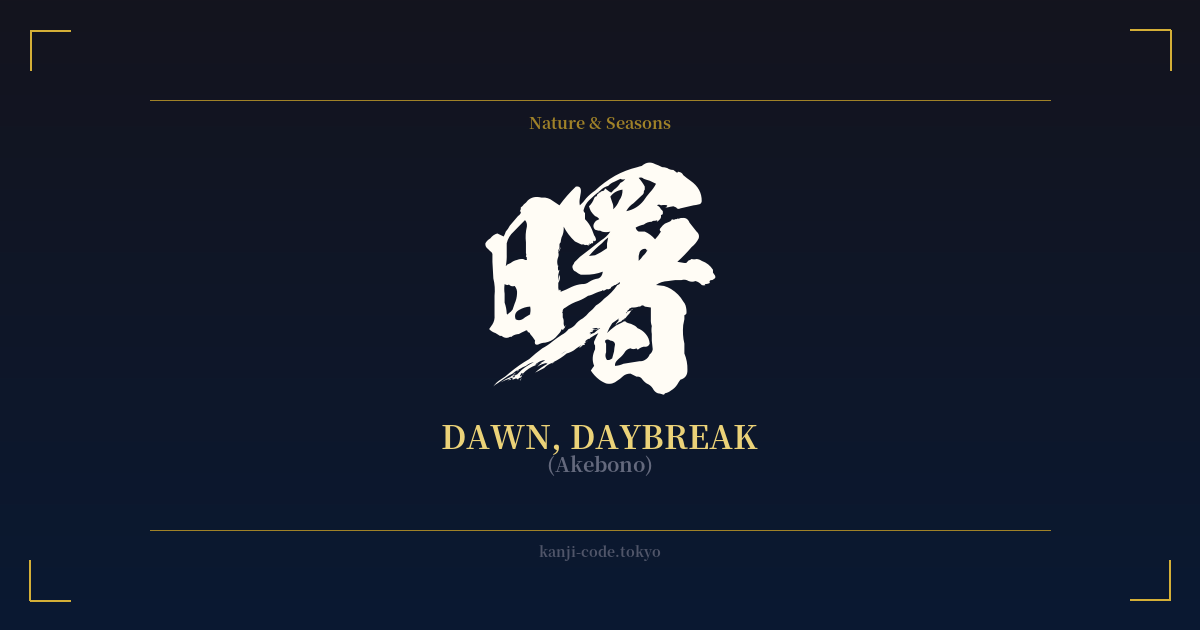
✍️ 曙 (Akebono) — Cultural Context
The kanji 曙 (Akebono) represents the specific, magical moment of dawn—not just the morning, but the very instance light first breaks over the horizon, chasing away the night. It's a character steeped in poetic and aesthetic beauty, capturing a fleeting yet powerful transition.
Its most famous cultural touchstone comes from the opening lines of Sei Shōnagon's classic Heian-era work, The Pillow Book (枕草子). She writes, "In spring, it is the dawn that is most beautiful" (春はあけぼの, Haru wa akebono). This single phrase has cemented Akebono in the Japanese cultural consciousness as a symbol of peak aesthetic beauty, a moment of quiet, sublime perfection. It evokes the image of the sky slowly lighting up, the mountain outlines becoming sharp against a pale, colorful backdrop. It's a moment of pure, tranquil observation.
Metaphorically, Akebono is a potent symbol for new beginnings, hope, and renewal. It represents the end of a period of darkness and the start of something fresh and full of potential. This makes it a popular concept in art, literature, and personal philosophy. It’s the promise that no matter how long or dark the night, the sun will rise again. This symbolism extends to overcoming hardship, embarking on a new life chapter, or celebrating a personal breakthrough.
In modern times, the name Akebono gained international fame through the sumo grand champion (yokozuna) Akebono Tarō. As the first non-Japanese born wrestler to achieve this highest rank, his name became synonymous with breaking barriers and achieving unprecedented success. His powerful presence brought a new dimension to the word, linking the gentle beauty of dawn with immense strength and pioneering spirit.
Structurally, the kanji tells a story. It combines 日 (sun) with 署 (which can relate to gathering or being stationed). One can imagine the sun arriving at its designated post to begin the duties of the day, bringing light and order to the world. This distinguishes it from 朝 (asa), which refers to the broader morning period. Akebono is the specific, dramatic event of daybreak itself.
🖌️ Font Styles for 曙
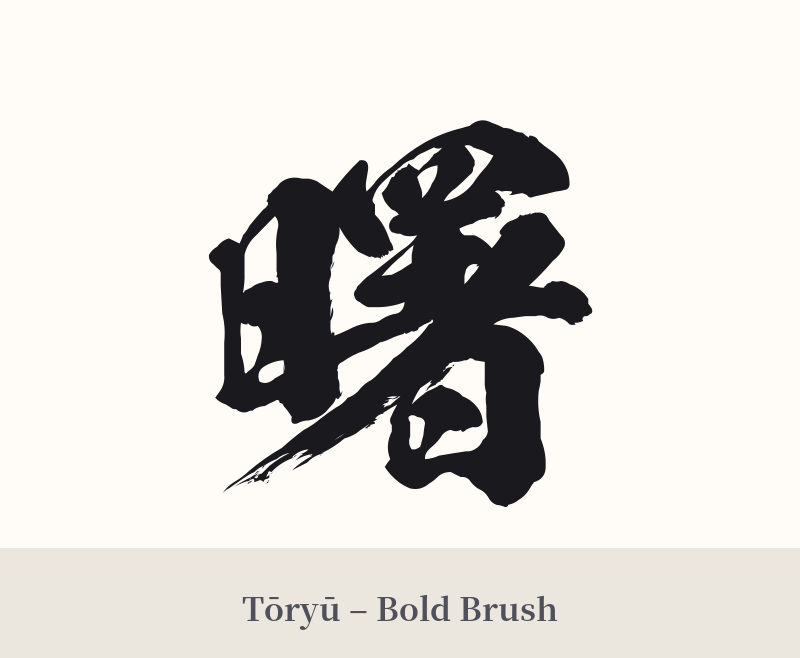
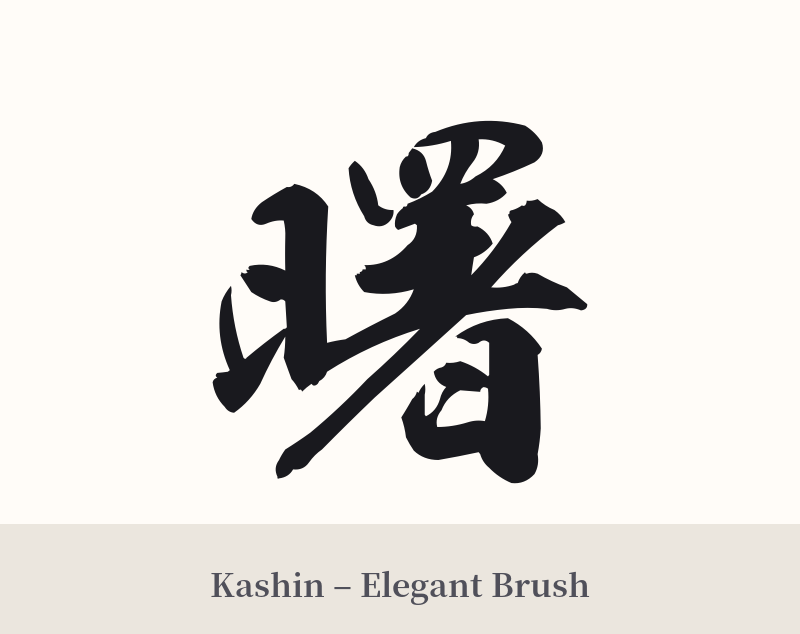
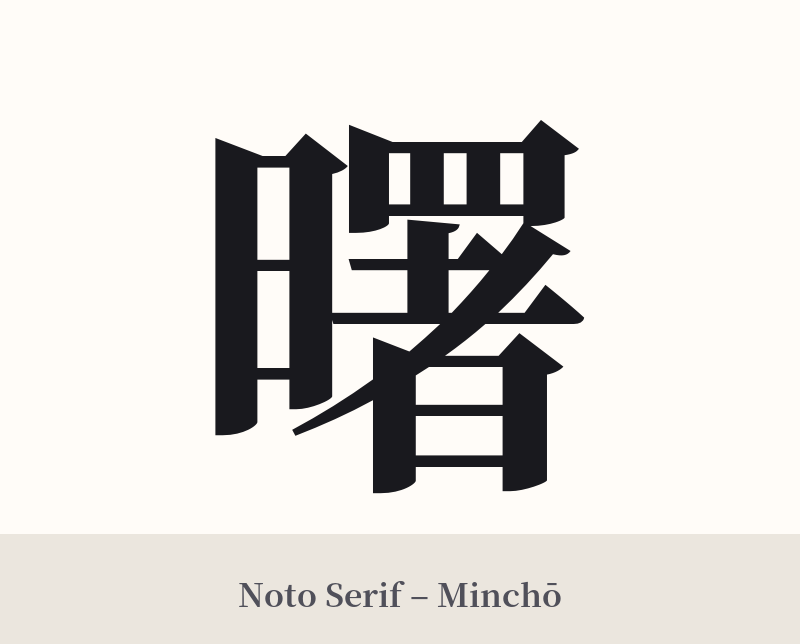
The same kanji can look dramatically different depending on the calligraphy style. Choose a font that matches the mood you want for your tattoo or design.
🎨 Tattoo Suitability
📐 Tattoo Design Guide
The kanji 曙 (Akebono) offers wonderful flexibility for a tattoo design, balancing elegance and substance.
– Placement: For a symbol of new beginnings, prominent placements like the inner forearm, the chest over the heart, or the back of the neck work well. It can serve as a personal, daily reminder of hope. A larger vertical placement along the spine or ribs can also be very striking.
– Font Style: A flowing, semi-cursive calligraphy style (gyōsho) can beautifully capture the gentle, unfolding nature of dawn. For a bolder statement reflecting its association with strength (like the sumo champion), a strong, clear block script (kaisho) or a classic Mincho font is an excellent choice.
– Visual Tips: Consider incorporating subtle colors to enhance the theme. A watercolor effect with soft pinks, oranges, and purples bleeding from the character can evoke a sunrise. Alternatively, placing the kanji over a simple enso circle can reinforce the idea of enlightenment and the cyclical nature of day and night. For a minimalist approach, a simple, clean black ink design is timeless and powerful on its own.
Comments