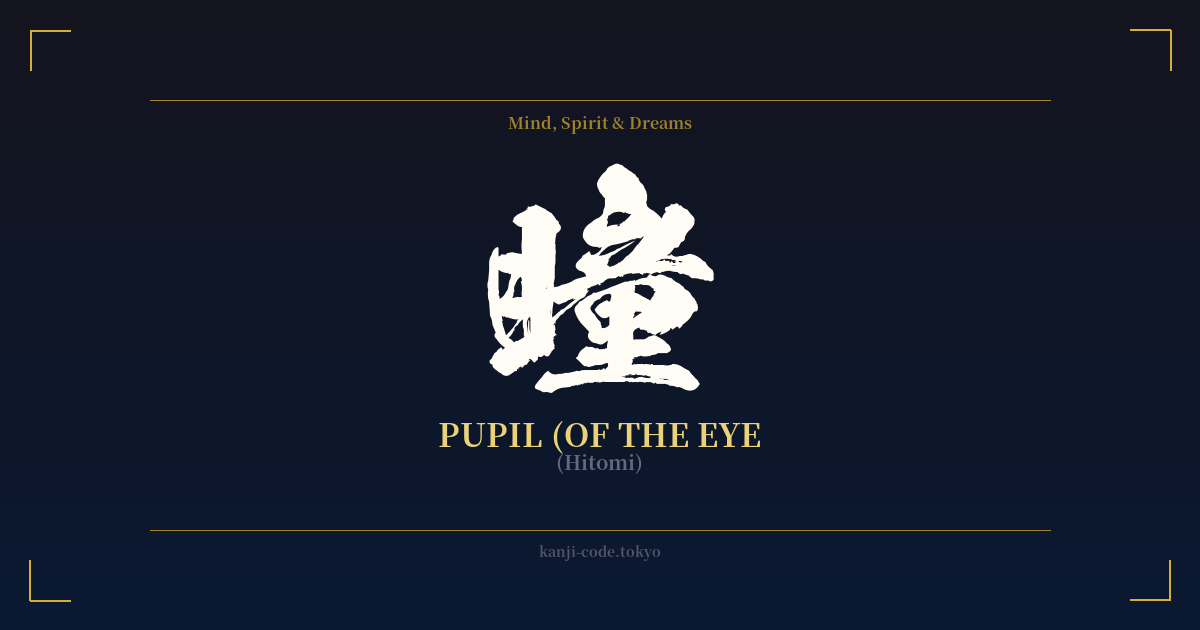
✍️ 瞳 (Hitomi) — Cultural Context
The kanji 瞳 (hitomi) literally translates to the pupil of the eye. However, its significance in Japanese culture extends far beyond simple anatomy, delving deep into the realms of poetry, emotion, and identity. It is one of the most evocative and intimate characters related to the human body.
The character's construction tells a beautiful story. It is composed of the radical 目 (me), meaning 'eye,' on the left, and the character 童 (dō, wabe), meaning 'child,' on the right. This etymology is thought to originate from the tiny reflection of oneself that can be seen in another person's pupil—a 'little child' in their eye. This single image captures a sense of intimacy, connection, and seeing the pure, true self in another.
In Japanese literature, art, and modern media like anime and manga, the eyes are famously expressive, and 'hitomi' is the key to that expression. It is the focal point that reveals a character's true feelings, intentions, or inner turmoil. A character with 'sharp hitomi' is perceptive and intense, while one with 'clear hitomi' is seen as pure and innocent. The state of the pupil—dilated in excitement or constricted in fear—is a powerful narrative tool, and this kanji embodies that narrative potential.
Beyond its poetic use, 瞳 is also a very popular female given name in Japan, 'Hitomi'. As a name, it carries connotations of beauty, clarity, and depth. It evokes the image of someone with captivating eyes and a perceptive nature. This common usage adds a layer of gentle, human warmth to the character, making it feel personal and relatable.
While 目 (me) is the general term for 'eye,' 瞳 (hitomi) is used when the focus is on the emotional or spiritual aspect of seeing. You look with your 'me,' but you connect through your 'hitomi.' It represents the gaze, the portal through which one's soul (魂, tamashii) is perceived. This distinction is crucial; choosing 'hitomi' over 'me' is a deliberate choice to emphasize depth, connection, and the unseen world of emotion that lies behind the physical act of sight.
🖌️ Font Styles for 瞳
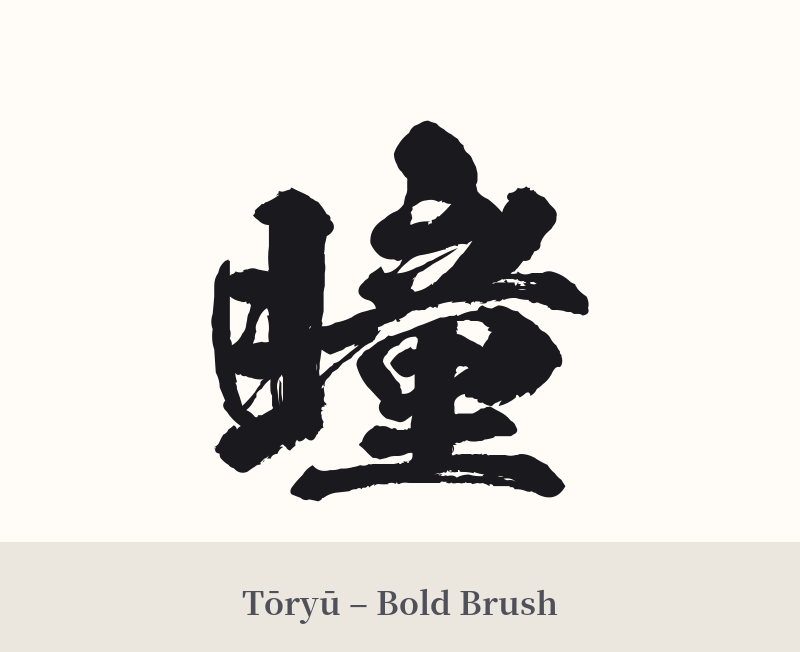
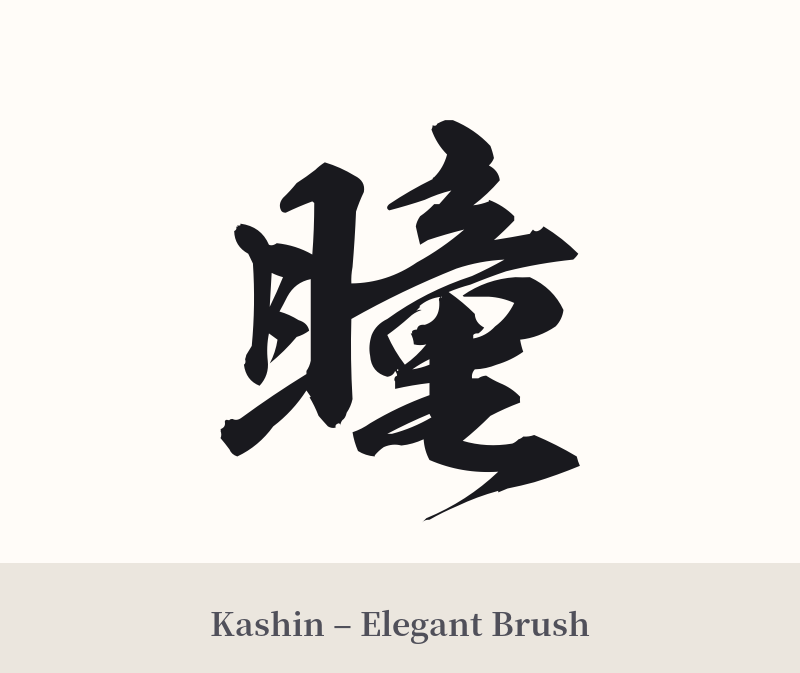
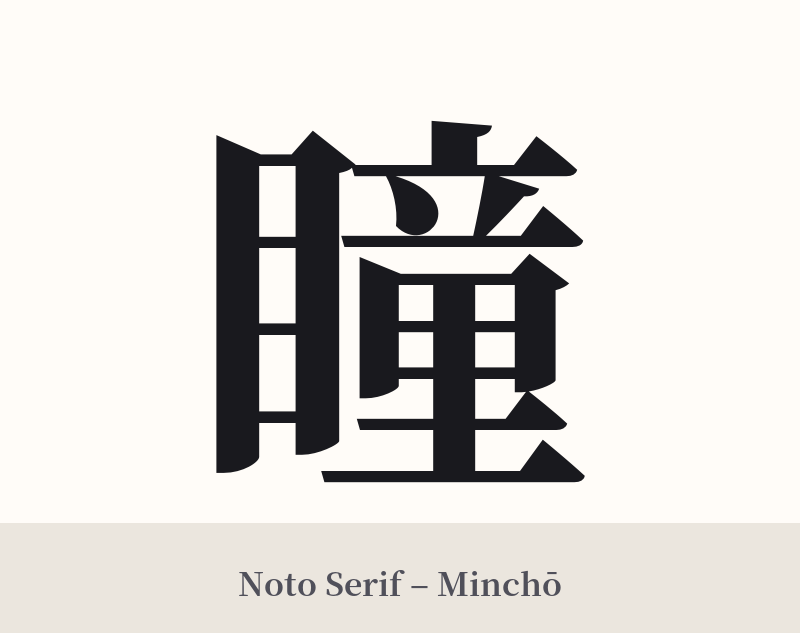
The same kanji can look dramatically different depending on the calligraphy style. Choose a font that matches the mood you want for your tattoo or design.
🎨 Tattoo Suitability
📐 Tattoo Design Guide
For a tattoo, 瞳 (hitomi) offers a blend of elegance and complexity. Its detailed structure demands careful consideration of placement and style.
– Placement: Choose areas with enough space to preserve the character's detail. The inner forearm, calf, shoulder blade, or upper back are excellent choices. These spots provide a flat, stable canvas that minimizes distortion and allows the artist to work with precision.
– Font Style: A classic, crisp Mincho (serif) style will emphasize the character's traditional beauty and intricate balance. For a more modern feel, a bold Gothic (sans-serif) font can work well, giving it a strong presence. For those seeking an artistic and flowing design, a Gyosho (semi-cursive) script can capture the poetic essence of 'hitomi,' but this requires a tattooist with experience in Japanese calligraphy to maintain legibility.
– Visual Elements: While 瞳 is powerful enough to stand alone, it can be beautifully integrated with other visuals. Consider placing it within a larger design of an iris, or having subtle light rays emanating from it. A reflection of a meaningful symbol (like a lotus or a crescent moon) could be artistically implied within the character itself, playing on its 'child in the eye' origin.
Comments