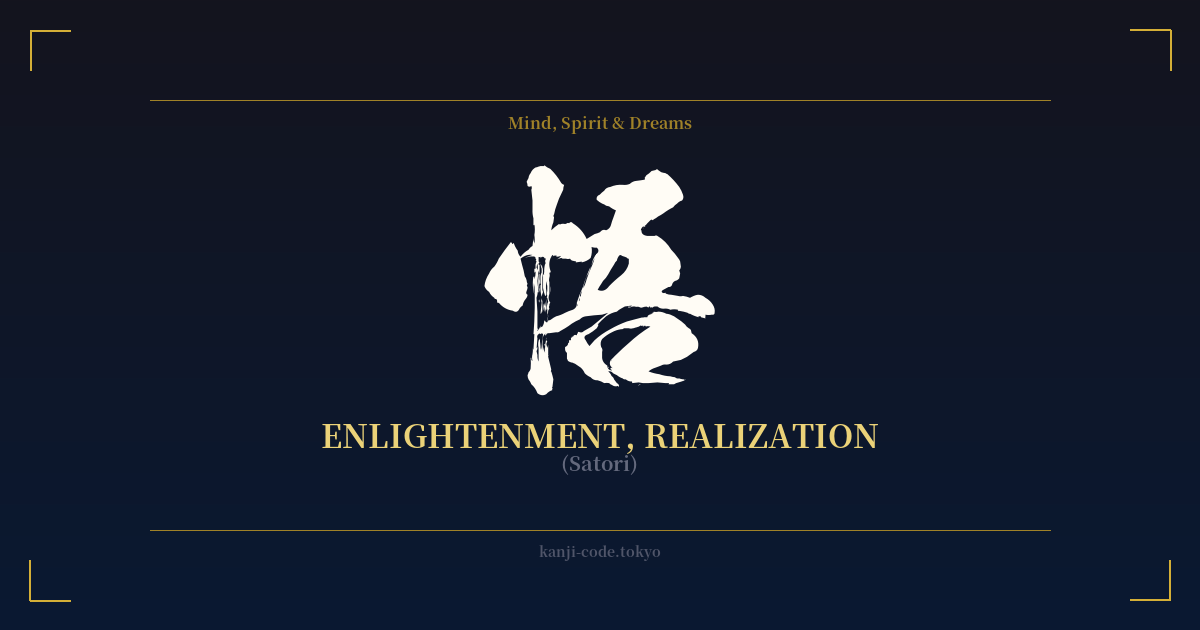
✍️ 悟 (Satori) — Cultural Context
The kanji 悟, read as 'Satori', is one of the most profound and evocative characters in the Japanese language. It encapsulates a concept central to Zen Buddhism: a moment of sudden, intuitive enlightenment or awakening. This is not an understanding arrived at through logic or study, but a direct, experiential flash of insight into the true nature of reality.
The character itself offers a glimpse into its meaning. It is composed of two radicals: on the left is 心 (shin or kokoro), meaning 'heart,' 'mind,' or 'spirit.' On the right is 吾 (go), meaning 'I' or 'oneself.' Together, they create a beautiful visual poem: the heart-mind coming to understand itself. It is an internal journey culminating in a profound realization.
Satori is often described as 'seeing things as they are.' It's the lifting of a veil of illusion, ego, and preconceived notions. While often associated with the ultimate goal of Buddhist practice, the term can also describe smaller, yet still significant, moments of deep insight that change one's perspective permanently. It's the ultimate 'aha!' moment, but one that resonates on a spiritual level.
In the context of Zen, Satori is often discussed alongside 'Kenshō' (見性), which means 'seeing one's true nature.' The two are frequently used interchangeably, though some traditions distinguish Kenshō as the initial glimpse of enlightenment, while Satori may refer to a deeper or more lasting state of awakening. Regardless, both point to a direct experience rather than intellectual knowledge.
The concept of Satori extends beyond the monastery. In the world of Japanese martial arts (budō), reaching a state akin to Satori is crucial. A warrior who achieves 'mushin' (無心), or 'no-mind,' can react spontaneously and perfectly, unhindered by thought or fear. This state of heightened awareness and instinct is a form of Satori in action.
While its roots are deeply spiritual, 悟 can also be used in more mundane contexts in modern Japanese to mean 'to realize,' 'to perceive,' or 'to understand.' For example, you might have a Satori moment when you finally grasp a difficult concept. However, even in everyday use, it retains a nuance of sudden, personal comprehension that goes beyond simple learning.
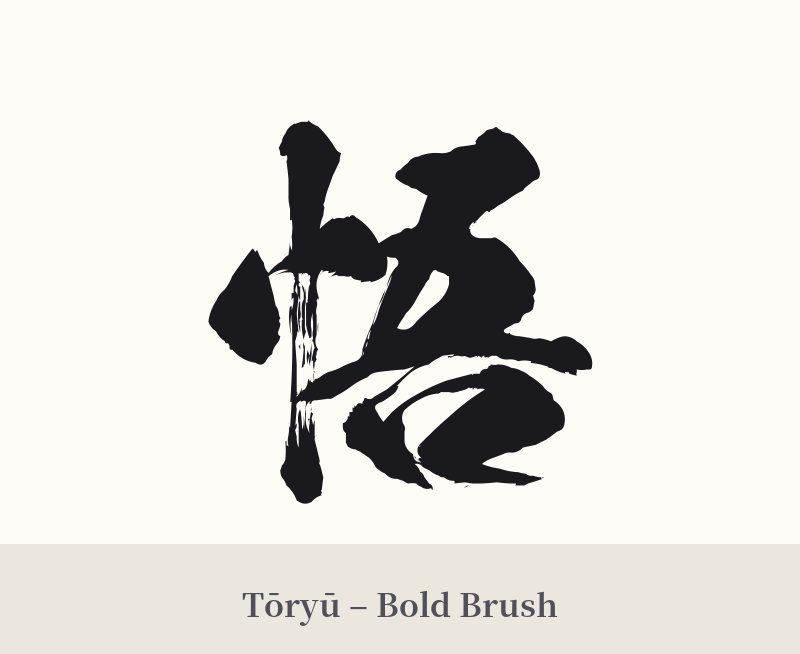
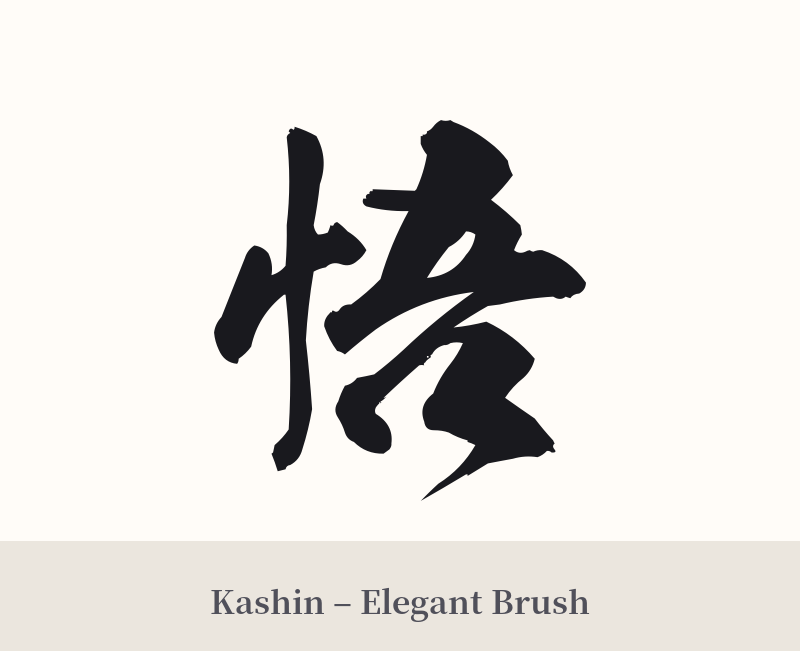
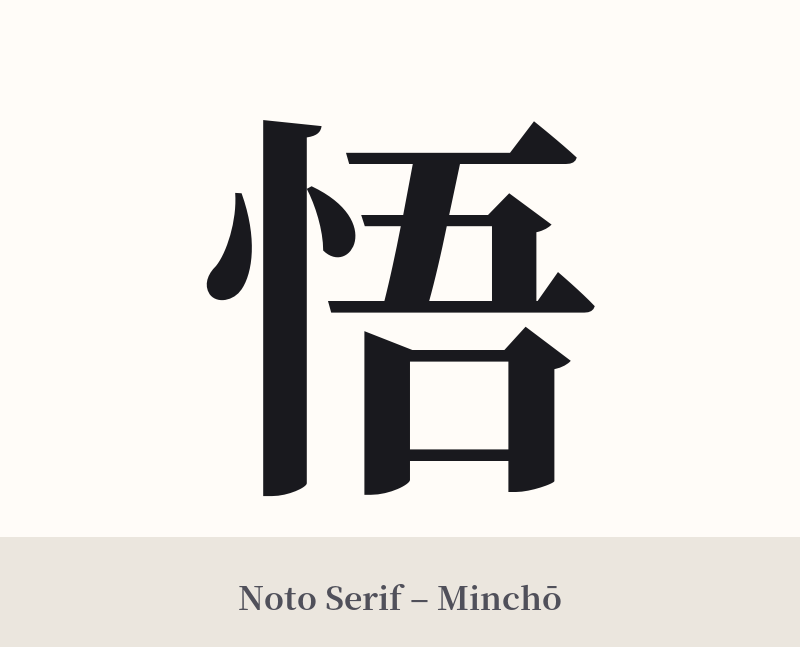
🖌️ Font Styles for 悟
The same kanji can look dramatically different depending on the calligraphy style. Choose a font that matches the mood you want for your tattoo or design.
🎨 Tattoo Suitability
📐 Tattoo Design Guide
The kanji 悟 (Satori) is a powerful choice for a tattoo, symbolizing a personal journey of awakening. Its balanced form works well in various styles and placements.
– Placement: Consider placing it where it feels most personal. The nape of the neck, symbolizing a private realization; the inner forearm, as a daily reminder; or over the chest, connecting to the 'heart-mind' origin of the character are all excellent choices.
– Font Style: A dynamic, flowing calligraphy style (shodō) can capture the 'sudden flash' nature of enlightenment. For a more serene and meditative feel, a clean and precise Kaisho or Mincho font style would be very fitting.
– Visual Complements: While 悟 stands powerfully on its own, it can be beautifully integrated with other Zen symbols. Pairing it with an Enso (the Zen circle of enlightenment) or a lotus flower (symbolizing purity and rising from the mud) can create a richer narrative within the design.
Comments