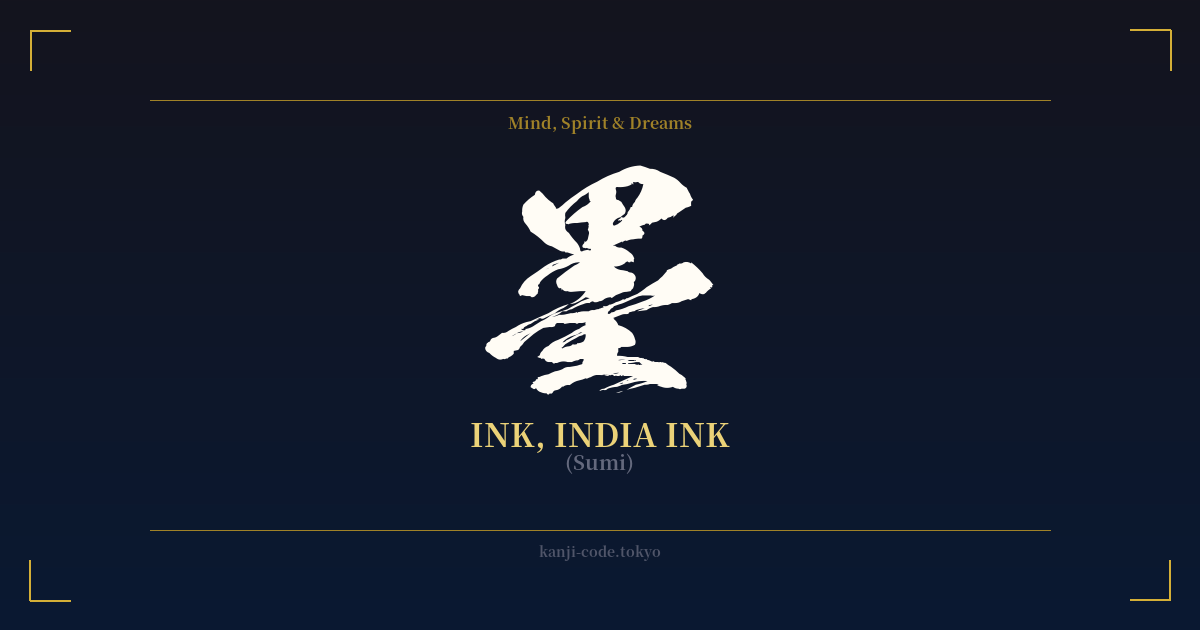
✍️ 墨 (Sumi) — Cultural Context
The kanji 墨 (Sumi) is far more than just a word for 'ink'; it is a vessel of Japanese culture, art, and philosophy. At its core, it represents the solid black ink stick, one of the Four Treasures of the Study (文房四宝, Bunbō Shihō), alongside the brush (筆, fude), paper (紙, kami), and inkstone (硯, suzuri). The character's etymology itself is poetic: the top component is 黒 (kuro), meaning 'black,' and the bottom is 土 (tsuchi), meaning 'earth' or 'soil.' This beautifully illustrates its origin as black soot (from burnt pine or oil) mixed with animal glue and pressed into a solid stick, a substance derived from the earth and fire.
The process of preparing the ink is a meditative ritual in itself. Before an artist or calligrapher begins their work, they place the sumi stick on the inkstone with a small amount of water. They then grind the stick in slow, deliberate circles. This act, known as 'sumi o suru' (墨を磨る), is a moment of calm and focus, a way to clear the mind and prepare the spirit for the creative act to follow. The quality of the ink—its depth, viscosity, and even its fragrance—is controlled by the artist's hand, making the preparation an integral part of the art.
In the world of Japanese art, sumi is the lifeblood of two major forms: Shodō (書道), the way of calligraphy, and Sumi-e (水墨画), ink wash painting. In Shodō, the strokes are not just letters but expressions of the artist's energy and spirit (気, ki). The nuances of a single character drawn in sumi can convey power, grace, anger, or tranquility. Similarly, Sumi-e uses varying concentrations of black ink to create entire landscapes and scenes. This art form celebrates the concept of 'notan' (濃淡), the interplay of light and dark, and 'yohaku no bi' (余白の美), the beauty of empty space. The black ink defines the form, but the white paper gives it breath and context.
Beyond the scroll and canvas, sumi holds a powerful place in the world of Irezumi, traditional Japanese tattooing. The term 'sumi' is often used to describe the black and grey work that defines this style. The ink, historically made from the same soot, was pricked into the skin to create the permanent, flowing designs of dragons, koi fish, and mythological heroes. To 'have sumi' in your skin is a statement of permanence and commitment, linking the bearer to a rich and often misunderstood artistic lineage. Thus, the single character 墨 carries the weight of creation, from a meditative moment of grinding ink to the permanent declaration of a tattoo.
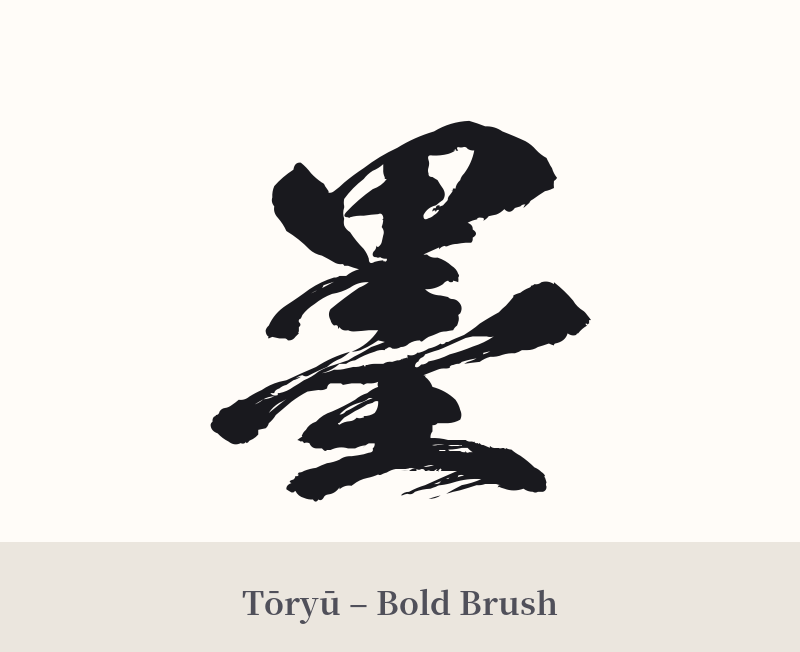
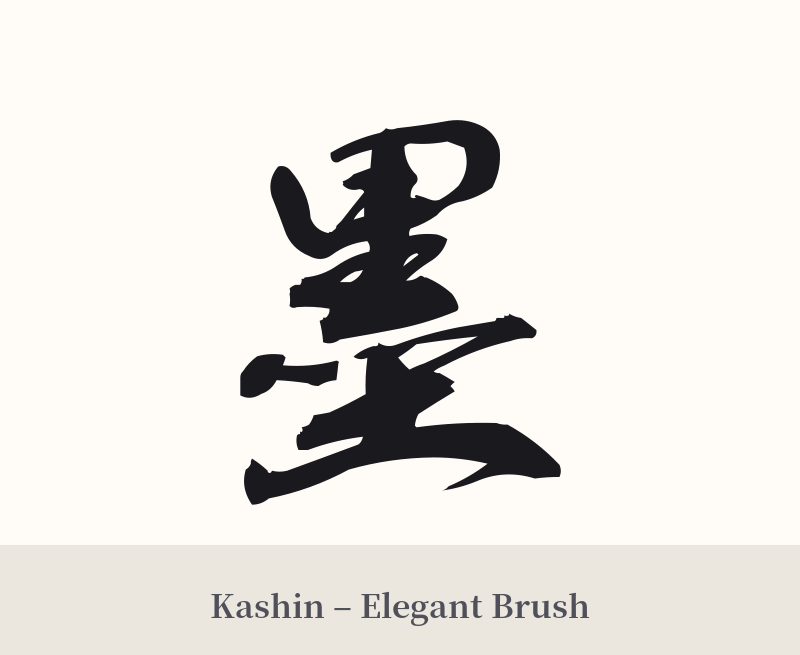
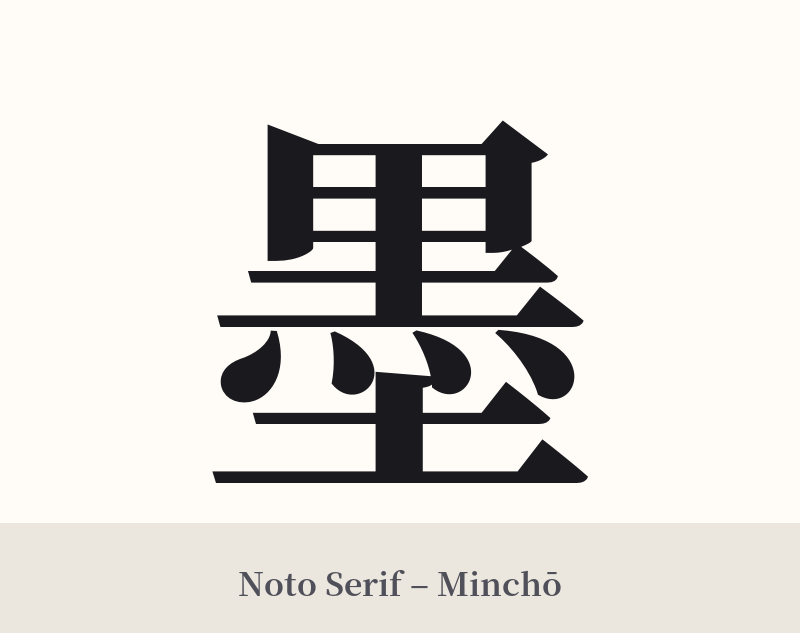
🖌️ Font Styles for 墨
The same kanji can look dramatically different depending on the calligraphy style. Choose a font that matches the mood you want for your tattoo or design.
🎨 Tattoo Suitability
📐 Tattoo Design Guide
A tattoo of 墨 (Sumi) is a tribute to art, tradition, and the creative process. Its balanced form works well in various styles and placements.
– Placement: The forearm is an excellent choice, allowing the character to be seen and appreciated. The calf or back of the shoulder also provides a great canvas. For a larger, more impactful piece, consider the center of the back or the ribcage.
– Font Style: The style of the calligraphy can dramatically alter the feeling. A bold, blocky Kaisho (楷書) style gives it a sense of stability and strength. For a more artistic and fluid feel, consider a semi-cursive Gyōsho (行書) or a highly expressive, abstract Sōsho (草書) style.
– Visual Tips: Consider incorporating elements related to the ink itself. A popular design is to have the kanji appear as if freshly painted, with a few artistic 'splatters' or a 'brushstroke' tail. Pairing it with a red artist's seal (hanko), either real or stylized, adds a beautiful, traditional accent. It can also serve as the foundational element for a larger Sumi-e (ink wash) style tattoo, with the character perhaps dissolving into a dragon, koi, or bamboo stalk.
Comments