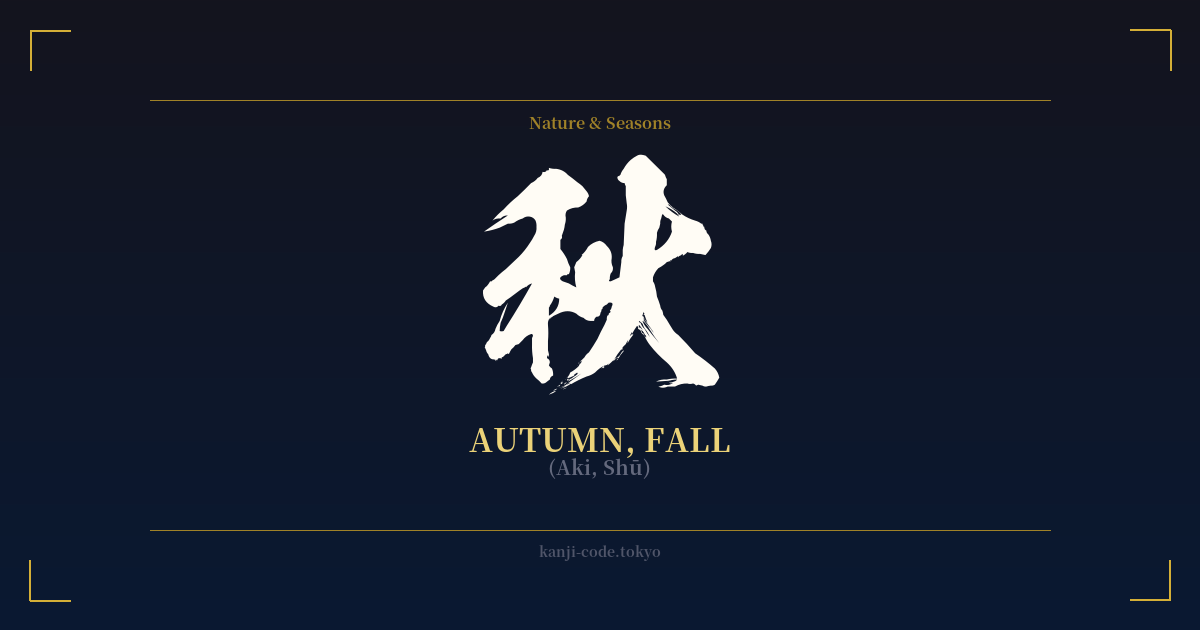
✍️ 秋 (Aki, Shū) — Cultural Context
In Japan, the four seasons are not just markers of time but cornerstones of culture, art, and daily life. Among them, 秋 (Aki), or Autumn, holds a particularly poignant and cherished place in the national consciousness. It is a season of profound duality, representing both the abundance of the harvest and the beautiful, melancholic decay that precedes winter.
The kanji itself tells a story. It is a combination of two radicals: 禾 (nogi-hen) on the left, which represents grain, specifically a stalk of rice, and 火 (hi) on the right, meaning fire. This evocative pairing has been interpreted in several ways: the golden color of ripe grain fields resembling fire, the burning of stubble after the harvest to enrich the soil, or the 'fire' of the brilliant red and orange autumn leaves.
This connection to nature is most famously celebrated in the tradition of 紅葉狩り (momijigari), or 'autumn leaf hunting'. People travel across the country to witness the spectacular transformation of maple and ginkgo trees. This activity is not merely a sightseeing tour; it is a deep, aesthetic appreciation for transient beauty, a core Japanese value. The fleeting peak of the autumn colors is a physical manifestation of the concept of 物の哀れ (mono no aware) – a gentle, wistful sadness for the impermanence of all things.
Autumn is also a time of bounty. It is known as a season for hearty appetites (食欲の秋, shokuyoku no aki), when seasonal delicacies like persimmons, chestnuts, sweet potatoes, and Pacific saury are enjoyed. This celebration of harvest connects the season to feelings of gratitude, abundance, and communal gathering.
Beyond food and foliage, autumn has inspired centuries of Japanese art and literature. It is a classic seasonal theme (kigo) in haiku poetry, often used to evoke feelings of loneliness, nostalgia, or quiet contemplation under the harvest moon (月見, tsukimi). The crisp, cool air is also said to be conducive to concentration, leading to the phrases 'autumn for reading' (読書の秋, dokusho no aki) and 'autumn for sports' (スポーツの秋, supōtsu no aki). Thus, 秋 is more than just a season; it is a rich cultural symbol representing the cycle of life, the beauty in passing moments, and a time for both celebration and reflection.
🖌️ Font Styles for 秋
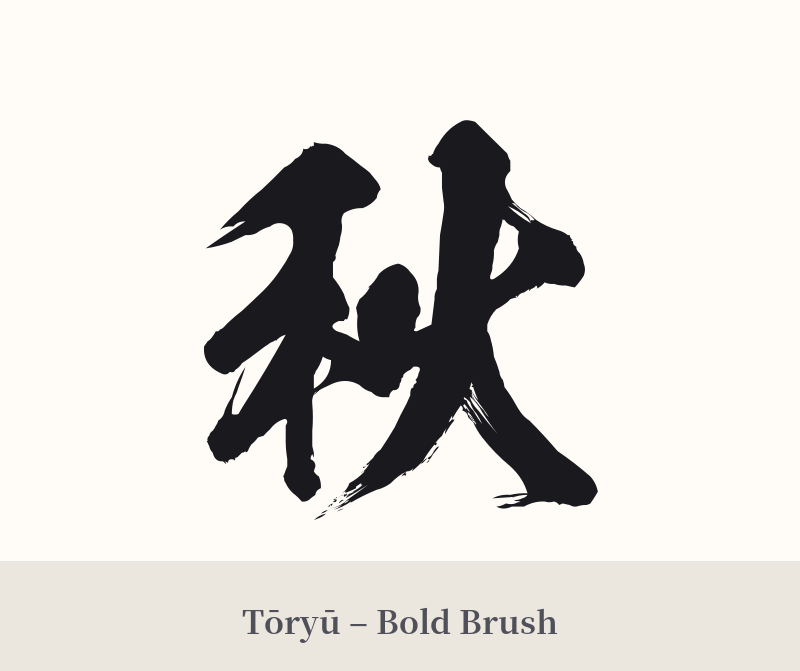
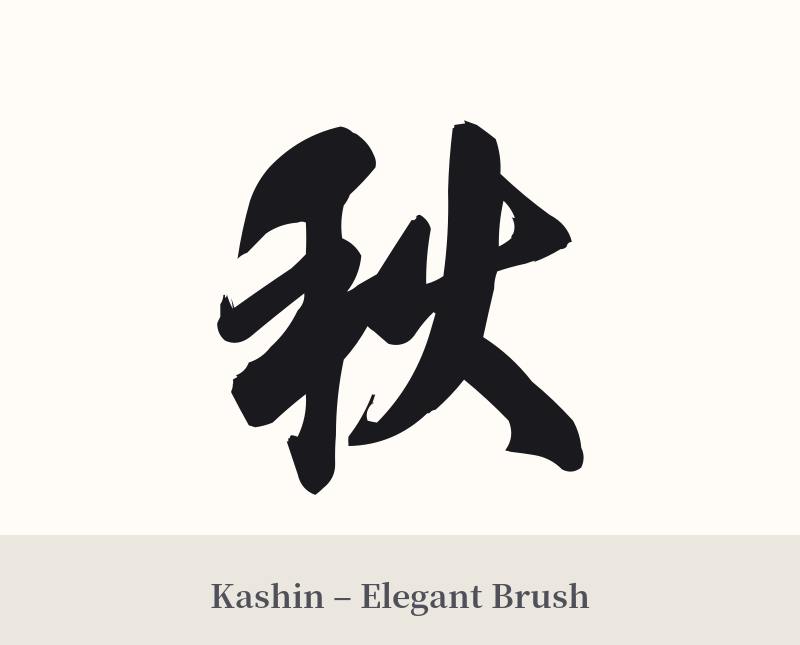
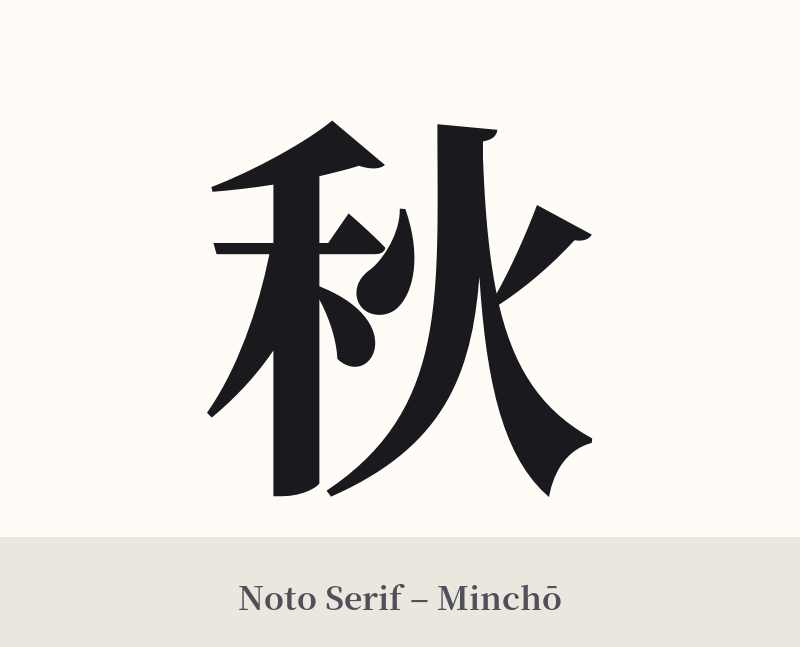
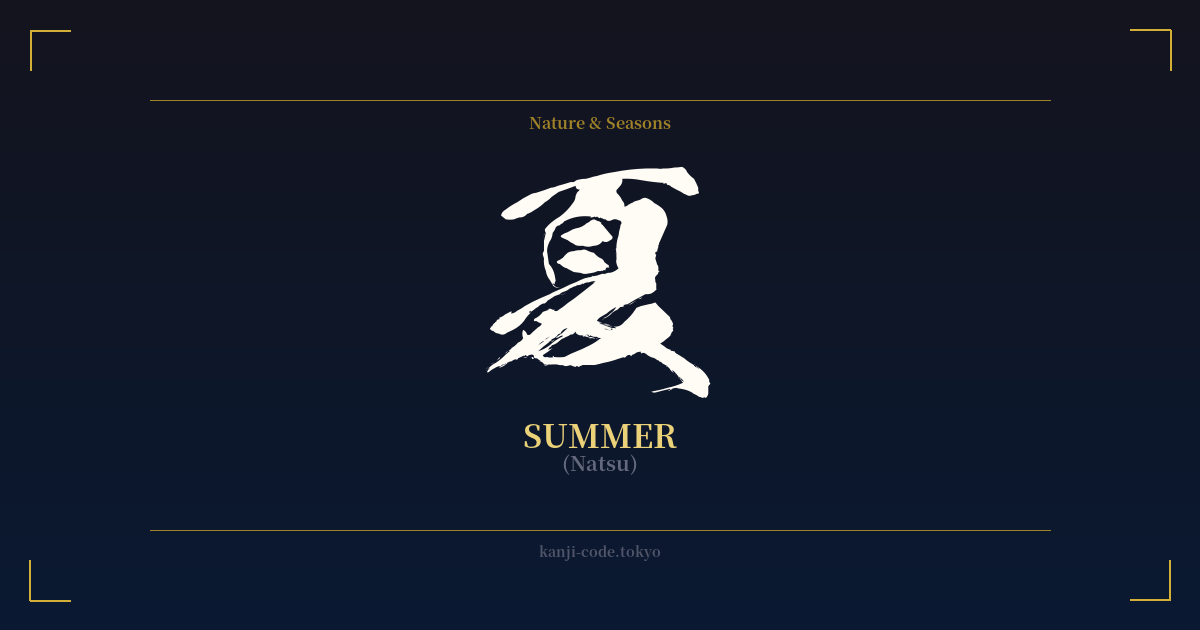
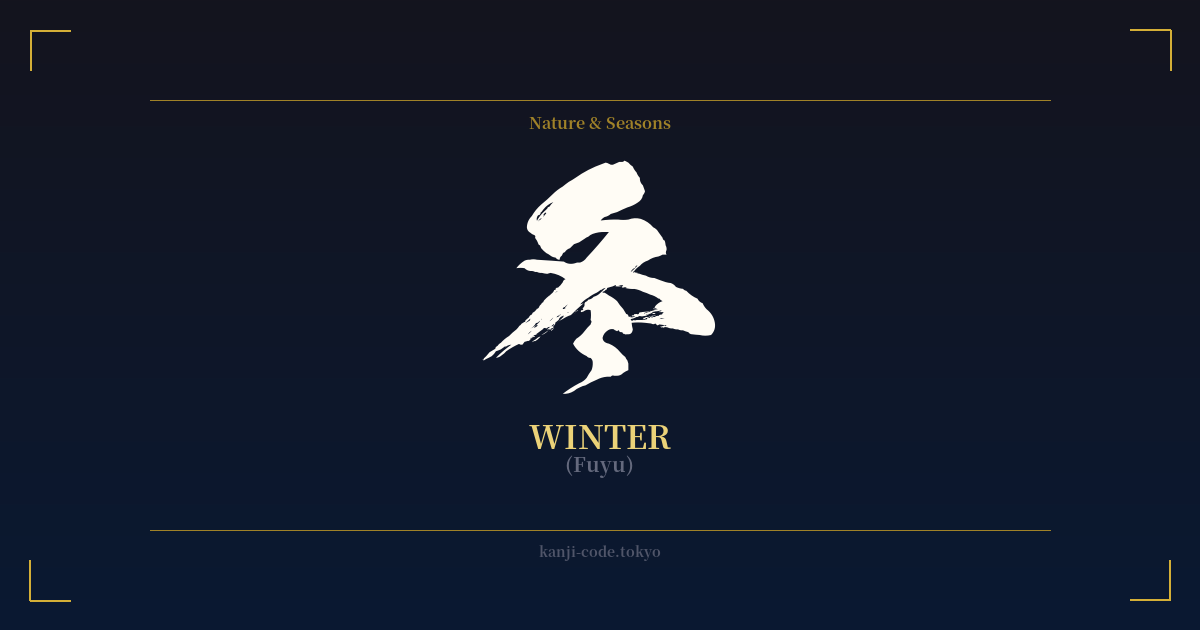
The same kanji can look dramatically different depending on the calligraphy style. Choose a font that matches the mood you want for your tattoo or design.
🎨 Tattoo Suitability
📐 Tattoo Design Guide
The kanji 秋 offers wonderful flexibility for a tattoo design, thanks to its balanced form and poetic meaning.
– Placement: For a single, elegant statement, consider the inner wrist, ankle, or the nape of the neck. Its vertical structure also makes it suitable for the spine or along the forearm. As a larger centerpiece, it works well on the calf or shoulder blade, where it can be surrounded by other elements.
– Font Style: The mood of your tattoo can be greatly influenced by the calligraphy style. A flowing, semi-cursive gyōsho script can mimic the feeling of falling leaves and gentle winds. For a more dramatic and artistic look, a highly stylized sōsho script is an excellent choice. Conversely, a clean, crisp kaisho or mincho style emphasizes the character's classical roots and structure.
– Visual Tips: Consider integrating the kanji with imagery that enhances its meaning. A few red maple leaves drifting around the character is a classic and beautiful choice. You could also incorporate a harvest moon, a branch of a persimmon tree, or subtle watercolor washes in autumn hues (gold, crimson, burnt orange) behind the black ink. The design can even play on the kanji's components, with the 'fire' radical rendered in a subtle red.
Comments