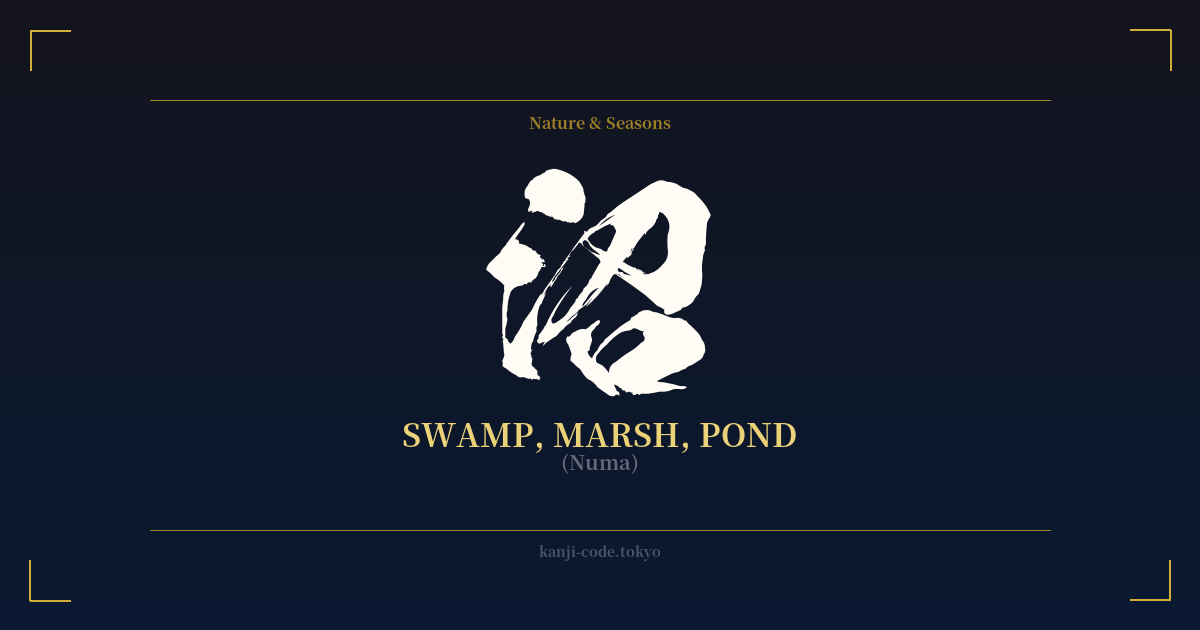
✍️ 沼 (Numa) — Cultural Context
The kanji 沼 (numa) paints a vivid picture with its very structure. Composed of the radical for water (氵) on the left and a character (召) suggesting something that calls or draws you in, it perfectly captures the essence of a swamp, marsh, or bog—a body of water that can feel both alluring and treacherous.
In Japan, an archipelago rich with varied landscapes, swamps and marshes are integral parts of the ecosystem. Places like the Kushiro Wetlands in Hokkaido, a Ramsar Convention site, are celebrated for their biodiversity and natural beauty, home to the iconic red-crowned cranes. In this literal sense, 沼 represents a wild, untamed, and life-giving aspect of nature.
However, the cultural symbolism of 沼 delves much deeper, often into murky waters. Historically and in folklore, swamps are places of mystery and danger. They are the settings for ghost stories (kaidan) and tales of yōkai, supernatural creatures that might dwell in the muddy depths. A swamp is a place where one can easily lose their way, get stuck, and disappear. This imagery gives the kanji a somber, almost gothic undertone.
This leads to its most powerful metaphorical use in the phrase 「沼にはまる」(numa ni hamaru), literally "to get stuck in a swamp." Traditionally, this expression has a heavy, negative meaning. It describes being trapped in an inescapable situation, such as overwhelming debt, a toxic relationship, or a dead-end job. It implies a struggle with no clear path out, a feeling of being slowly pulled under.
Yet, in a fascinating twist of modern language, this very phrase has been co-opted by Japanese fan and hobbyist culture. Today, young people use "numa ni hamaru" to describe being completely and utterly obsessed with a hobby, an idol, an anime series, or a video game. In this context, the "swamp" is the deep, all-consuming world of their passion. It's a self-aware and often humorous admission that they are so deeply invested, they can't get out—and may not even want to. This dual meaning makes 沼 a complex and layered character, representing both a dire predicament and a profound passion.
🖌️ Font Styles for 沼
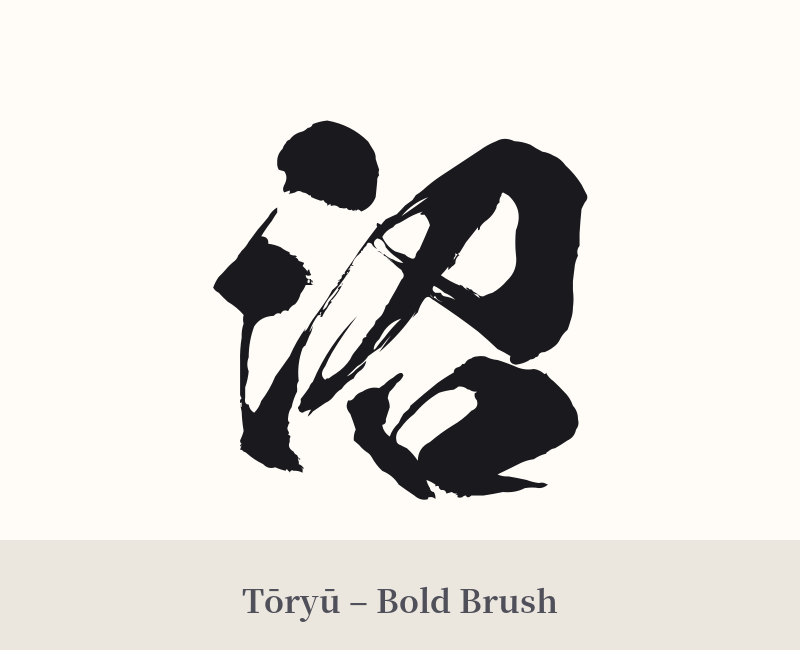
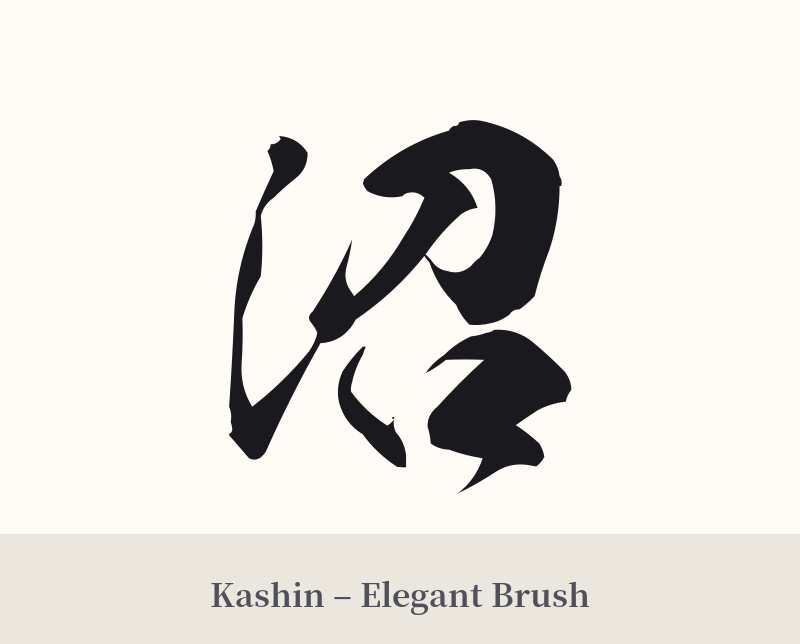
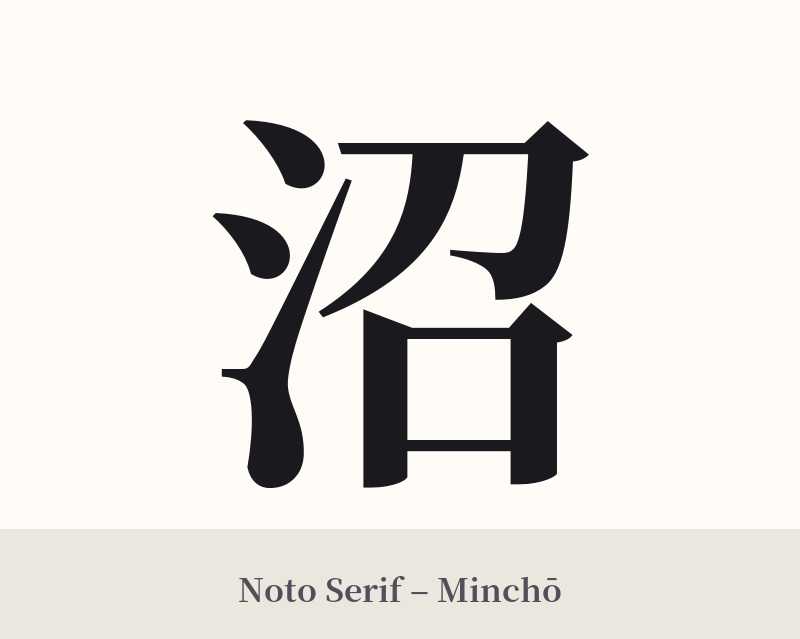
The same kanji can look dramatically different depending on the calligraphy style. Choose a font that matches the mood you want for your tattoo or design.
🎨 Tattoo Suitability
📐 Tattoo Design Guide
A tattoo of 沼 (numa) is a statement about depth, complexity, and perhaps a touch of obsession. The design should reflect which aspect of the kanji you want to emphasize.
– Placement: For a personal and introspective meaning, consider the inner forearm, ribcage, or the back of the calf. These spots are easily covered but can be revealed, mirroring the hidden depths of a swamp or a personal passion.
– Font Style: A rough, semi-cursive calligraphy style (gyōsho) can capture the raw, untamed nature of a physical swamp or the intensity of an obsession. For those who connect more with the modern, otaku-culture meaning, a clean, bold Mincho or even a pixelated font could be a clever nod to its use in digital-age fandoms.
– Visual Elements: Consider pairing the kanji with imagery that enhances its meaning. Ripples of murky water, a single lotus flower blooming from the mud to symbolize beauty from a difficult place, or even subtle chains to represent the feeling of being 'stuck' can add narrative depth. For the fandom meaning, you could incorporate a small, subtle symbol from the specific 'swamp' you've fallen into.
Comments