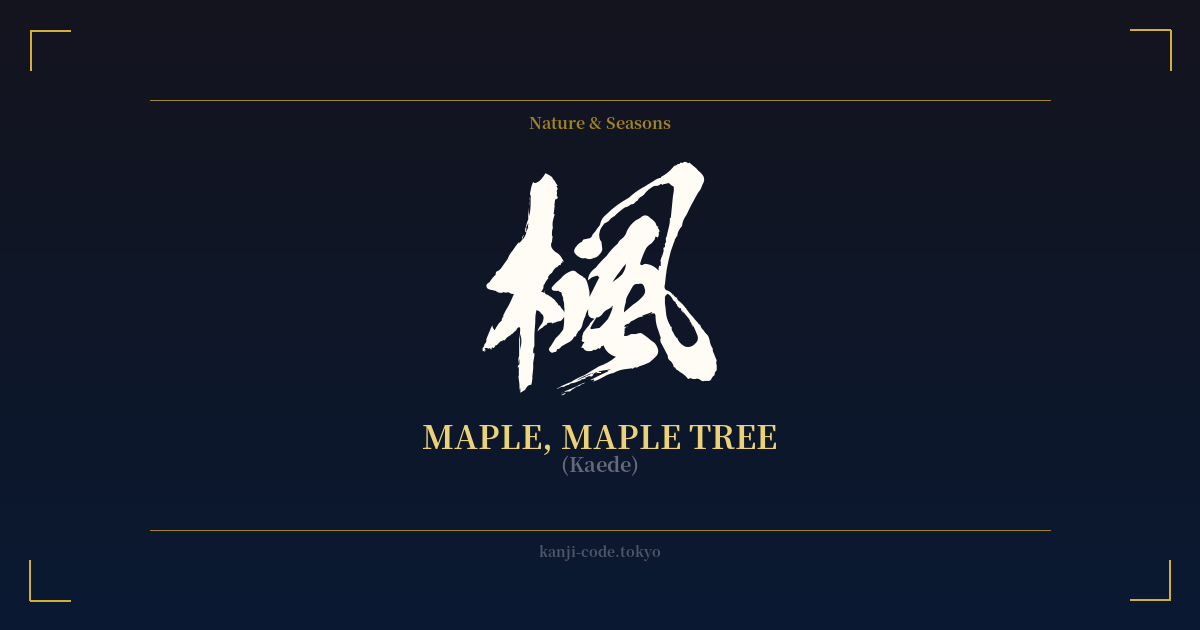
✍️ 楓 (Kaede) — Cultural Context
The kanji 楓 (Kaede) is a beautiful and evocative character that captures a core aspect of Japanese aesthetics: the appreciation of seasonal change. Representing the maple tree, this single character is a gateway to one of Japan's most cherished traditions, the viewing of autumn leaves.
At its heart, the kanji is a work of poetry itself. It is a compound of two other characters: 木 (ki), meaning 'tree', on the left, and 風 (kaze), meaning 'wind', on the right. Together, they form the 'wind tree'—a name that conjures the image of leaves rustling and dancing in a cool autumn breeze. This composition beautifully reflects the maple's delicate nature and its association with the shifting atmosphere of the fall season.
The word 'Kaede' itself has a fascinating origin. It is believed to be a contraction of 'kaeru-te' (蛙手), which translates to 'frog's hand'. This charming name comes from the distinct shape of the Japanese maple leaf, which resembles the webbed foot of a frog. It’s a testament to the close observation of nature that is so integral to Japanese culture.
In Japan, the maple tree is synonymous with autumn. Much like the cherry blossoms (sakura) in spring, the turning of maple leaves into vibrant reds, oranges, and yellows is a national event. This phenomenon is known as 'kōyō' (紅葉), and the tradition of traveling to view the leaves is called 'momijigari' (紅葉狩り), or 'autumn leaf hunting'. This practice is a deeply ingrained cultural activity, where people flock to mountains, temples, and gardens to witness the spectacular, albeit temporary, display of color.
This connection to fleeting beauty ties the maple leaf to the Japanese aesthetic concept of 'mono no aware' (物の哀れ), the gentle pathos of things. The brilliance of the red leaves is cherished precisely because it is transient; it is a poignant reminder of the beauty in impermanence and the natural cycle of life, growth, and decay. For centuries, poets and artists have used the maple leaf as a symbol, or 'kigo' (season word), to signify autumn in haiku and waka poetry.
While often used interchangeably by foreigners, there is a subtle distinction between 楓 (Kaede) and 紅葉 (Momiji). Kaede is the botanical term for the maple tree itself, of the genus Acer. Momiji, while it can also refer to the Japanese maple, more specifically denotes the phenomenon of leaves turning crimson, particularly maple leaves. In essence, Kaede is the tree, and Momiji is the fiery spectacle it creates.
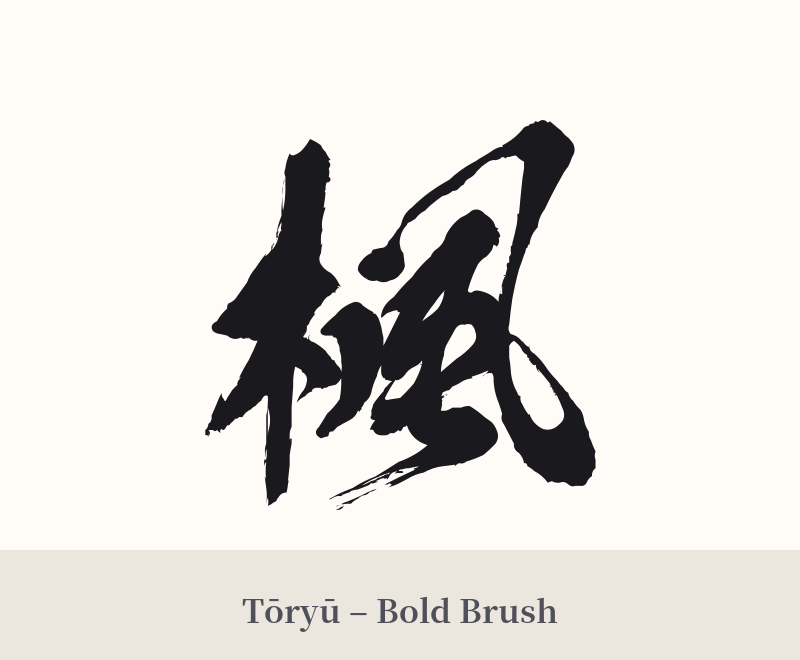
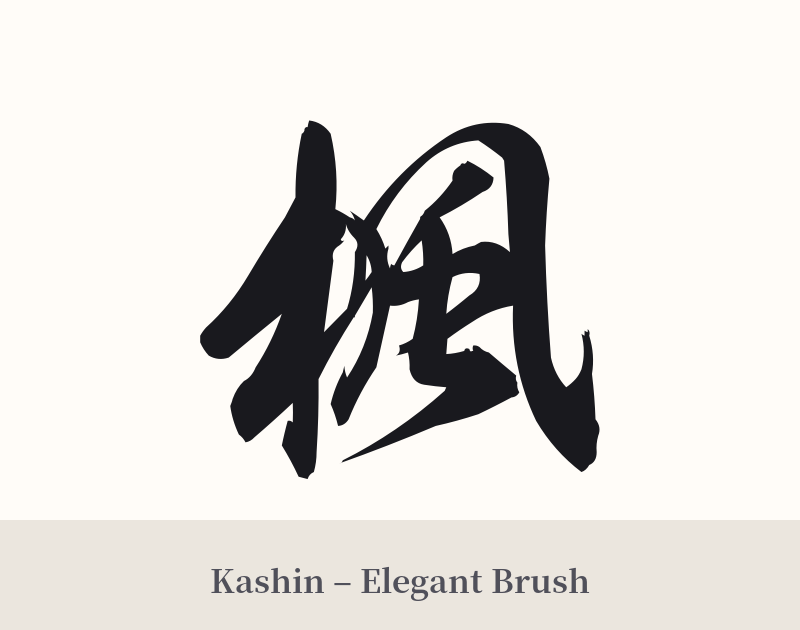
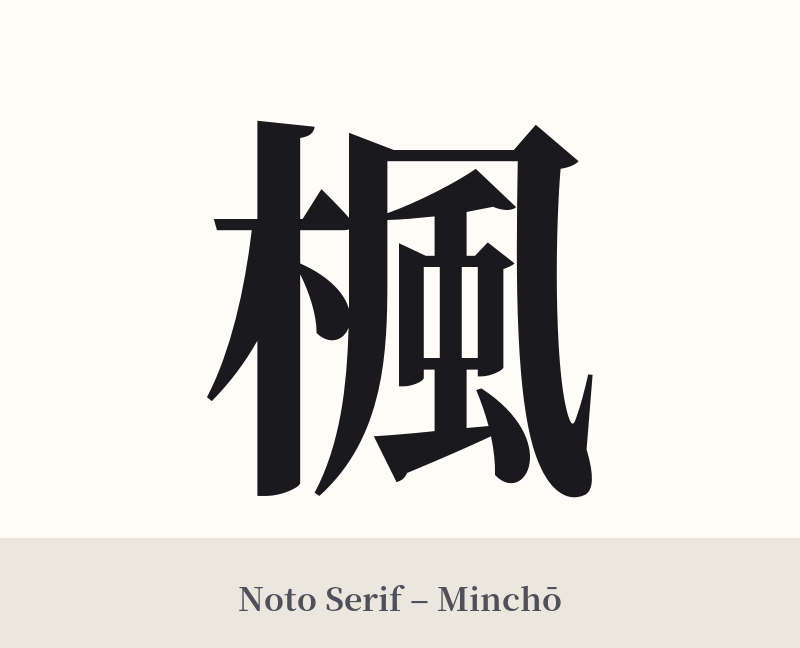
🖌️ Font Styles for 楓
The same kanji can look dramatically different depending on the calligraphy style. Choose a font that matches the mood you want for your tattoo or design.
🎨 Tattoo Suitability
📐 Tattoo Design Guide
The kanji 楓 (Kaede) offers wonderful versatility for a tattoo design, blending natural elegance with profound symbolism.
For placement, consider areas that complement its graceful form. A vertical placement on the forearm, calf, or along the spine can accentuate the character's structure. For a more subtle design, the back of the shoulder, the ankle, or the ribs are excellent choices.
When it comes to font style, you have several compelling options: – A standard, crisp Mincho or Gothic font gives it a clean, modern, and easily readable look. – A semi-cursive Gyōsho or fully cursive Sōsho calligraphy style can emphasize the 'wind' (風) element within the kanji, creating a sense of movement and flow. – A delicate, fine-line style works well for a minimalist and elegant interpretation.
To enhance the design, consider pairing the kanji with a visual element. A single, intricately detailed maple leaf falling beside the character can be very powerful. Another popular choice is to have a watercolor splash of red, orange, or gold behind the black ink of the kanji, directly referencing the 'kōyō' (autumn colors) without being overly literal.
Comments