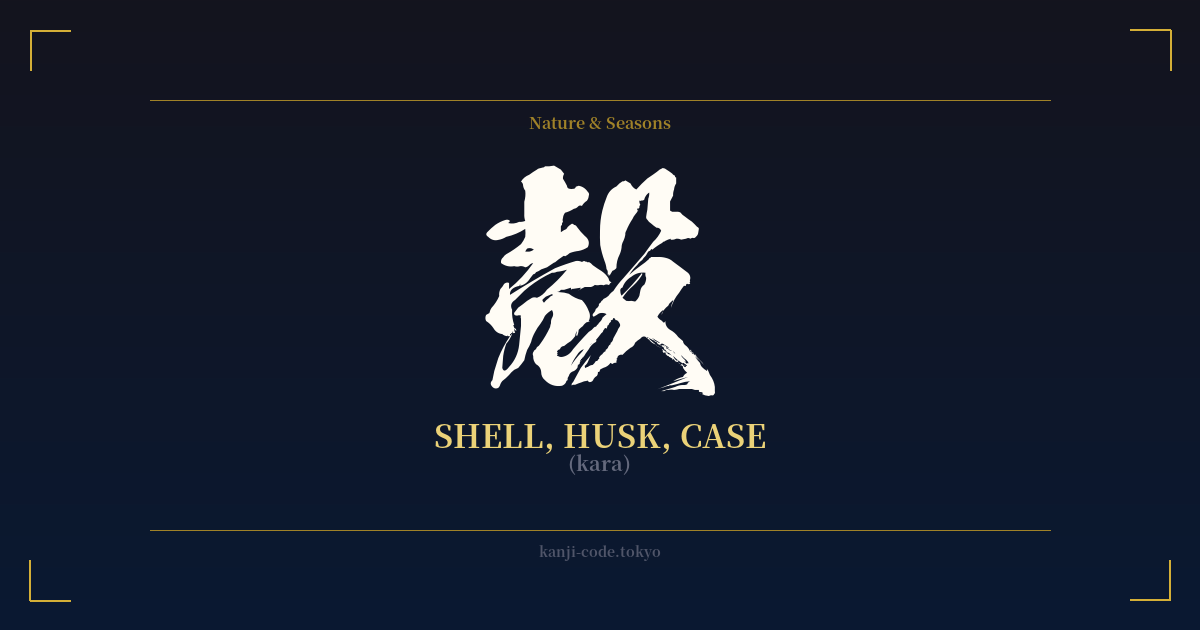
✍️ 殻 (kara) — Cultural Context
The kanji 殻 (kara) is a character deeply rooted in the natural world, yet its true power lies in its profound psychological metaphors. On the surface, it refers to the literal protective outer coverings we see everywhere: an eggshell (卵の殻, tamago no kara), a nutshell (くるみの殻, kurumi no kara), or a seashell (貝殻, kaigara).
One of the most evocative images associated with 殻 is the discarded husk of a cicada, known as 蝉の抜け殻 (semi no nuke-gara). In Japan, finding these delicate, empty forms clinging to trees is a hallmark of summer. They are not symbols of death, but of transformation—proof that a creature has shed its old form to emerge into a new stage of life. This image is frequently used in Japanese literature and poetry to represent transience, rebirth, and the passage of time.
This idea of shedding an old self gives rise to the kanji's most potent metaphorical meanings. The expression 殻を破る (kara o yaburu), literally 'to break the shell', is a powerful phrase for self-actualization. It means to break out of one's limitations, overcome inhibitions, and achieve personal growth. It signifies a pivotal moment of liberation and stepping into one's true potential.
Conversely, the kanji also represents the shell as a prison. The phrase 殻に閉じこもる (kara ni tojikomoru) means 'to shut oneself in one's shell'. This describes someone who is withdrawn, introverted to a fault, or afraid to face the world. It paints a picture of self-imposed isolation, where the protective shell has become a barrier to connection and experience.
Therefore, 殻 embodies a fundamental duality. It is both the shield that protects us and the cage that confines us. It represents the old self that must be cast off for the new to emerge. This dynamic tension between safety and stagnation, protection and liberation, makes 殻 a deeply introspective and meaningful character in the Japanese language.
🖌️ Font Styles for 殻
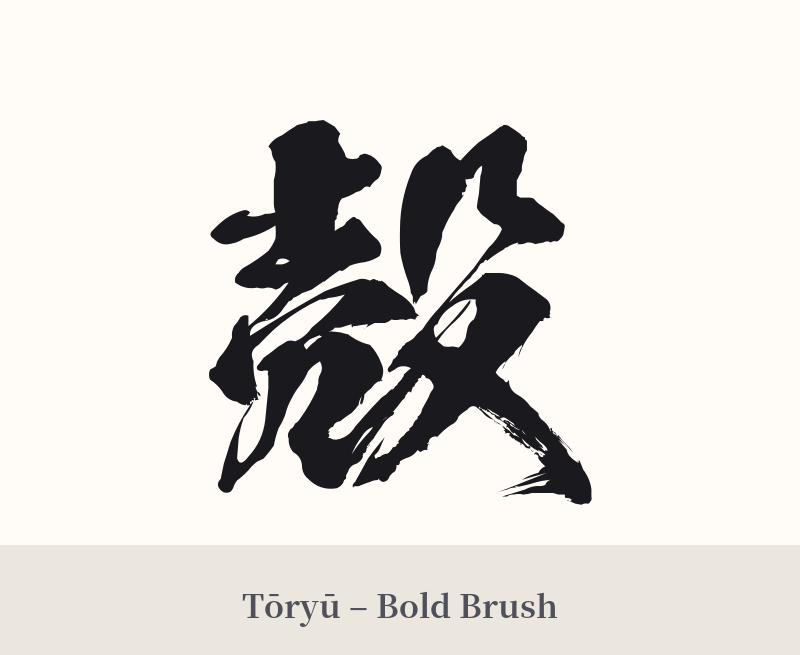
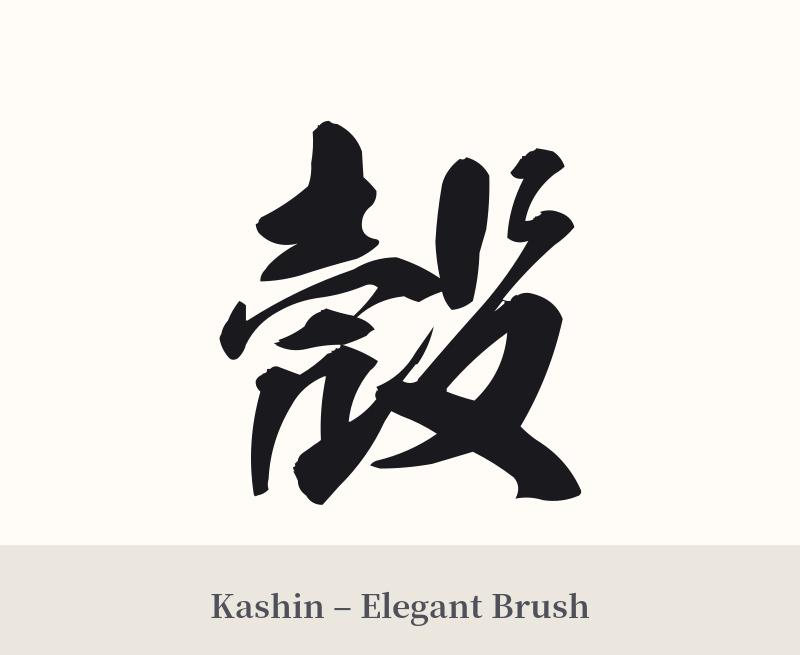
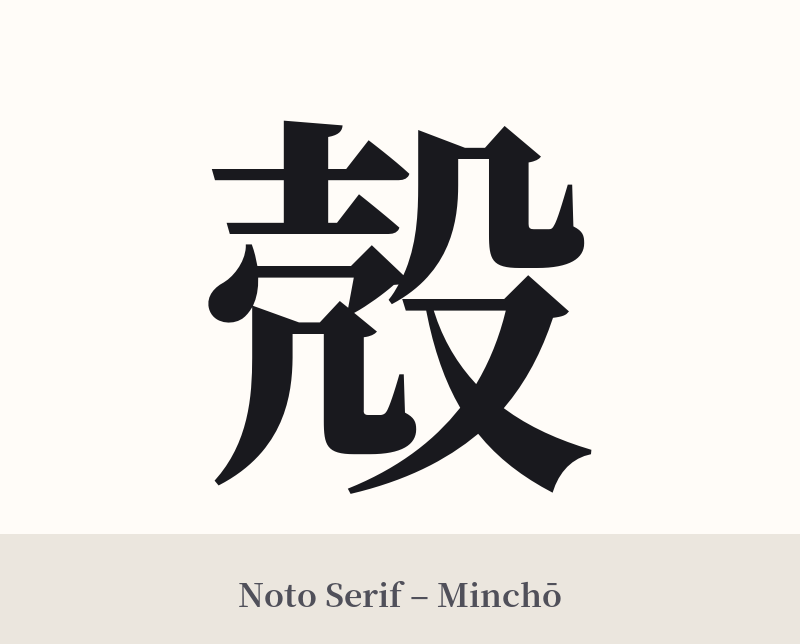
The same kanji can look dramatically different depending on the calligraphy style. Choose a font that matches the mood you want for your tattoo or design.
🎨 Tattoo Suitability
📐 Tattoo Design Guide
The kanji 殻 (kara) offers a lot of creative flexibility for a tattoo, allowing you to emphasize its different meanings through style and placement.
– Placement: For a personal, introspective meaning, consider the inner forearm, ribs, or over the heart. For a bolder statement about 'breaking free', the calf, shoulder blade, or back of the neck are excellent choices.
– Font Style: A strong, crisp Kaisho (block) script can emphasize the 'protective' and 'solid' nature of the shell. Conversely, a flowing Gyosho (semi-cursive) style can evoke the feeling of movement and transformation inherent in 'breaking the shell'. A design that incorporates cracks or appears weathered can visually represent the act of breaking free.
– Visual Combinations: To clarify the intended meaning, consider pairing 殻 with other imagery. Combining it with a cicada or a bird hatching from an egg powerfully reinforces the theme of rebirth and transformation. Placing it within a splash of watercolor can suggest the 'shell' dissolving or being washed away.
Comments