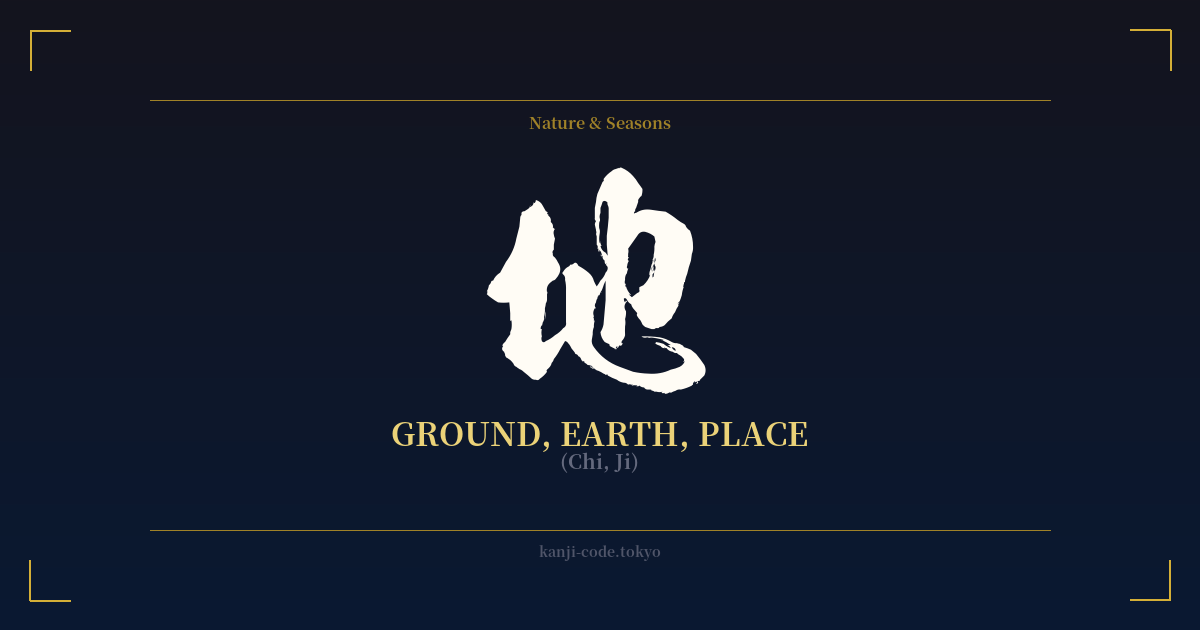
✍️ 地 (Chi, Ji) — Cultural Context
The kanji 地 (chi or ji) is one of the most fundamental characters in the Japanese language, representing the ground beneath our feet, the land we inhabit, and the very planet itself. Its form is a combination of the radical 土 (tsuchi), which means 'soil' or 'earth,' and the phonetic component 也. This structure grounds the character in the tangible world of dirt and soil while extending its meaning to broader concepts of place and foundation.
In East Asian philosophy, 地 is most famously paired with 天 (ten), meaning 'heaven' or 'sky.' The compound word 天地 (tenchi), 'Heaven and Earth,' represents the entirety of the cosmos. This duality is a cornerstone of Taoist and Zen thought, where 天 embodies the celestial, the spiritual, and the formless, while 地 represents the terrestrial, the material, and the tangible. Together, they signify a complete and balanced universe, the stage upon which all existence plays out.
This character is a building block for countless everyday words, illustrating its core importance. 地球 (chikyū) is the modern word for the planet Earth. 地震 (jishin) is an earthquake, a powerful reminder of the ground's immense power. A 地図 (chizu) is a map, a representation of a place. The subway is called a 地下鉄 (chikatetsu), literally 'underground iron.' Each term reinforces 地 as the foundation for location, geography, and physical reality.
Within Shintoism, Japan's indigenous religion, the land itself (土地, tochi) is often considered sacred. Specific mountains, forests, and plots of ground are believed to be inhabited by kami (gods or spirits). In this context, 地 is not merely inert matter but a living, spiritual foundation that sustains life, agriculture, and community. It is the source of nourishment and the resting place of ancestors, commanding respect and reverence.
In martial arts, a connection to the 'chi' or 'ji' is crucial for stability and power. A low, grounded stance provides a solid base from which to generate force. The concept of being 'grounded' is not just physical but also mental, implying a calm, stable, and realistic mindset. Ultimately, 地 symbolizes foundation, stability, reality, and our unbreakable connection to the physical world.
🖌️ Font Styles for 地
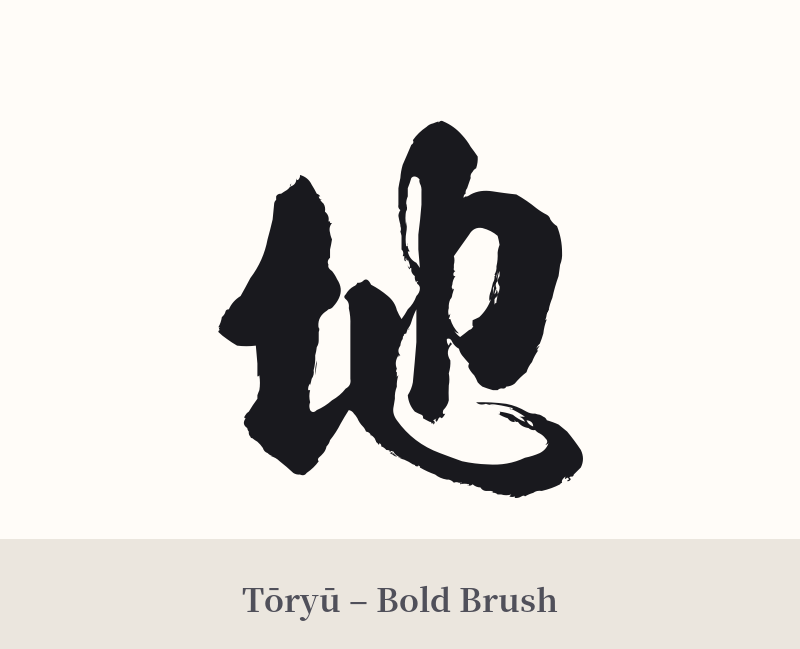
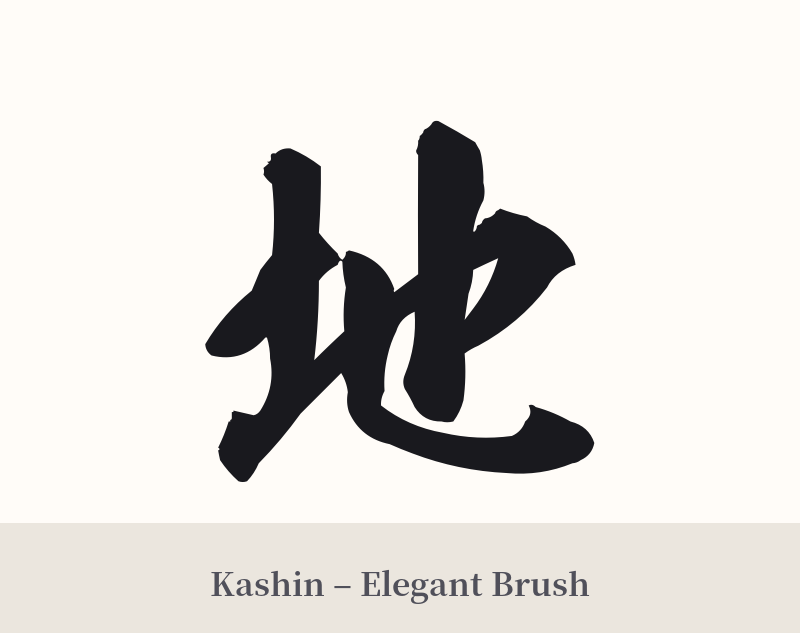
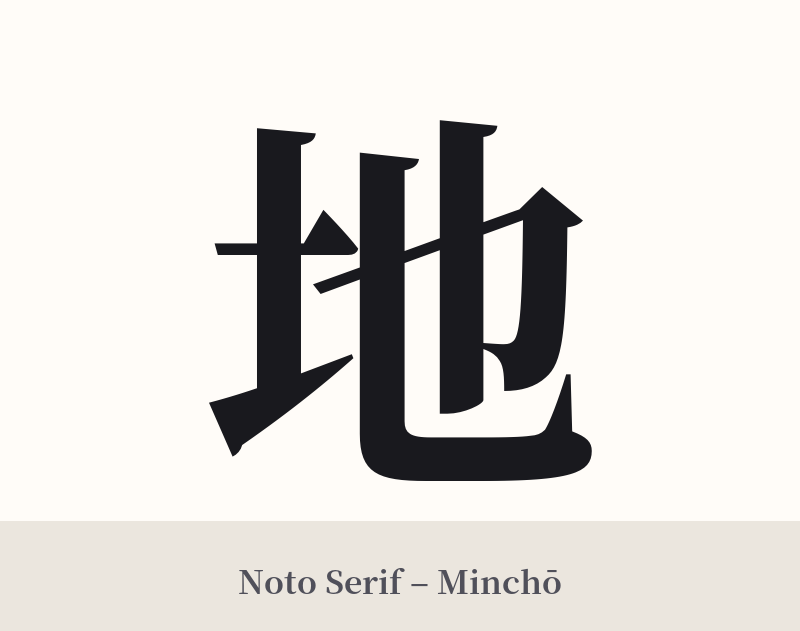
The same kanji can look dramatically different depending on the calligraphy style. Choose a font that matches the mood you want for your tattoo or design.
🎨 Tattoo Suitability
📐 Tattoo Design Guide
While tattooing 地 on its own is not highly recommended due to its incomplete feel, it can work within a larger concept. If you choose to use it, consider these design elements:
– Placement: Areas that suggest stability and grounding are ideal. The calf, ankle, or forearm can create a sense of being connected to the earth. A placement on the back could symbolize it as a foundation for your life.
– Font Style: To emphasize the meaning of stability, a strong, blocky script like Kaisho (regular script) is an excellent choice. A heavy, traditional Mincho font can also work well. Avoid overly cursive or flowing styles, as they may contradict the kanji's grounded nature.
– Visual Tips: The strongest recommendation is to pair it with another character. The classic and most powerful combination is 天地 (tenchi – Heaven and Earth), often written vertically. You could also incorporate 地 into a larger illustrative tattoo, such as having the character appear on the ground within a Japanese landscape design, providing a symbolic anchor for the entire piece.
Comments