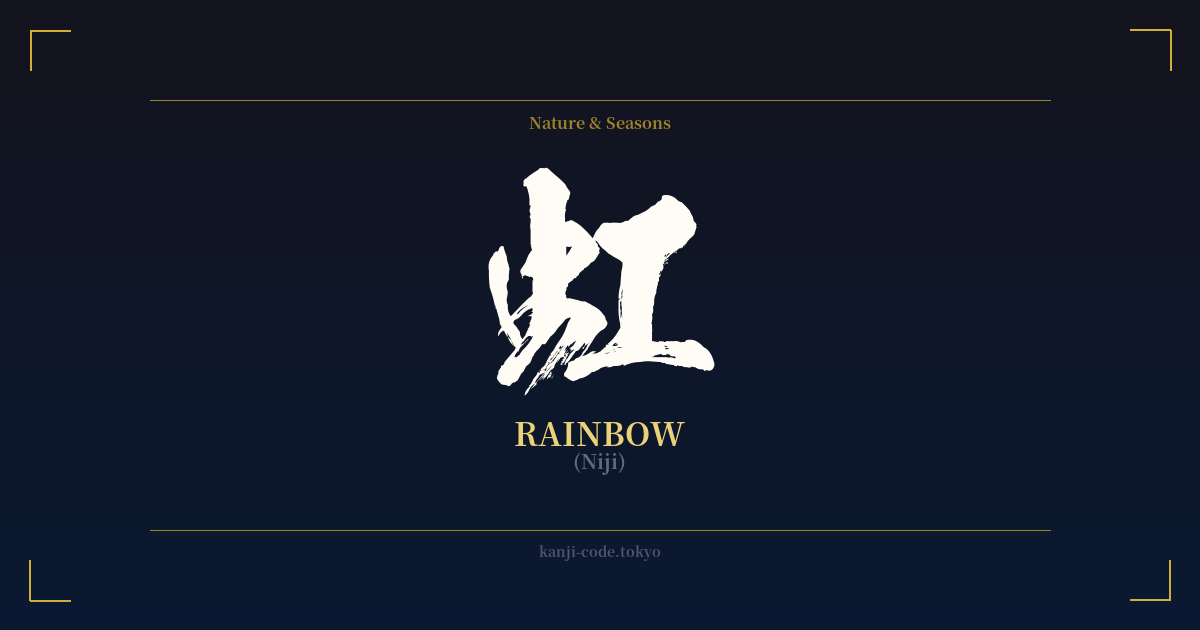
✍️ 虹 (Niji) — Cultural Context
The kanji 虹 (Niji) captures the fleeting, awe-inspiring beauty of a rainbow. In Japan, as in many cultures, its appearance after a storm is a powerful symbol of hope, renewal, and good fortune. It represents a magical moment where the sky, cleansed by rain, is adorned with a bridge of light, connecting the heavens and the earth.
The character's origin is fascinating and reveals a much deeper, more ancient worldview. 虹 is a pictograph composed of two radicals: 虫 (mushi) on the left and 工 (kō) on the right. Today, 虫 means 'insect,' which can seem puzzling. However, in ancient Chinese etymology, this radical was used for a wide range of creatures, including reptiles, amphibians, and even dragons. The right side, 工, means 'work,' 'craft,' or 'construction.'
Therefore, the original meaning of 虹 was not a meteorological phenomenon but the 'work of a celestial dragon.' Ancient beliefs envisioned the rainbow as a mythical, serpent-like dragon arching across the sky to drink water from the earth. The character beautifully captures this ancient myth: a divine creature's magnificent construction in the sky. This connection elevates the rainbow from a simple arc of light to a powerful, mythical event.
In Japanese culture, this idea of a bridge is particularly significant. The word for bridge, 橋 (hashi), sounds the same as the word for 'edge' or 'end.' Bridges in Shintoism are often seen as sacred passageways connecting the human world with the realm of the kami (gods). The rainbow, as a natural, temporary bridge, is therefore seen as a divine sign, a momentary connection to the sacred. It embodies the Japanese aesthetic of 'mono no aware'—a gentle sadness for the transience of things. Its breathtaking beauty is amplified by the fact that it will soon disappear.
This rich symbolism has made 虹 a recurring motif in Japanese art, from classical ukiyo-e woodblock prints to contemporary anime and music. It signifies a pivotal moment, a promise of better things to come, or a beautiful memory that lingers long after it has faded.
🖌️ Font Styles for 虹
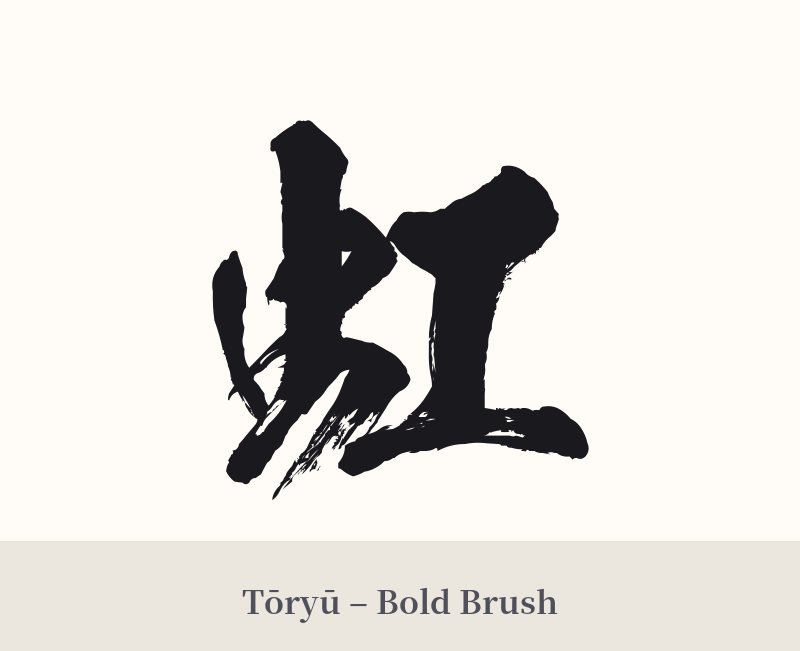
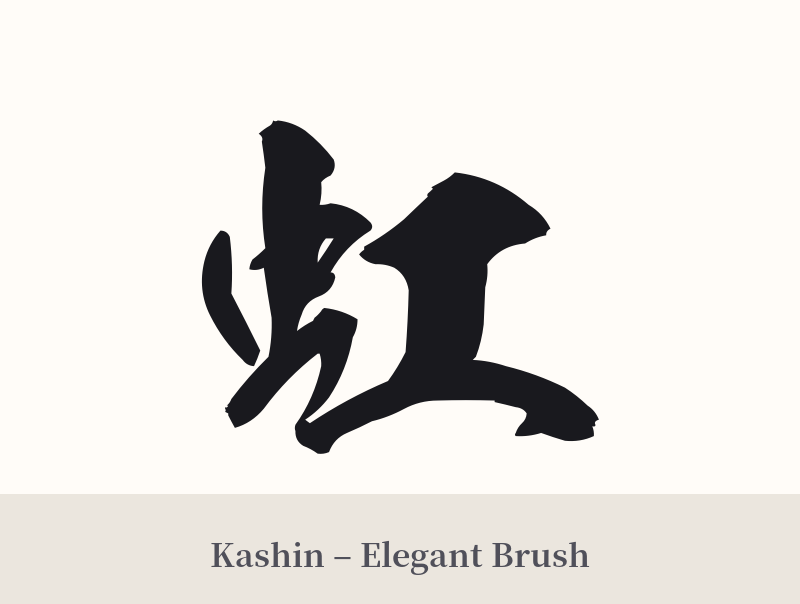
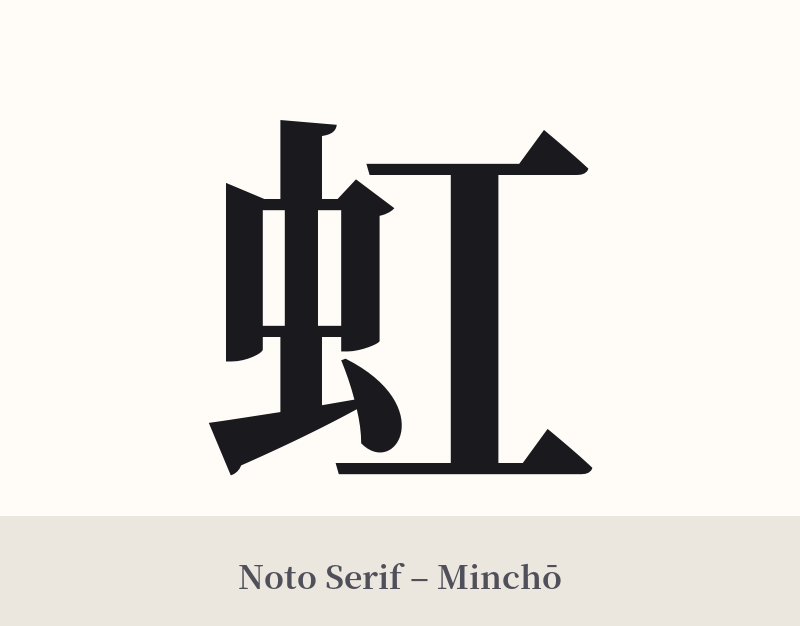
The same kanji can look dramatically different depending on the calligraphy style. Choose a font that matches the mood you want for your tattoo or design.
🎨 Tattoo Suitability
📐 Tattoo Design Guide
The kanji 虹 is versatile and visually appealing, offering several design possibilities.
– Placement: A single, elegant character works well on the forearm, calf, nape of the neck, or along the ribs. Its balanced form suits both vertical and horizontal orientations.
– Style: Consider a semi-cursive script (gyōsho) to evoke a sense of fluidity and movement, mimicking the arc of a real rainbow. For a more classic and refined look, a Mincho (serif) style is an excellent choice. An expressive, custom brushstroke can also capture the raw, natural energy of the symbol.
– Visuals: While the black ink of the kanji should remain central, you could incorporate a subtle watercolor wash of rainbow colors behind or around the character. This should be done with care to avoid overwhelming the kanji itself. Having the colors 'splash' away from the black strokes can create a dynamic and beautiful effect.
Comments