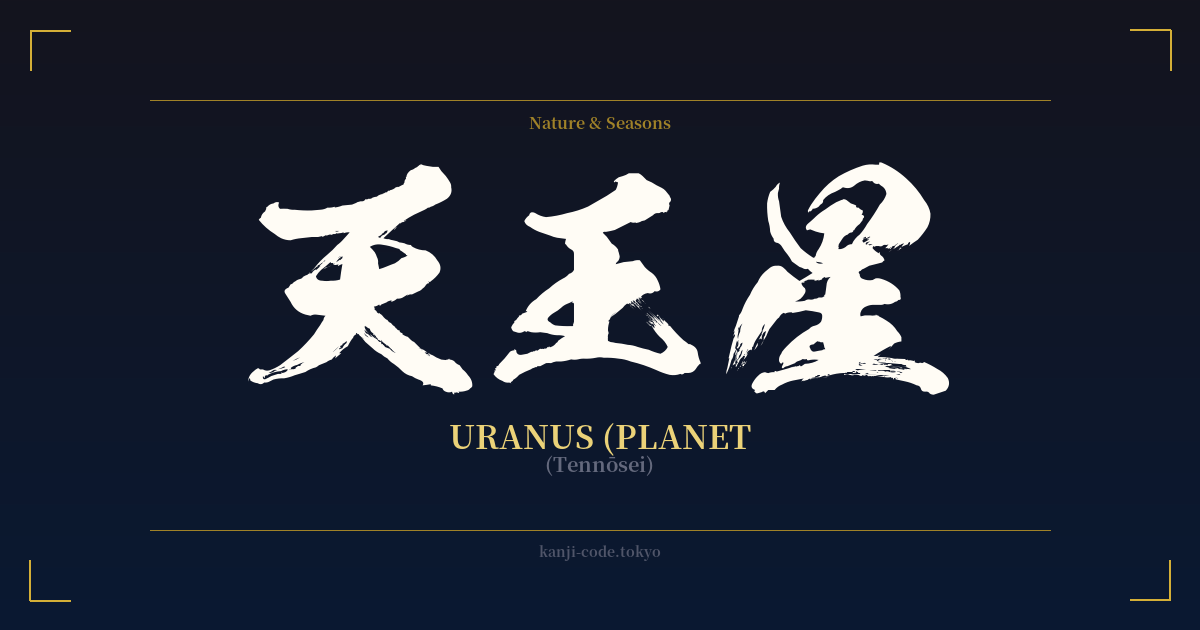
✍️ 天王星 (Tennōsei) — Cultural Context
天王星 (Tennōsei) is the Japanese name for the planet Uranus. While the individual kanji characters are ancient, their combination to name the seventh planet from the sun is a relatively modern invention, dating back to Japan's Meiji Restoration period in the 19th century.
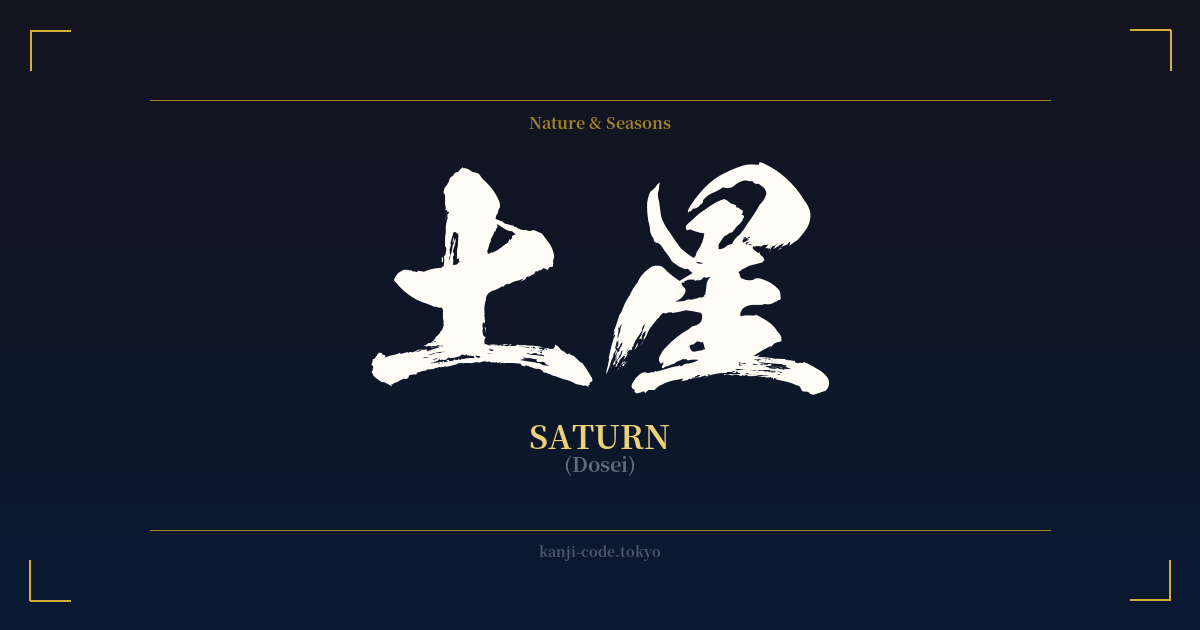
During this time, Japan rapidly absorbed Western science and knowledge. When it came to astronomy, the classical planets known since antiquity—Mercury, Venus, Mars, Jupiter, and Saturn—already had names rooted in Chinese philosophy and the five elements (水星, 金星, 火星, 木星, 土星). However, newly discovered planets like Uranus required new names.
Instead of assigning an element, Japanese scholars opted for a direct translation of the planet's Western namesake: Uranus, the Greek primordial god of the sky. The name 天王星 breaks down beautifully to reflect this: 天 (ten) means 'heaven' or 'sky', 王 (ō) means 'king', and 星 (sei) means 'star' or 'planet'. Together, they form 'Heavenly King Star', a perfect parallel to the Greco-Roman deity who ruled the heavens.
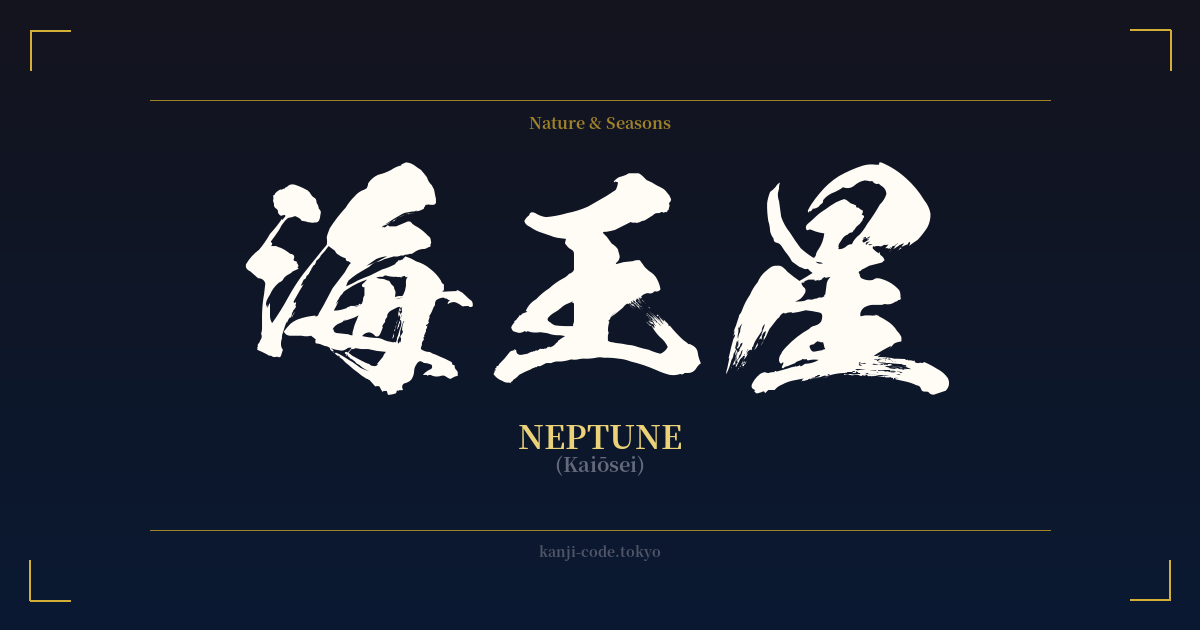
This method of translation created a fascinating bridge between Eastern and Western traditions. It preserved the mythological intent behind the Western name while using the rich symbolic palette of kanji. The same logic was applied to Neptune (海王星, Kaiōsei, 'Sea King Star') and Pluto (冥王星, Meiōsei, 'Underworld King Star'), creating a consistent and poetic system for the outer planets.
In modern Japanese culture, 天王星 is primarily understood in its scientific context. However, it gained a significant cultural foothold through the massively popular anime and manga series Sailor Moon. The character Sailor Uranus, whose civilian name is 天王はるか (Ten'ō Haruka), embodies the power of the sky and wind, bringing the kanji's mythological undertones to a global audience. This association has given the word a contemporary cool and a connection to themes of strength, speed, and rebellion.
🖌️ Font Styles for 天王星
The same kanji can look dramatically different depending on the calligraphy style. Choose a font that matches the mood you want for your tattoo or design.
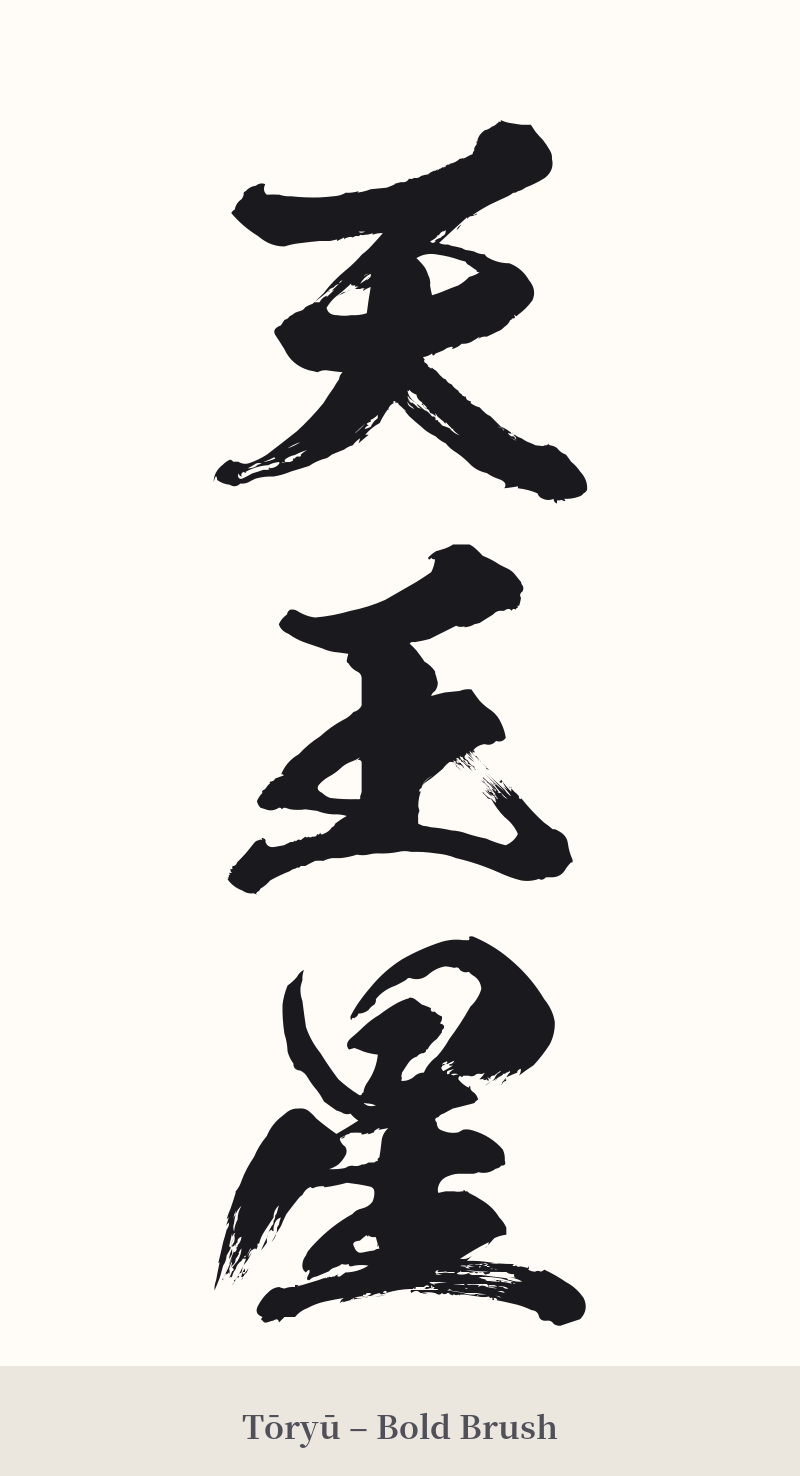
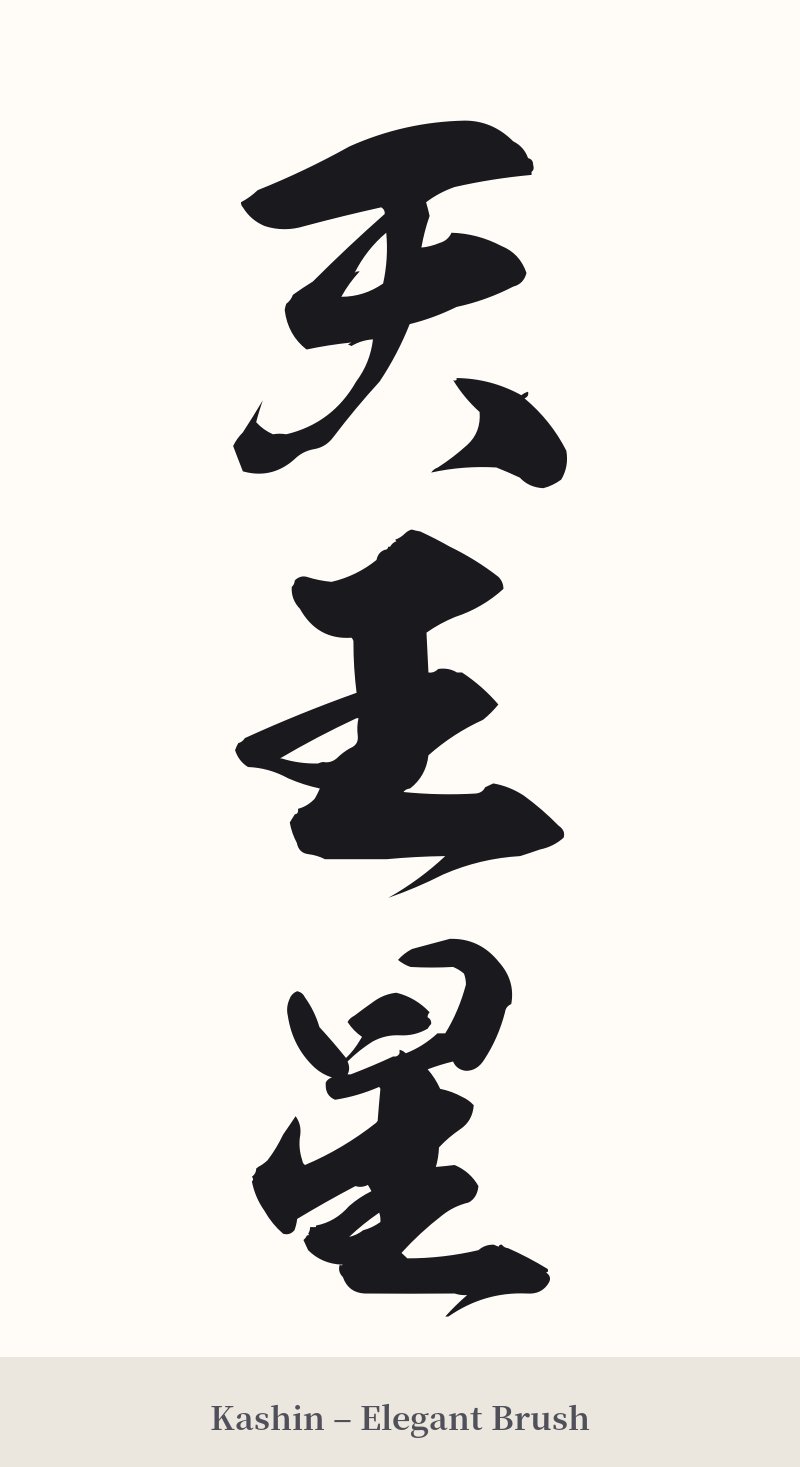
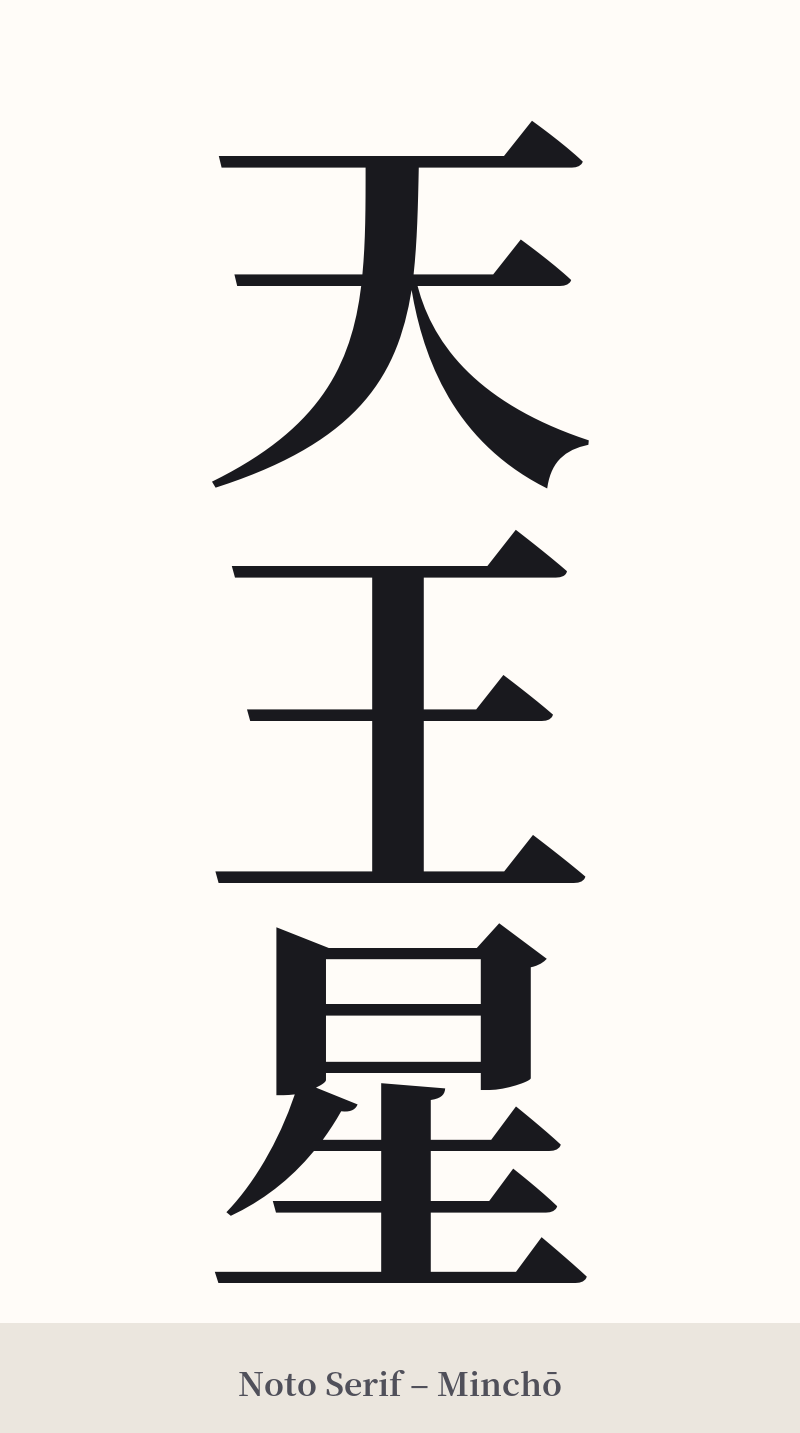
🎨 Tattoo Suitability
📐 Tattoo Design Guide
The three-character structure of 天王星 offers great versatility in tattoo design. Its length makes it particularly striking when rendered vertically.
– Placement: A vertical arrangement looks powerful along the spine, forearm, or calf. For a horizontal design, it fits well across the chest, upper back, or along the ribs.
– Font Style: For a modern, scientific feel, a clean and sharp Gothic or Mincho style works well. To connect with the ancient feel of the individual kanji, a flowing semi-cursive (Gyosho) or a classic block script (Kaisho) can add a touch of elegance and history.
– Visual Tips: Consider incorporating celestial elements into the design. A background of faint stars, orbital lines, or a splash of pale cyan watercolor to evoke the planet's actual color can elevate the piece. The astrological symbol for Uranus (♅) could also be subtly integrated.
Comments