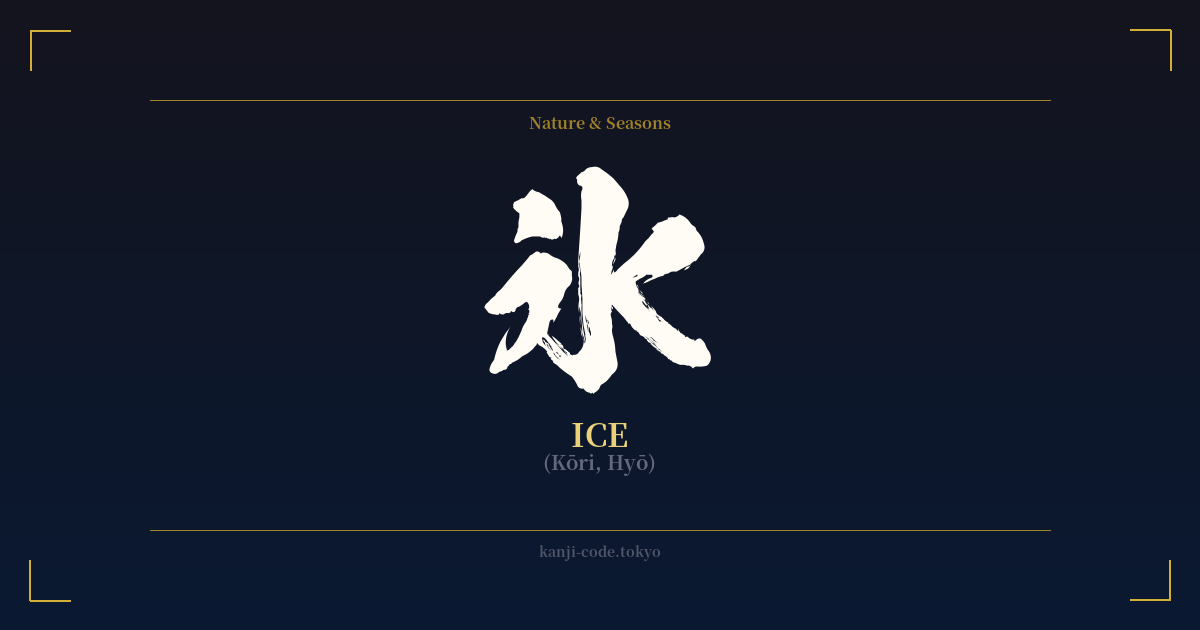
✍️ 氷 (Kōri, Hyō) — Cultural Context
The Japanese kanji 氷 (kōri) is a beautifully simple character that captures the essence of its meaning: ice. Its origin is a testament to the visual nature of kanji. It is derived from the character for water, 水 (mizu), with an additional stroke (丶) that symbolizes the process of condensation or freezing, representing water solidifying into its crystalline form. This simple elegance makes 氷 a powerful symbol in Japanese culture, representing much more than just frozen water.
In Japan, a country with distinct seasons, 氷 is deeply connected to winter. It evokes images of silent, snow-covered landscapes, frozen lakes reflecting the pale winter sun, and delicate icicles (氷柱, tsurara) hanging from the eaves of temples and homes. This association imbues the character with a sense of stillness, tranquility, and the quiet, introspective beauty of the coldest season. It's a common element in haiku and other forms of poetry to set a winter scene and convey a feeling of serene solitude.
However, the symbolism of 氷 is not confined to winter's chill. Paradoxically, it is also a celebrated part of Japanese summer. The beloved treat Kakigōri (かき氷), or shaved ice, is a staple of summer festivals. Heaps of finely shaved ice are topped with colorful syrups, offering a refreshing escape from the intense heat and humidity. This dual role highlights the character's versatility: it is both the harsh reality of winter and the welcome relief of summer.
Beyond its literal meanings, 氷 carries significant metaphorical weight. It can represent purity, clarity, and transparency, like looking through a perfect sheet of ice. A mind that is 'like ice' can be seen as sharp, focused, and unclouded by emotion. On the other hand, it can also symbolize fragility—a beautiful, solid form that can shatter with a single blow or melt away in an instant. This ephemeral quality connects it to the Japanese aesthetic of mono no aware, the gentle sadness of transient things. In personal expression, it can also describe a person who is emotionally reserved or 'cold-hearted,' though this is just one facet of its rich symbolic meaning.
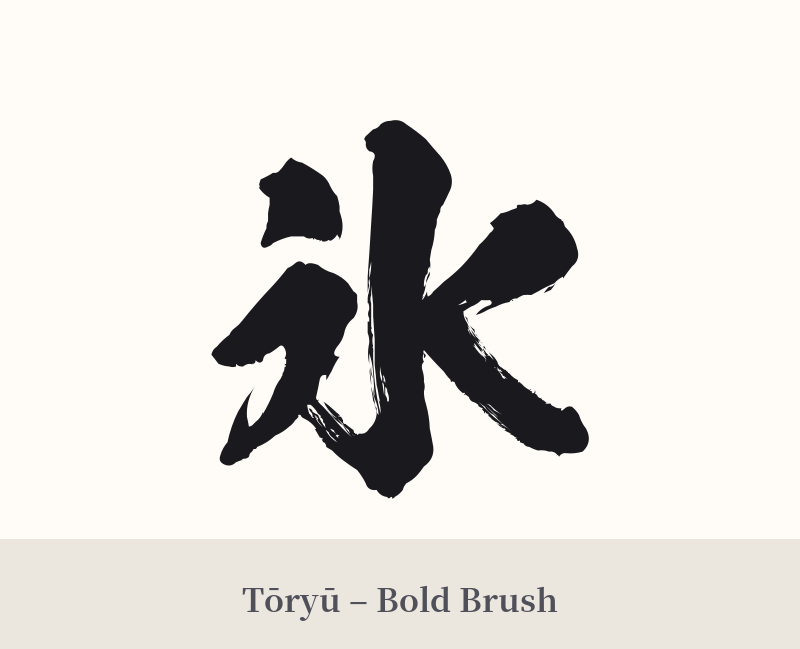
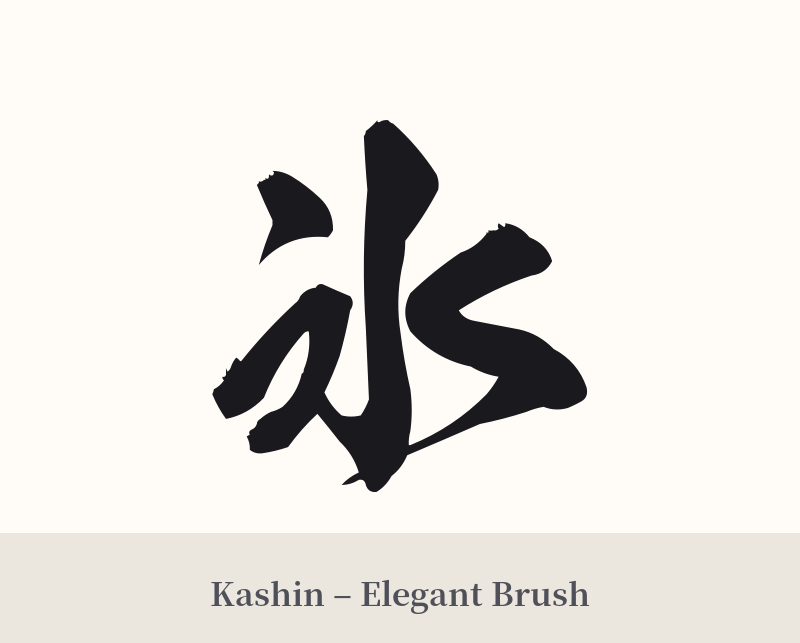
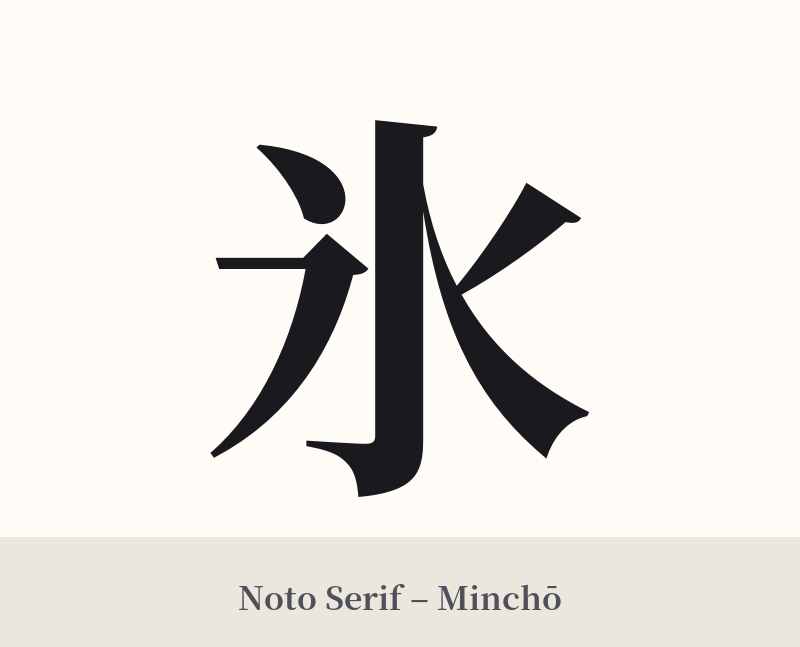
🖌️ Font Styles for 氷
The same kanji can look dramatically different depending on the calligraphy style. Choose a font that matches the mood you want for your tattoo or design.
🎨 Tattoo Suitability
📐 Tattoo Design Guide
The kanji 氷 offers wonderful flexibility for a tattoo design due to its clean and simple structure.
For placement, its minimalist nature makes it perfect for subtle spots like the inner wrist, behind the ear, or on the ankle. For a more prominent statement, it looks sharp and clean on the forearm or the nape of the neck.
When considering font styles, you have several compelling options: – A sharp, angular Kaisho or Mincho script emphasizes the crystalline, geometric nature of ice. The precise strokes give it a modern and clean feel. – A more fluid, cursive Sosho style can represent the transition between water and ice, or the look of melting ice. This adds a sense of movement and dynamism. – A custom design that incorporates cracks or a shattered effect within the strokes can symbolize breaking free or overcoming hardship.
To enhance the design, consider incorporating it with other elements. Pairing 氷 with a single water ripple can tell the story of its origin. Placing it alongside a winter flower like the camellia (tsubaki) or a snowflake can create a beautiful seasonal piece. Using shades of blue or white ink, while less traditional, can directly evoke the visual qualities of ice and cold.
Comments