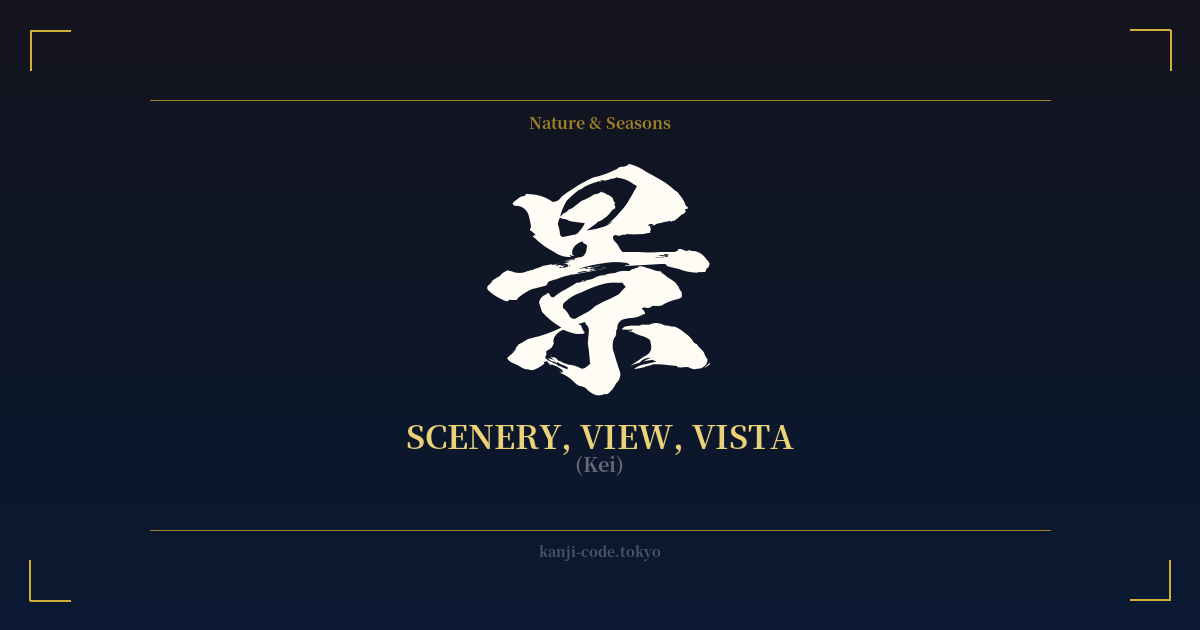
✍️ 景 (Kei) — Cultural Context
The kanji 景 (kei) is a beautiful and evocative character that captures a core element of Japanese aesthetics: the deep appreciation for a view or a moment in time. Its very structure tells a story. The character is a combination of 日 (hi), meaning 'sun' or 'day', and 京 (kyō), which originally depicted a tall building or capital city. Together, they paint a picture of the sun shining over a grand vista, a scene worthy of admiration.
While 景 stands for 'scenery' or 'view', it's most frequently encountered in the word 景色 (keshiki). Here, 景 provides the core concept of a 'view', and 色 (shiki/iro), meaning 'color', adds a layer of sensory detail. Keshiki is the everyday word for landscape or scenery, what you see when you look out a window or stand atop a mountain. The single character 景, however, feels more poetic and distilled, representing the very essence of the scene itself.
This appreciation for scenery is woven into the fabric of Japanese culture. It is linked to concepts like 'mono no aware', the gentle sadness and awareness of the transience of all things. A beautiful view (景) is not just a pretty picture; it's a fleeting moment. The cherry blossoms in spring, the vibrant colors of autumn leaves (koyo), or the stark beauty of a snow-covered temple are all examples of keshiki that are celebrated precisely because they do not last. The kanji 景 embodies the act of pausing to observe and internalize this transient beauty.
This character appears in many other important words that highlight its versatility. 風景 (fūkei) combines 'wind' and 'scenery' to mean landscape, often with a more artistic or atmospheric nuance. 光景 (kōkei) means 'spectacle' or 'a scene'—a view characterized by light. And 夜景 (yakei) specifically refers to a 'night view', a concept highly prized in Japan, with cities like Hakodate and Kobe famous for their spectacular nighttime cityscapes.
In art and literature, particularly in poetry like haiku, capturing a specific 景 is paramount. The poet's job is to distill a complex scene into a few evocative words, allowing the reader to experience the view for themselves. In this way, 景 is not just about what is seen, but about the feeling and atmosphere that the scene evokes.
🖌️ Font Styles for 景
The same kanji can look dramatically different depending on the calligraphy style. Choose a font that matches the mood you want for your tattoo or design.
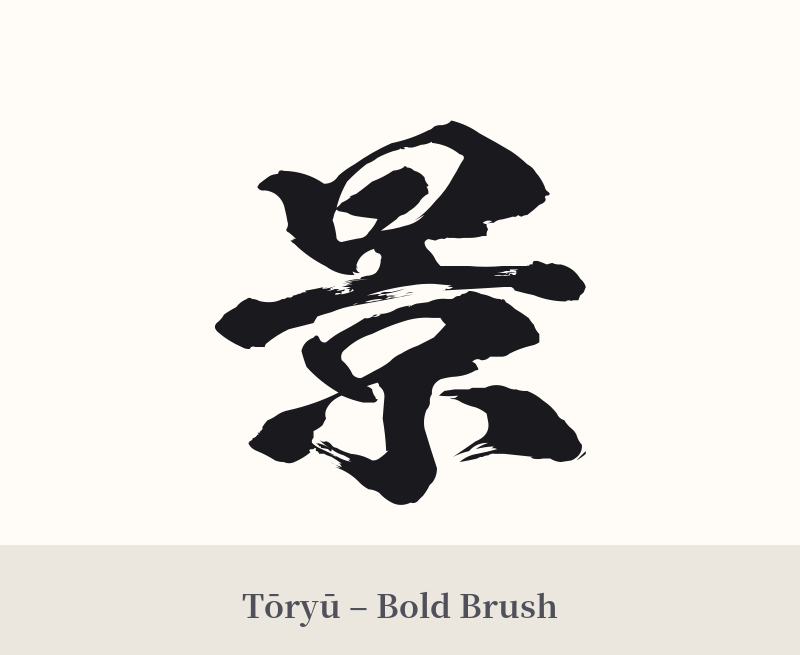
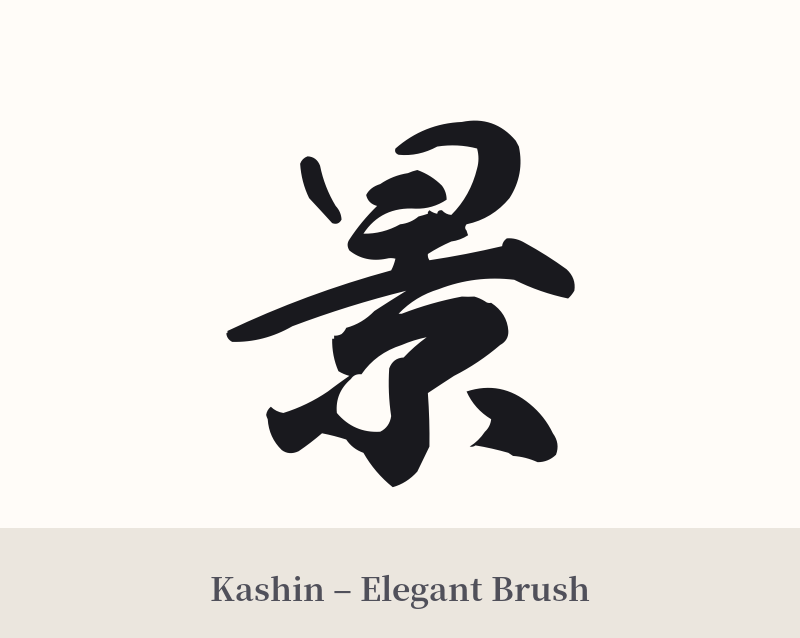
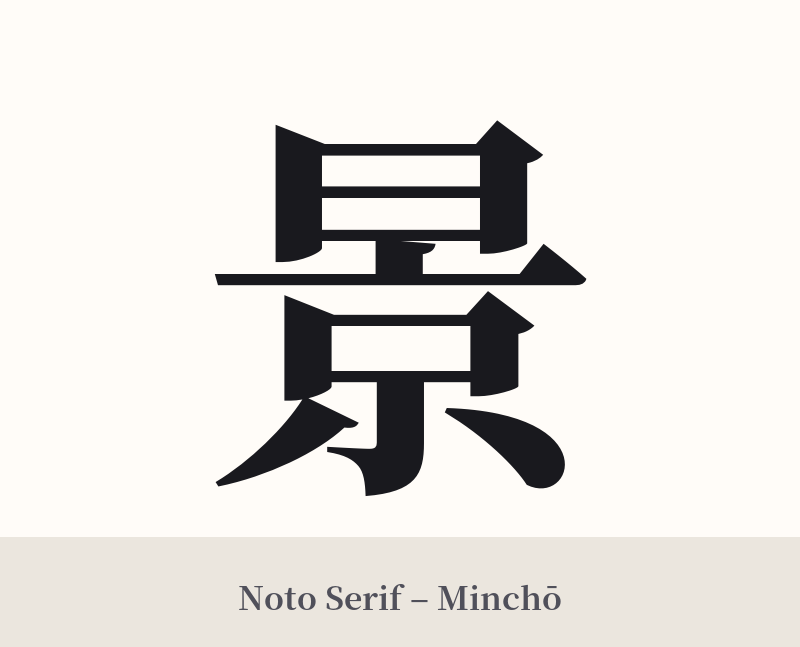
🎨 Tattoo Suitability
📐 Tattoo Design Guide
The kanji 景 offers wonderful design possibilities due to its balanced structure and elegant meaning.
– Placement: Consider areas of the body that suggest a canvas or a window to a scene. The shoulder blade, the upper back, or the forearm provide a great surface. For a more subtle design, the inner wrist or ankle could work well.
– Font Style: The style can drastically change the feeling. A crisp, clear Kaisho (block script) will emphasize the architectural origins of the 京 component. A more fluid Gyosho (semi-cursive) or Sousho (cursive) script can evoke the natural, flowing beauty of a landscape, like wind or water.
– Visual Tips: While 景 is beautiful on its own, it can be paired with minimalist elements. A single enso circle behind it can symbolize the completeness of the moment. Alternatively, a subtle, watercolor-style splash of color could represent the 'color' (色) from the word 景色, hinting at the full meaning without writing the second character.
Comments