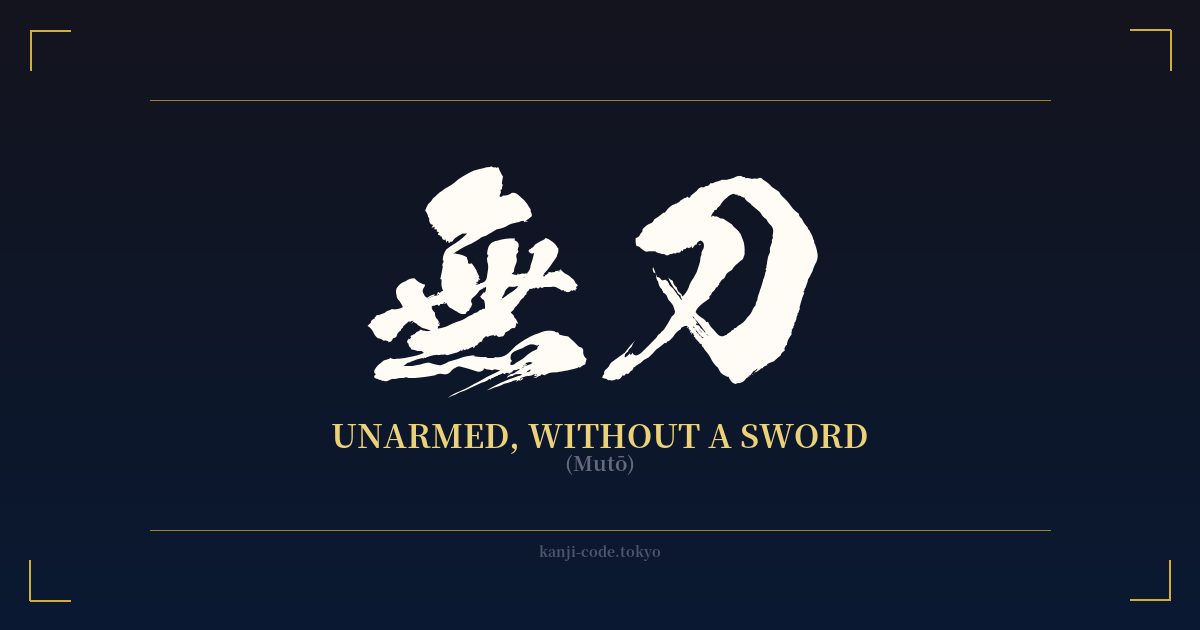
✍️ 無刀 (Mutō) — Cultural Context
At first glance, 無刀 (Mutō) translates simply as 'unarmed' or 'without a sword.' While accurate, this translation barely scratches the surface of a concept deeply embedded in the philosophy of Japanese martial arts (budō). It represents not a lack of defense, but a level of mastery so profound that a physical weapon becomes secondary, or even unnecessary.
The most direct application of this idea is seen in the technique of 'Mutō-dori' (無刀取り), which means 'sword capture.' This is an advanced set of techniques for an unarmed practitioner to disarm, control, and defeat a sword-wielding opponent. It is the ultimate test of timing, distance, and courage, requiring one to enter the deadly range of a blade with nothing but their own body and spirit.
This concept was central to the teachings of legendary swordsmen like Yagyū Munenori, who served as an instructor to the Tokugawa shoguns. In his famous treatise, 'The Life-Giving Sword' (Heihō Kadensho), he discusses the idea of the 'sword of no-sword.' This wasn't about being literally weaponless, but about achieving a state of mind where the sword and the self are one, and one's spirit is the true weapon. The physical blade is merely an extension of this spirit. To be 'Mutō' is to embody this principle, able to face any threat because your mind and spirit are already the ultimate weapon.
This philosophy is heavily influenced by Zen Buddhism, particularly the concept of 'Mu' (無), the first character in the word. 'Mu' signifies nothingness or emptiness, but not in a negative sense. In Zen, this emptiness is a state of pure potential, free from the ego and mental clutter that hinders true perception and action. A warrior who achieves this state of 'no-mind' (無心, Mushin) can react spontaneously and perfectly to any situation, unburdened by fear or hesitation. Their actions flow naturally, making them formidable even when unarmed.
Therefore, 無刀 is more than a physical state; it's a philosophical ideal. It represents the pinnacle of skill, where reliance on external tools is transcended by inner mastery. It speaks to a quiet confidence and a spirit so well-honed that it can face any challenge, armed or not. It is the victory of mind over matter, of spirit over steel.
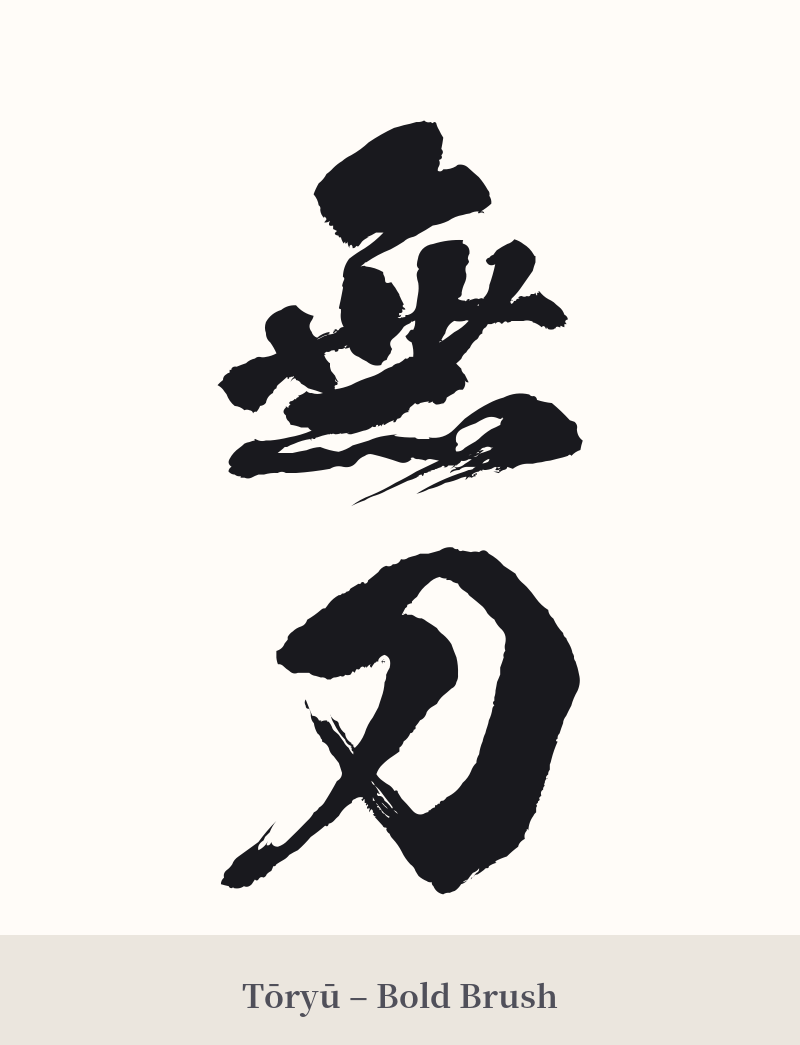
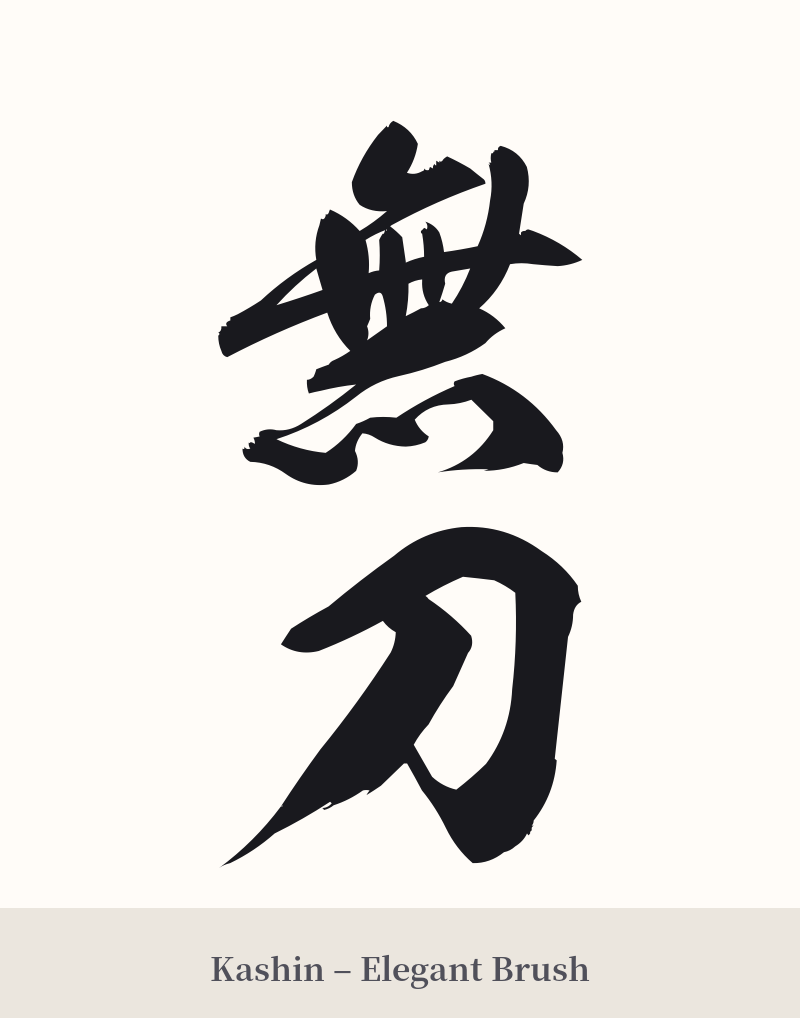
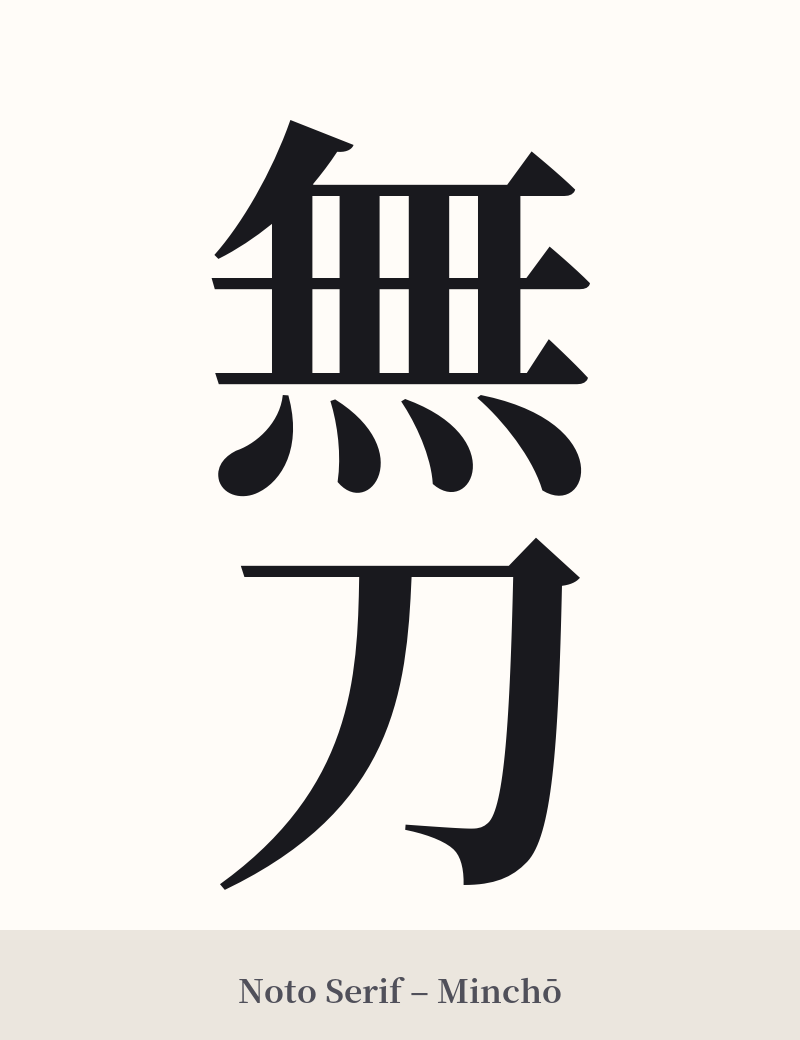
🖌️ Font Styles for 無刀
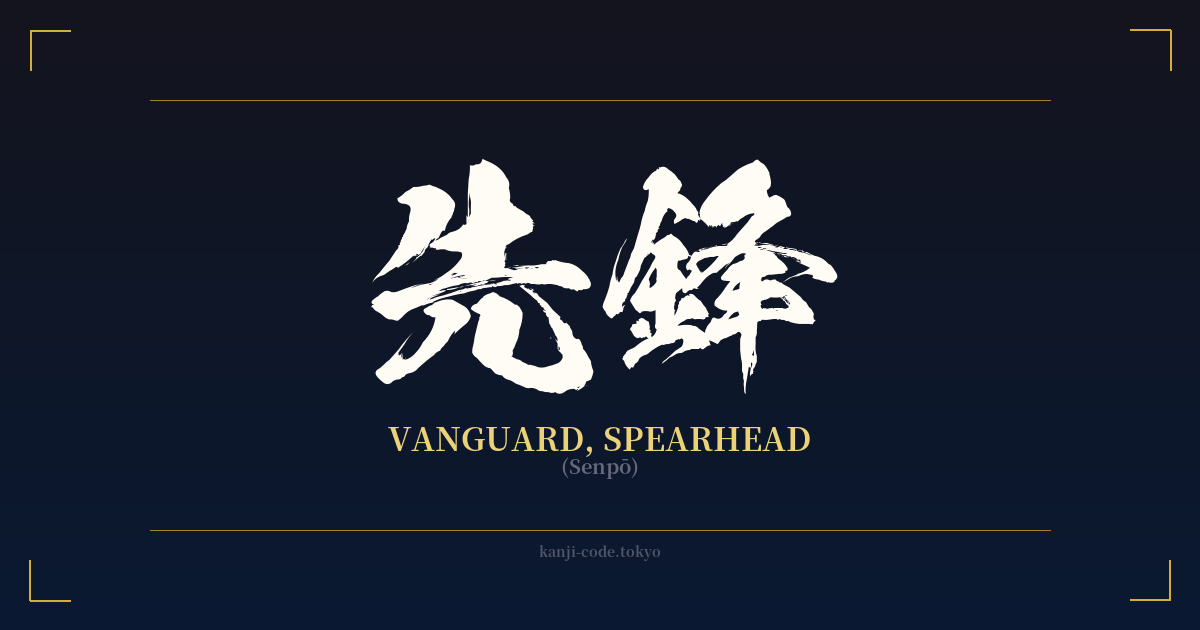
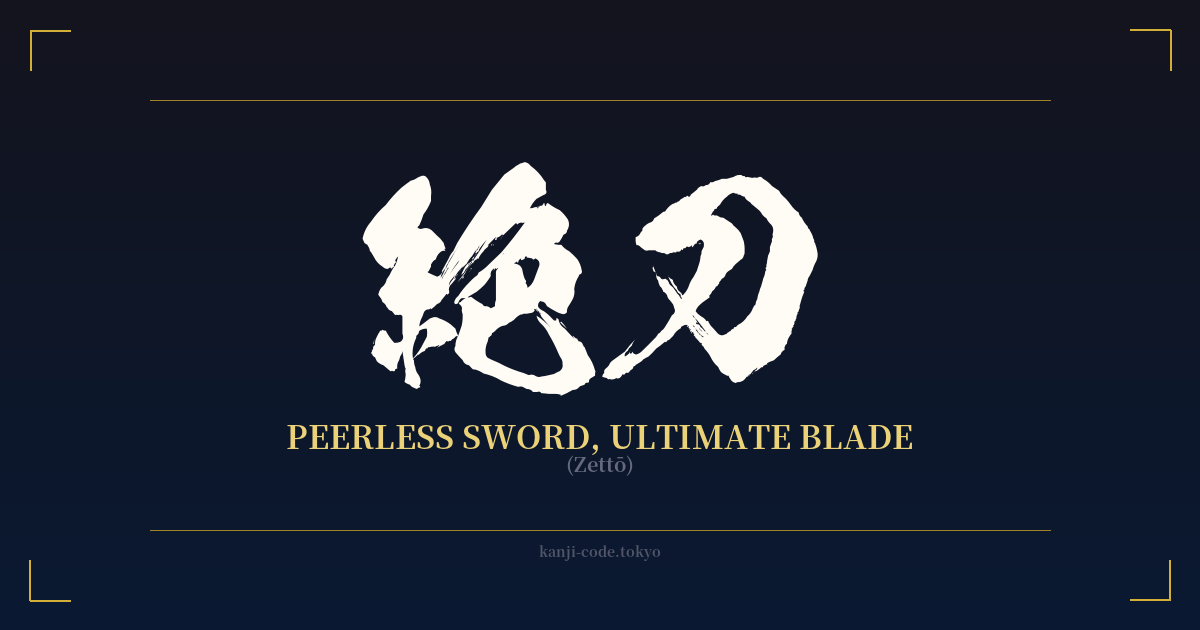
The same kanji can look dramatically different depending on the calligraphy style. Choose a font that matches the mood you want for your tattoo or design.
🎨 Tattoo Suitability
📐 Tattoo Design Guide
The two characters in 無刀 offer a beautiful visual contrast, making it a versatile choice for a tattoo design.
– Placement: This word suits vertical placement along the lines of the body that suggest strength and action. The forearm, the calf, or along the spine are excellent choices. For a more subtle placement, the back of the shoulder or across the chest works well.
– Font Style: A flowing, semi-cursive script (Gyōsho) can capture the fluid movements required for unarmed combat. For a more aggressive and impactful look, a bold, angular Kaisho (block script) emphasizes the strength and unshakeable spirit behind the concept. A highly abstract Sōsho (cursive) script can visually represent the Zen idea of 'emptiness' and formlessness.
– Visual Tips: Consider the interplay between the two kanji. The complexity of 無 (12 strokes) contrasts with the stark simplicity of 刀 (2 strokes). You could have the character 刀 appear faded or broken, visually reinforcing the 'without a sword' meaning. Alternatively, surrounding the kanji with an Ensō (Zen circle) can highlight the themes of emptiness, enlightenment, and completeness inherent in the word.
Comments