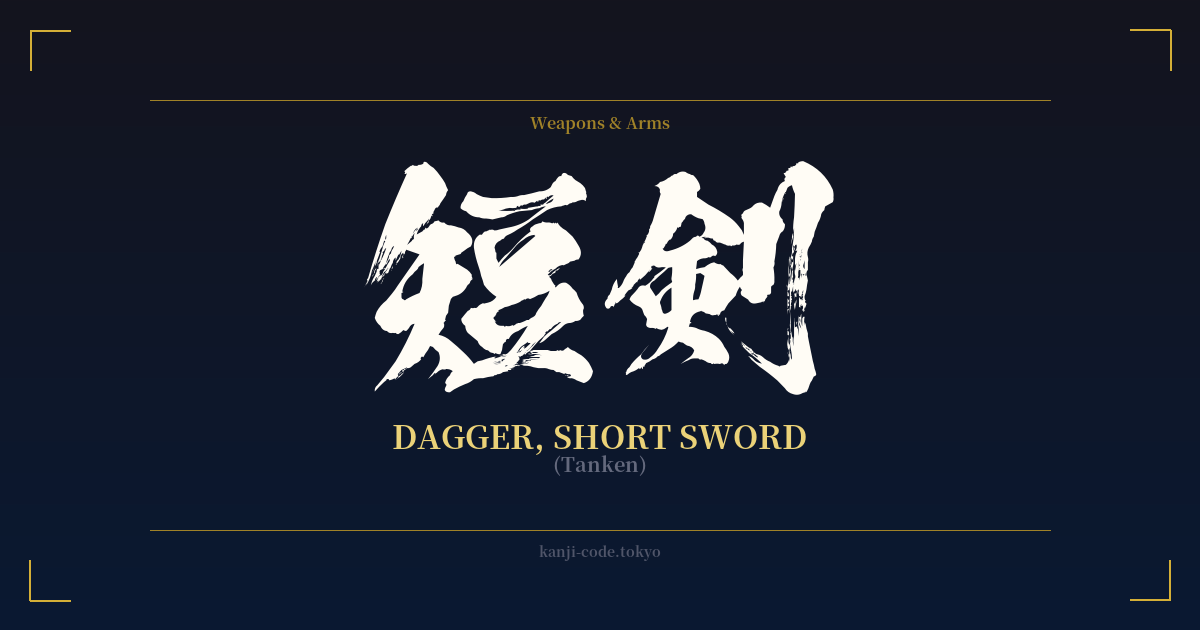
✍️ 短剣 (Tanken) — Cultural Context
短剣 (Tanken) is the Japanese word for a dagger or short sword. Composed of the kanji for 'short' (短) and 'sword' (剣), its meaning is direct and unambiguous. While a simple term, it carries the weight of centuries of Japanese martial history, evoking images of samurai, ninja, and clandestine conflict.
In Japanese history, the most famous type of dagger is the tantō (短刀), a specific blade traditionally worn by the samurai class. The tantō was not just a weapon but a tool and a symbol. It served as a secondary, close-quarters weapon to the longer katana and wakizashi. Its shorter blade made it ideal for grappling, surprise attacks, and self-defense in tight spaces where a longer sword would be impractical.
Beyond its function in combat, the tantō held deep symbolic importance. It was an emblem of the samurai's readiness and resolve. Most famously, a specific type of tantō, called a 'kwaiken', was carried by women of the samurai class for self-defense. More grimly, the tantō was the preferred instrument for the ritual suicide known as seppuku, a final act to preserve or restore one's honor. This imbues the concept of the 'tanken' with a profound sense of finality, duty, and sacrifice.
The image of the dagger is also inextricably linked with the ninja, or shinobi. For these covert agents of feudal Japan, the dagger was an essential tool for stealthy assassinations and silent takedowns. This association adds a layer of meaning related to secrecy, hidden danger, and lethal precision.
In modern Japan, 'tanken' is a word you're more likely to encounter in historical dramas, video games, or fantasy novels than in daily conversation. It represents a specific archetype: a weapon that is personal, concealable, and deadly. It symbolizes not brute force, but calculated and precise power, a hidden strength to be revealed only when necessary.
🖌️ Font Styles for 短剣
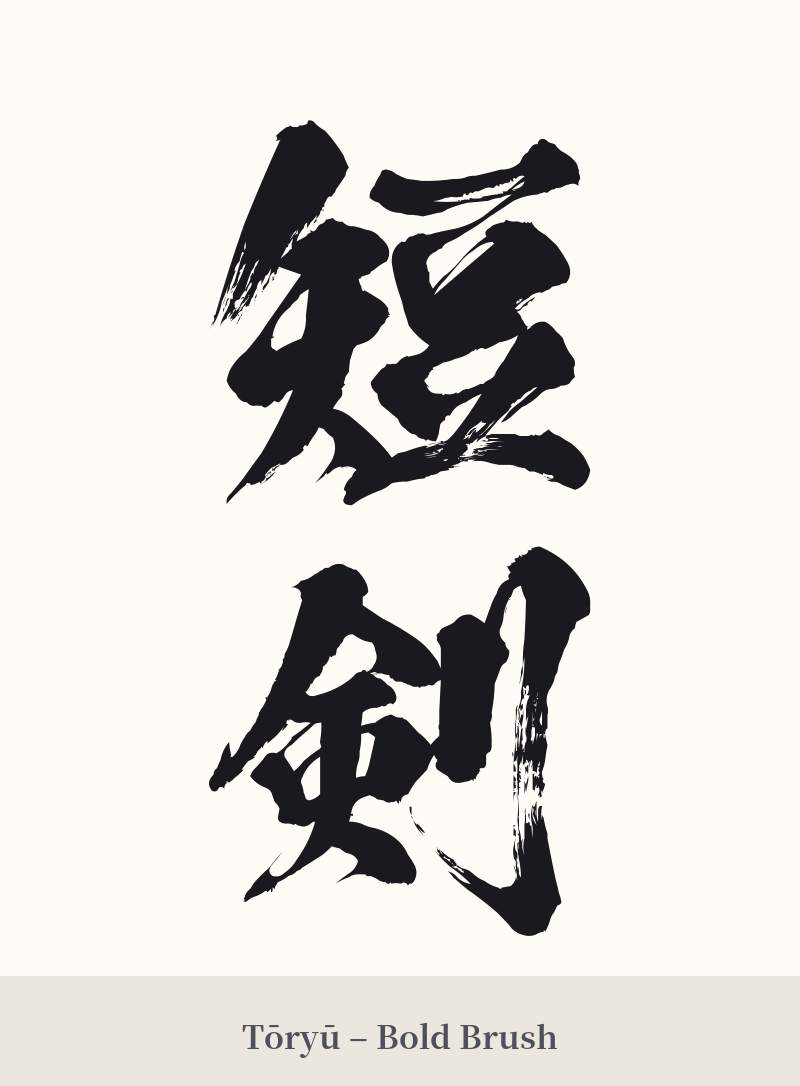
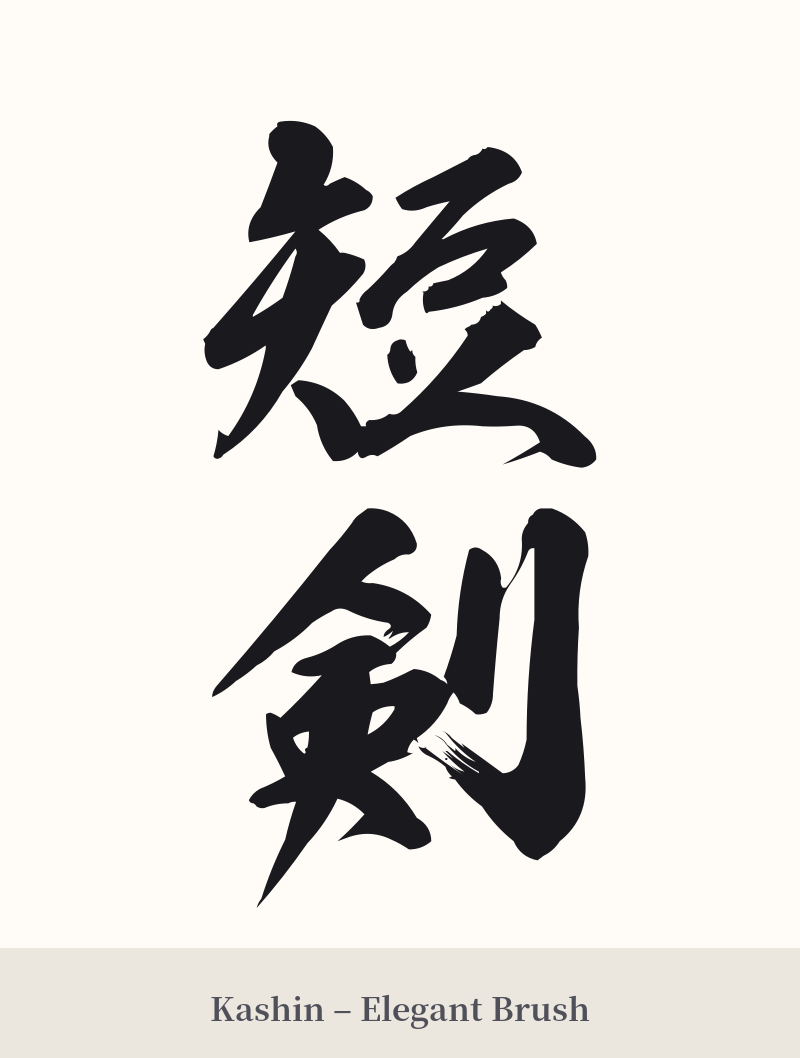
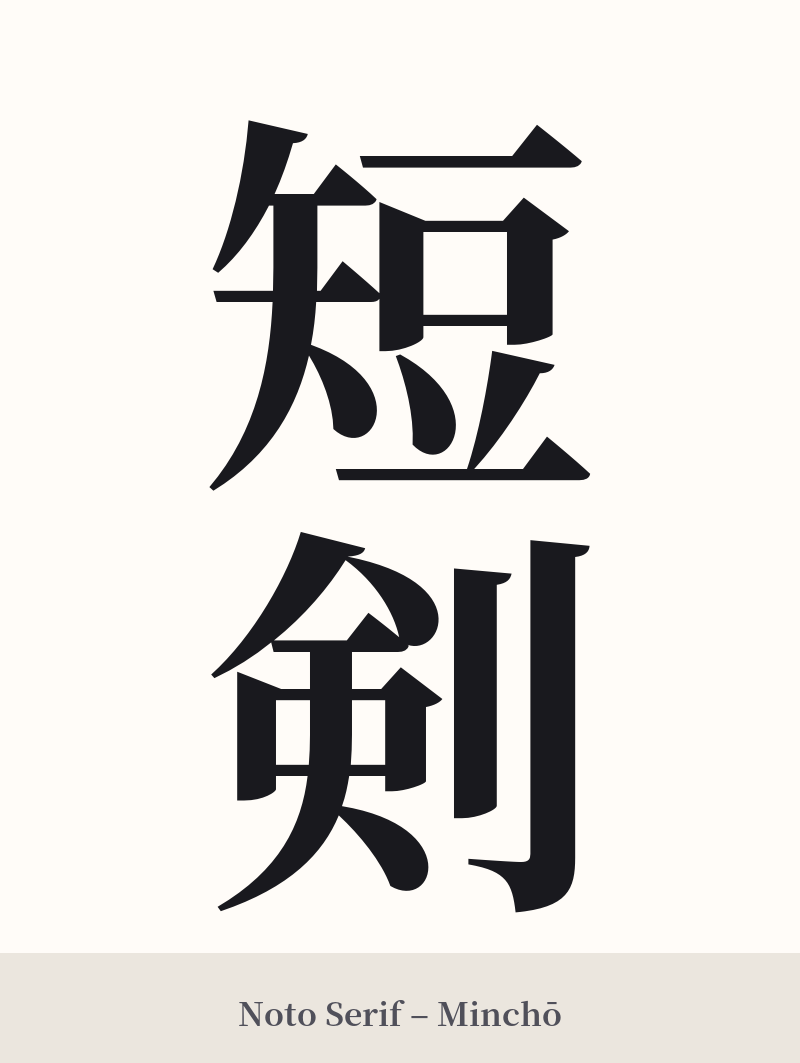
The same kanji can look dramatically different depending on the calligraphy style. Choose a font that matches the mood you want for your tattoo or design.
🎨 Tattoo Suitability
📐 Tattoo Design Guide
For a 短剣 tattoo, the design should emphasize sharpness and precision. A vertical orientation works exceptionally well, mirroring the shape of a blade itself.
– Placement: Consider placements like the forearm, calf, or along the spine or ribs. These long, straight areas complement a vertical script. A horizontal placement across the chest or upper back can also create a powerful, stable look.
– Font Style: A sharp, angular Mincho-style font can mimic the clean, cutting edge of a blade. For a more dynamic and fluid feel, a cursive calligraphy style like Gyosho suggests the swift movement of a draw or strike.
– Visual Elements: While the kanji stands strong on its own, it can be paired with complementary imagery. Consider wrapping it with a snake to symbolize protection and danger, or pairing it with a hannya mask for a darker, more dramatic theme. Adding a falling cherry blossom (sakura) can introduce the samurai concept of the beautiful, transient nature of life.
Comments