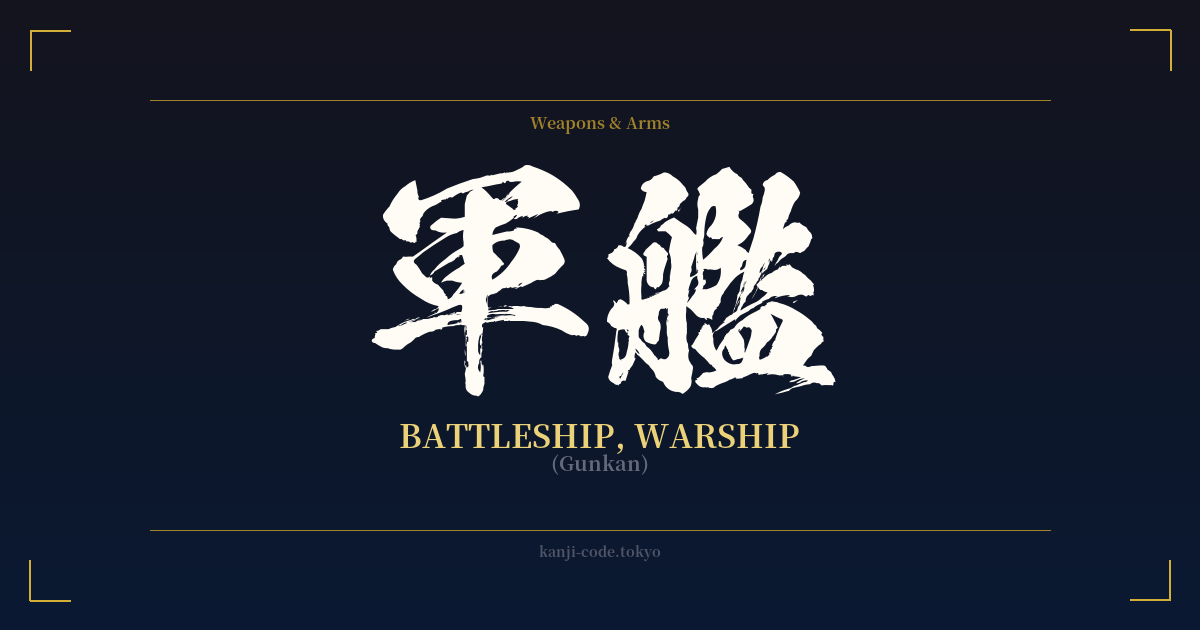
✍️ 軍艦 (Gunkan) — Cultural Context
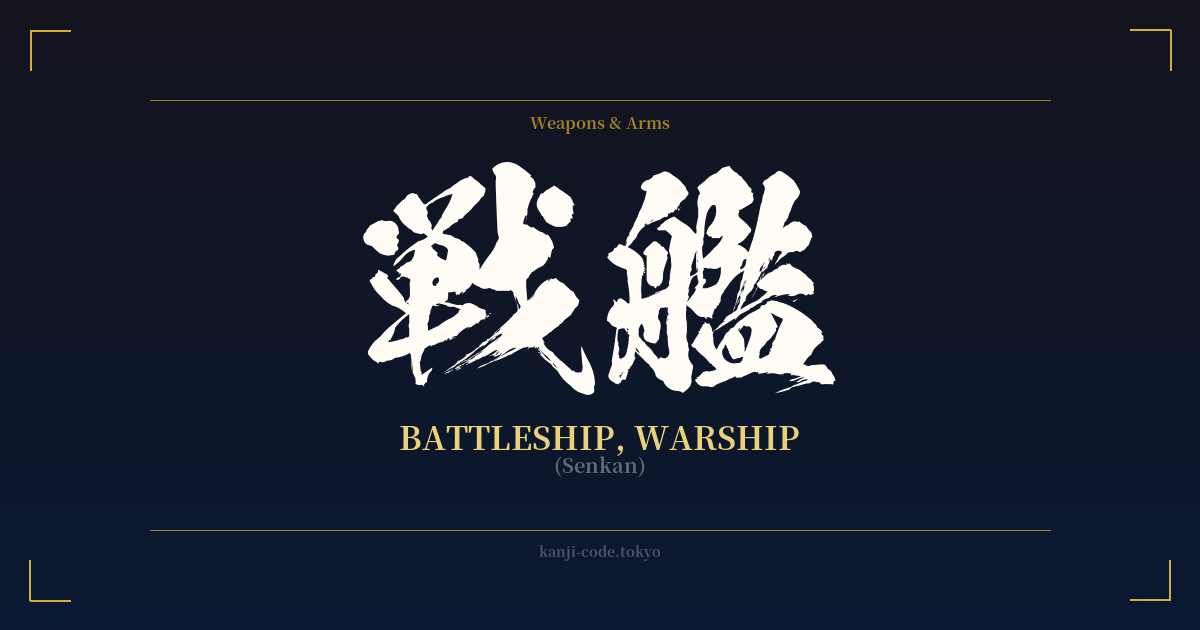
The word 軍艦 (Gunkan) translates directly to 'military ship' and is the general Japanese term for a warship or battleship. It’s a compound word that powerfully evokes images of naval might, technological prowess, and the often-turbulent history of modern Japan.
The term gained prominence during the Meiji Restoration in the late 19th century, a period when Japan rapidly modernized its military to stand on equal footing with Western powers. Building a powerful navy was a cornerstone of this effort, and 'gunkan' became symbols of national ambition and sovereignty. They were seen as floating castles, projecting the nation's strength across the seas.
One of the most famous early examples is the battleship Mikasa, the flagship of Admiral Tōgō Heihachirō during the Russo-Japanese War (1904-1905). Its victory at the Battle of Tsushima cemented Japan's status as a major world power and turned the Mikasa into a national icon, which is now preserved as a museum ship in Yokosuka.
In the 20th century, the image of the 'gunkan' became inextricably linked with World War II. The battleships Yamato and Musashi, the largest ever built, represent both the pinnacle of Japanese naval engineering and the tragic end of the battleship era. While revered by some for their engineering and the spirit of their crews, they are also somber reminders of a devastating conflict. The sinking of the Yamato on a one-way mission to Okinawa is a particularly poignant and debated event in Japanese history.
In contemporary Japan, 'gunkan' has a dual identity. It exists in history books and museums as a relic of a past era. But it also thrives in popular culture, most famously in the anime series 'Space Battleship Yamato' ('Uchū Senkan Yamato'), which reimagined the historical vessel as a spaceship on a mission to save Earth. More recently, games like 'Kantai Collection' personify historical warships as characters, creating a new layer of cultural engagement that is both popular and sometimes controversial for its portrayal of military history. Thus, 'Gunkan' is not just a word; it's a vessel carrying a heavy cargo of history, pride, tragedy, and modern fantasy.
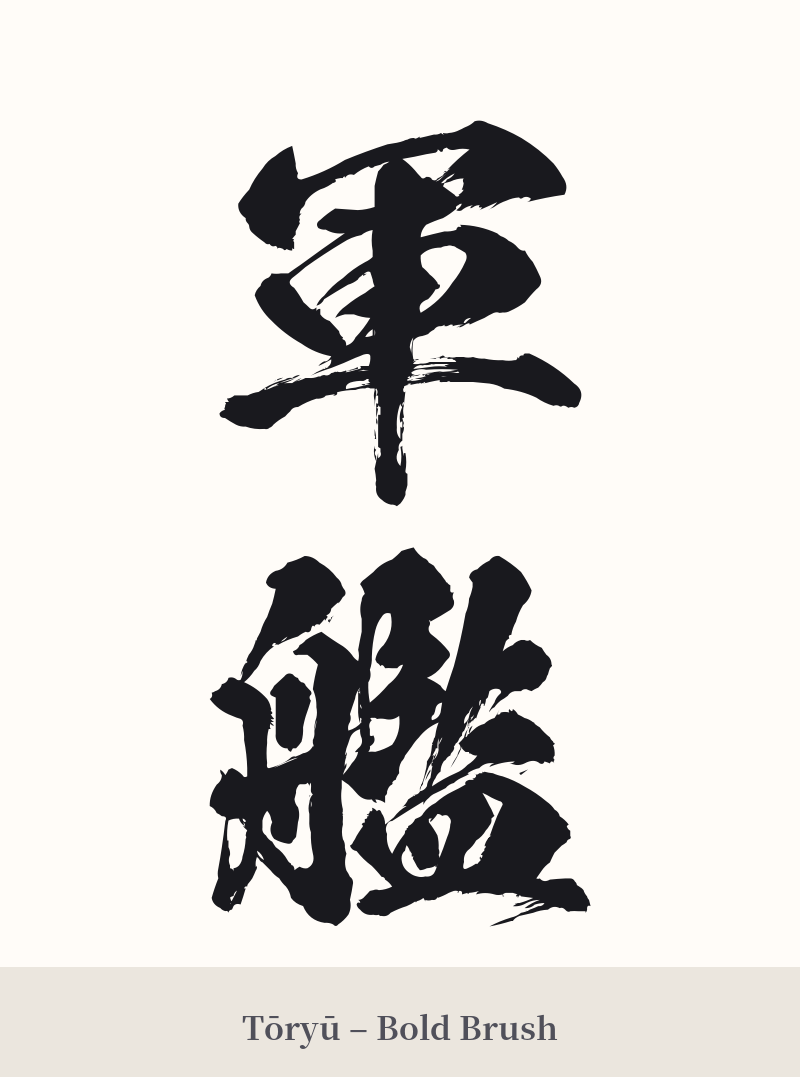
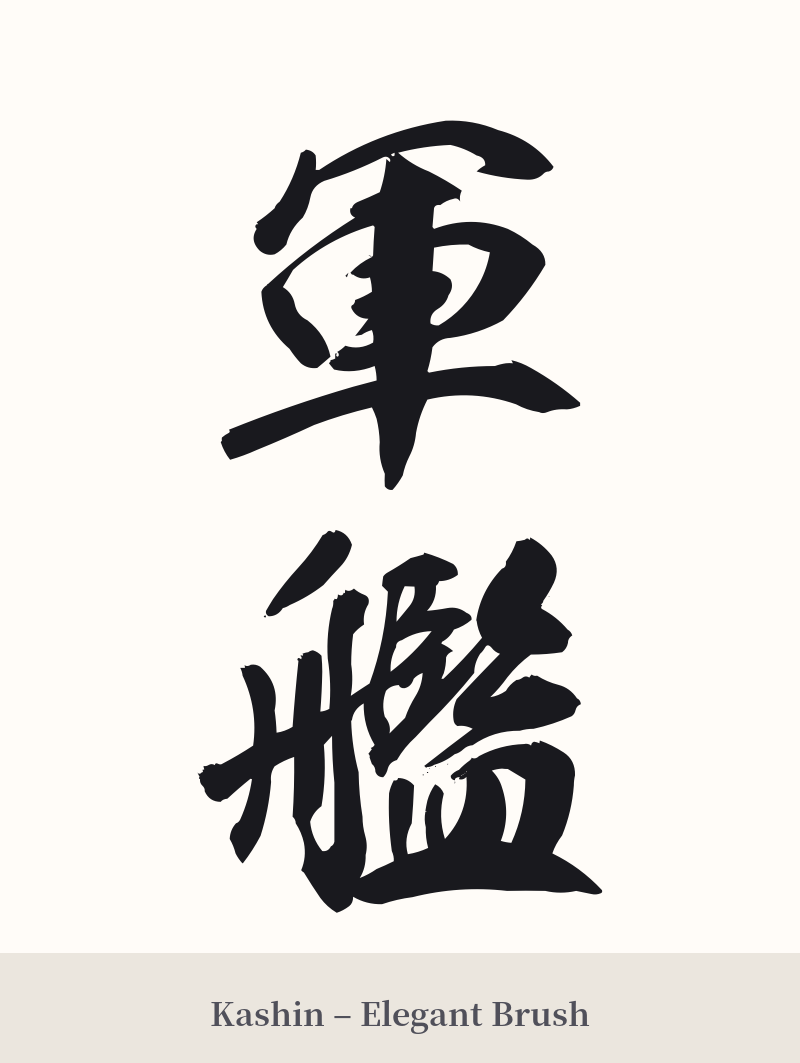
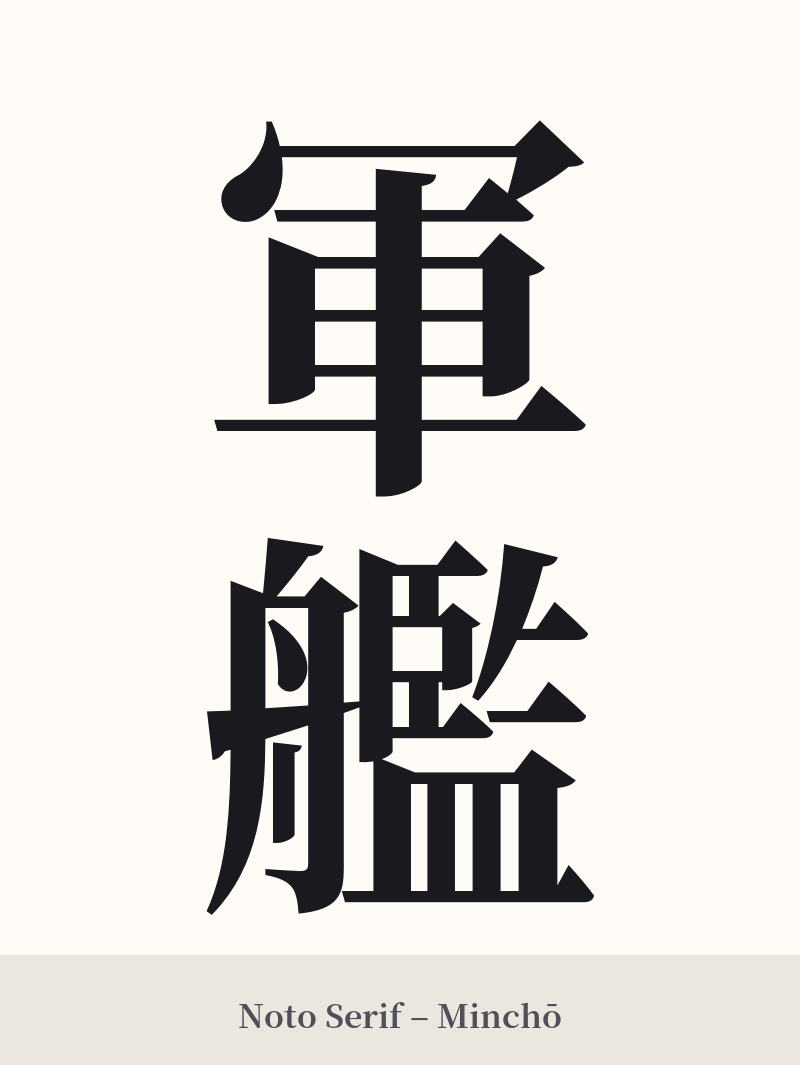
🖌️ Font Styles for 軍艦
The same kanji can look dramatically different depending on the calligraphy style. Choose a font that matches the mood you want for your tattoo or design.
🎨 Tattoo Suitability
📐 Tattoo Design Guide
Due to the complexity of this kanji, particularly the second character, careful consideration of design and placement is crucial.
– Placement: This design demands a large, flat surface area to maintain legibility. The back, chest, or the outer thigh are excellent choices. A forearm or calf could work, but only if the tattoo is sized generously.
– Style: A bold, clear script is essential. A thick, blocky Kaisho (regular script) or a strong, semi-cursive Gyosho would work well to define the numerous strokes in 艦. Avoid overly ornate or thin styles, as they will likely blur together over time.
– Orientation: Vertical placement is classic and visually striking for Japanese kanji. It allows the characters to stack naturally and creates a powerful pillar-like effect on a limb or down the spine.
– Visuals: Consider pairing the kanji with thematic imagery. Traditional Japanese waves (nami), dramatic clouds, or a subtle silhouette of a battleship could frame the characters and enhance the overall narrative of the piece.
Comments