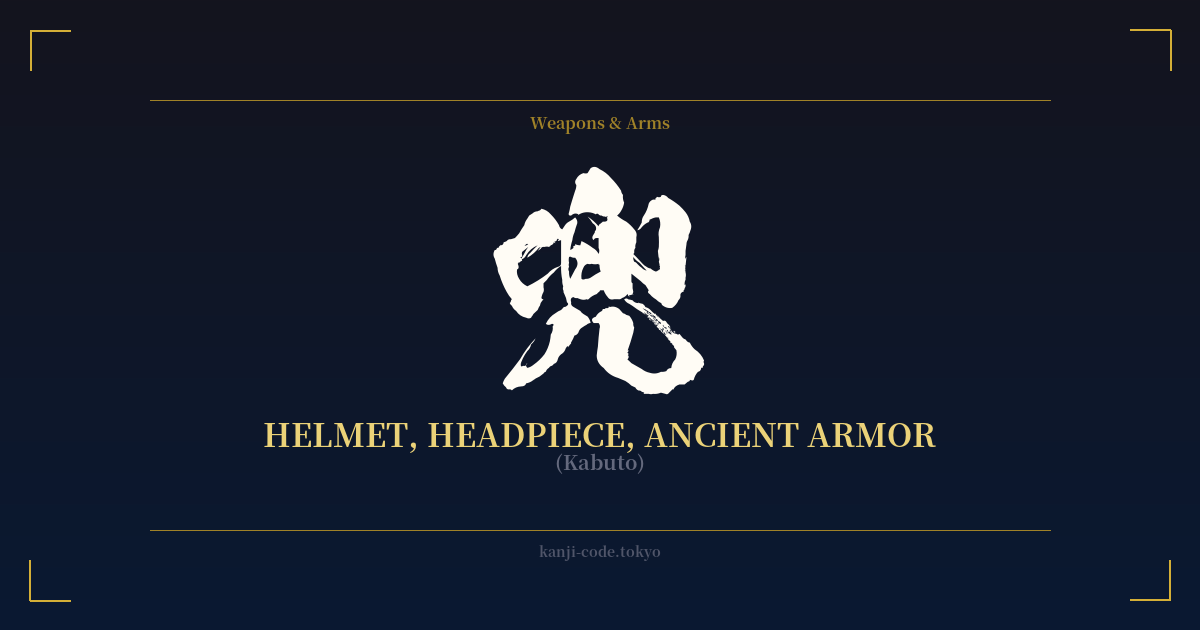
✍️ 兜 (Kabuto) — Cultural Context
The kanji 兜 (Kabuto) refers to the traditional helmet worn by Japanese samurai warriors. More than just protective headgear, the kabuto was a powerful symbol of a warrior's status, identity, and personal beliefs. It was the crown of the samurai, an object of both practical engineering and profound artistic expression.
Historically, the kabuto evolved over centuries, from simple bowl-like helmets in the Kofun period to the elaborate and fearsome designs of the Sengoku (Warring States) period. Each kabuto was a unique masterpiece, often decorated with a prominent crest called a 'maedate' (前立). These crests were not mere ornaments; they served to identify the warrior on the battlefield and often represented their clan, personal values, or invoked divine protection. Famous examples include the crescent moon of Date Masamune or the stag antlers of Honda Tadakatsu.
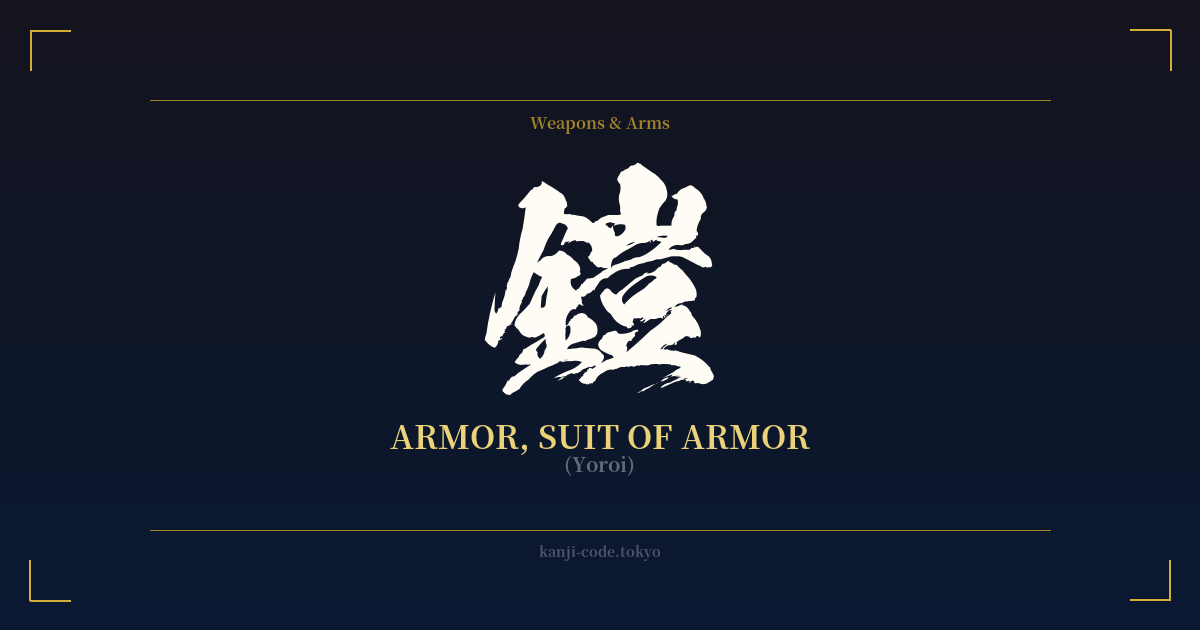
The kabuto was an integral part of the full suit of armor, or 'yoroi' (鎧). Its construction, with overlapping plates and silk cords, was a testament to Japanese craftsmanship. The fierce-looking face mask, or 'mempo' (面頬), attached to the kabuto was designed to both protect the face and intimidate enemies, often featuring snarling expressions, wrinkles, and bristling mustaches.
Beyond the battlefield, the kabuto holds a deep place in Japanese culture and language. The idiom 'kabuto no o o shimeru' (兜の緒を締める), which translates to 'tighten the strings of your helmet,' is a well-known proverb. It means that one should not let their guard down even after a victory, but rather remain vigilant and prepared for the next challenge. This phrase encapsulates the discipline and mindset central to Bushido, the way of the warrior.
Today, the image of the kabuto is a potent symbol of Japanese heritage, strength, and the samurai spirit. It appears frequently in popular culture, from historical dramas and films to anime and video games, representing an archetypal warrior figure. For many, the kanji 兜 is not just about armor; it's about embodying the principles of protection, honor, and unwavering resolve.
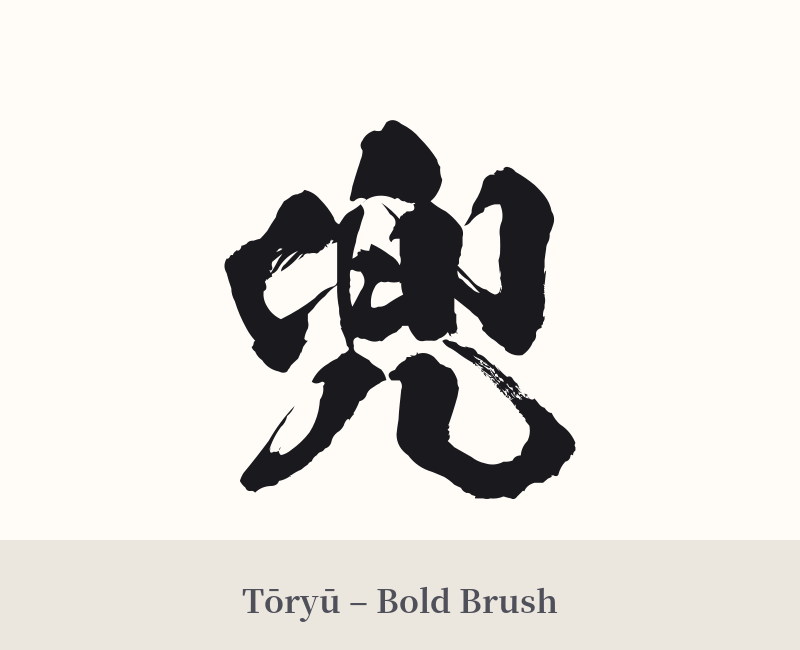
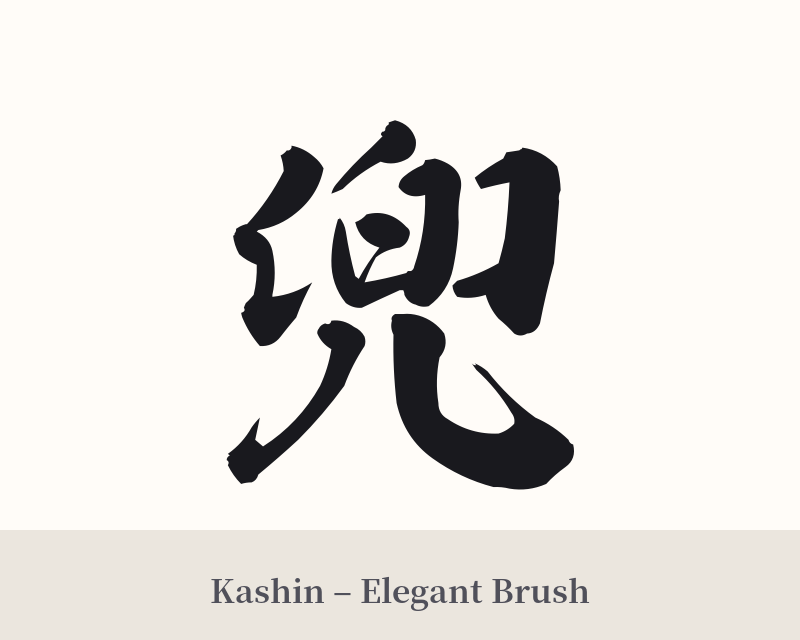
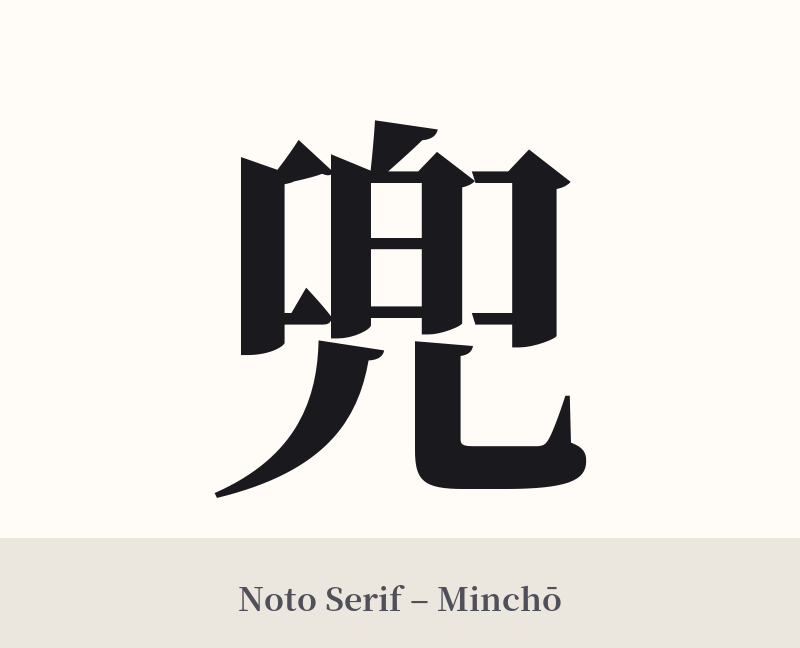
🖌️ Font Styles for 兜
The same kanji can look dramatically different depending on the calligraphy style. Choose a font that matches the mood you want for your tattoo or design.
🎨 Tattoo Suitability
📐 Tattoo Design Guide
A tattoo of 兜 (Kabuto) should feel strong and deliberate. Its historical weight calls for a design that is both respectful and powerful.
– Placement: This kanji works exceptionally well on areas of the body that suggest strength and protection. Consider the shoulder, upper back, calf, or forearm. A vertical placement along the spine or arm can enhance its commanding presence.
– Style: A bold, semi-cursive calligraphy style (Gyosho) can capture the dynamic energy of the samurai. For a more formal and solid look, a traditional block script (Kaisho) is an excellent choice. Avoid overly thin or wispy fonts that might detract from the kanji's inherent strength.
– Visuals: While 兜 is a powerful standalone character, it can be integrated into a larger piece. Consider pairing it with classic Japanese motifs like crashing waves (symbolizing resilience), cherry blossoms (the transient nature of a warrior's life), or a dragon. You could also have the kanji as a central element within a silhouette of a full kabuto helmet.
Comments