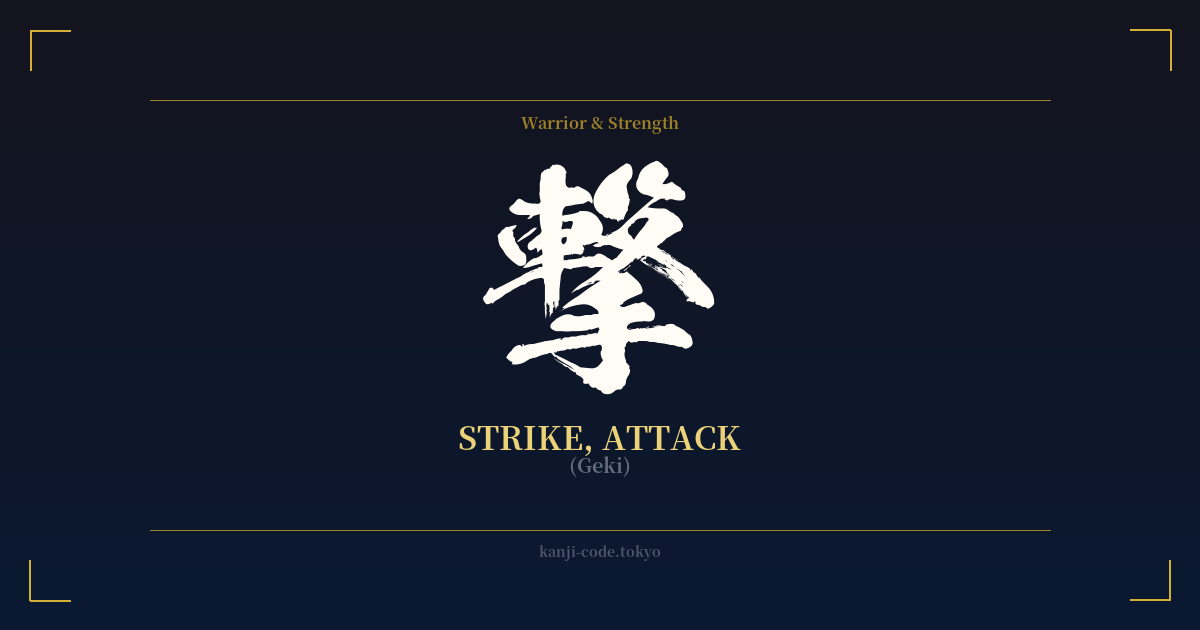
✍️ 撃 (Geki) — Cultural Context
The kanji 撃 (geki) is a character of pure, unadulterated action. It embodies the very moment of impact, the decisive act of striking. Unlike more philosophical concepts in Japanese martial arts, 撃 is direct, forceful, and concerned with a singular, powerful event.
Its etymology paints a vivid picture of this intensity. The character is a combination of two main parts. On the left is the radical 手 (te), meaning 'hand,' which grounds the action in a physical act. The right side is more complex, derived from a component that originally depicted a chariot (車) and a weapon or hand holding a lance (殳). The combined image is one of a hand launching an assault with the force and speed of a war chariot, a collision of immense power.
In the world of Japanese martial arts (budō), 撃 is a foundational concept. It appears in essential vocabulary like 攻撃 (kōgeki), the general term for 'attack,' and 打撃 (dageki), meaning 'a blow' or 'a strike.' You'll hear it in dojos for karate, kendo, and judo. It represents the culmination of training: the perfectly timed, precisely executed technique meant to overwhelm an opponent. A 'geki' is not a tentative jab; it is a committed, full-body strike.
Beyond the dojo, 撃 is used to describe any sudden and forceful event. The word 衝撃 (shōgeki) means 'shock' or 'impact,' whether physical or emotional. The term 電撃 (dengeki), literally 'electric strike,' is used for lightning-fast military assaults (a 'blitz') or even a sudden, shocking event in a story. To witness an event is 目撃 (mokugeki), literally an 'eye-strike,' suggesting the event forcefully imprinted itself on your vision.
This versatility shows that 撃 is about more than just fighting. It represents a moment of decisive force that changes a situation instantly. It is the thunderclap, the lightning strike, the final blow. While it lacks the quiet contemplation of 'zen' or the strategic depth of 'heiho,' it possesses an undeniable, raw power that captures the essence of a critical, impactful moment.
🖌️ Font Styles for 撃
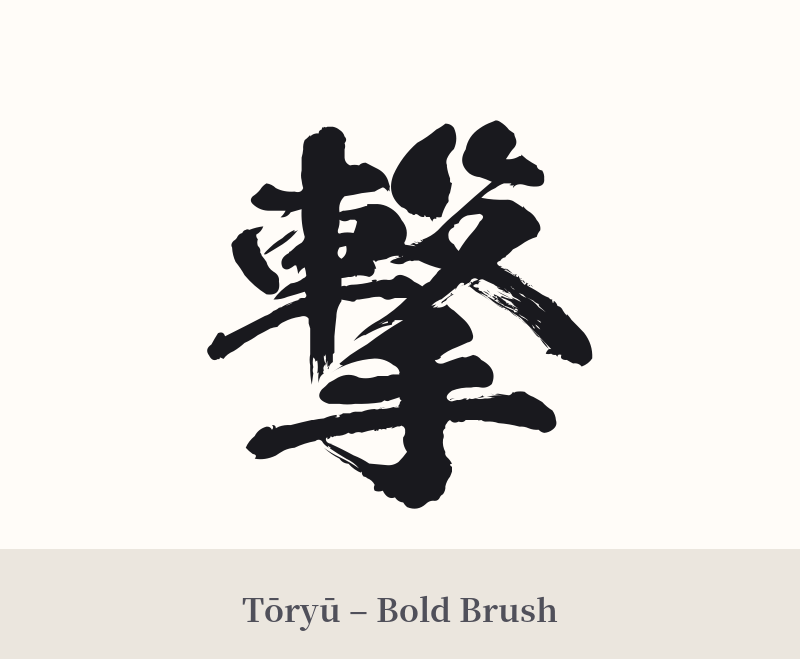
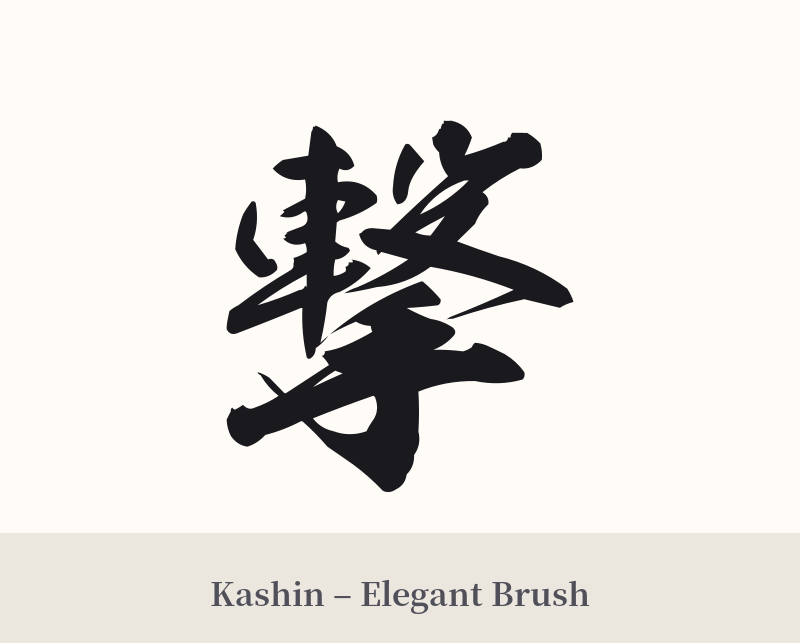
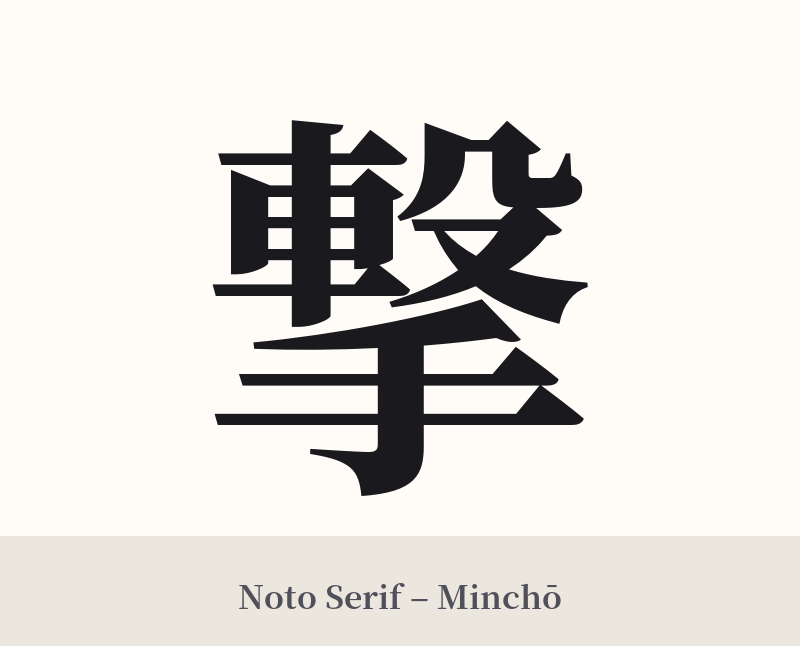
The same kanji can look dramatically different depending on the calligraphy style. Choose a font that matches the mood you want for your tattoo or design.
🎨 Tattoo Suitability
📐 Tattoo Design Guide
A tattoo of 撃 (Geki) should convey dynamism and power. It's a character that demands a bold presentation.
– Placement Suggestions: This kanji works well in vertical spaces that complement its forceful nature. Consider the forearm (to align with your own 'strike'), the calf, or down the spine or shoulder blade.
– Font Style Choices: The style can dramatically alter the feel. A thick, angular Kaisho (block) script can give it a sense of solid, impactful weight. Conversely, a more fluid, semi-cursive Gyōsho or fully cursive Sōsho style can emphasize the speed and motion of the strike.
– Visual Tips: Because 撃 is a complex character, it needs space to be legible. Avoid making it too small. It can be the centerpiece of a larger design, perhaps integrated with a fist, a dragon, or abstract splashes of red or black ink to represent the energy of the impact. A strong vertical composition is often most effective.
Comments