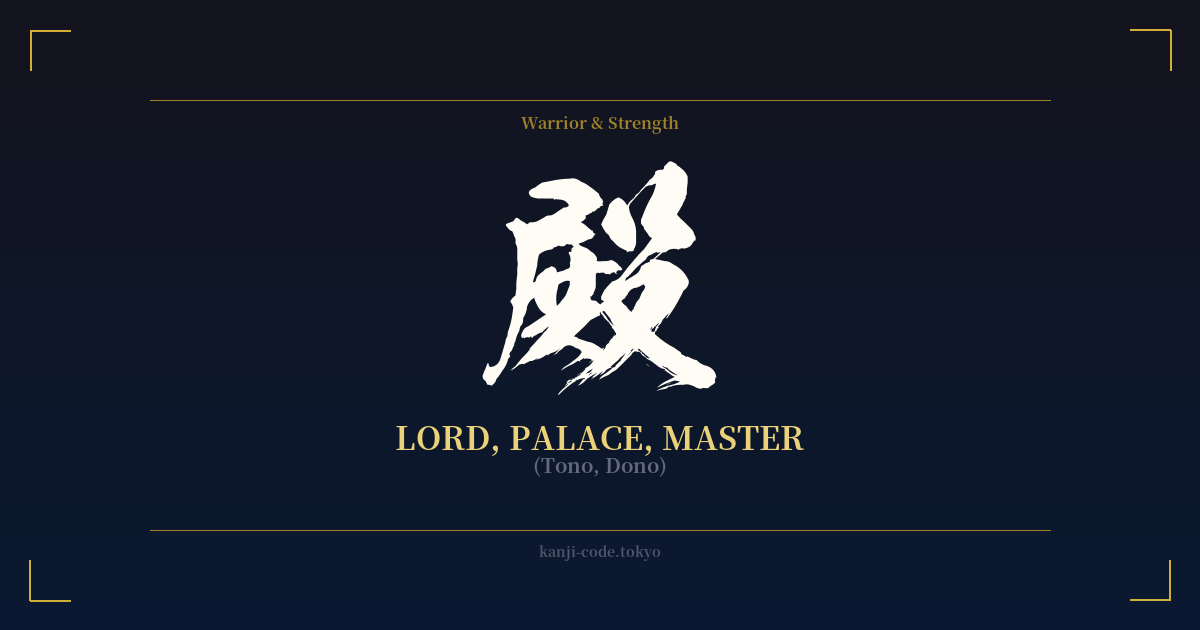
✍️ 殿 (Tono, Dono) — Cultural Context
The kanji 殿 (tono/dono) is a character deeply embedded in the hierarchical structure of feudal Japan, carrying the weight of authority, respect, and physical grandeur. Its meaning is twofold, referring to both a magnificent building or palace, and the esteemed person who resides within it—a lord or master.
Originally, the character's etymology suggests a connection between structure and action. It combines elements representing a building or shelter with a component that signifies a hand holding a tool or weapon. This paints a picture of someone holding authority or performing an action from a seat of power, the very essence of a feudal lord governing from his castle or hall.
In the age of the samurai, addressing one's feudal lord as 'Tono' (殿) was the standard. It was a term of absolute respect, acknowledging the daimyō's power and the vassal's loyalty. To hear the word 'Tono!' in a Japanese historical drama (jidaigeki) is to be instantly transported to a world of samurai, castles, and strict codes of honor. It was the verbal equivalent of a deep bow, a recognition of one's place below a powerful master.
Over time, the reading 'dono' became prominent as a formal honorific suffix, attached to a person's name (e.g., Oda-dono). In the complex system of Japanese honorifics, '-dono' sits in a unique place. It is more formal and respectful than the ubiquitous '-san' but generally considered a step below '-sama,' which is often reserved for deities, royalty, or deeply respected customers. Among samurai of equal or near-equal rank, '-dono' was a common and appropriate form of address, conveying mutual respect within their warrior class.
Today, the use of 殿 in spoken language is almost entirely archaic. Using 'tono' or '-dono' in a casual conversation would sound theatrical and out of place, as if you were role-playing a samurai. However, its legacy persists in formal writing. You will still find 殿 printed on certificates, awards, and official business correspondence, where it serves as a formal, somewhat impersonal title for the recipient. This modern usage has stripped away some of the personal fealty of the samurai era, but it retains a core feeling of formality and high stature.
🖌️ Font Styles for 殿
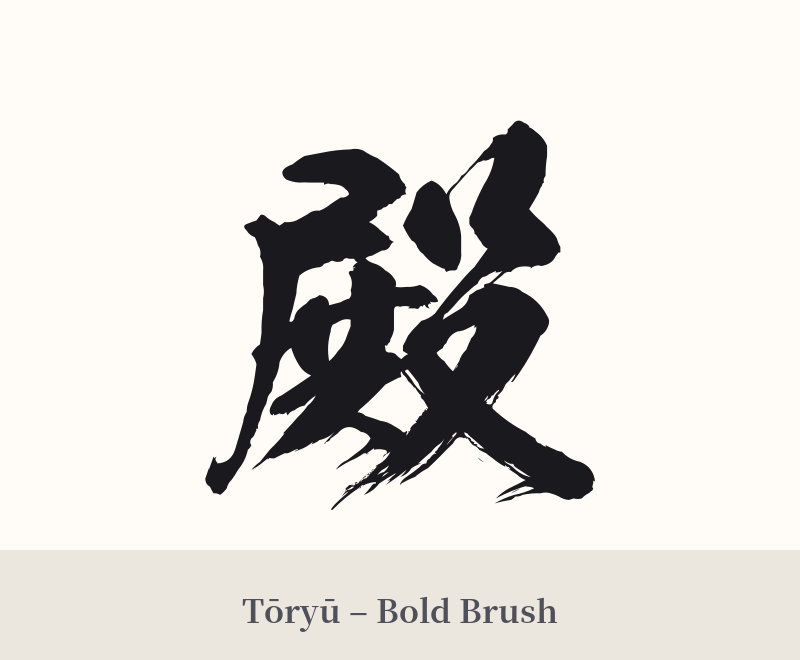
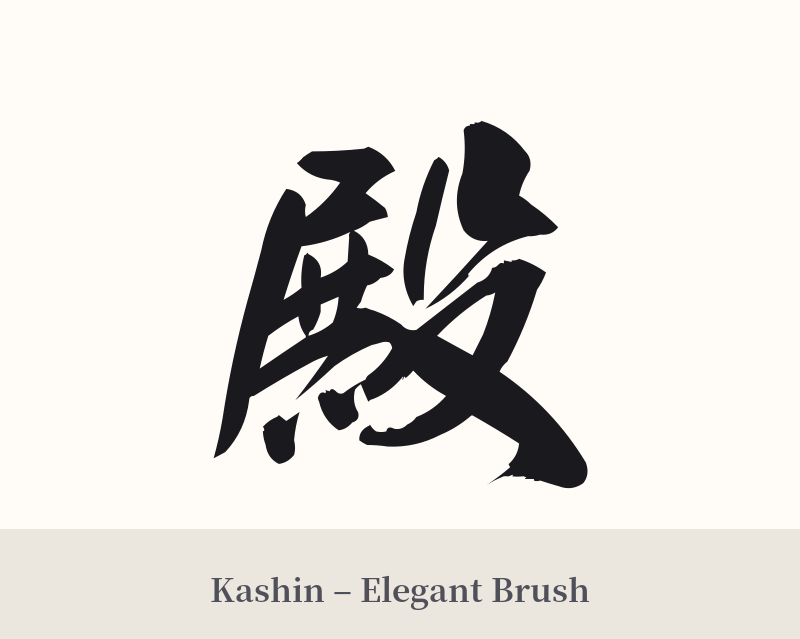
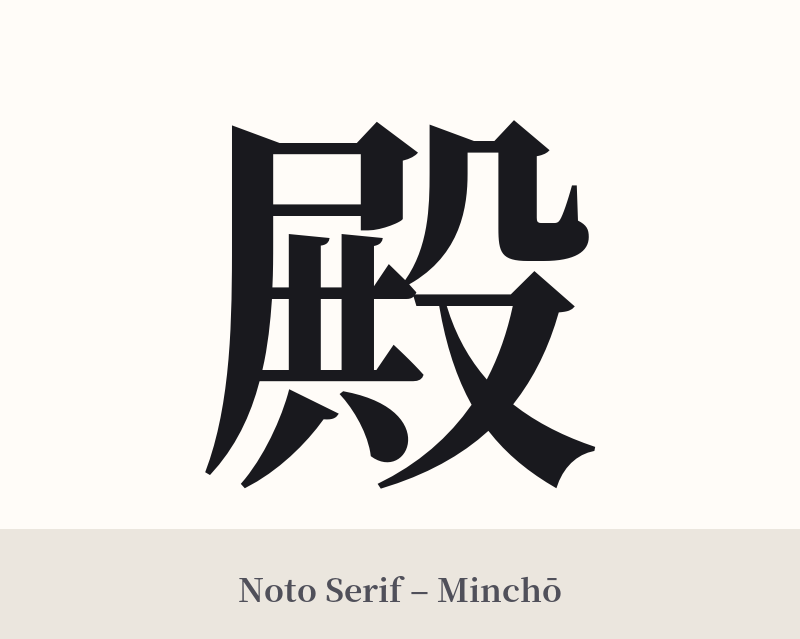
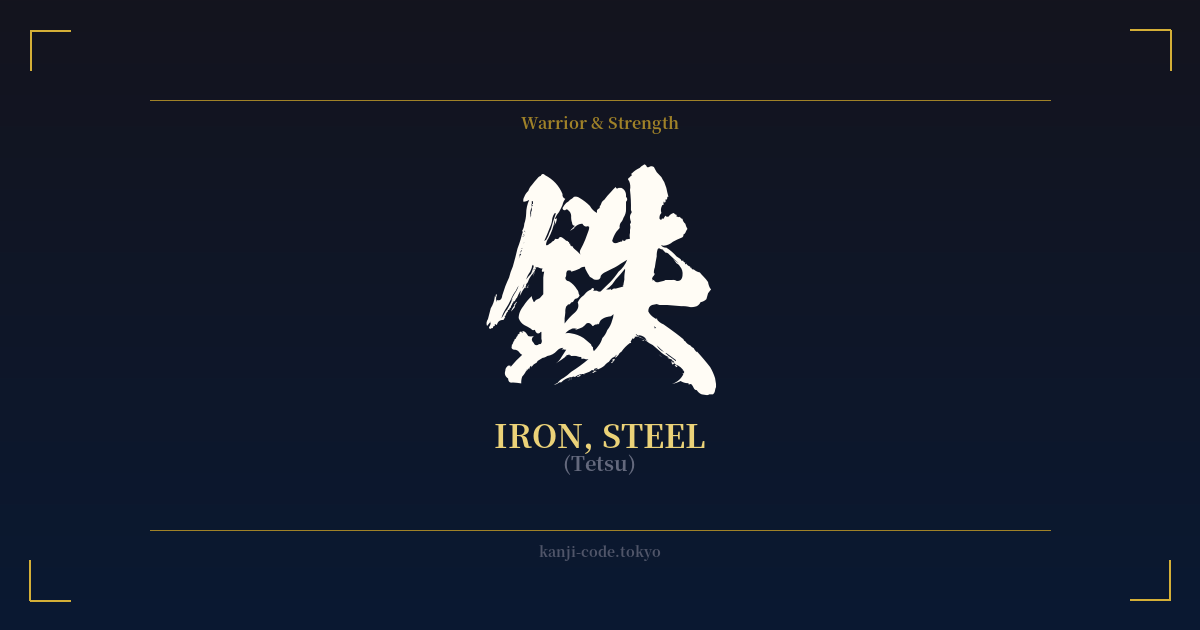
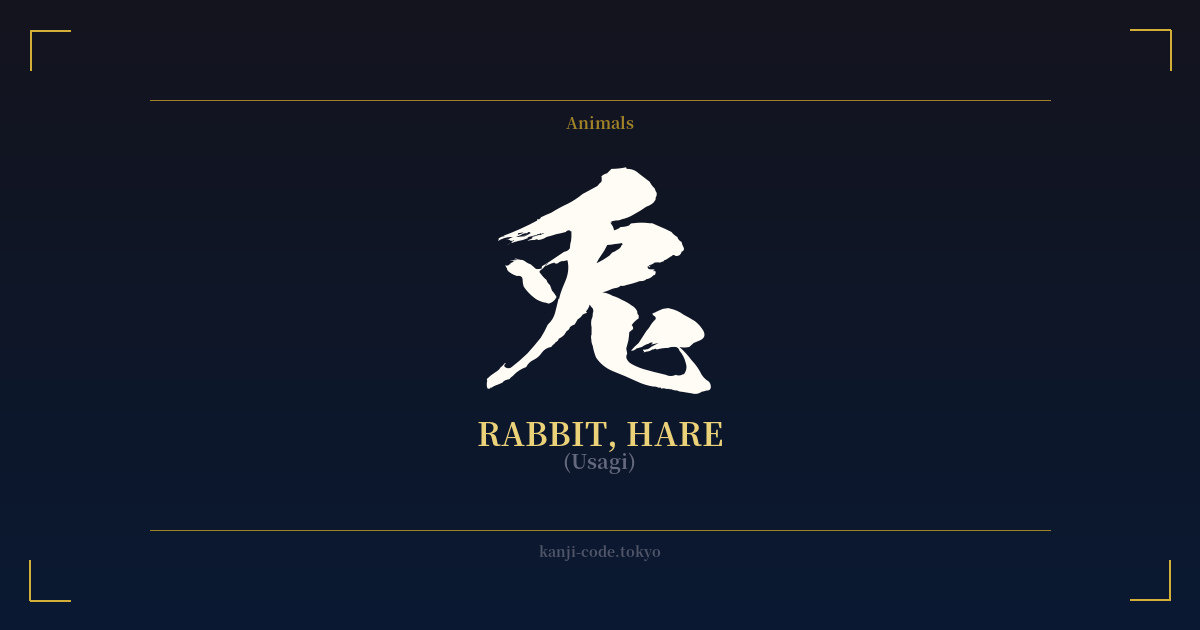
The same kanji can look dramatically different depending on the calligraphy style. Choose a font that matches the mood you want for your tattoo or design.
🎨 Tattoo Suitability
📐 Tattoo Design Guide
A tattoo of 殿 demands a design that reflects its historical weight and sense of authority. Its form is solid and architectural, lending itself to bold interpretations.
– Placement: Consider areas that suggest strength and support, such as the upper arm, the back of the shoulder, or the calf. These placements provide a solid canvas for the character's balanced structure.
– Font Style: Traditional is key. A powerful, semi-cursive Gyosho or a formal, blocky Kaisho script would be most appropriate. These styles honor the kanji's historical roots. A modern, minimalist, or overly ornate font would clash with its dignified essence.
– Visual Tips: For this kanji to work, it needs to be inked with confidence. Use thick, decisive lines to give it presence. As a standalone piece, it can look somewhat incomplete, so it might be better integrated into a larger Japanese-style piece that provides more context, such as being placed near a castle or alongside a samurai motif.
Comments