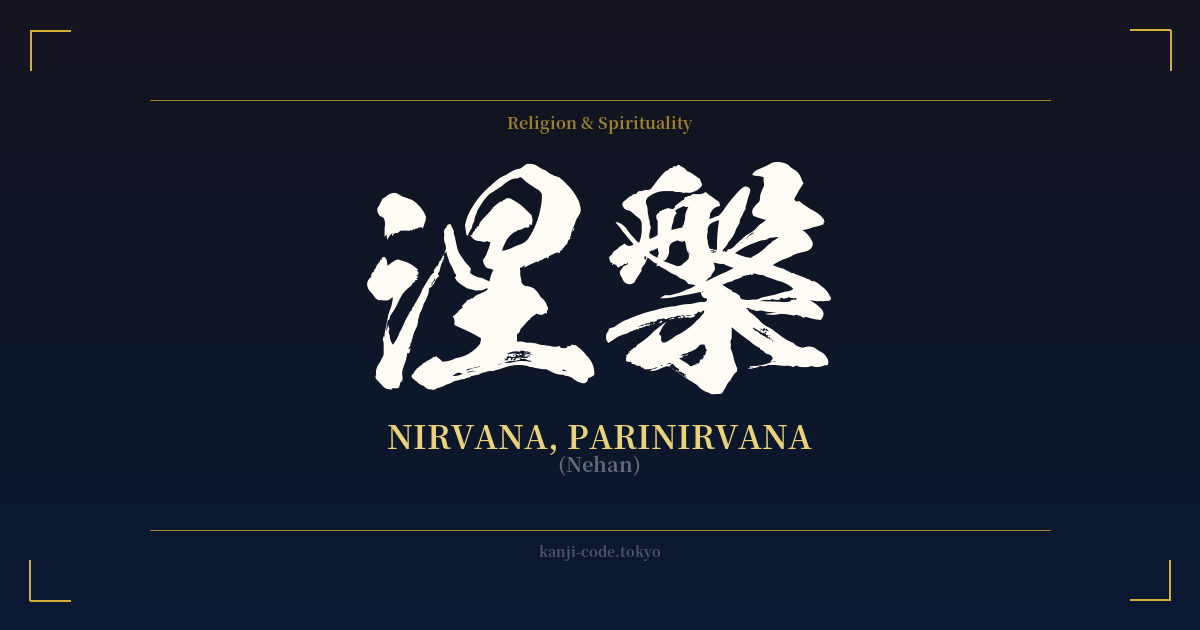
✍️ 涅槃 (Nehan) — Cultural Context
涅槃 (Nehan) is the Japanese word for the Sanskrit term Nirvāṇa, a foundational concept in Buddhism. It signifies the ultimate goal of the spiritual path: the cessation of suffering and the liberation from samsara, the endless cycle of death and rebirth. The literal meaning of Nirvana is 'to extinguish' or 'to blow out,' referring to the extinguishing of the 'three fires' of greed, hatred, and delusion that cause human suffering.
In Buddhist thought, Nehan is not a heavenly paradise one goes to after death, but a state of profound peace, tranquility, and non-attachment that can be achieved in this life. It is the realization of ultimate reality, free from the ego and the illusions of the material world. When an enlightened being, such as the historical Buddha Siddhartha Gautama, passes away, they are said to enter Parinirvāṇa (完全なる涅槃 – kanzen'naru nehan), or 'complete Nirvana,' from which they will not be reborn.
This event is one of the most iconic scenes in Buddhist art, often depicted as the 'Reclining Buddha.' These statues and paintings show the Buddha lying on his right side, peacefully transitioning from his physical form. This imagery has deeply influenced Japanese art and religious iconography for centuries, and temples throughout Japan feature depictions of the Buddha entering Nehan.
While deeply rooted in religion, the word 涅槃 has also seeped into secular Japanese language. It can be used colloquially to describe a state of blissful peace or ultimate comfort. In a more somber context, it can also be a euphemism for death, particularly a peaceful one. This dual meaning, both sacred and sometimes secular, adds a layer of complexity to the word. It represents a state of being that is the absolute antithesis of the stress and chaos of daily life—a quiet, final peace.
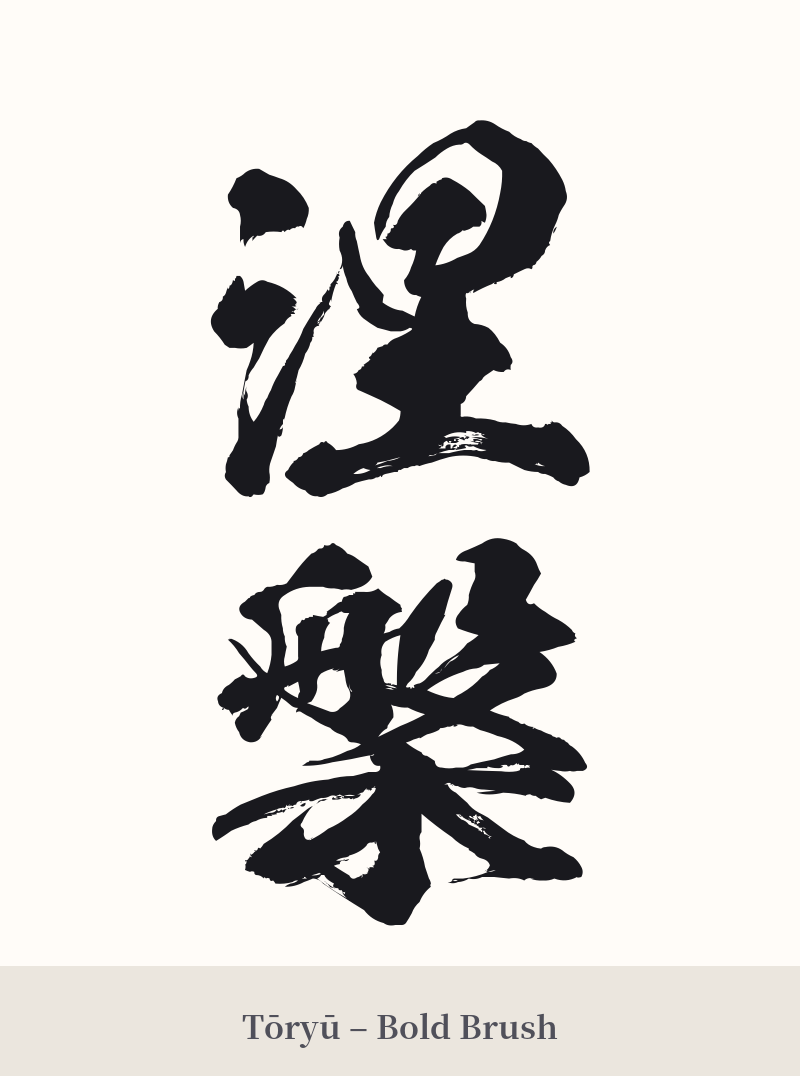
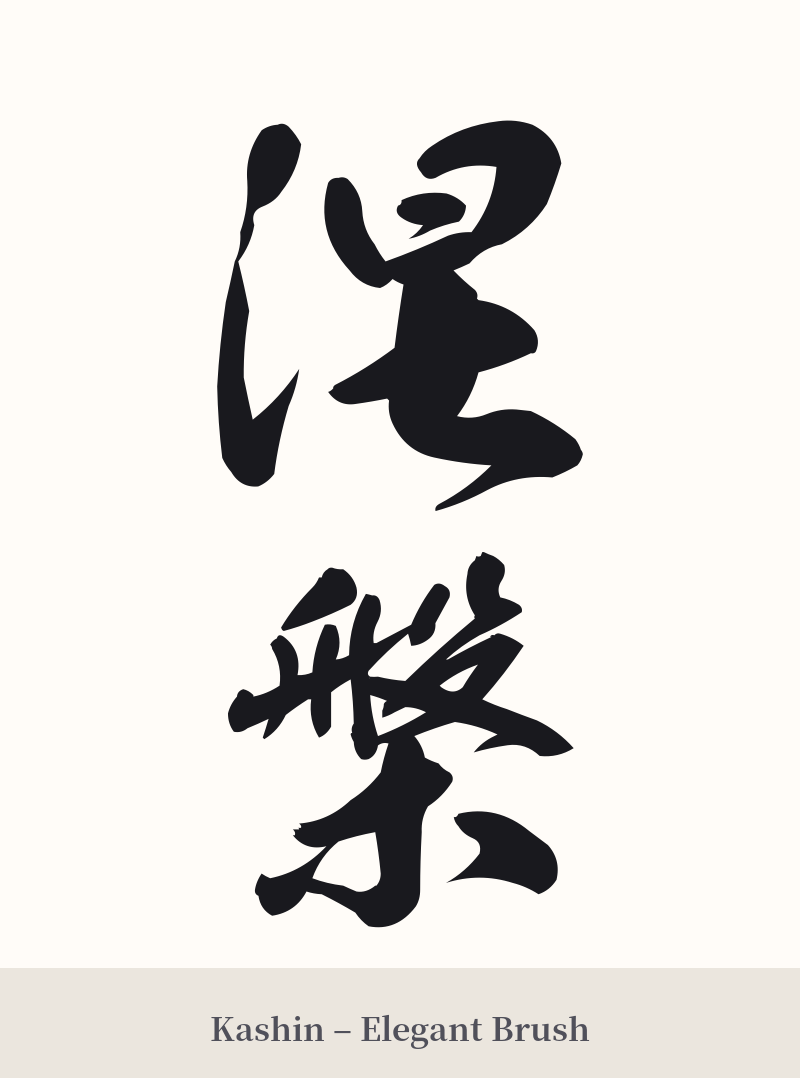
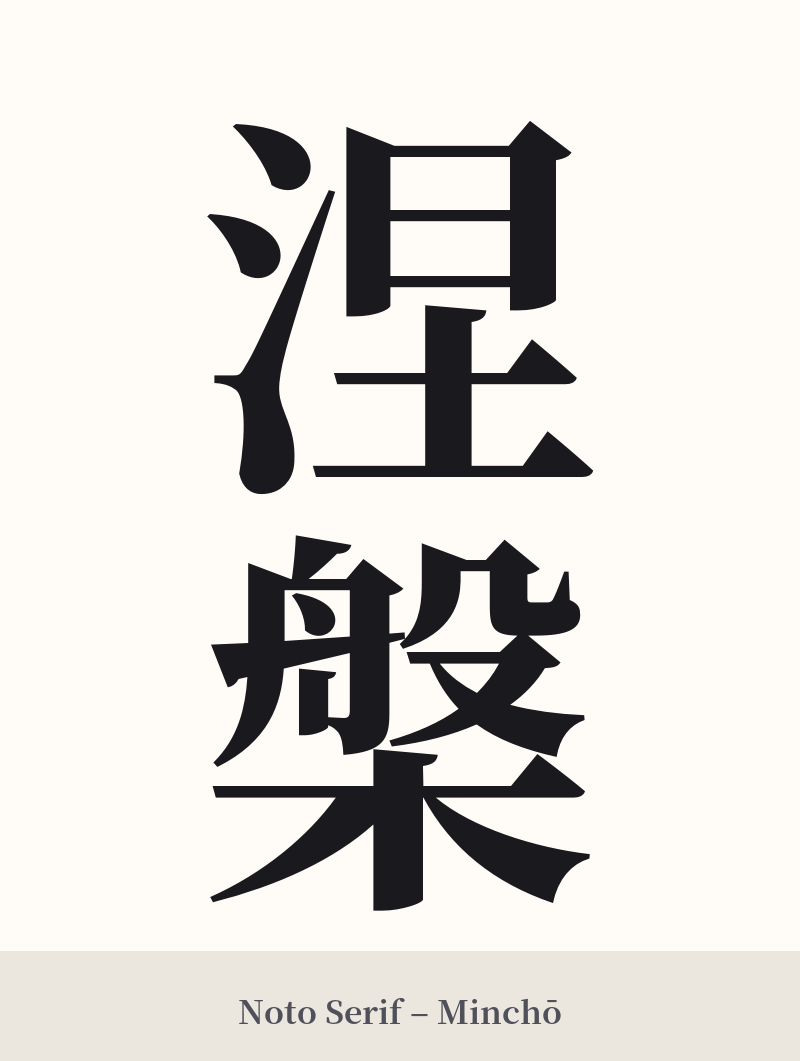
🖌️ Font Styles for 涅槃
The same kanji can look dramatically different depending on the calligraphy style. Choose a font that matches the mood you want for your tattoo or design.
🎨 Tattoo Suitability
📐 Tattoo Design Guide
The profound nature of 涅槃 calls for a design that is respectful and aesthetically considered. Its two-character structure offers good balance for both vertical and horizontal layouts.
– Placement: A vertical orientation is traditional and looks powerful on the spine, forearm, or along the calf. A horizontal placement works well across the upper back, chest, or inner bicep.
– Font Style: To honor its classical and spiritual roots, traditional calligraphic styles are highly recommended. A flowing semi-cursive script (Gyosho) can add a sense of peace and movement, while a formal block script (Kaisho) emphasizes its stability and importance.
– Visual Tips: Avoid pairing it with flashy or aggressive imagery. Consider complementing it with subtle, related symbols like a single lotus flower (representing purity emerging from mud) or an Enso circle (symbolizing enlightenment and the void). Give the characters ample space to breathe; a cluttered design will detract from their inherent serenity.
Comments