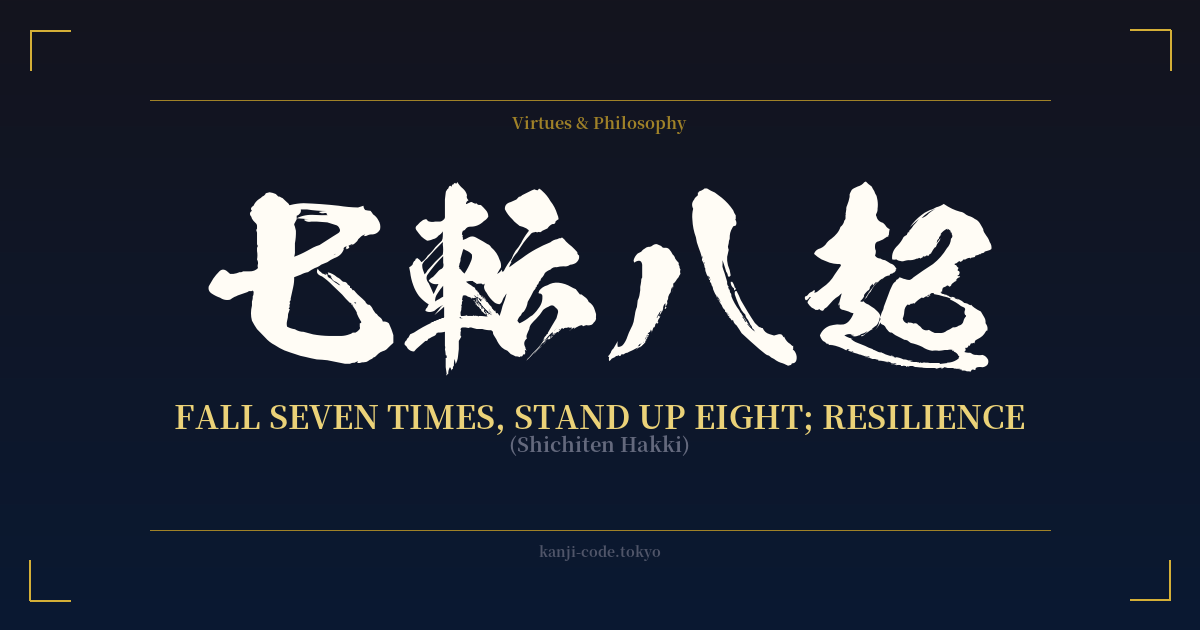
✍️ 七転八起 (Shichiten Hakki) — Cultural Context
七転八起 (Shichiten Hakki) is a four-character idiom, or yojijukugo, that translates literally to "seven falls, eight rises." It is one of the most famous and beloved proverbs in Japan, encapsulating a core tenet of Japanese philosophy: resilience in the face of adversity. This isn't about simple stubbornness; it's about the quiet, unwavering spirit of perseverance that defines true strength.
The proverb's meaning goes beyond the literal numbers. The key is not that you fall seven times, but that you rise eight times. You always get up one more time than you are knocked down, ensuring that your final state is standing, not fallen. It speaks to a life filled with inevitable setbacks, failures, and hardships, but emphasizes that what truly matters is the will to continue, to learn from failure, and to never give up.
This concept is most famously embodied by the Daruma doll. These round, papier-mâché figures are designed with a weighted bottom, so no matter how many times you push them over, they always return to an upright position. They are a physical manifestation of Shichiten Hakki. Traditionally, when setting a goal, a person will paint in one of the doll's blank eyes. The second eye is only filled in once the goal is achieved, serving as a constant, visible reminder of one's commitment to persevere until the task is complete.
The spirit of Shichiten Hakki is woven into the fabric of Japanese culture. It's a mindset applied in business, where companies are expected to weather economic downturns and emerge stronger. It's a foundational principle in martial arts (Budo), where a student must endure countless falls and defeats on the path to mastery. It also reflects a national psyche shaped by a history of overcoming natural disasters like earthquakes and typhoons. Rather than despairing, the focus is on rebuilding and moving forward. Shichiten Hakki is not a loud declaration of invincibility, but a quiet, profound promise to oneself to always, always get back up.
🖌️ Font Styles for 七転八起
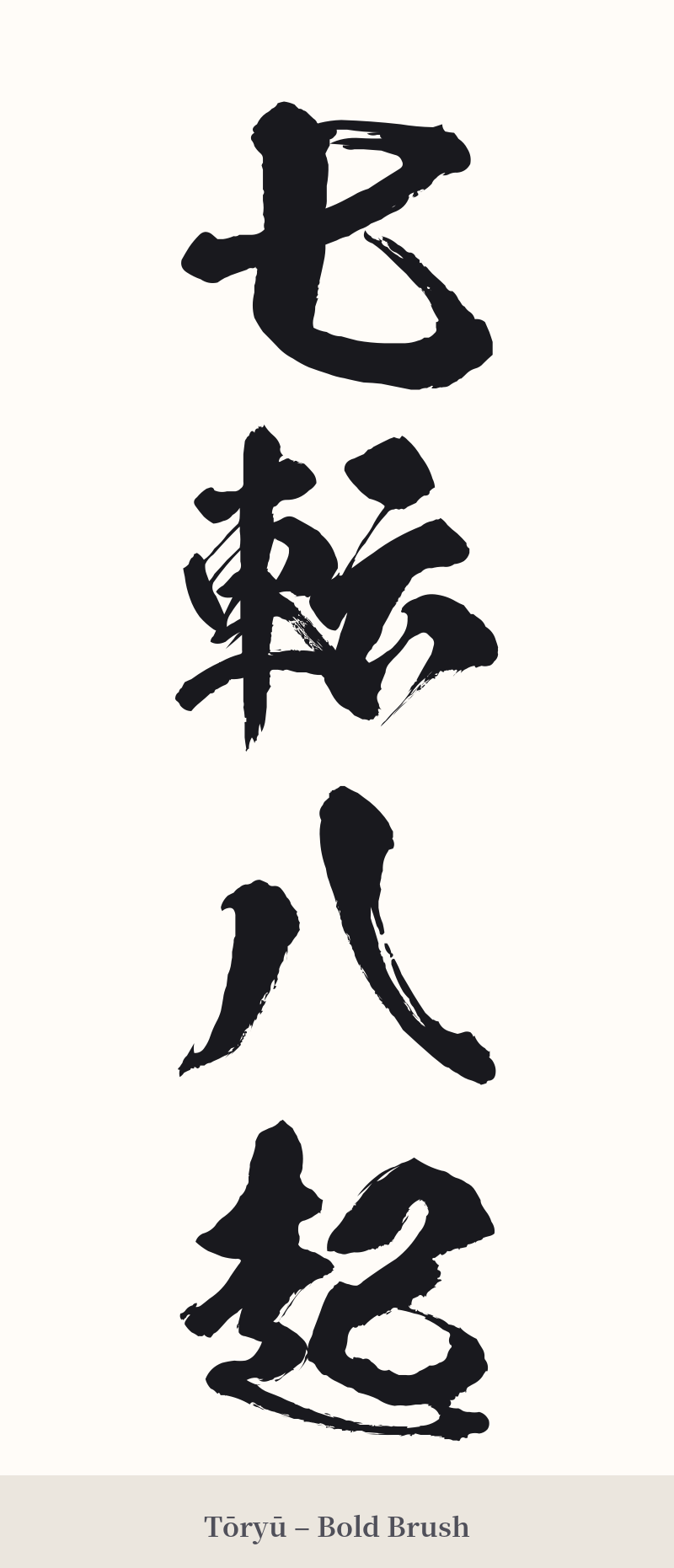
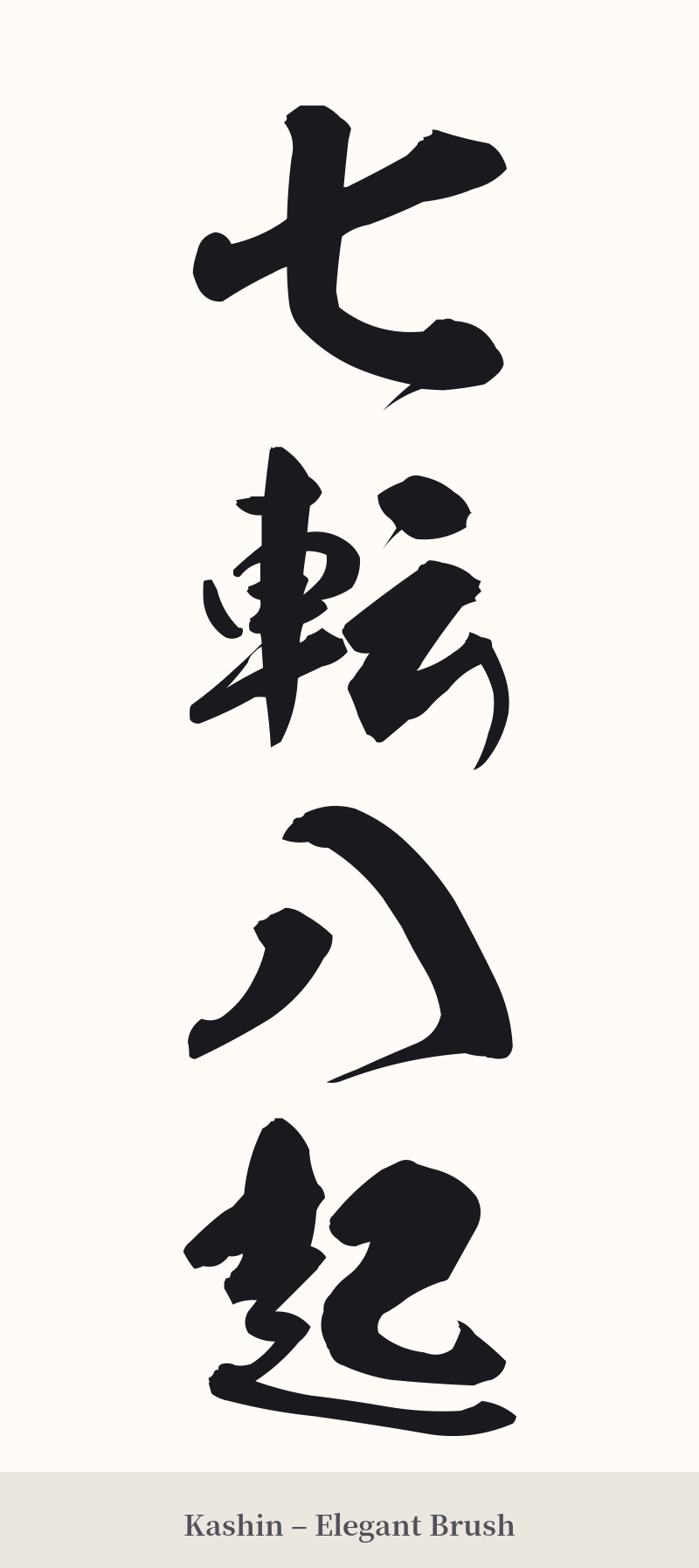
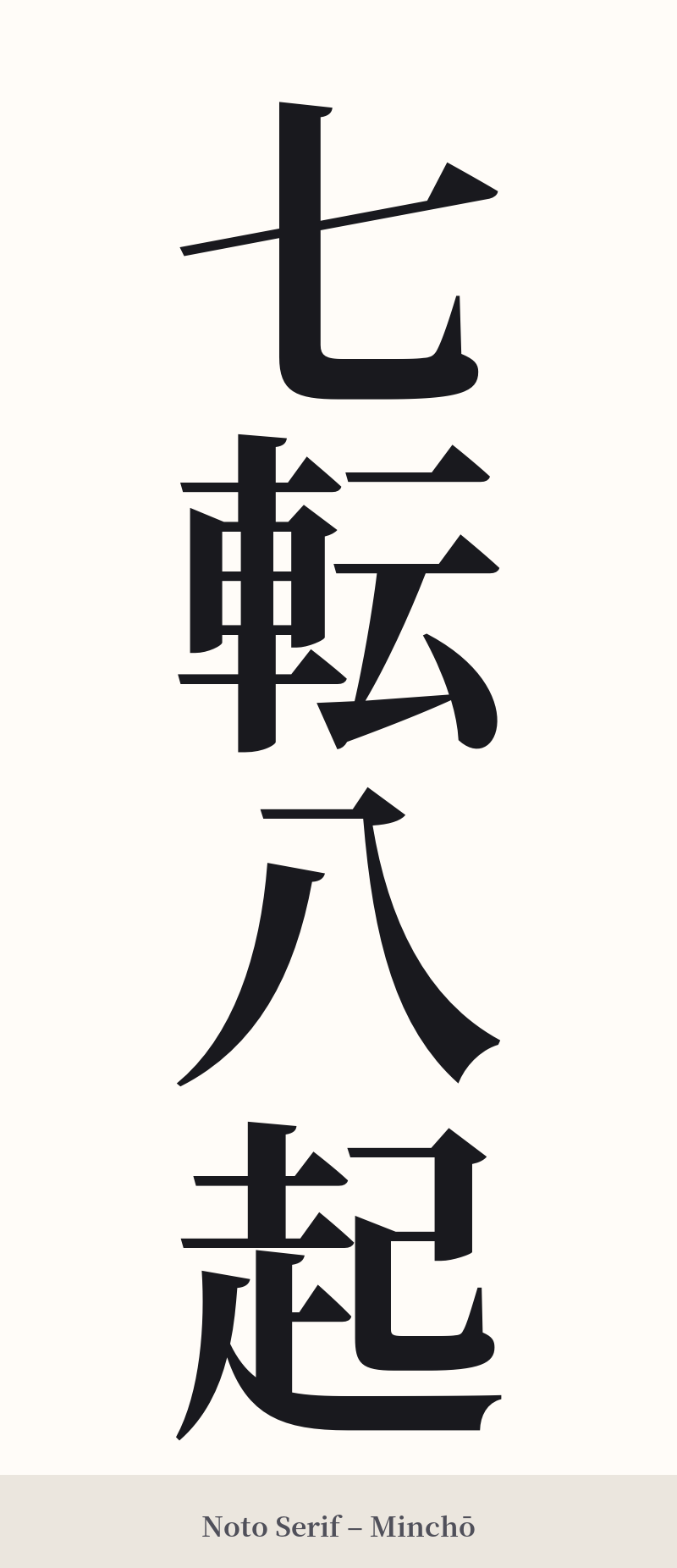
The same kanji can look dramatically different depending on the calligraphy style. Choose a font that matches the mood you want for your tattoo or design.
🎨 Tattoo Suitability
📐 Tattoo Design Guide
The four-character structure of 七転八起 offers excellent design flexibility. It's a classic choice for a reason.
– Placement: A vertical orientation is traditional and visually striking. It works perfectly along the spine, the forearm, the bicep, or down the calf. A horizontal layout is also powerful, suitable for the chest, upper back, or across the collarbone.
– Font Style: For a dynamic and energetic feel, a semi-cursive script like Gyosho (行書) is an excellent choice. It captures the sense of movement and resilience. For a statement of pure strength and stability, a bold block script like Kaisho (楷書) is ideal. Avoid overly complex or thin fonts, as the details in '転' and '起' can get lost.
– Visual Complements: To enhance the meaning, consider pairing the kanji with an image of a Daruma doll. Other powerful symbols of resilience that pair well include the lotus flower (rising from the mud) or a phoenix (rising from the ashes). These elements can be subtly integrated into the background or placed alongside the script.
Comments