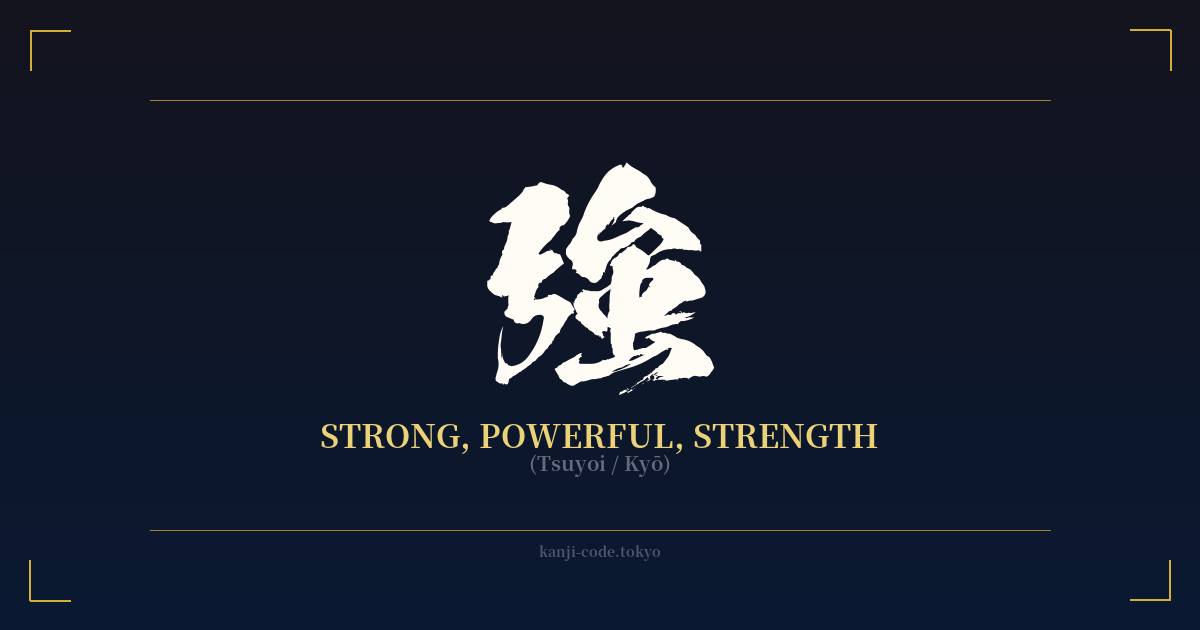
✍️ 強 (Tsuyoi / Kyō) — Cultural Context
The kanji 強, read as 'tsuyoi' or 'kyō', is one of the most fundamental and potent characters in the Japanese language. It embodies the concept of strength in all its forms, from raw physical power to unshakeable mental fortitude. Its very structure tells a story: the character is composed of the radicals for 'bow' (弓) and 'insect' or 'worm' (虫), with a private or elbow-like shape (厶). While modern interpretations vary, a common understanding is that it depicts a strong, resilient bow, one that can withstand immense tension without breaking—a perfect metaphor for strength.
In Japanese, 'tsuyoi' is an adjective used to describe a vast spectrum of power and intensity. You can have a strong body (体が強い, karada ga tsuyoi) or a strong spirit (精神が強い, seishin ga tsuyoi). A gust of wind can be strong (風が強い, kaze ga tsuyoi), and so can a cup of coffee (コーヒーが強い, kōhī ga tsuyoi). This versatility highlights how deeply the concept is woven into the fabric of daily life and thought. It’s not just about muscle; it's about concentration, skill, and resilience.
This idea of multifaceted strength is central to many aspects of Japanese culture, particularly in the philosophy of Bushido, the way of the warrior. For a samurai, true strength wasn't merely about swordsmanship. It was about 'gōkyō' (剛強), a fortitude combining physical prowess with an iron will, discipline, and the ability to endure hardship without complaint. This echoes the cultural value of 'gaman' (我慢), the quiet endurance and perseverance that is seen as a sign of maturity and inner strength.
It's important to distinguish 強 from a similar kanji, 力 (chikara). While both relate to power, 力 represents the noun 'force' or 'power' itself—a more raw, potential energy. 強, on the other hand, is the quality or state of being strong. A person has 力 (power), but they are 強い (strong). This makes 強 a more personal and descriptive character, signifying a quality that has been cultivated or is inherent in a person, object, or phenomenon.
Even the word for 'studying', 'benkyō' (勉強), uses this kanji. It literally translates to 'exertion of strength', framing the act of learning not as a passive activity but as a vigorous, active pursuit requiring effort and discipline. This reveals a cultural mindset where true mastery, whether academic or physical, is a product of dedicated strength.
🖌️ Font Styles for 強
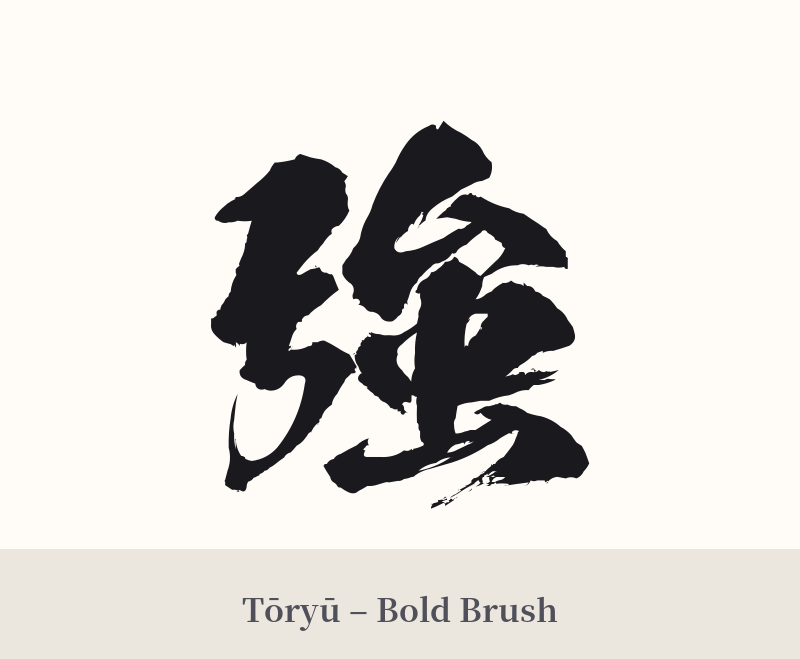
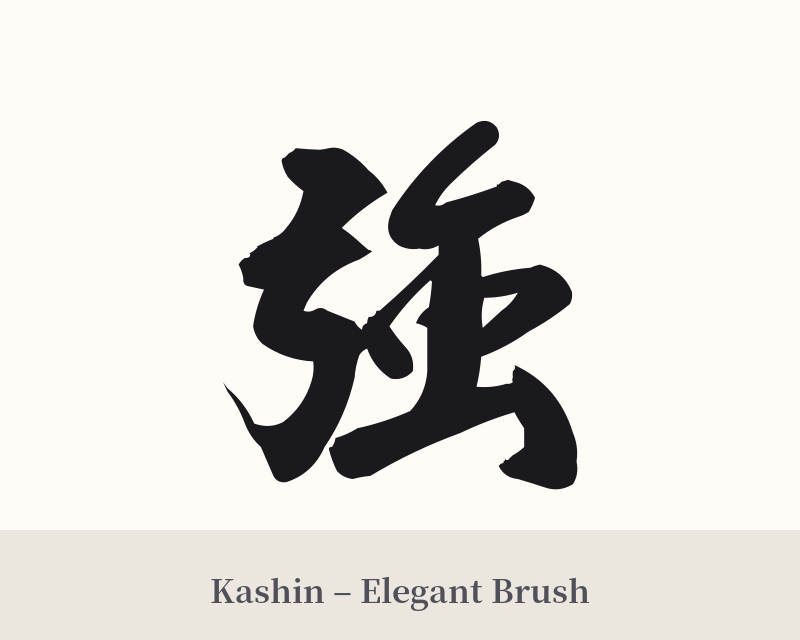
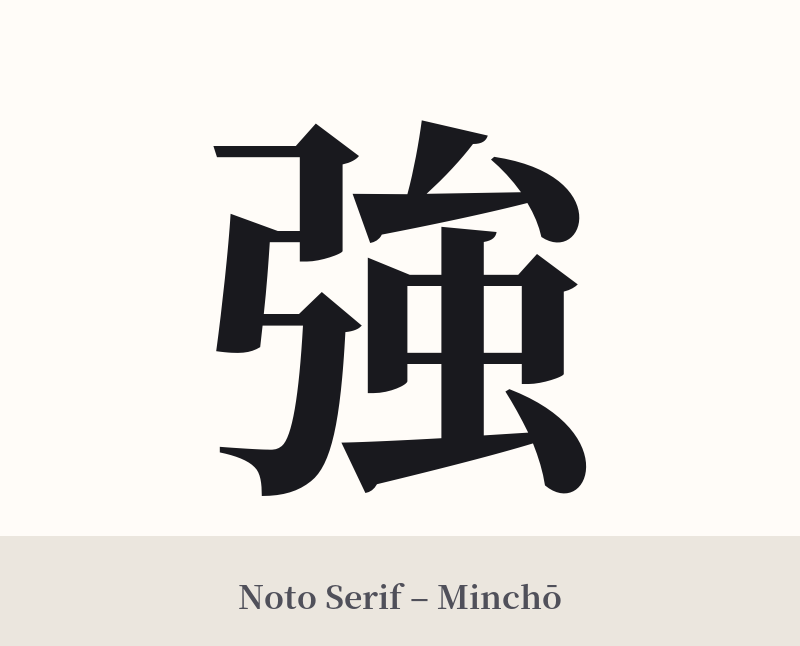
The same kanji can look dramatically different depending on the calligraphy style. Choose a font that matches the mood you want for your tattoo or design.
🎨 Tattoo Suitability
📐 Tattoo Design Guide
The kanji 強 offers a bold and clear statement, making it suitable for various tattoo designs.
– Placement: Consider areas of the body that symbolize power and action. The forearm, bicep, calf, or across the shoulder blades are all excellent choices. For a more personal representation of inner strength, placement over the chest or on the ribs can be very meaningful.
– Style: A standard, blocky Kaisho (楷書) script emphasizes the kanji's stability and power. For a more dynamic and fluid look, a semi-cursive Gyōsho (行書) or fully cursive Sōsho (草書) style can represent a more adaptable, flowing strength.
– Visual Combinations: While powerful on its own, 強 can be integrated with other imagery. Pairing it with a dragon (龍) can signify overwhelming power, a tiger (虎) can represent physical prowess, and a koi fish can symbolize strength through perseverance. A simple Enso circle drawn around the kanji can frame it as a complete and balanced aspect of your being.
Comments