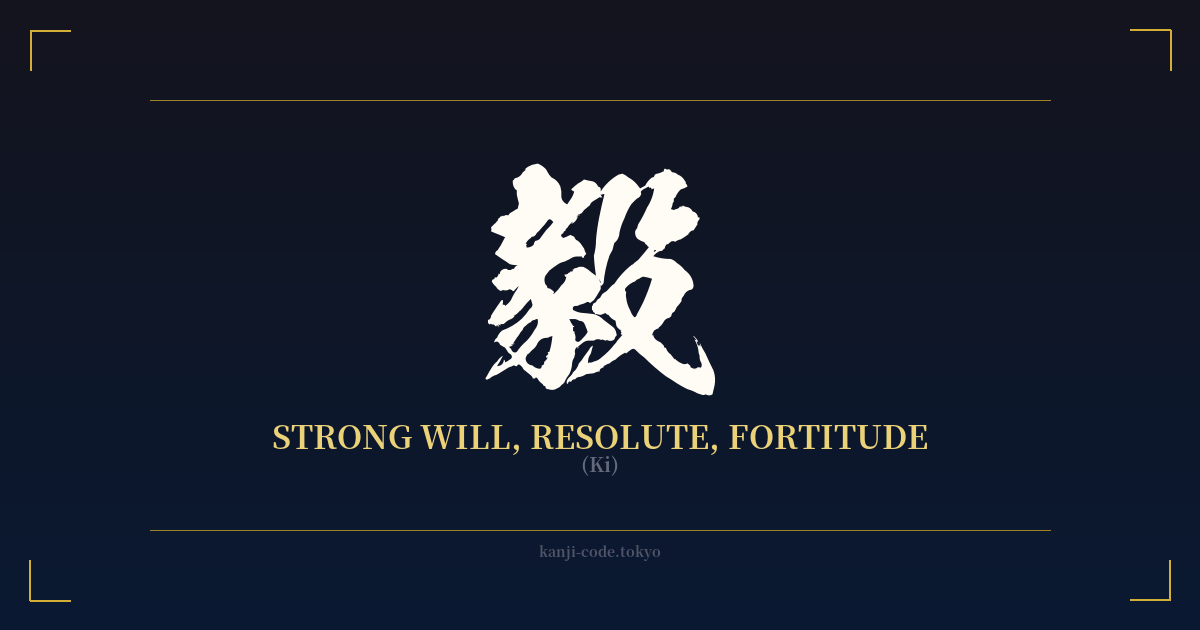
✍️ 毅 (Ki) — Cultural Context
The kanji 毅, read as 'Ki', is a powerful symbol of inner strength, fortitude, and unwavering resolve. It represents a specific kind of strength that is not merely physical, but deeply rooted in one's character and spirit. This is the strength to stand firm in your convictions, to face adversity without flinching, and to pursue a goal with single-minded determination.
The character's origin offers a fascinating glimpse into its meaning. It is a composite of two radicals: 殳 (shu) on the left and 豕 (shi) on the right. The 殳 radical depicts a weapon, often a long-handled spear or pike, symbolizing force, action, and purpose. The 豕 radical is a pictograph of a pig or wild boar, an animal known for its fierce, stubborn, and headstrong nature when charging forward.
Together, they paint a picture not of brute force, but of channeled, purposeful aggression. It is the raw, unyielding energy of a wild boar, guided and directed by the focus of a weapon. This combination beautifully captures the essence of 'Ki': a conscious, directed will that is both powerful and unshakeable.
In Japanese culture, this concept is highly valued and is distinct from similar ideas like 'gaman' (我慢), which is about stoic endurance and patience, or 'konjō' (根性), which refers to sheer guts or grit. 'Ki' (毅) implies a more proactive and deliberate state of mind. It is the quality seen in a leader who makes a difficult but necessary decision, or an artist who toils for years to perfect their craft against all odds.
This kanji is frequently used in names, most famously 'Takeshi'. Bestowing this character upon a child expresses the parents' hope that they will grow to be strong-willed, resilient, and resolute in character. It also appears in powerful compound words like 'kizen' (毅然), meaning 'resolute' or 'dauntless,' used to describe someone facing a challenge with a firm and dignified attitude, and 'gōki' (剛毅), which combines 'sturdy' and 'resolute' to mean fortitude and strength of character.
Ultimately, 毅 (Ki) is not just about being tough; it's about possessing a core of steel in your soul. It is the quiet confidence and internal strength that allows a person to remain steadfast, no matter the external pressures or internal doubts. This makes it a profound symbol for anyone who values resilience, determination, and the power of the human will.
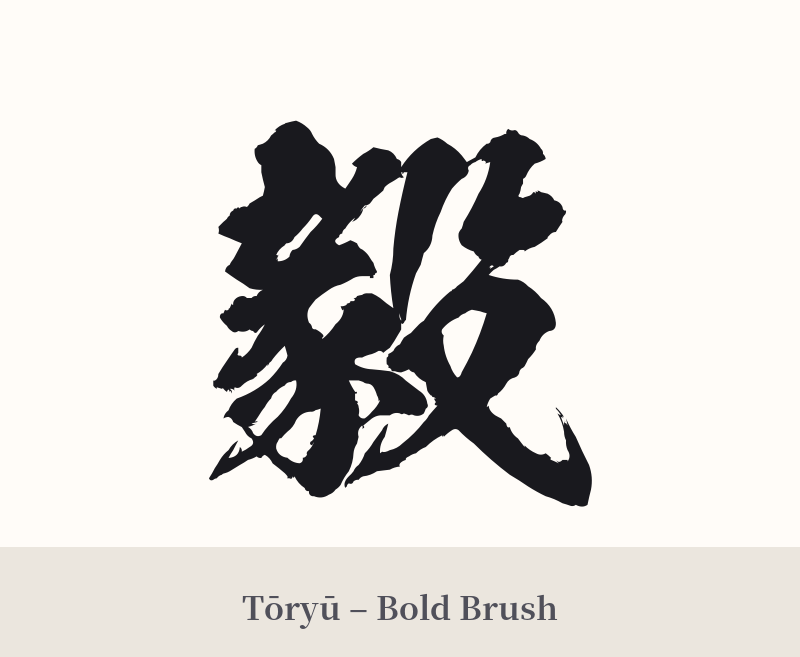
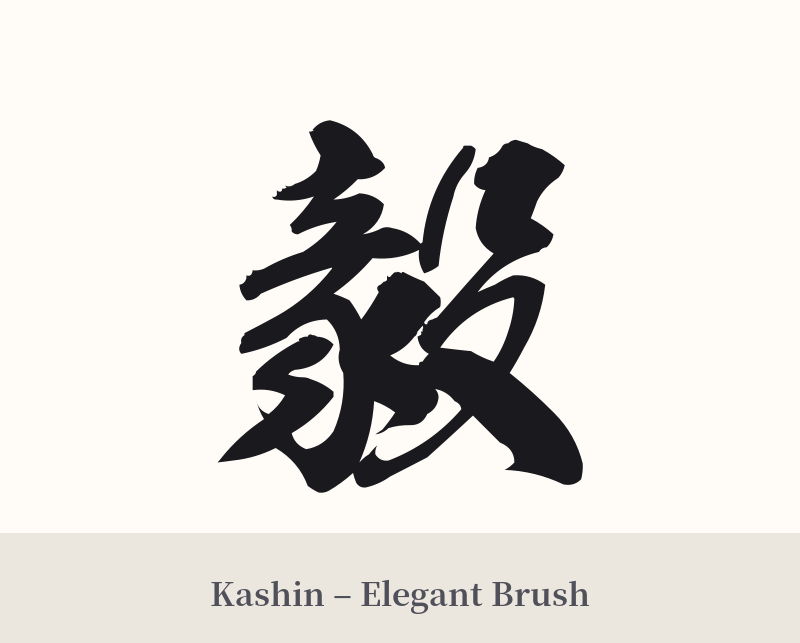
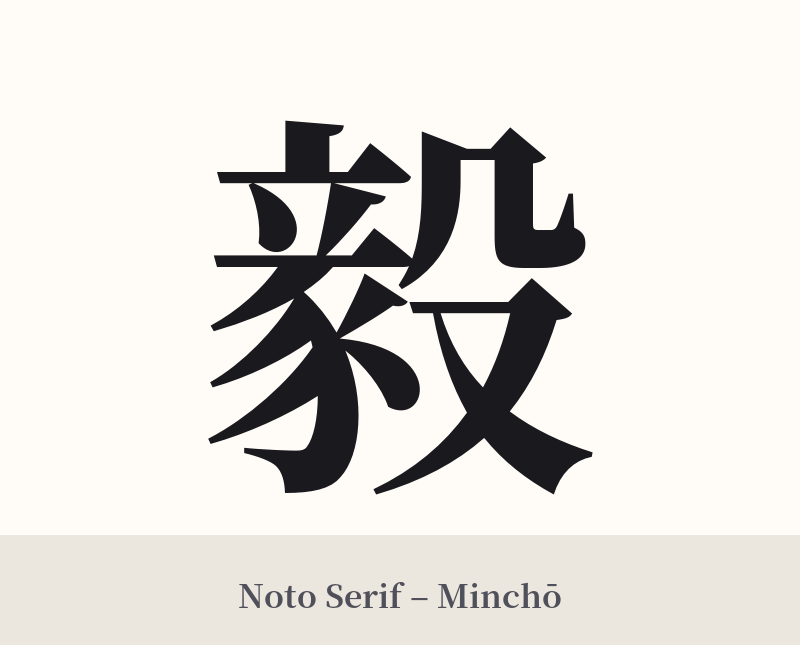
🖌️ Font Styles for 毅
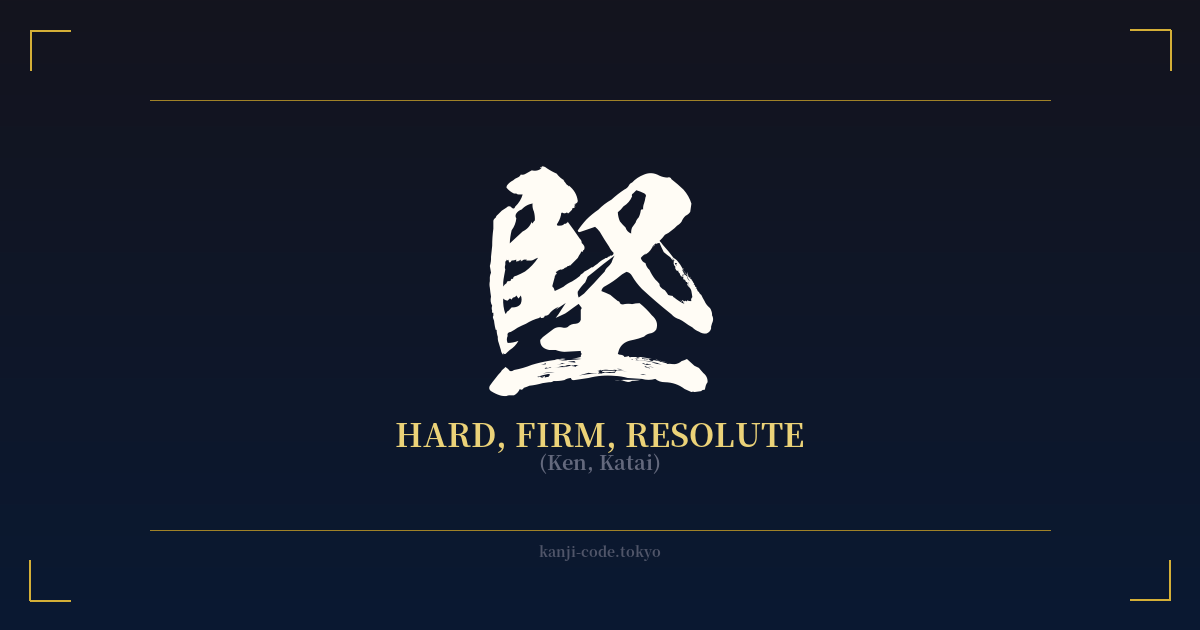
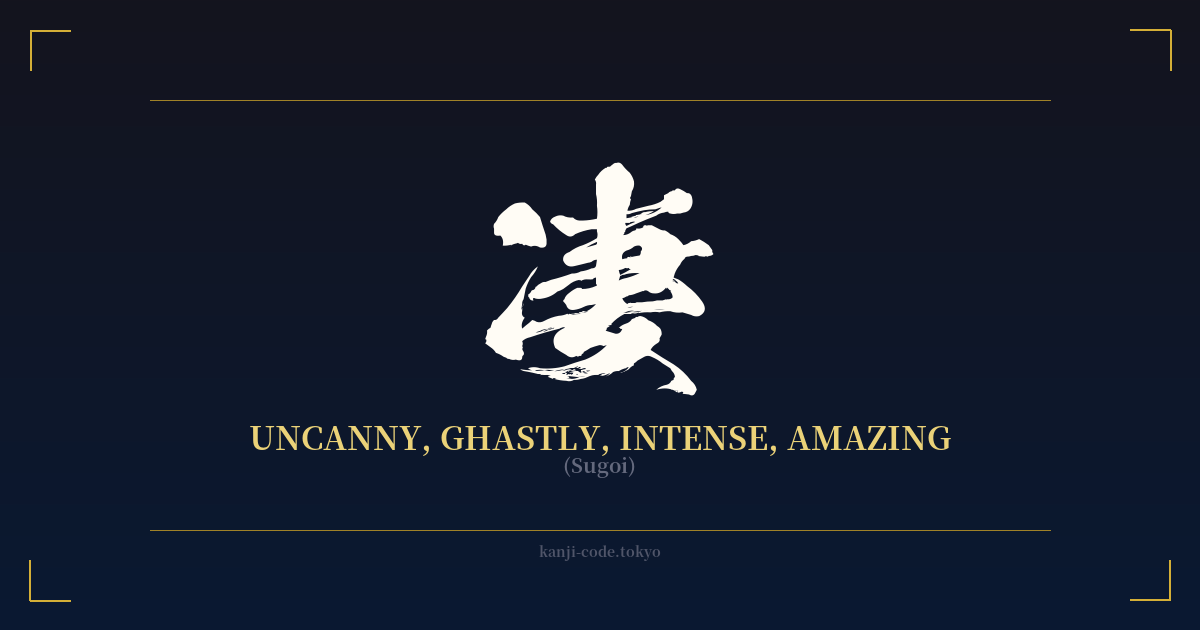
The same kanji can look dramatically different depending on the calligraphy style. Choose a font that matches the mood you want for your tattoo or design.
🎨 Tattoo Suitability
📐 Tattoo Design Guide
The kanji 毅 (Ki) carries a feeling of stability and determination, which should be reflected in its design.
– Placement: This character works well in vertical orientations. Consider the inner forearm, the calf, or along the spine. The back of the shoulder or the chest are also excellent spots that provide a solid canvas for its balanced structure.
– Font Style: A strong, clear font is recommended. A bold Kaisho (block script) will emphasize its stability and firmness. For a more dynamic feel, a Gyosho (semi-cursive script) can add a sense of flowing power, while a vigorous, expressive Sosho (cursive) or a custom brushstroke style can highlight the 'fierce energy' from its etymology.
– Visual Tips: Keep the design focused on the kanji itself, as its meaning is the main statement. If you wish to add accompanying elements, they should be subtle. Consider a base of unmoving rock, a single sturdy bamboo stalk, or abstract ink splashes that suggest focused energy. Avoid cluttering the design, which could detract from the kanji's powerful simplicity.
Comments