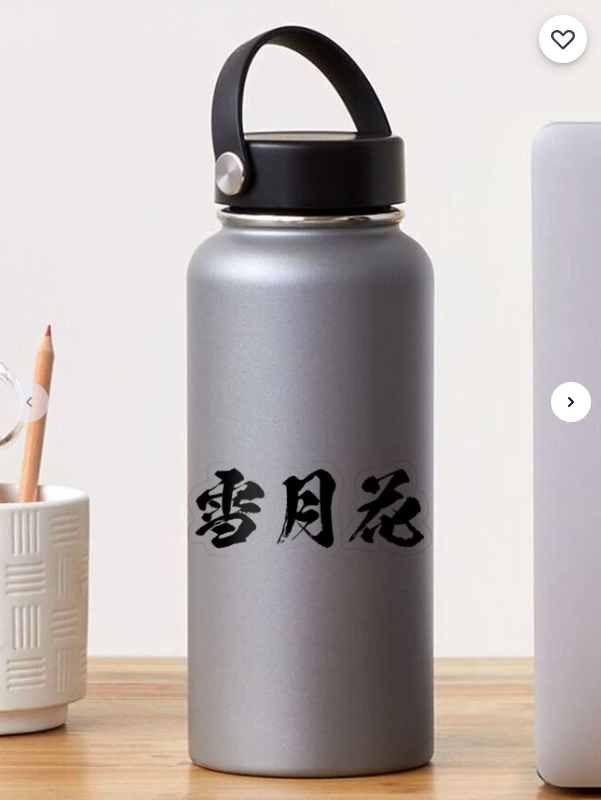
雪月花
Snow, Moon, Flowers
Three characters from a Tang dynasty love poem that became Japan’s most elegant way to say “the beauty of nature breaks my heart.”
In 806 CE, Chinese poet Bai Juyi wrote a simple line to a distant friend: “雪月花時最憶君” (At times of snow, moon, or flowers, I think of you most). He meant it literally—whenever I see something beautiful, you’re not here to share it, and that absence hurts. The sentiment was so perfectly captured that these three images—snow, moon, flowers—became shorthand for sublime natural beauty across East Asian culture.
Japan absorbed 雪月花 (setsugetsuka or setsugekka) centuries later and made it their own. By the Heian period (794-1185), court poets were weaving these three elements into waka poetry. The writer Sei Shōnagon mentioned them in her Pillow Book around the year 1000, establishing the phrase in Japanese literary tradition. But Japanese culture transformed the original meaning—it wasn’t just about missing someone. It became about the transient, poignant beauty of seasonal change itself.
Each element represents a season and a mood: snow for winter’s quiet purity, the moon for autumn’s reflective melancholy, flowers (specifically cherry blossoms) for spring’s explosive joy tinged with sadness because blossoms fall. Together, they capture the entire emotional cycle of living in harmony with nature’s rhythms—a philosophy central to Japanese aesthetics. The compound appears in classical painting triptychs, garden design, tea ceremony variations, and now, permanently inked on skin as a tribute to beauty’s fleeting nature.
✨ Kanji Styles Gallery
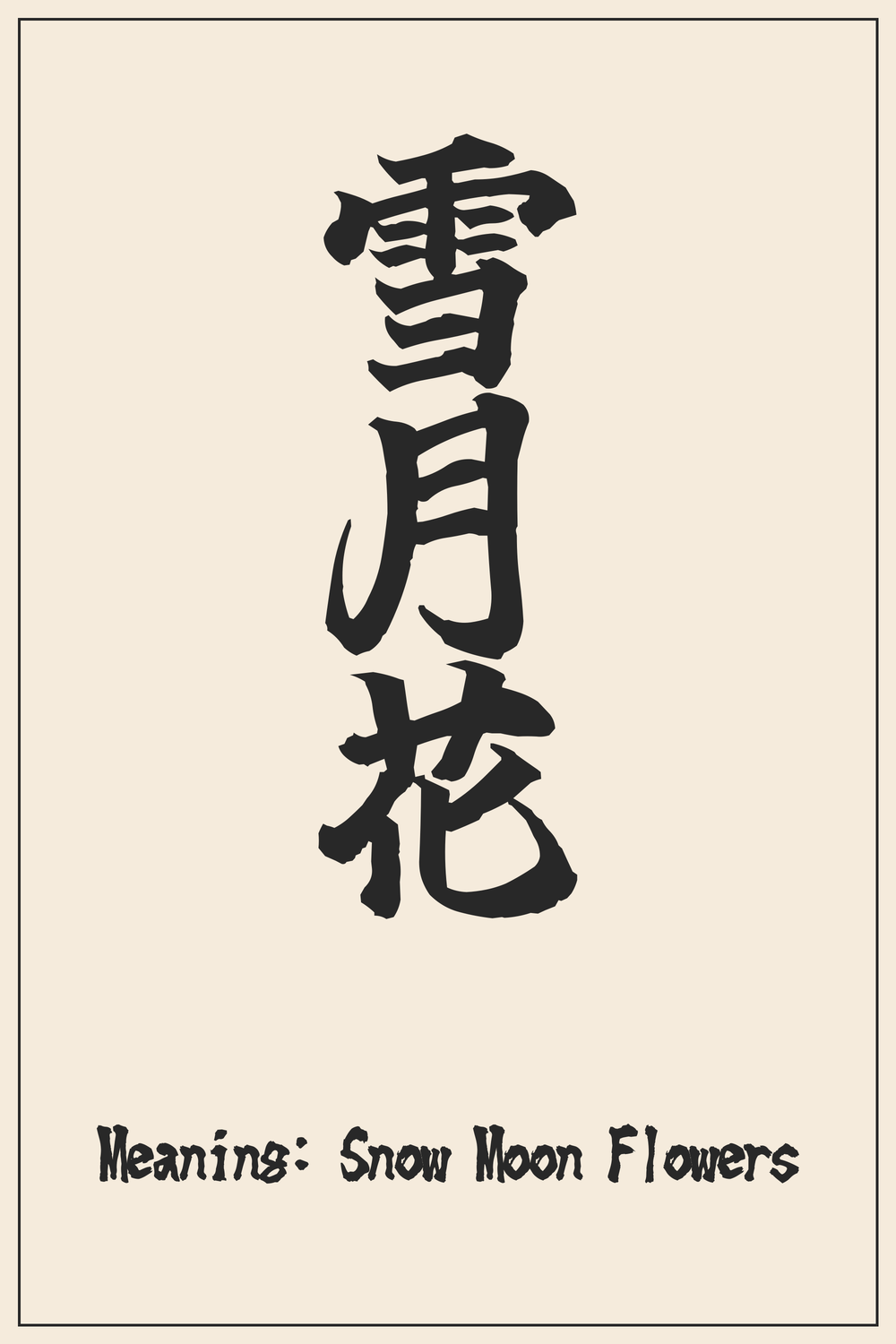
🖌️ Calligraphy Style
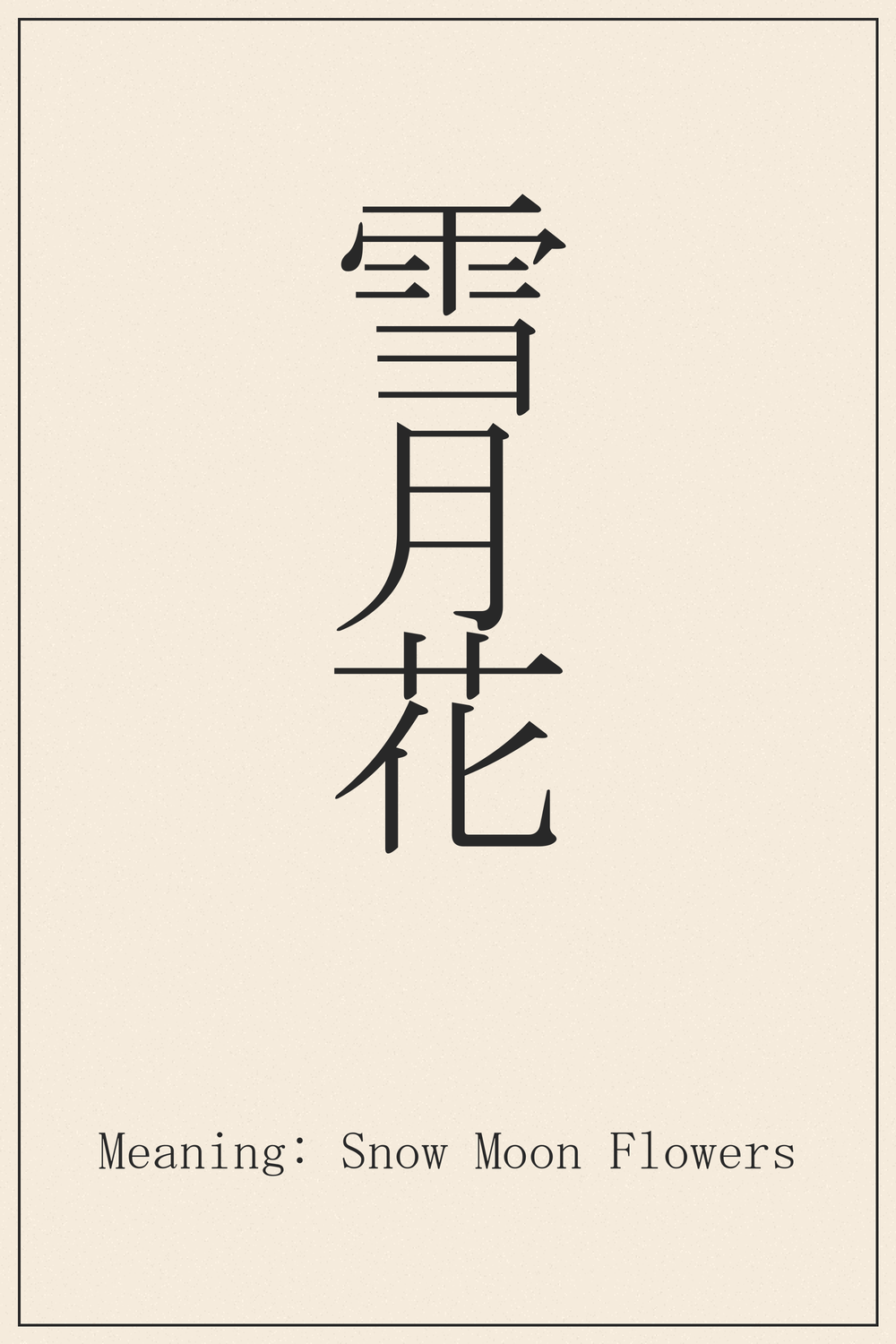
📝 Mincho Style
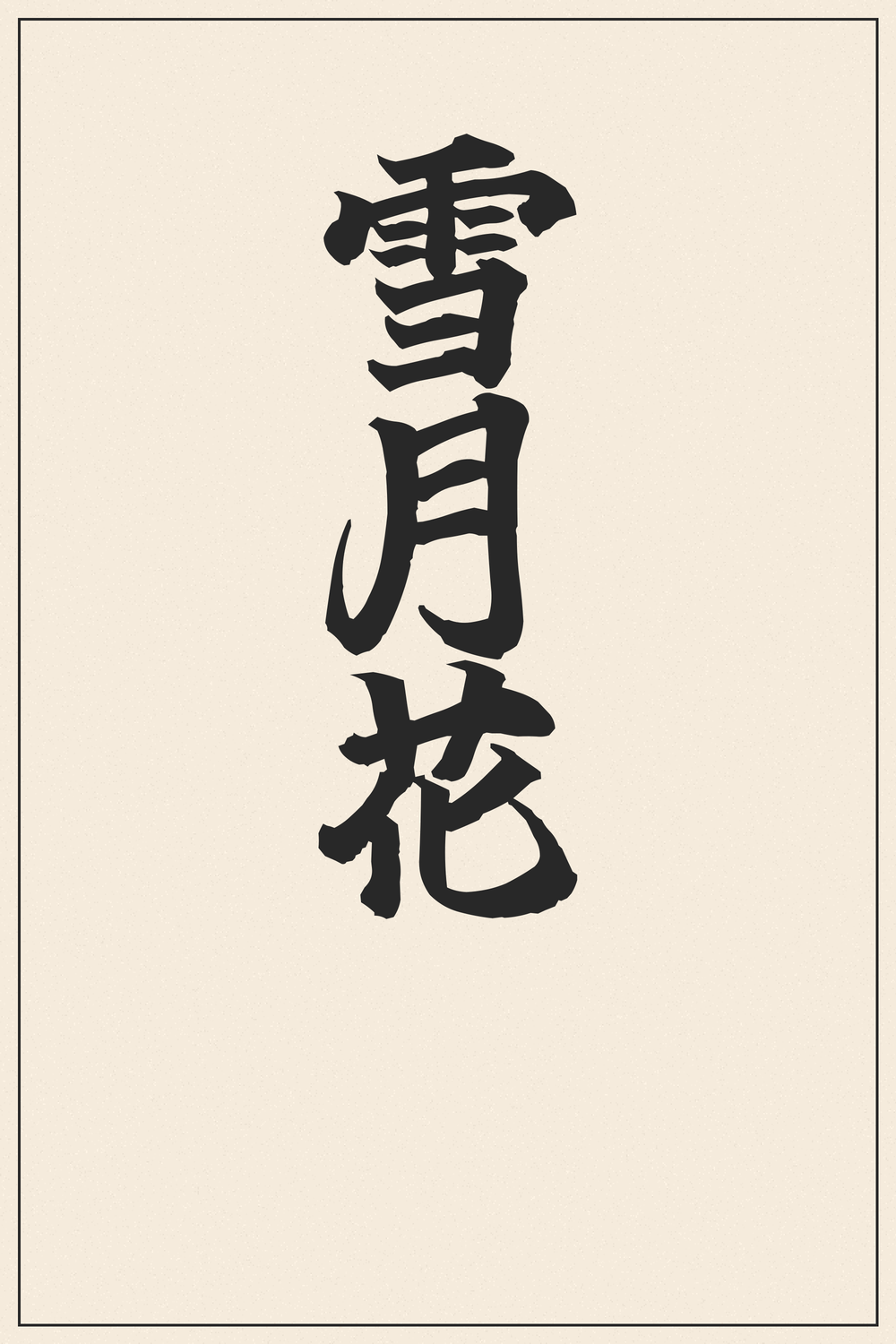
📜 Vertical Writing
⚡ Quick Facts
Breaking Down 雪 (Setsu)
The character 雪 (snow) combines the rain radical 雨 (ame) at the top with a phonetic component below that ancient scribes associated with sweeping or clearing. The visual logic suggests precipitation falling from the sky, but lighter and more delicate than rain—crystals that accumulate silently, transforming landscapes overnight into blank canvases.
In Japanese aesthetic philosophy, snow represents purity, quietude, and the beauty of emptiness. Fresh snow covers imperfections, muffles sound, simplifies complex scenery into essential forms. It’s nature’s minimalism—reducing the world to black ink strokes on white paper, like a sumi-e painting come to life. Winter gardens in Kyoto’s Zen temples become meditation halls when snow falls, each branch holding perfect silence.
The character also carries practical weight. In ancient Japan, heavy snow meant isolation—mountain villages cut off for months, travelers stranded, hardship endured. Yet poets and artists chose to focus on snow’s beauty rather than its burden. That choice reveals something essential about Japanese aesthetics: finding profound beauty precisely in conditions that cause difficulty, seeing elegance in what complicates survival.
Snowflakes have six-sided symmetry, so classical Japanese poetry sometimes calls snow 六花 (rikka or rokka)—literally “six flowers”—treating each snowflake as a tiny blossom. This wordplay connects winter’s snow directly to spring’s flowers, creating cyclical unity across seasons.
Breaking Down 月 (Getsu)
The character 月 (moon) started as a pictogram—ancient scribes literally drew a crescent moon. Over centuries of standardization, it evolved into the current form showing the moon’s horns and curve, still recognizable as celestial imagery. It’s one of the few kanji that remained visually faithful to its original object across three thousand years.
In the setsugetsuka compound, the moon specifically represents autumn—the season when Japan’s weather turns clear and cool, allowing the moon to shine with maximum brilliance. Autumn moon-viewing parties (月見, tsukimi) remain cultural traditions, where people gather to drink sake, eat rice dumplings, and compose poetry while contemplating the harvest moon. The activity isn’t recreational distraction; it’s deliberate aesthetic practice.
The moon symbolizes reflection, contemplation, the passage of time, and a bridge between earthly existence and celestial mystery. Unlike the sun’s aggressive brightness, moonlight offers gentle illumination—showing just enough to see outlines while leaving details in shadow. That quality of partial revelation appeals to Japanese aesthetic sensibilities that value suggestion over explicit statement, the power of what remains hidden.
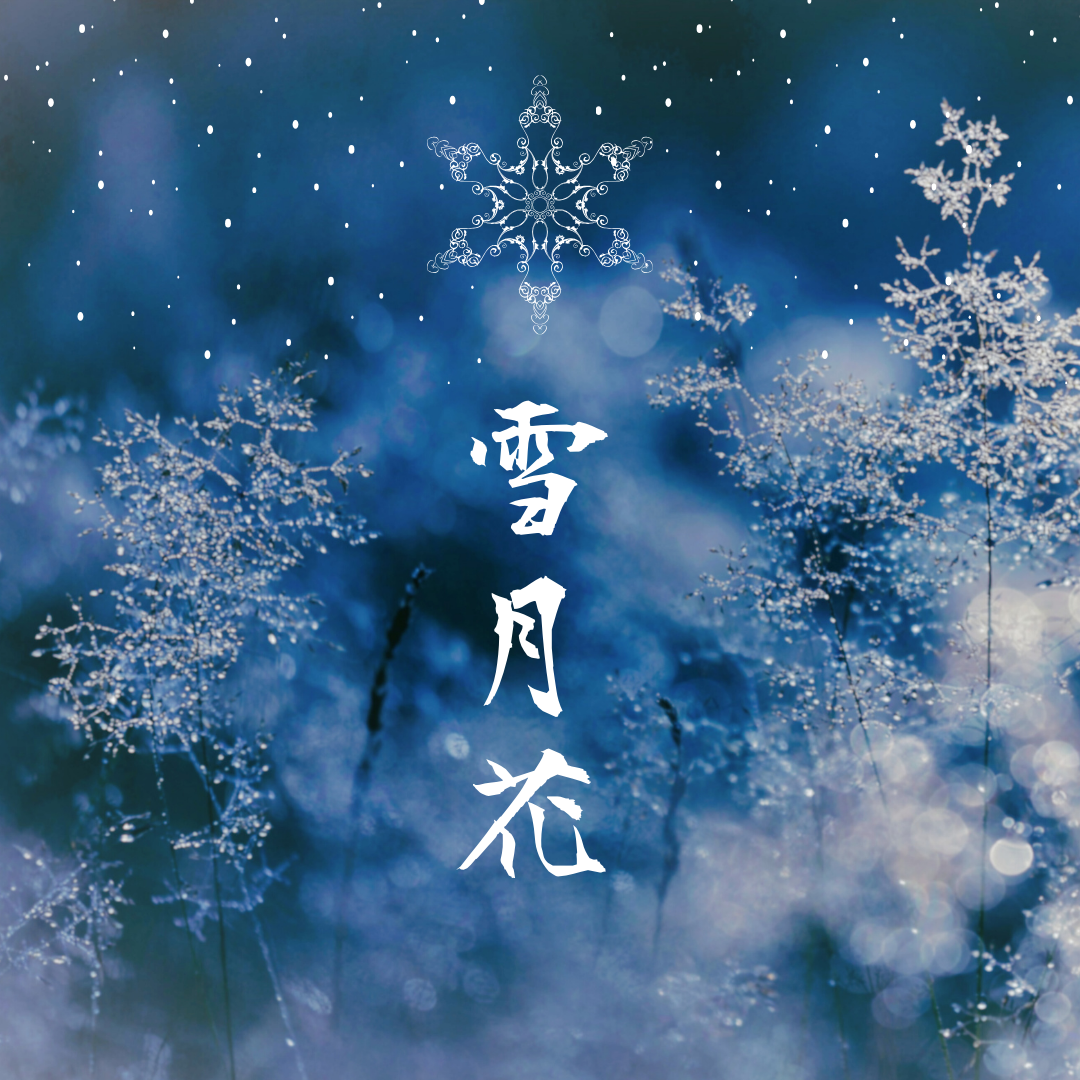
Three seasons, three beauties, one profound meditation on impermanence
Breaking Down 花 (Ka)
The character 花 (flower) combines the grass/plant radical 艹 at the top with 化 (change/transform) below. The etymology suggests transformation—seeds becoming buds becoming blossoms becoming seeds again in endless cycle. Flowers are change made visible, proof that nature never stays still, that beauty emerges through metamorphosis.
In the setsugetsuka context, 花 almost always means cherry blossoms (桜, sakura) specifically, not generic flowers. Cherry blossom season (late March through early April in most of Japan) triggers national obsession—weather forecasts track the “cherry blossom front” moving north, millions gather for hanami (flower viewing) parties under blooming trees, entire social calendars organize around peak bloom dates.
The cultural fixation centers on transience. Cherry blossoms bloom spectacularly for roughly one week, then fall. That brevity makes them precious—you can’t postpone experiencing them, can’t save the moment for later. They teach mono no aware (物の哀れ), the poignant awareness that beauty and sadness intertwine because beautiful things don’t last. The petals falling become metaphors for life itself—brief, beautiful, and gone before you’re ready.
Cherry blossoms became samurai symbols because warriors identified with their brief, brilliant lives. A samurai was expected to live fully, serve loyally, and die beautifully when the time came—just like sakura blossoms that peak gloriously then fall without clinging to branches. The flower justified a death-focused philosophy through aesthetic metaphor.
The Three-Season Mystery
Careful observers notice something odd: setsugetsuka assigns imagery to winter (snow), autumn (moon), and spring (flowers), but skips summer entirely. Some scholars argue the moon represents all warm months, making “flowers” specifically late spring. Others claim summer was considered too hot, humid, and uncomfortable for aesthetic contemplation in pre-air-conditioning Japan.
The real answer lies in Chinese poetry’s seasonal associations. Tang dynasty poets linked these three images to their most aesthetically perfect seasonal moments. Summer had its own poetic imagery—lotus blossoms, cooling streams, summer rain—but those never coalesced into a comparable compound. The three-element structure felt complete despite the seasonal gap.
This “incompleteness” actually aligns with Japanese aesthetics. The concept of 間 (ma)—meaningful emptiness, the space between things—suggests perfection requires gaps. A painting shouldn’t fill every corner. A garden path shouldn’t reveal everything at once. Music needs silence between notes. Maybe setsugetsuka leaves summer unspoken because the unstated fourth season makes the other three resonate more powerfully.
雪月花 in Traditional Arts
Japanese painters developed setsugetsuka triptychs as formal genre—three hanging scrolls displayed side by side, each depicting one element. The snow scroll might show Mount Fuji’s peak in winter, the moon scroll a full harvest moon over Sumida River, the flower scroll cherry blossoms at Yoshino mountain. These triptychs decorated tokonoma alcoves in formal reception rooms, signaling the owner’s cultural sophistication.
Tea ceremony practitioners created variations called setsugetsuka-no-temaemae—special procedures where participants draw cards determining their roles, with snow allowing you to eat sweets, moon allowing you to drink tea, and flowers requiring you to prepare tea for others. The randomness introduced playful unpredictability into normally rigid ritual, while the seasonal imagery connected the ceremony to nature’s cycles.
Garden designers incorporated all three elements into viewing gardens: spaces designed to be contemplated from a specific vantage point (usually inside a building) across seasons. Snow falling on carefully pruned pines, moonlight reflecting on pond surfaces, cherry trees positioned to frame views—the garden became a living setsugetsuka triptych changing naturally through the year.
Edo period woodblock print masters like Hiroshige and Hokusai created famous setsugetsuka series combining the theme with meisho-e (pictures of famous places). Their “Thirty-six Views of Mount Fuji” and similar series often organized compositions around seasonal markers—snow-capped peaks, moonlit bays, cherry-lined riverbanks—making commercial art from classical poetic themes.
Wabi-Sabi Connection
Setsugetsuka shares DNA with wabi-sabi, Japan’s famous aesthetic philosophy celebrating imperfection, impermanence, and incompleteness. Both embrace transience as central to beauty. Snow melts. The moon waxes and wanes. Flowers bloom briefly then fall. Nothing lasts, and that fragility makes moments precious rather than worthless.
Where wabi-sabi focuses on rustic simplicity and the beauty of aging (moss on stones, cracks in tea bowls, weathered wood), setsugetsuka emphasizes natural grandeur—but both reject Western ideals of permanence and perfection. They find profound meaning in watching things change and disappear. The falling cherry petal, the fading moon, the melting snow—these aren’t failures or losses but completions of natural cycles worth witnessing with full attention.
This philosophy offers powerful counterbalance to modern culture’s obsession with preservation, documentation, and permanence. We photograph everything trying to freeze moments forever. Japanese aesthetic tradition suggests instead: fully experience the moment because it won’t last, and that impermanence is precisely what makes it beautiful. The tattoo becomes ironic—using permanent ink to celebrate transient beauty.
🎨 Tattoo Design Ideas
- ✨ Horizontal Triptych Format – Three characters arranged horizontally in classic brushwork creates visual balance and honors traditional setsugetsuka artwork. Best for upper back, chest, or ribcage placements (6-9 inches wide) where all three characters get equal prominence.
- ✨ Vertical Scroll Style – Traditional top-to-bottom arrangement along spine or forearm. Consider adding subtle seasonal imagery—a snowflake near 雪, crescent moon near 月, cherry blossom petal near 花—integrated minimally so kanji dominate.
- ✨ Circular/Triangular Composition – Arrange the three characters in triangular or circular pattern suggesting cyclical nature and seasonal rotation. This breaks from linear tradition but creates powerful symbolic geometry showing how the elements connect and cycle endlessly.
- ✨ Minimalist Contemporary Line – Clean, precise strokes without decorative flourishes work for smaller placements (4-5 inches). The 22 total strokes maintain readability while keeping design uncluttered. Perfect for inner forearm or upper shoulder where text flows naturally.
- ✨ Integrated Landscape Elements – Pair the three kanji with subtle landscape imagery—Mount Fuji silhouette, water reflection, tree branch—creating full scene. Keep additions minimal and atmospheric, not literal. The characters should remain focal point, imagery provides context.
- ✨ Seasonal Color Accents – Bold black kanji with extremely subtle color touches—pale blue wash behind 雪, soft silver gradient on 月, delicate pink hint near 花. Keep color minimal and tasteful; the goal is suggestion, not illustration.
Who Chooses This Tattoo
Artists and creatives gravitate toward setsugetsuka because it represents aesthetic philosophy—the commitment to finding and creating beauty even knowing it won’t last. Photographers, painters, musicians, writers often work with transient media: performances end, exhibitions close, songs fade. The characters acknowledge that temporality while celebrating the act of creation itself.
Nature enthusiasts and environmentalists choose it expressing connection to seasonal cycles and natural beauty. In an urbanized world where many people experience seasons primarily through thermostats and calendar apps, setsugetsuka declares “I still notice when snow falls, when the moon rises, when flowers bloom—and those moments matter deeply to me.”
People who’ve experienced profound loss sometimes select setsugetsuka as memorial. The imagery honors what was beautiful and is now gone—whether relationships, opportunities, or people. The characters don’t deny the sadness of endings. They affirm that beauty’s transience doesn’t diminish its value. Something can be brief and still be everything.
Setsugetsuka isn’t everyday Japanese vocabulary—it’s literary, classical, sophisticated. Most modern Japanese people recognize it but might not use it in conversation. Getting this tattoo signals you appreciate deeper aesthetic traditions, not just surface-level “cool kanji.” That’s either appealing or pretentious depending on how you carry it.
Why These Characters Endure
Bai Juyi wrote his poem over 1,200 years ago. The imagery has survived dynasties, wars, technological revolutions, and the internet. Why? Because the core experience hasn’t changed. Humans still notice beautiful moments. We still wish we could share them with people we’ve lost or who live far away. We still feel that bittersweet combination of joy and sadness when confronted with nature’s perfection.
Modern life accelerates constantly, demanding we move faster, achieve more, maximize efficiency. Setsugetsuka offers counternarrative: slow down, look up, notice the moon. Appreciate what’s happening right now because next week it’ll be different. Value beauty for itself, not for what it produces or proves. These aren’t revolutionary ideas, but they’re increasingly rare in practiced form.
Getting 雪月花 tattooed creates permanent reminder to live according to those values. The snow will melt. The moon will wane. The flowers will fall. You can photograph them, but you can’t keep them. What you can do is witness them fully, let their beauty touch you, carry that experience forward, and recognize that life itself follows the same pattern—brief, beautiful, worth paying attention to while it lasts.
Comments