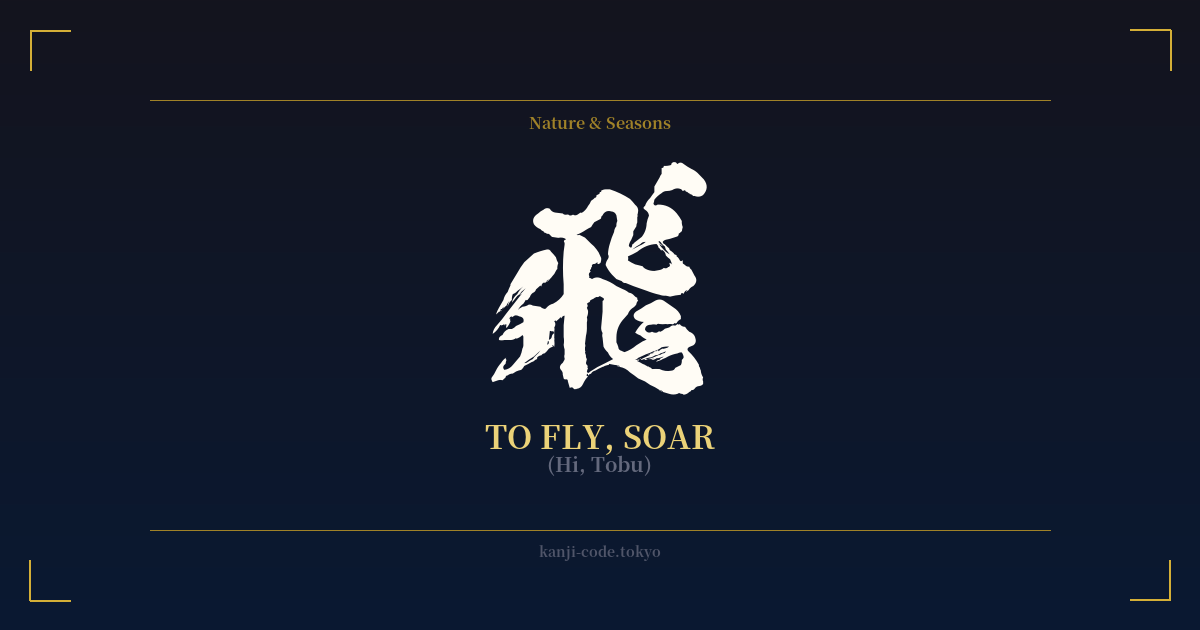
✍️ 飛 (Hi, Tobu) — Cultural Context
The kanji 飛 (hi, tobu) is one of the most visually evocative and poetically rich characters in the Japanese language. Its origins are a beautiful example of pictographic evolution, stemming from an ancient drawing of a bird with outstretched wings, poised for upward flight. This inherent dynamism is captured in its very strokes, which seem to lift off the page, embodying the essence of soaring through the air.
In Japanese, 飛 carries both a literal and a profound metaphorical weight. Literally, it is the character you see in words like 飛行機 (hikōki), meaning airplane, or when describing a bird's flight (鳥が飛ぶ, tori ga tobu). It represents the physical act of moving through the sky, untethered from the ground.
However, its true power lies in its figurative meanings. 飛 represents ambition, progress, and breaking free from limitations. The term 飛躍 (hiyaku) is a perfect example, meaning a 'great leap' or 'rapid advance.' It’s used to describe a sudden breakthrough in one's career, a massive improvement in skill, or a society making a significant stride forward. To embody 飛 is to aspire to rise above your current circumstances, to soar towards your goals with speed and grace.
This concept is deeply embedded in Japanese culture, which values perseverance and striving for excellence. The image of flight is often associated with freedom, not just from physical constraints but also from mental and spiritual burdens. It evokes a sense of liberation and boundless potential. Think of the majestic crane, a symbol of longevity and good fortune, taking to the skies, or the mythical dragon ascending into the heavens. The kanji 飛 captures the spirit of these powerful cultural symbols.
Furthermore, the character is used in names and artistic expressions to convey a sense of dynamism and talent. A person with 飛 in their name might be hoped to have a life full of great achievements and forward momentum. In calligraphy (shodō), artists often render 飛 with swift, energetic brushstrokes to emphasize its inherent motion, making it a popular subject that showcases both skill and spirit. It’s a single character that tells a complete story of aspiration, freedom, and the powerful journey of ascent.
🖌️ Font Styles for 飛
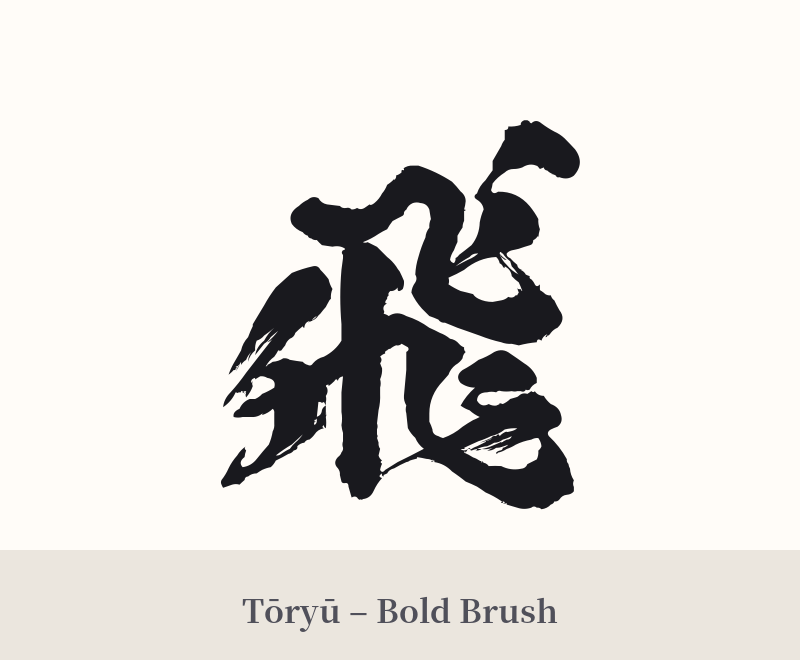
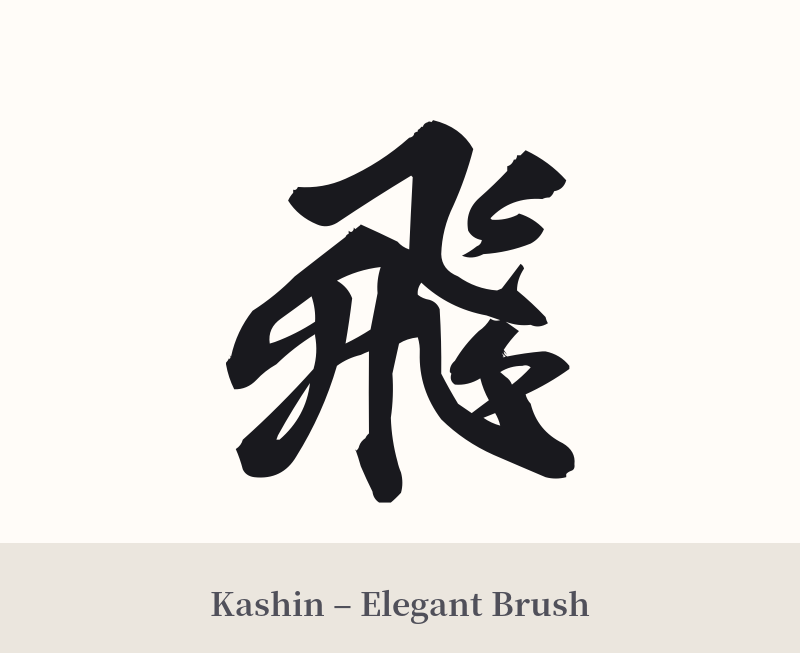
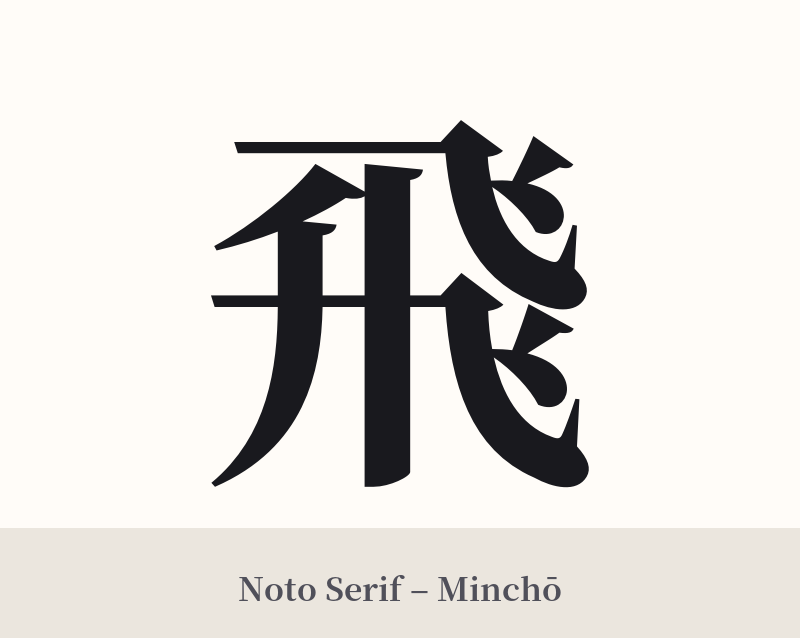
The same kanji can look dramatically different depending on the calligraphy style. Choose a font that matches the mood you want for your tattoo or design.
🎨 Tattoo Suitability
📐 Tattoo Design Guide
The kanji 飛 is visually dynamic, making it an excellent choice for a tattoo. Its form naturally suggests movement and elegance.
– Placement: Consider areas that complement its sense of motion. The shoulder blade is a classic choice, as if representing a wing. The forearm or calf allows the vertical shape of the kanji to flow with the lines of the limb. The back, along the spine, can create a powerful image of ascent.
– Font Styles: The style can dramatically alter the feeling. A semi-cursive (gyōsho) or full cursive (sōsho) brushstroke style will emphasize the fluid, graceful nature of flight. For a bolder, more impactful statement, a strong, clean block script (kaisho) works wonderfully.
– Visual Tips: While 飛 is strong on its own, it can be paired with other elements. Consider integrating it with imagery of a bird (phoenix, crane, or swallow), feathers scattering in the wind, or abstract ink splashes and cloud motifs to enhance the theme of soaring through the sky.
Comments