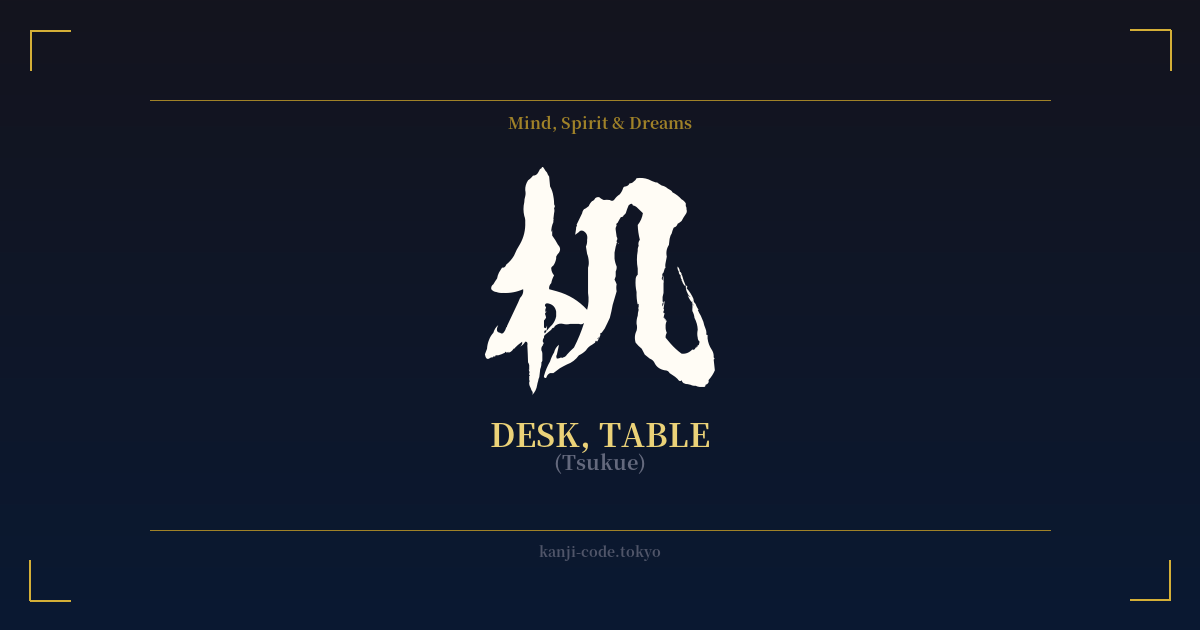
✍️ 机 (Tsukue) — Cultural Context
The Japanese kanji 机 (tsukue) refers to a desk or table, a seemingly simple piece of furniture that holds a surprisingly significant place in Japanese culture. Its visual construction tells a straightforward story: the character is a combination of 木 (ki), the radical for 'tree' or 'wood', and 几 (ki), an element originally depicting a small stool or table. Together, they form a character that literally means 'a wooden table.'
While its origin is humble, the role of the desk in Japan is deeply tied to concepts of work, study, and personal space. For students, the 勉強机 (benkyō-zukue), or study desk, is a rite of passage. It is not just furniture but a private sanctuary for learning, a symbol of the immense pressure and dedication associated with the Japanese education system. It's where childhood dreams are nurtured and academic futures are forged.
In the professional world, the 事務机 (jimu-zukue), or office desk, represents an individual's small territory within the larger collective of the Japanese workplace. The state of one's desk can be seen as a reflection of their mind and work ethic—a tidy desk suggesting an organized and focused employee. It is the silent witness to the famed diligence and long hours that characterize Japanese corporate culture.
Beyond study and work, the desk has a rich history as a platform for creativity. The 文机 (fuzukue) was a traditional low writing desk used by scholars, poets, and calligraphers. Seated on the tatami floor, an artist would use the fuzukue to craft poems, letters, and works of art. This elevates the desk from a mere object to a sacred space where thoughts, ideas, and dreams are given physical form. It is the surface upon which the mind's inner world is translated into reality.
Therefore, 机 is more than just its literal meaning. It symbolizes a place of focus, discipline, and creation. Whether for a student cramming for exams, an office worker meeting a deadline, or a writer crafting a story, the 'tsukue' is the essential stage for intellectual and creative labor. It embodies the quiet, persistent effort that leads to growth and achievement.
🖌️ Font Styles for 机
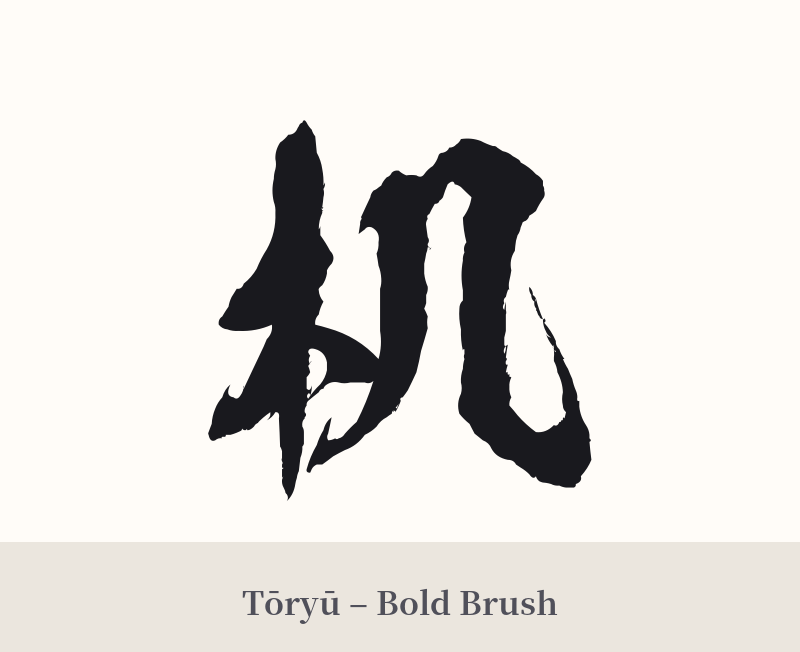
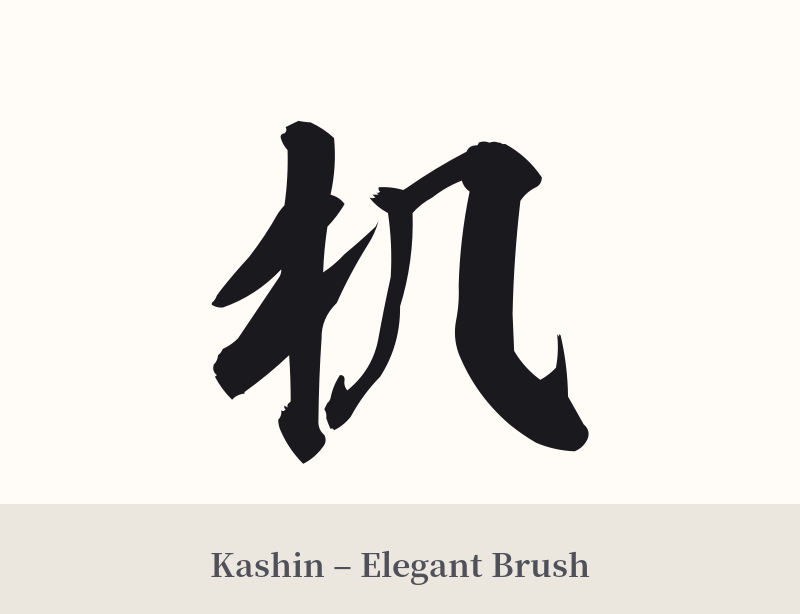
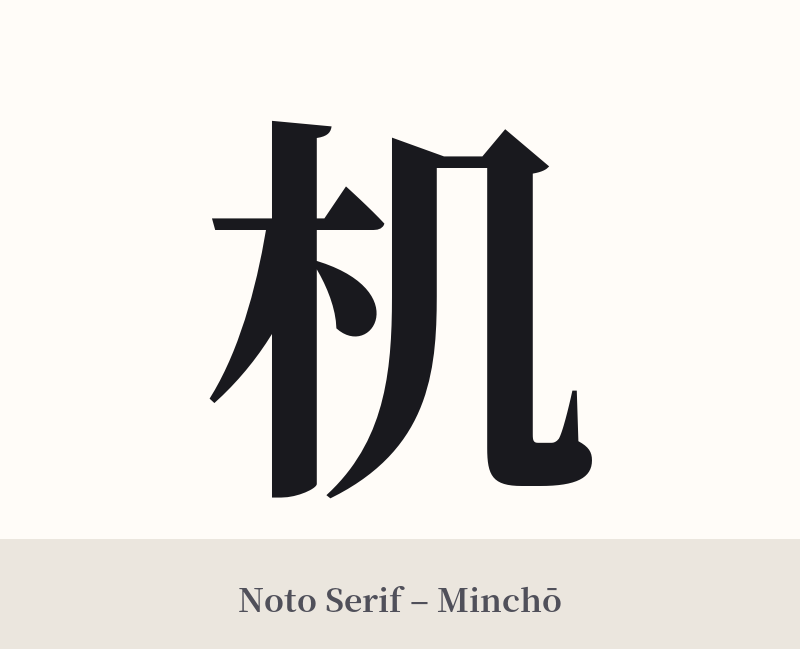
The same kanji can look dramatically different depending on the calligraphy style. Choose a font that matches the mood you want for your tattoo or design.
🎨 Tattoo Suitability
📐 Tattoo Design Guide
Given the simple nature of the kanji 机, a tattoo design requires careful thought to convey its intended meaning. The character's form is basic, with only six strokes, making it clean and legible even at a small size.
– Placement: Small, discreet placements like the inner wrist, behind the ear, or on the ankle would suit its humble nature. It could serve as a personal, quiet reminder of your work or creative passion.
– Style: A minimalist, sans-serif style font would align with the functional meaning of a desk. Conversely, a flowing, expressive calligraphy (shodō) style could imbue it with a sense of artistry, hinting at the creative work performed upon it.
– Visual Tips: Because of its mundane literal meaning, 机 is a character that strongly benefits from being part of a larger composition. Consider pairing it with other kanji or imagery to provide context. For example, a writer might pair it with 筆 (fude, writing brush) or 書 (sho, to write). An artist could add a splash of ink, or a student could combine it with 学 (gaku, learning). Standing alone, it says "desk"; paired with another element, it tells a story.
Comments