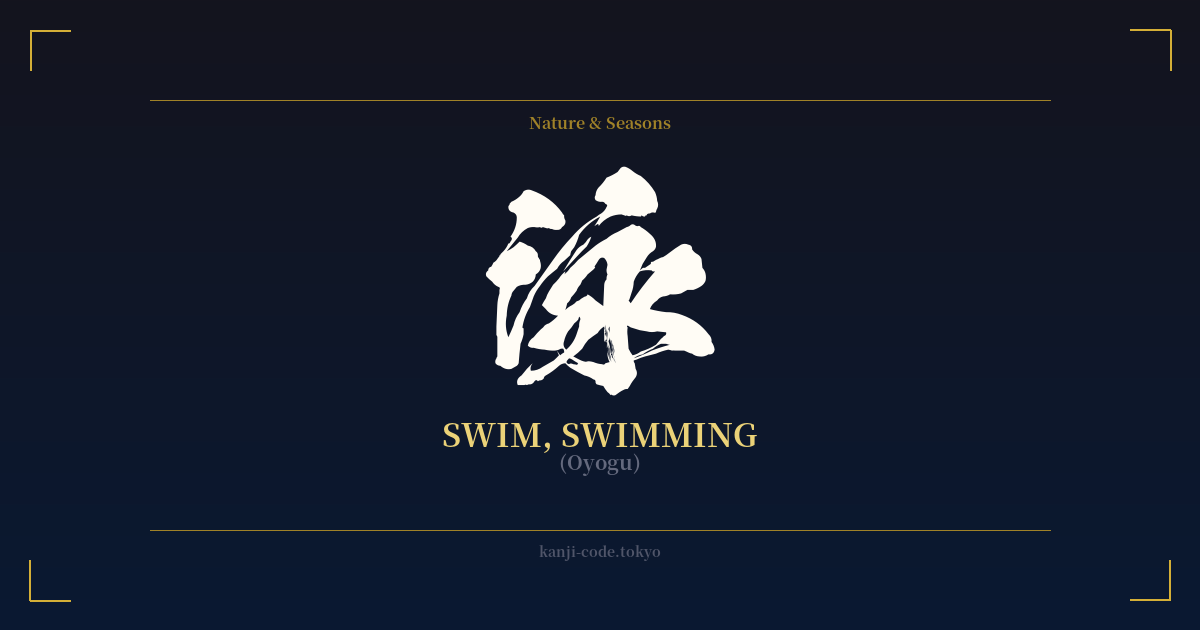
✍️ 泳 (Oyogu) — Cultural Context
The kanji 泳 (oyogu) is a beautiful and direct representation of the act of swimming. Its composition tells a story: on the left is the radical 氵 (sanzui), which signifies water. On the right is the character 永 (ei, nagai), meaning 'eternal' or 'long.' Together, they create a poetic image of moving through water, a long and flowing action.
In Japan, swimming is deeply woven into the fabric of life, especially during the humid summer months. The word evokes images of children splashing in the ocean, the disciplined lanes of a community pool, or the quiet tranquility of a mountain river. Swimming lessons (水泳, suiei) are a standard part of the school curriculum, instilling a basic comfort and respect for water from a young age. It's seen not just as a leisure activity but as a fundamental life skill.
The cultural significance extends beyond recreation. Japan has a proud history in competitive swimming, with numerous Olympic champions becoming national heroes. In this context, 泳 symbolizes discipline, relentless training, and the pursuit of excellence. It represents the dedication required to perfect one's form, to push the limits of human endurance against the resistance of water.
Metaphorically, the verb 'oyogu' is used in fascinating ways. The phrase 世の中をうまく泳ぐ (yo no naka o umaku oyogu) means 'to swim skillfully through the world,' which translates to navigating the complexities of society with tact and cleverness. It implies an ability to adapt, to move with the currents of social life rather than fighting against them. On the other hand, 目が泳ぐ (me ga oyogu), literally 'eyes swim,' describes someone whose eyes are darting around nervously, a sign of anxiety, guilt, or dishonesty. This shows the versatility of the concept, from graceful movement to unsettled agitation.
While not a spiritual symbol in itself, 泳 connects to the purifying nature of water in Shintoism. The act of swimming can be a form of immersion in nature, a cleansing of both body and mind, akin to the practice of misogi (water purification rituals). It's a character that holds both the simple joy of a summer day and the deeper metaphors of navigating life's currents.
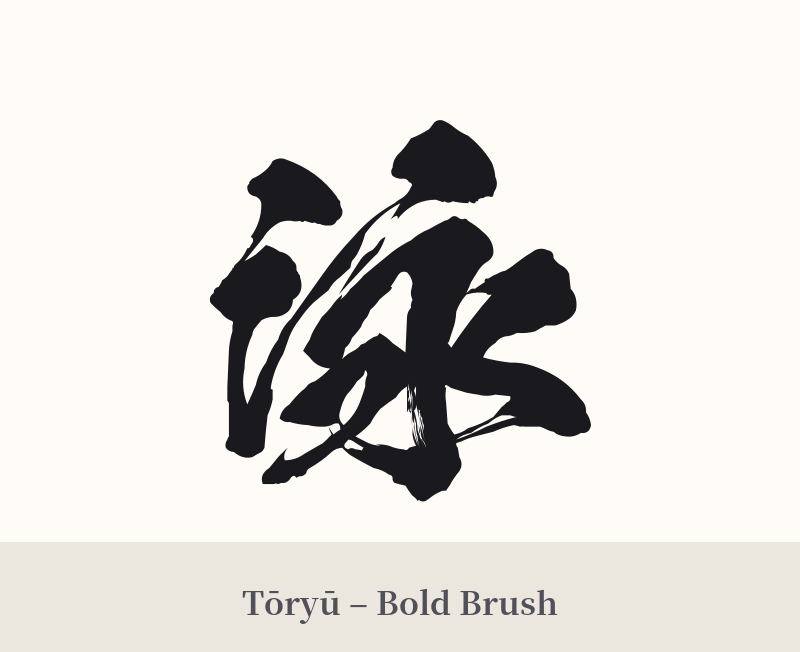
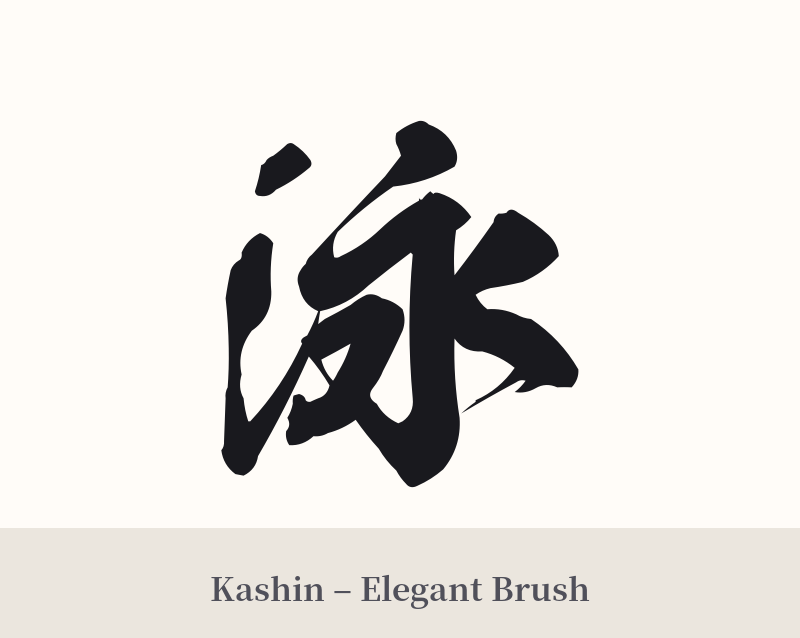
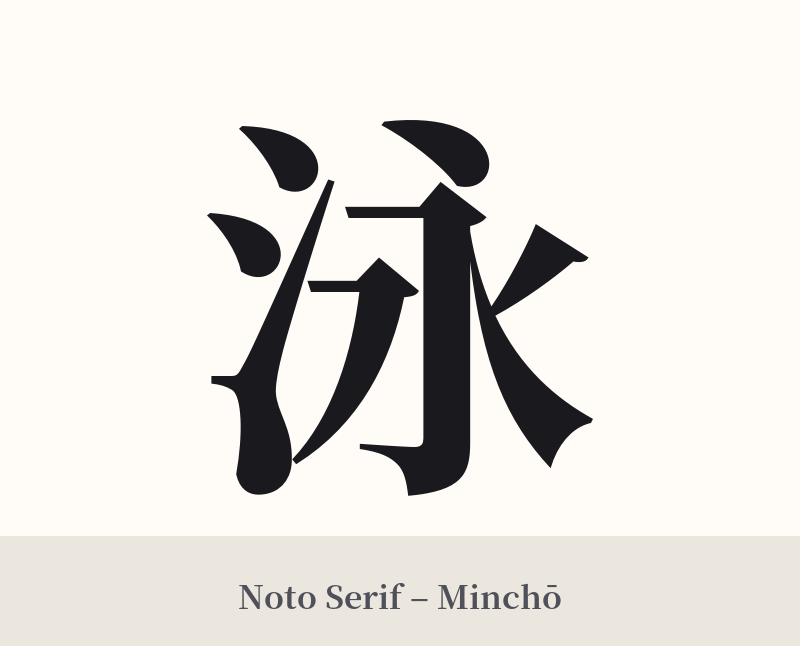
🖌️ Font Styles for 泳
The same kanji can look dramatically different depending on the calligraphy style. Choose a font that matches the mood you want for your tattoo or design.
🎨 Tattoo Suitability
📐 Tattoo Design Guide
The kanji 泳 offers great versatility in tattoo design due to its simplicity and clear meaning.
– Placement: Consider areas of the body that suggest movement. The ankle, calf, or side of the foot can connect the idea of swimming to propulsion. The forearm or wrist offers a visible and personal reminder of a passion. A placement along the ribs or shoulder blade can create a sense of flowing with the body's contours.
– Font Style: For a design that emphasizes the fluidity of water, a cursive script like Gyōsho (行書) or the even more abstract Sōsho (草書) works beautifully. Their connected, flowing strokes can mimic the movement of a swimmer or the ripples in a pond. For a design focused on the discipline of competitive swimming, a crisp, balanced Kaisho (楷書) block script conveys strength and precision.
– Visual Elements: While 泳 can stand alone, it pairs exceptionally well with other imagery. Integrating it with stylized waves, a koi fish swimming upstream (a symbol of perseverance), or a lotus flower (symbolizing purity and rising above) can add layers of meaning and create a more dynamic visual piece.
Comments