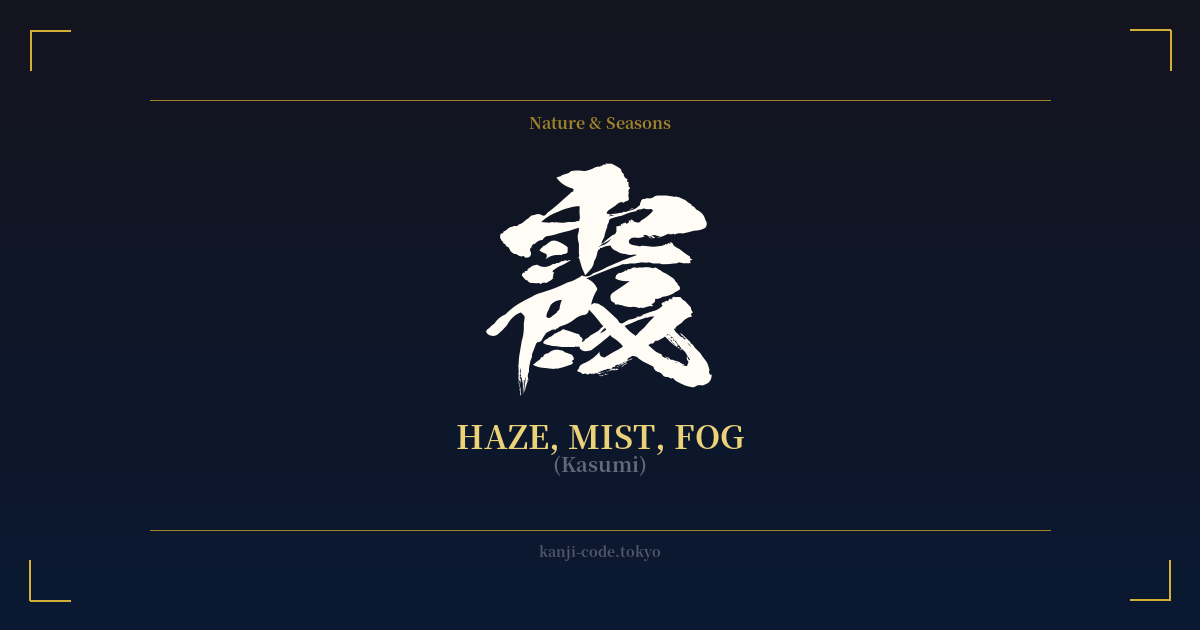
✍️ 霞 (Kasumi) — Cultural Context
The kanji 霞 (Kasumi) is far more than a simple word for haze or mist; it is a vessel of deep cultural and poetic resonance in Japan. Its very structure tells a story: the radical 雨 (ame) at the top signifies 'rain,' anchoring the character firmly in the realm of weather and atmosphere. The character evokes a specific type of atmospheric condition, one that is light, ethereal, and often beautiful, veiling the landscape in a soft, dreamlike shroud.
Crucially, Japanese culture draws a sharp distinction between 霞 (kasumi) and its counterpart, 霧 (kiri). Kasumi is the haze of spring, a gentle vapor that rises with the warmth and is celebrated in poetry and art. It is a 'kigo,' or season word, for spring, forever linked to the blooming of cherry blossoms and the gentle renewal of nature. When poets of the Heian period wrote of kasumi, they were painting a picture of a world softened at the edges, a symbol of subtle beauty and the poignant passage of time.
In contrast, 霧 (kiri) is the fog of autumn and winter. It is typically denser, colder, and carries a different emotional weight. While kasumi is poetic and gentle, kiri can be mysterious, disorienting, or even ominous, often used in folklore and literature to obscure monsters or hide dramatic reveals. To choose 霞 is to choose the delicate, painterly haze of a spring morning over the thick, enveloping fog of a winter's night.
This character is a cornerstone of the Japanese aesthetic of 'yūgen' (幽玄), which points to a profound, mysterious beauty that is hinted at rather than explicitly stated. The haze of kasumi doesn't hide the landscape; it suggests its depth and hints at what lies beyond, engaging the imagination. It is the perfect embodiment of 'mono no aware' (物の哀れ), the gentle sadness and pathos of things, as the haze both beautifies and obscures, reminding the viewer of the transient, impermanent nature of beauty and life itself.
From the ancient poetry of the Man'yōshū to the delicate ink wash paintings of sumi-e and ukiyo-e woodblock prints, kasumi has been used by artists for centuries to create atmosphere, depth, and a sense of longing. It is a character that represents not just a weather phenomenon, but a way of seeing the world—appreciating the beauty in the unseen and the elegance of imperfection.
🖌️ Font Styles for 霞
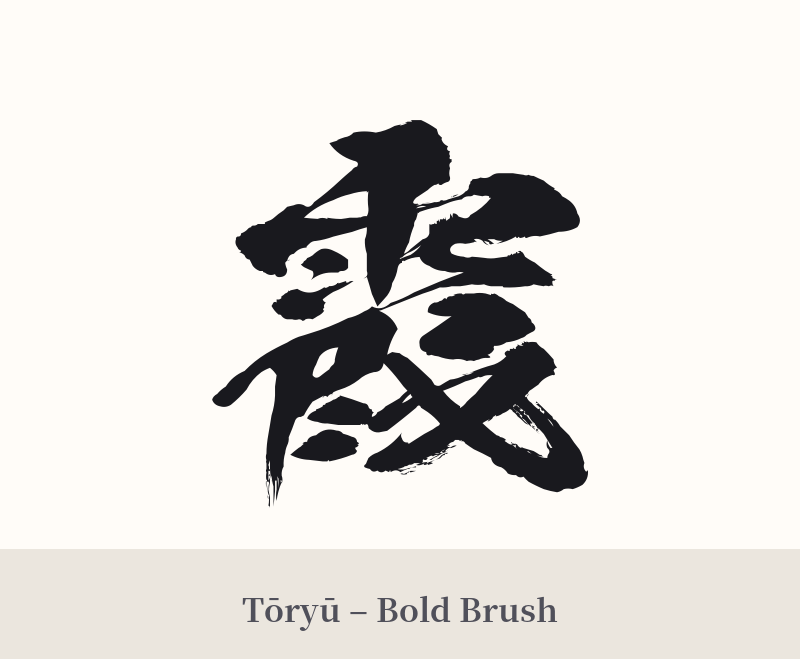
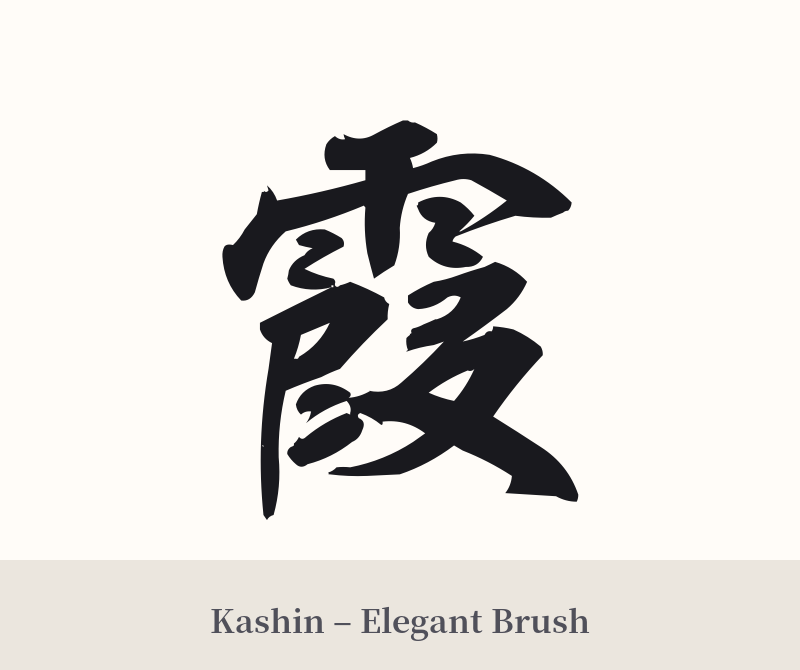
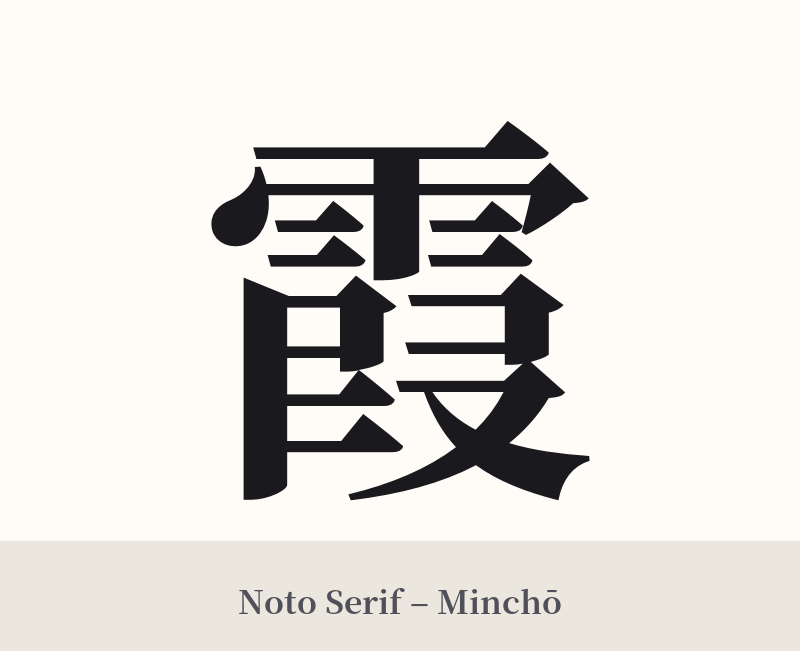
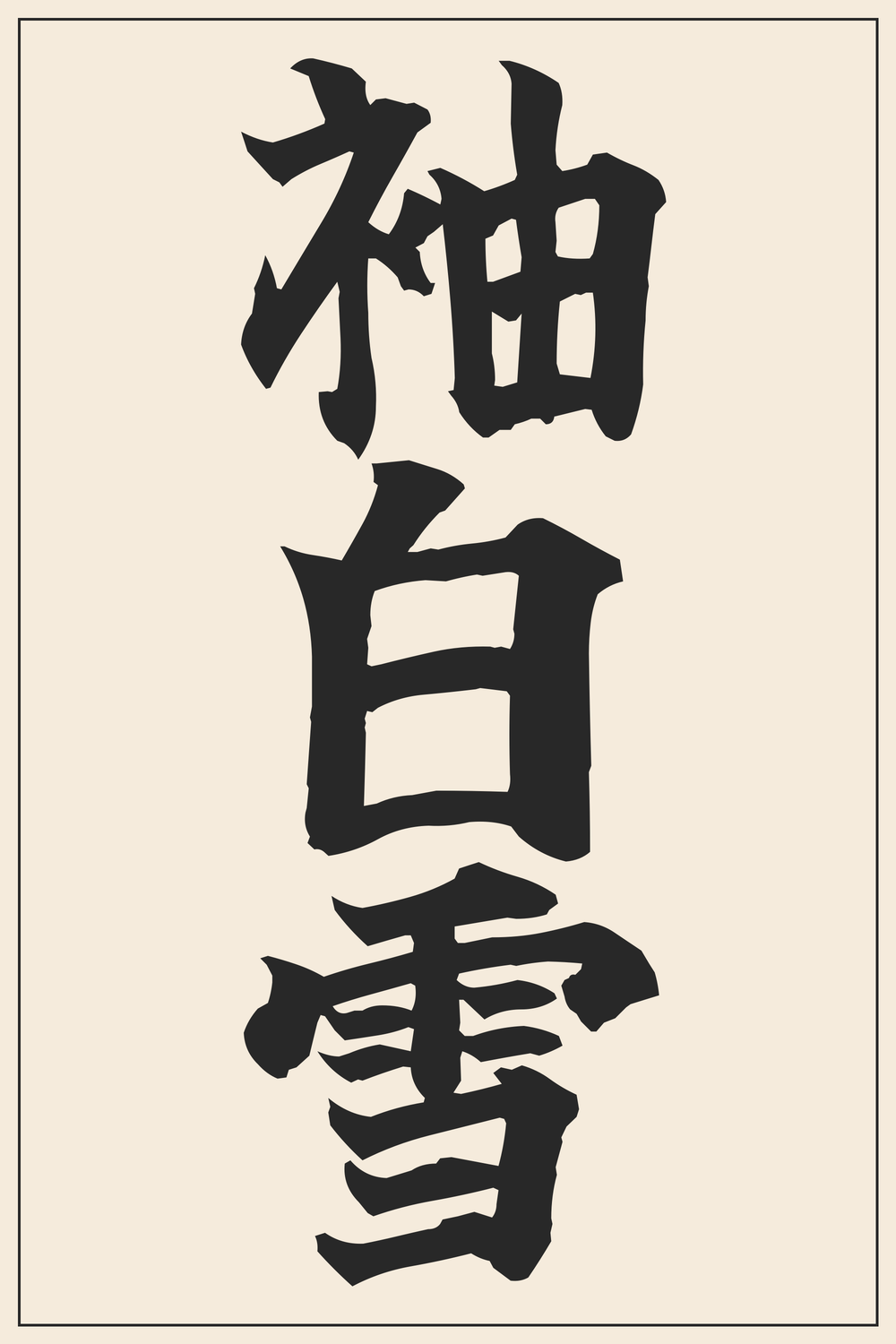
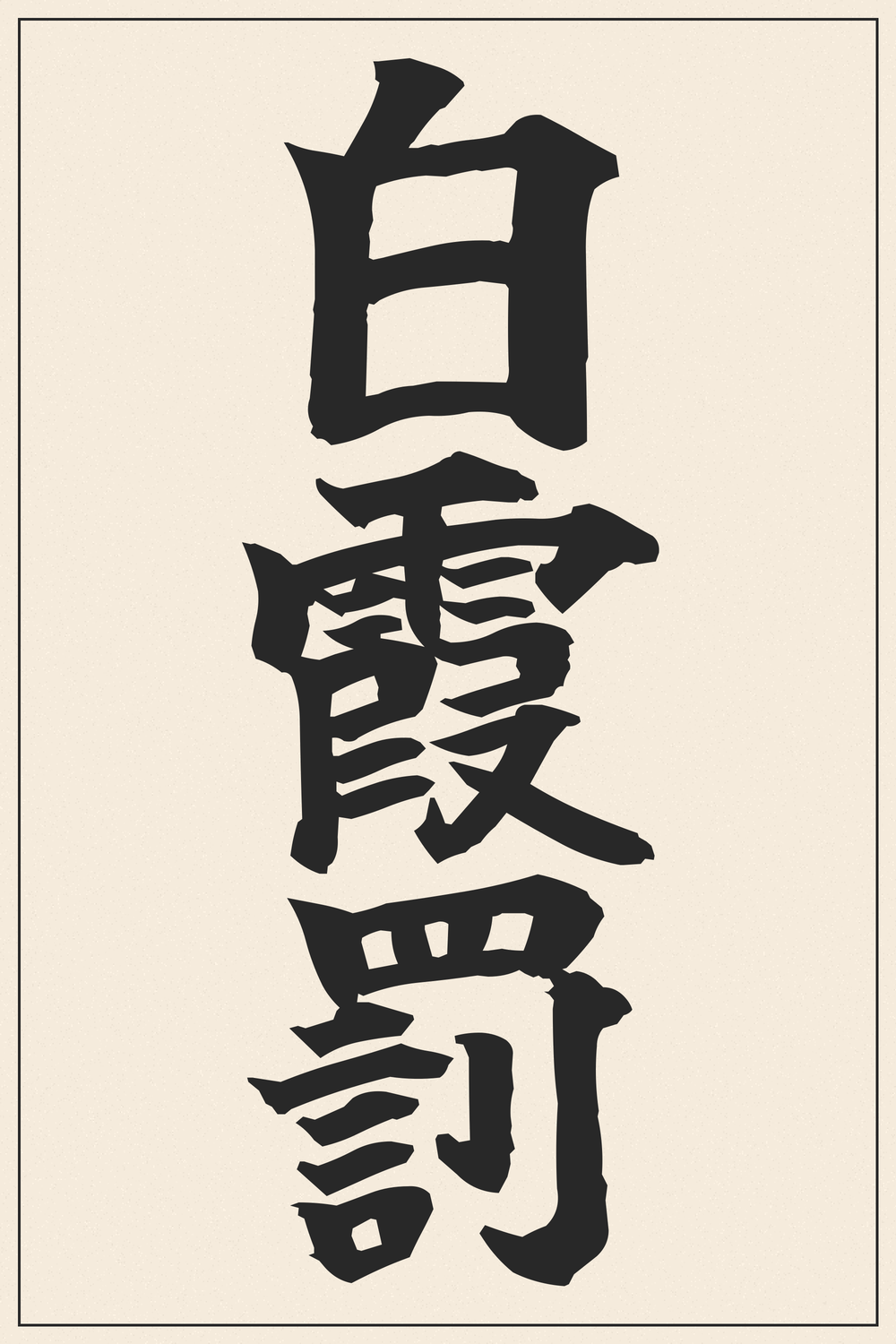
The same kanji can look dramatically different depending on the calligraphy style. Choose a font that matches the mood you want for your tattoo or design.
🎨 Tattoo Suitability
📐 Tattoo Design Guide
The kanji 霞 (Kasumi) is visually complex and elegant, offering several design possibilities.
– Placement: Due to its high stroke count, this kanji is best suited for larger, flatter areas of the body where the details can be appreciated without becoming muddled. Consider the forearm, inner bicep, calf, shoulder blade, or back. Avoid small, bony, or high-friction areas like the wrist, fingers, or feet.
– Style: A cursive or semi-cursive calligraphy style (gyōsho or sōsho) would beautifully capture the flowing, ethereal quality of mist. A traditional, crisp block script (kaisho) will highlight the character's intricate structure and balance. A delicate, serif-style Mincho font could also be an elegant choice for a more modern, refined look.
– Visual Tips: Consider integrating 霞 into a larger piece. It pairs wonderfully with classic Japanese motifs like cherry blossoms (sakura) to emphasize its spring association, or a mountain range partially veiled by the character itself. A watercolor or soft wash background in gray or light blue can further enhance the misty, atmospheric feeling.
Comments