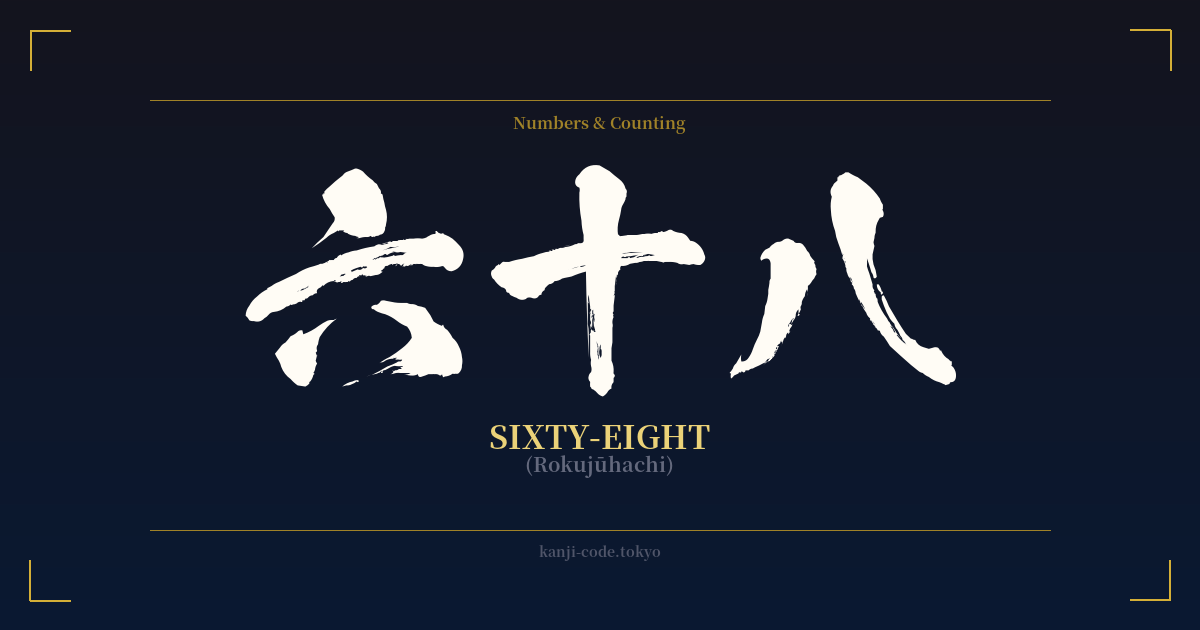
✍️ 六十八 (Rokujūhachi) — Cultural Context
The Japanese word for sixty-eight, 六十八 (Rokujūhachi), is a straightforward construction that reveals the logic of the Sino-Japanese numeral system. It is composed of three characters: 六 (roku – six), 十 (jū – ten), and 八 (hachi – eight). The structure literally translates to "six tens plus eight," a clear and efficient way to represent numbers that is consistent across East Asian languages using Chinese characters.
In Japan, two primary counting systems coexist. The native Japanese system (yamato kotoba) is used for counting objects up to ten (e.g., hitotsu, futatsu, mittsu). For larger numbers, abstract counting, and most modern applications, the Sino-Japanese system (ichi, ni, san) is used. Therefore, sixty-eight is exclusively read as Rokujūhachi.
While the number sixty-eight itself doesn't hold a major, overarching cultural significance like the ages of 20 (coming of age), 60 (kanreki), or 70 (koki), the individual numbers within it do carry their own symbolism. The number eight, 八 (hachi), is widely considered to be a lucky number in Japan. Its shape, which widens at the bottom, is called 末広がり (suehirogari), symbolizing growing prosperity and a bright future. This positive association with 'eight' lends a subtle fortunate air to any number ending in it.
The number six, 六 (roku), is generally neutral. It doesn't have the strong positive connotations of eight or the negative ones of four (shi, which sounds like death) or nine (ku, which sounds like suffering). Its simplicity makes it a foundational building block in the numerical system.
Numbers in Japan also play a role in a form of wordplay called goroawase (語呂合わせ), where numbers can be read phonetically to create words. For 68, one could potentially read it as "ro-ya" or "mu-ba," but there are no famous, universally recognized phrases associated with it. This contrasts with numbers like 4649 (yoroshiku) or 39 (san-kyu, or 'thank you').
In modern Japan, Arabic numerals (68) are used for almost all everyday purposes, such as on price tags, digital clocks, and in phone numbers. Kanji numerals, like 六十八, are reserved for more traditional or formal contexts. You might see them on formal certificates, in vertical writing in books and letters, or used for aesthetic effect in art and design to evoke a sense of tradition and timelessness.
🖌️ Font Styles for 六十八
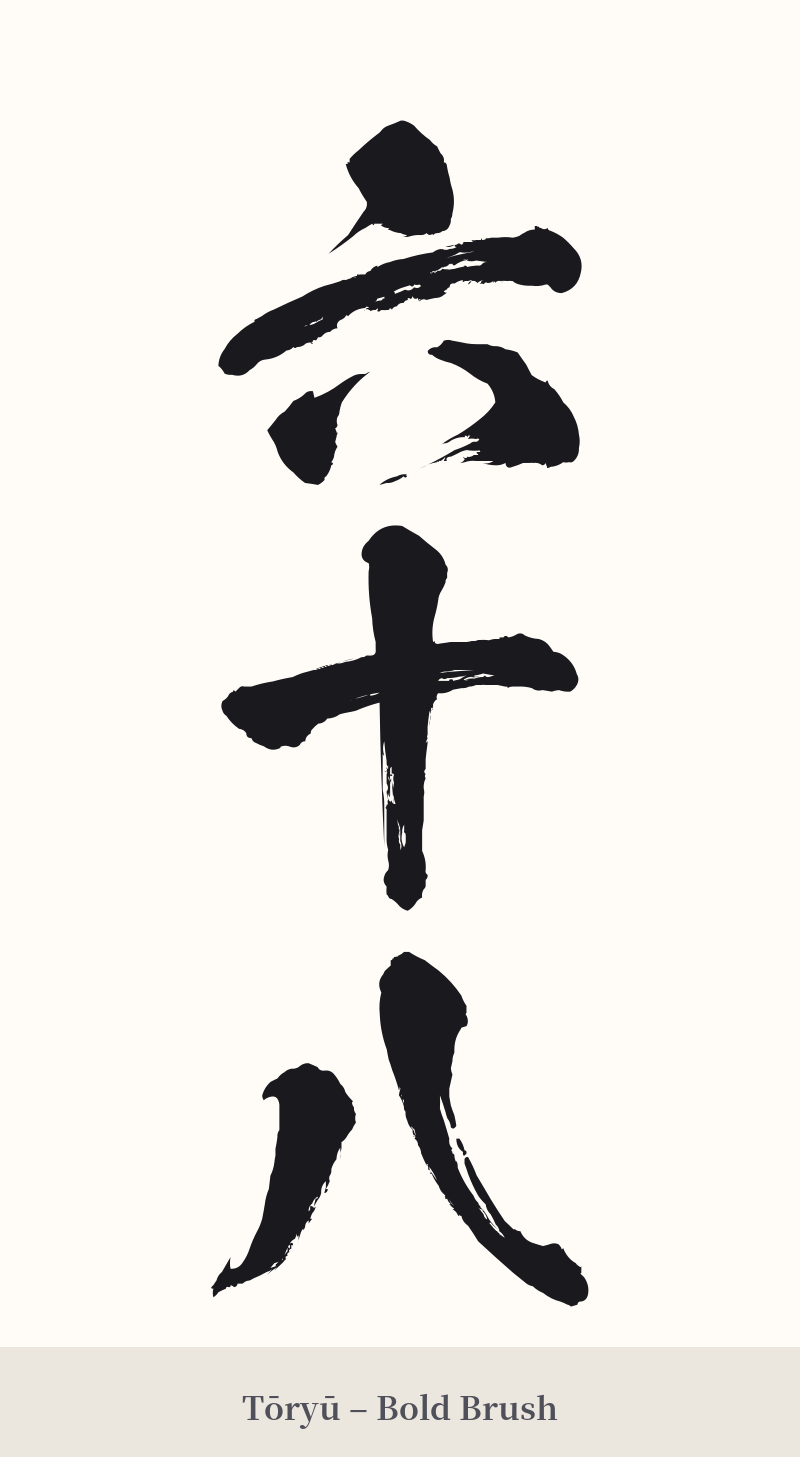
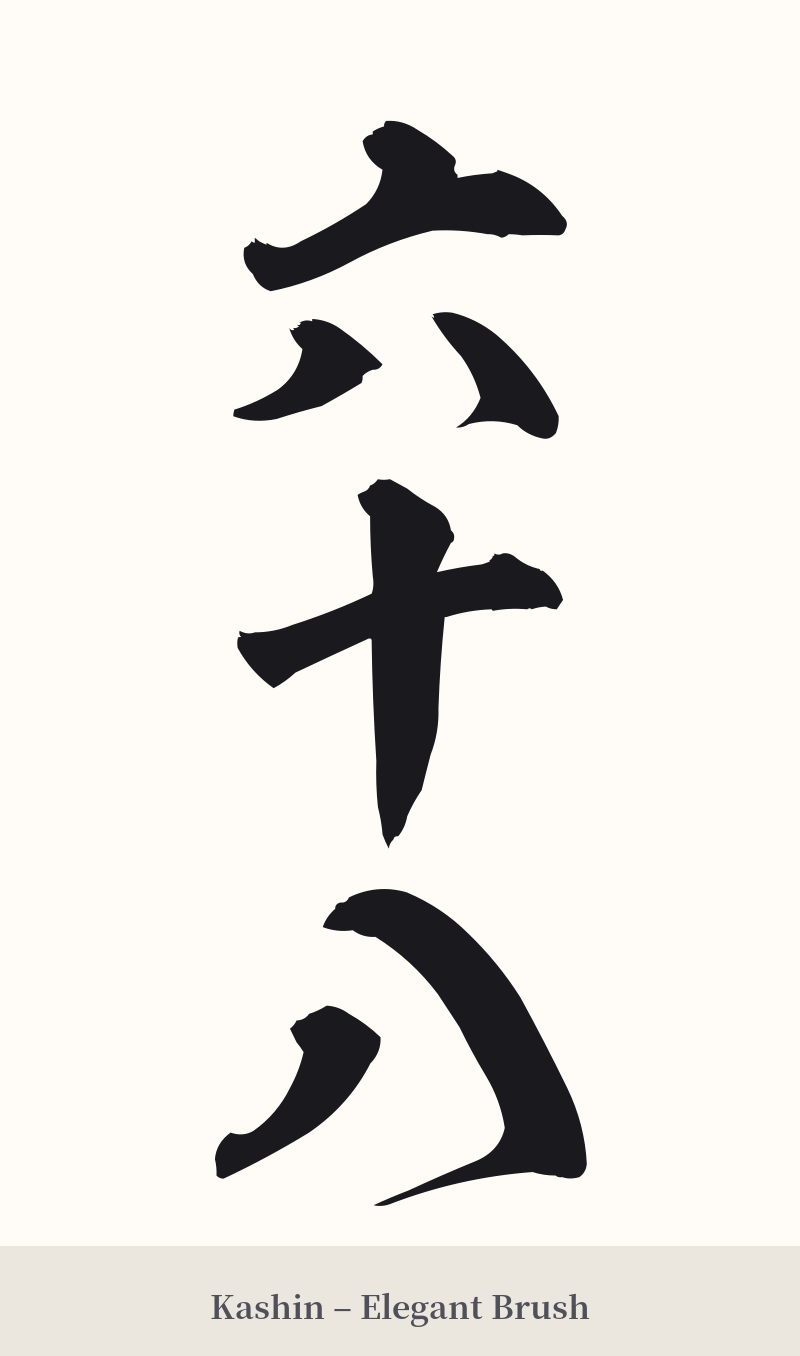
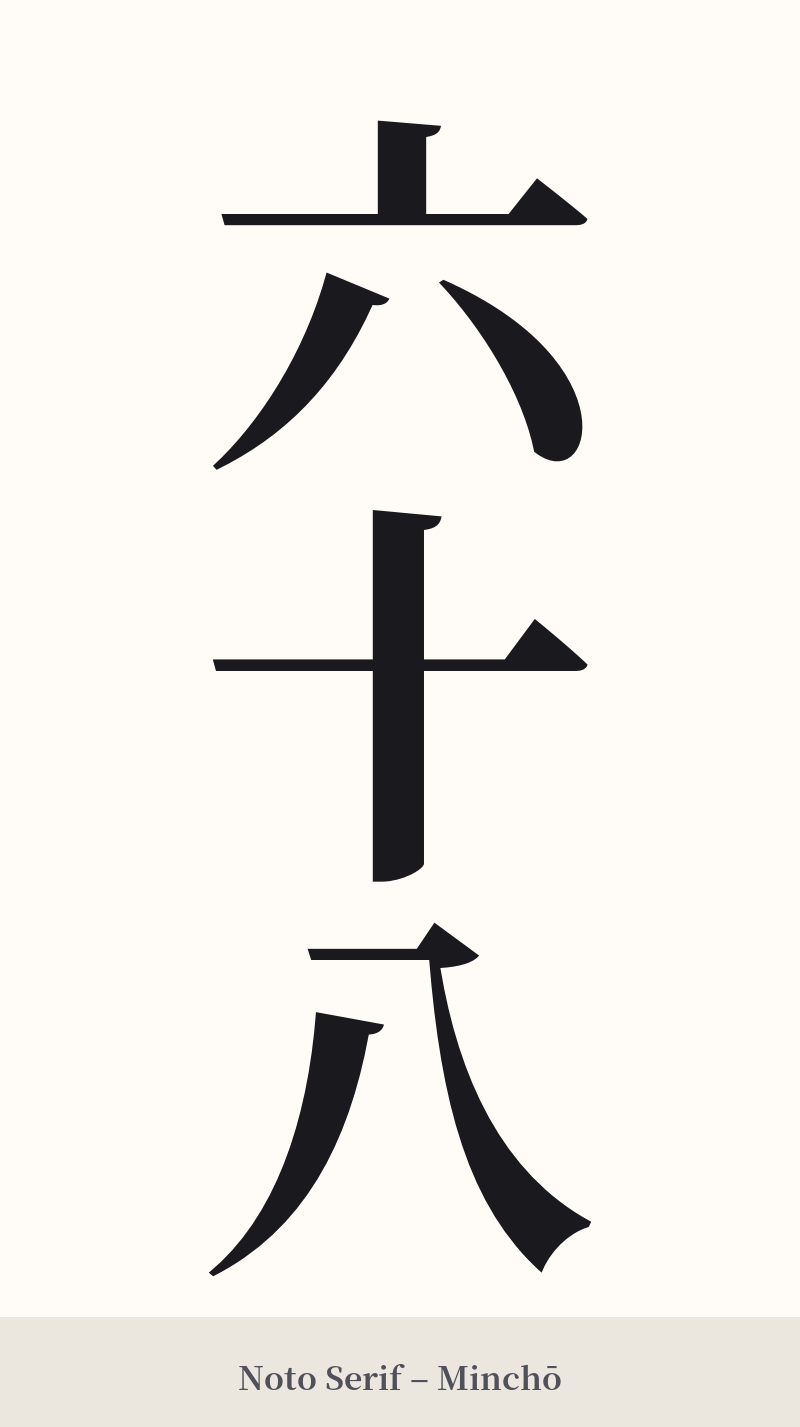
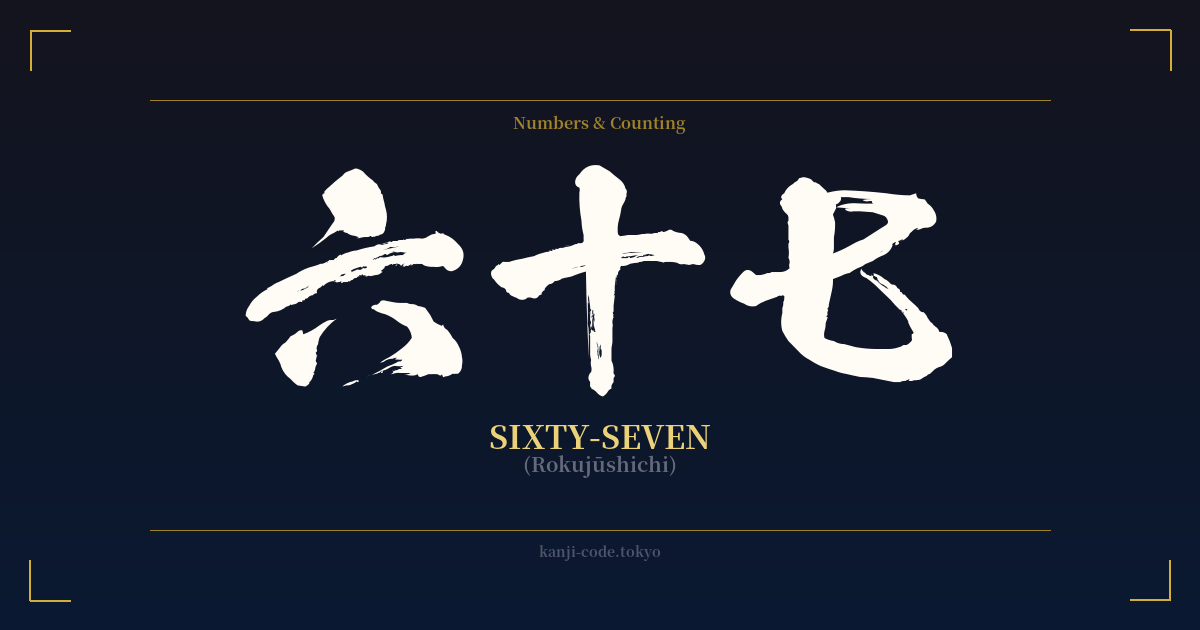
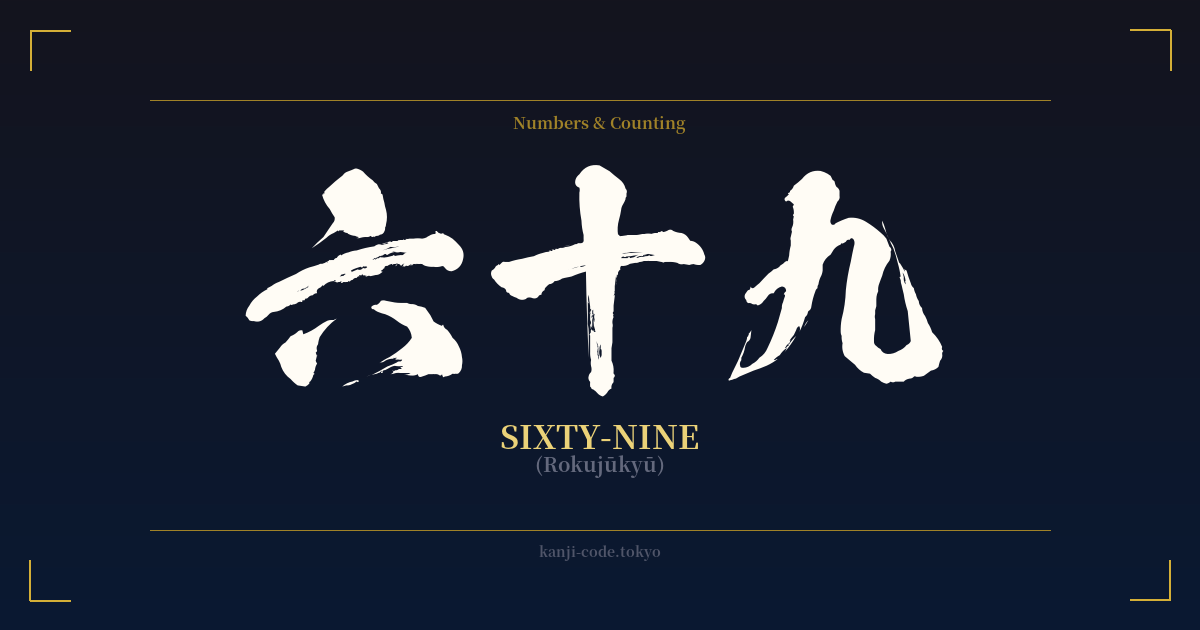
The same kanji can look dramatically different depending on the calligraphy style. Choose a font that matches the mood you want for your tattoo or design.
🎨 Tattoo Suitability
📐 Tattoo Design Guide
For a tattoo of 六十八, the arrangement of the three characters is the primary design choice. A vertical alignment is the most traditional and classic look for Japanese text, making it well-suited for placements like the spine, forearm, or back of the calf.
A horizontal layout offers a more modern feel, fitting well across the chest, on the inner bicep, or along the collarbone. Because the characters are all very simple with low stroke counts, this design remains clear and legible even at a smaller size.
Here are some style suggestions: – Shodō (Calligraphy): A semi-cursive (gyōsho) or cursive (sōsho) style can lend an artistic and fluid quality to these simple characters, turning a plain number into a piece of art. – Minchō: A traditional, serif-style font that provides a look of elegance and formality, similar to Times New Roman in English. – Gothic (Goshikku): A bold, sans-serif block font that gives the kanji a strong, modern, and impactful appearance.
Comments