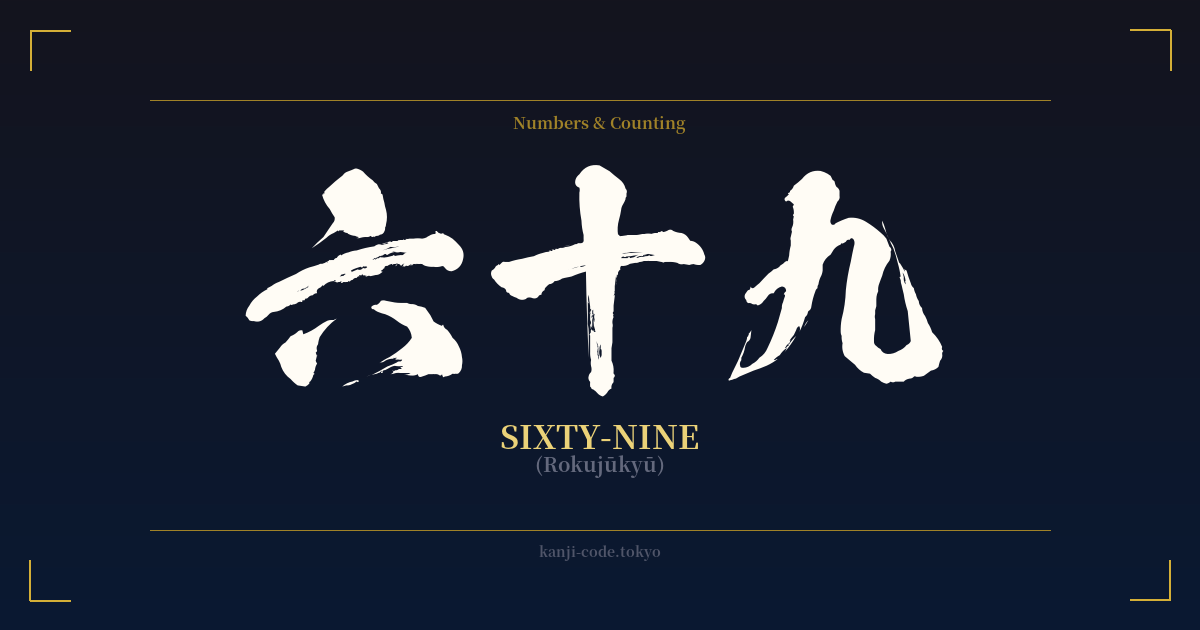
✍️ 六十九 (Rokujūkyū) — Cultural Context
The Japanese word for sixty-nine, 六十九 (Rokujūkyū), is a perfect example of how meaning can be both straightforward and layered with imported cultural context. On the surface, its construction is a model of logical simplicity, a hallmark of the Sino-Japanese numbering system. It is composed of three fundamental kanji: 六 (roku) for 'six', 十 (jū) for 'ten', and 九 (kyū) for 'nine'. The structure literally translates to 'six tens and nine', a clear and unambiguous way to represent the value 69.
In everyday Japanese life, 六十九 functions just like any other number. You will see it on price tags, in addresses, as part of a date, or when referring to someone's age. The individual characters are among the first taught to Japanese children in elementary school, representing the basic building blocks of literacy and mathematics. In this sense, the word is mundane, practical, and devoid of any inherent special meaning. It does not carry the traditional superstitions associated with other numbers, such as 四 (shi), which sounds like 'death', or 九 (ku), which can evoke 'suffering'.
However, it is impossible to discuss 六十九 in the modern era without acknowledging its globally recognized sexual connotation. The Western association of the number '69' with a specific sexual act is not only known in Japan but is pervasive, especially among younger generations and in pop culture. This imported meaning completely overshadows its simple numerical value in any context where it's presented as a standalone concept.
This creates a fascinating cultural duality. While an elderly person might see the number on a calendar and think nothing of it, a teenager seeing it on a t-shirt would immediately understand the intended joke. It frequently appears in manga, anime, and comedy shows as a visual gag or a form of playful, slightly risqué humor. The pronunciation, 'rokujūkyū,' does not have a phonetic pun associated with it like some other numbers, so its significance is purely based on the visual representation of the Arabic numerals '6' and '9'.
Therefore, the cultural context of 六十九 is a tale of two meanings: one ancient and mathematical, the other modern and provocative. It serves as a powerful reminder that in our interconnected world, symbols can take on new lives, often eclipsing their original intent. Choosing to use this number, especially in a visual medium like a tattoo, is to consciously engage with its humorous and sexual identity, as its original, purely numerical meaning will almost certainly be lost on the viewer.
🖌️ Font Styles for 六十九
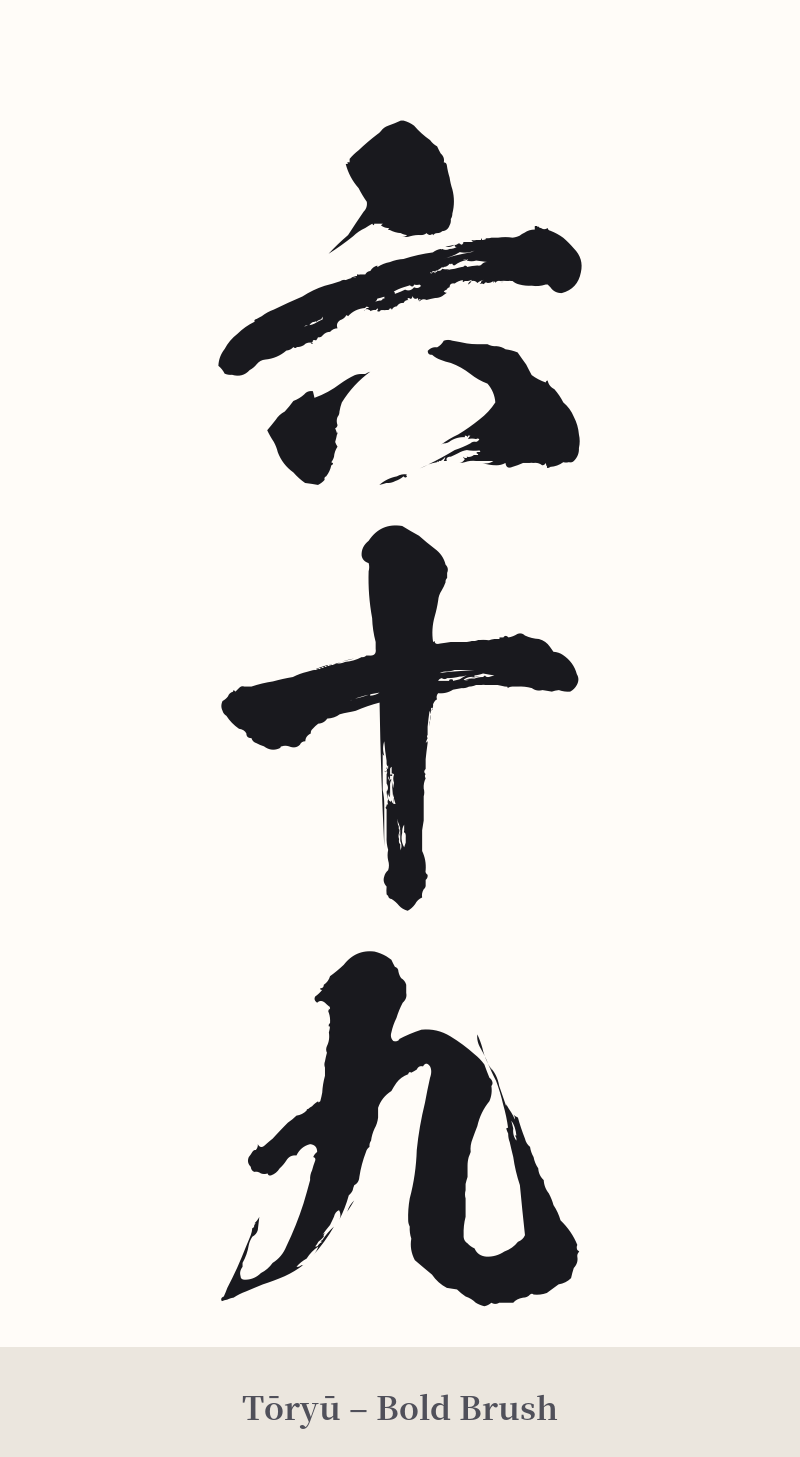
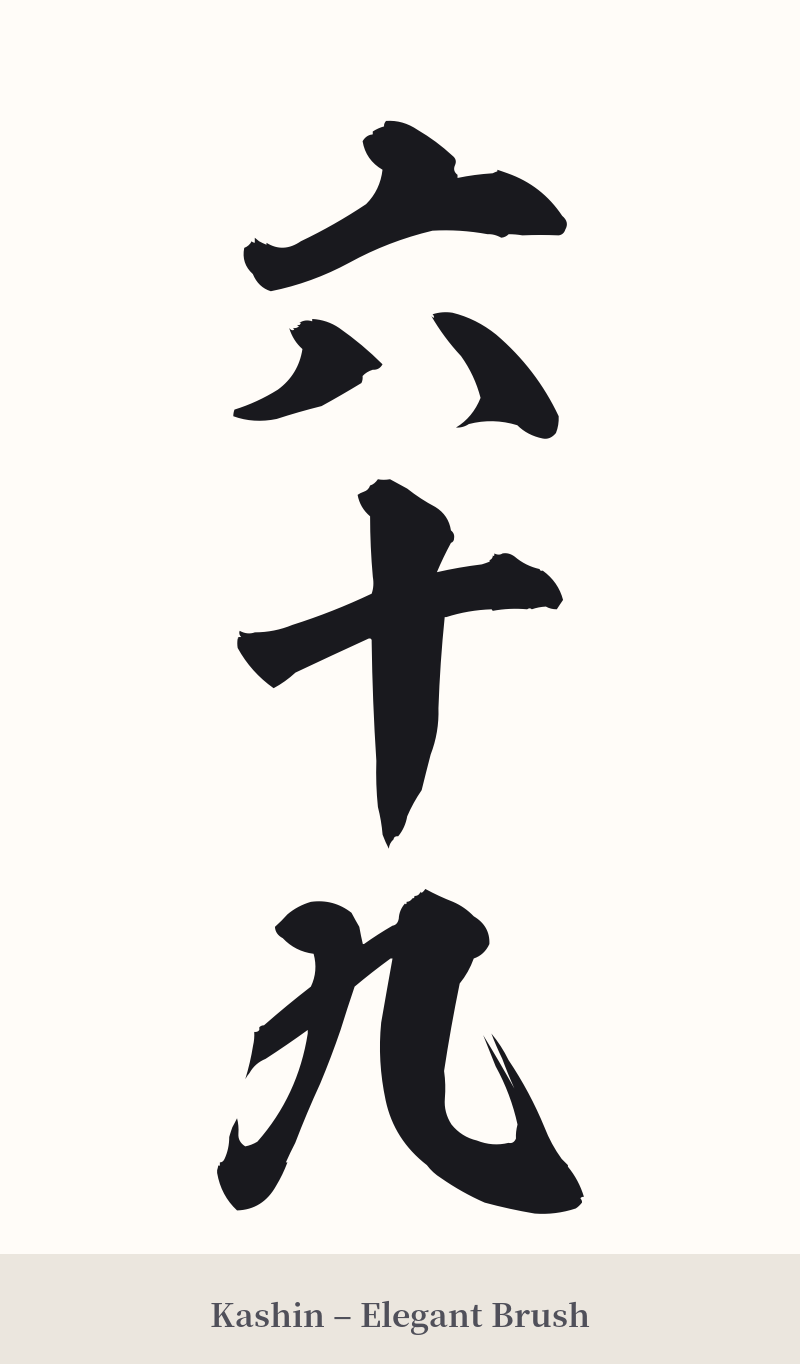
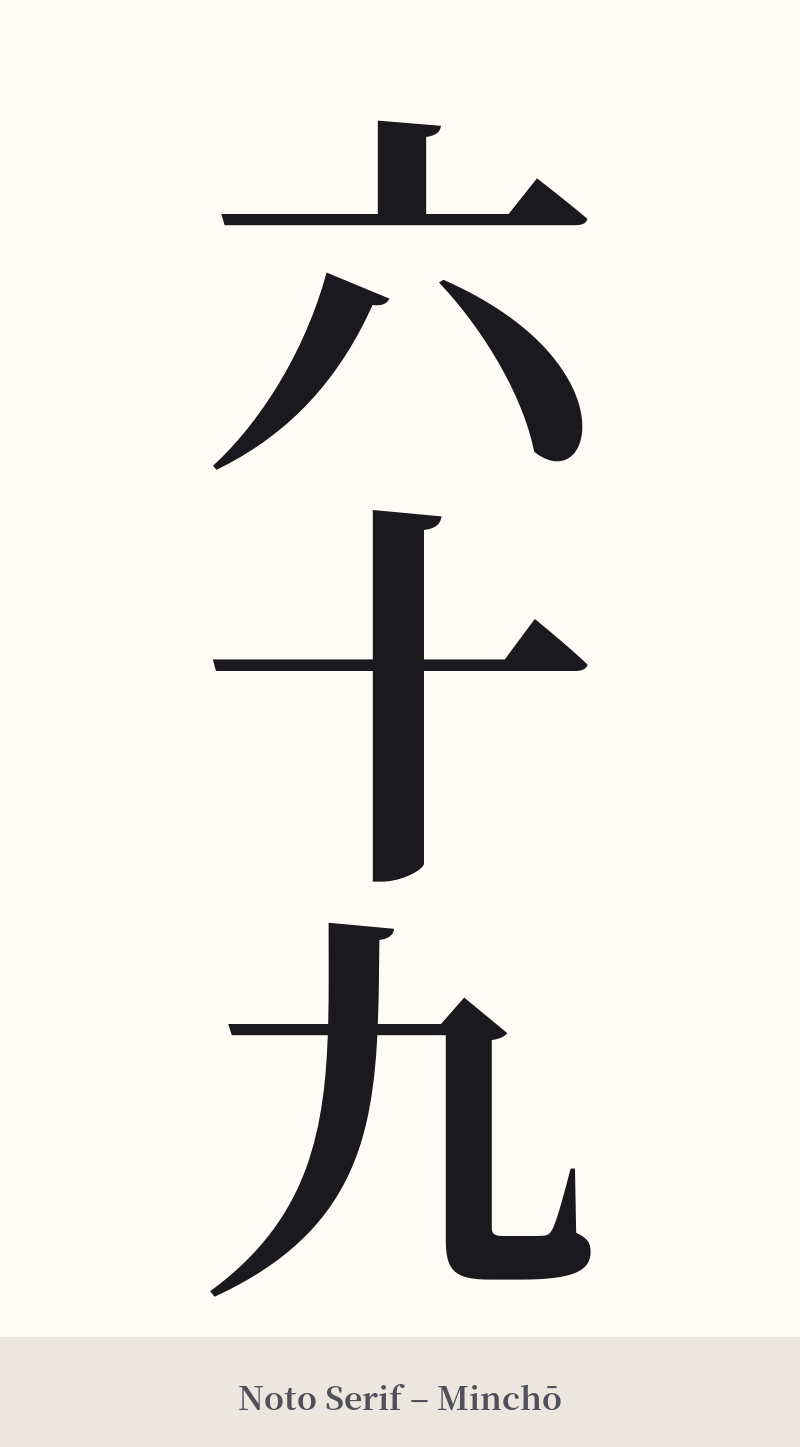
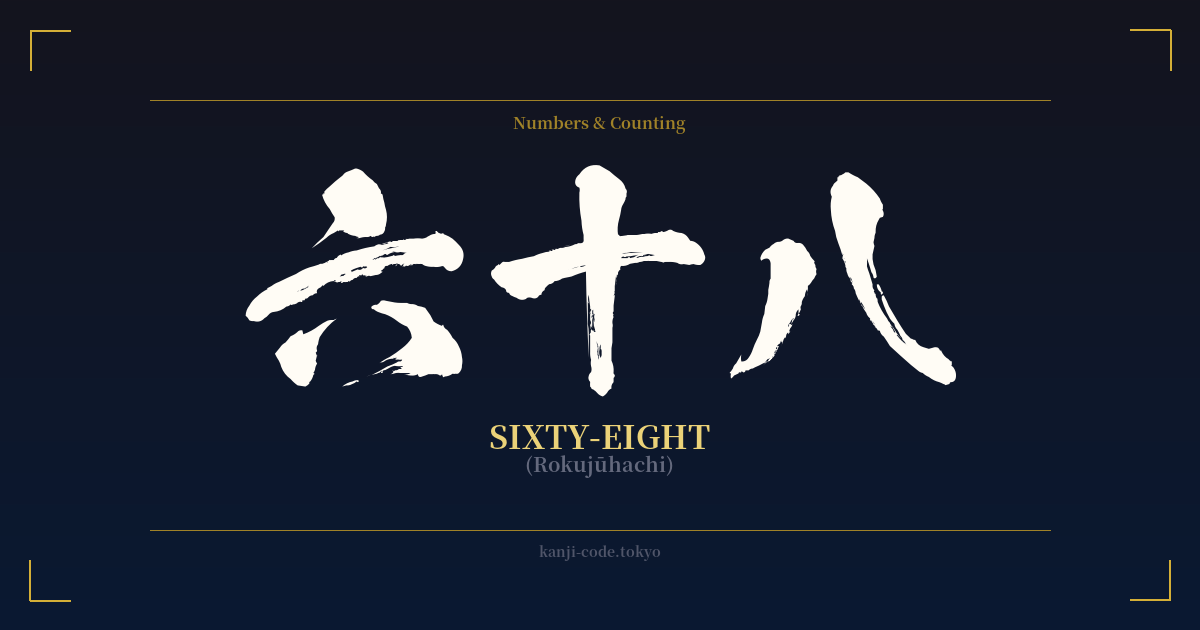
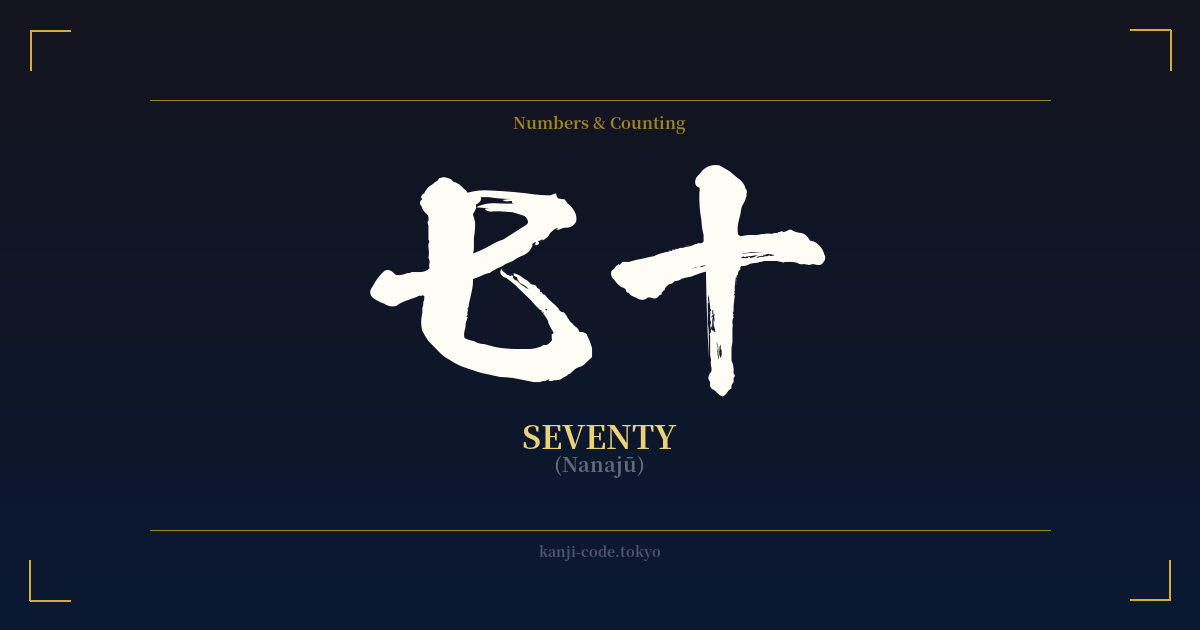
The same kanji can look dramatically different depending on the calligraphy style. Choose a font that matches the mood you want for your tattoo or design.
🎨 Tattoo Suitability
📐 Tattoo Design Guide
Given the strong and often juvenile connotations, a tattoo of 六十九 is generally not recommended for those seeking a serious or profound piece. However, if you are set on this design for its humorous or provocative value, here are some considerations:
– Vertical Orientation: This is the most crucial design choice. Arranging the characters vertically (六, then 十, then 九 below it) aligns with traditional Japanese writing. It helps the design look more like an intentional word and less like a random string of numbers, adding a touch of classic aesthetic.
– Font Style: Consider a dynamic, expressive calligraphy style like gyōsho (semi-cursive) or sōsho (cursive). The fluid, artistic strokes can add a layer of abstraction and beauty, slightly softening the bluntness of the meaning. A blocky, standard font (like Mincho or Gothic) will make the meaning feel more direct and stark.
– Placement: Due to the nature of the word, placement is key. Prominent and highly visible areas like the forearm, neck, or hands will make a very bold and unavoidable statement. For a more personal or subtle joke, consider placement on the ribs, hip, or another area that is typically covered.
– Avoid Clichés: Pairing 六十九 with other symbols can be tricky. Adding elements like hearts or lips will only amplify the sexual meaning. It's best left as a standalone piece to let the simple, stark humor of the number speak for itself.
Comments