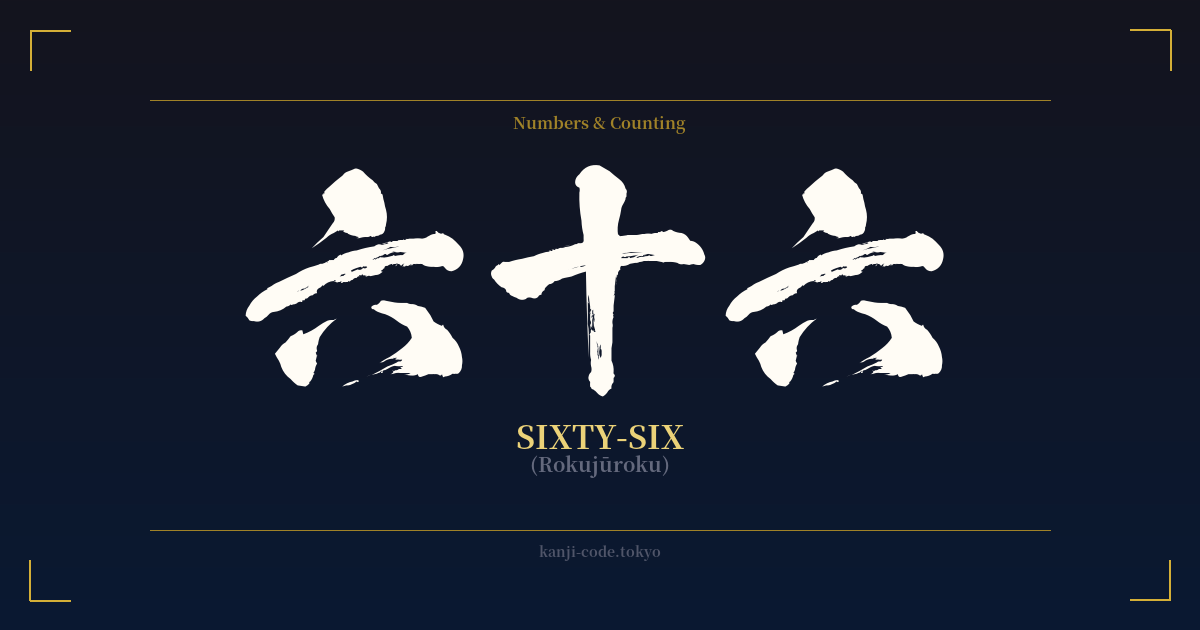
✍️ 六十六 (Rokujūroku) — Cultural Context
The kanji compound 六十六 (Rokujūroku) is the Japanese representation of the number sixty-six. Its construction is a clear and logical reflection of the Japanese counting system, combining the characters for six (六), ten (十), and six (六) again. This structure literally translates to 'six-tens-six,' a straightforward mathematical expression common for numbers above ten.
Unlike numbers such as seven (七), which is often considered lucky, or four (四), which is deemed unlucky due to its phonetic similarity to the word for death (死), the number sixty-six holds no strong, universally recognized superstition or symbolism in mainstream Japanese culture. It is a neutral number, its significance derived almost entirely from the context in which it appears.
However, this neutrality doesn't mean it's devoid of any cultural touchpoints. In modern Japan, there is a relatively new celebration for the 66th birthday called 緑寿 (Ryokuju). The name combines 'ryoku' (緑), meaning green, with 'ju' (寿), meaning longevity or celebration. This association with green links the age to nature, vitality, and new growth, framing it as a positive milestone. While not as deeply entrenched as the traditional 60th birthday (還暦, Kanreki), Ryokuju is a growing custom that brings a pleasant connotation to the number.
Furthermore, the number holds significance in certain Buddhist pilgrimage routes. For instance, the Musashino Kannon Pilgrimage (武蔵野観音霊場), which spans across Tokyo and Saitama prefectures, is composed of 66 sacred temples. For those who undertake or have a connection to this specific spiritual journey, the number 六十六 would carry a profound personal and religious meaning, representing perseverance, devotion, and the completion of a significant quest.
Ultimately, the power of 六十六 lies in its specificity. It's not an abstract concept like 'love' or 'courage'; it is a precise quantity. Its meaning is often tied to a personal anniversary, a significant year, a house number, or a unique event in an individual's life. Therefore, while it may not have the broad, sweeping cultural narrative of other kanji, its value is deeply personal, making it a code or a marker for a specific memory or identity known only to the bearer.
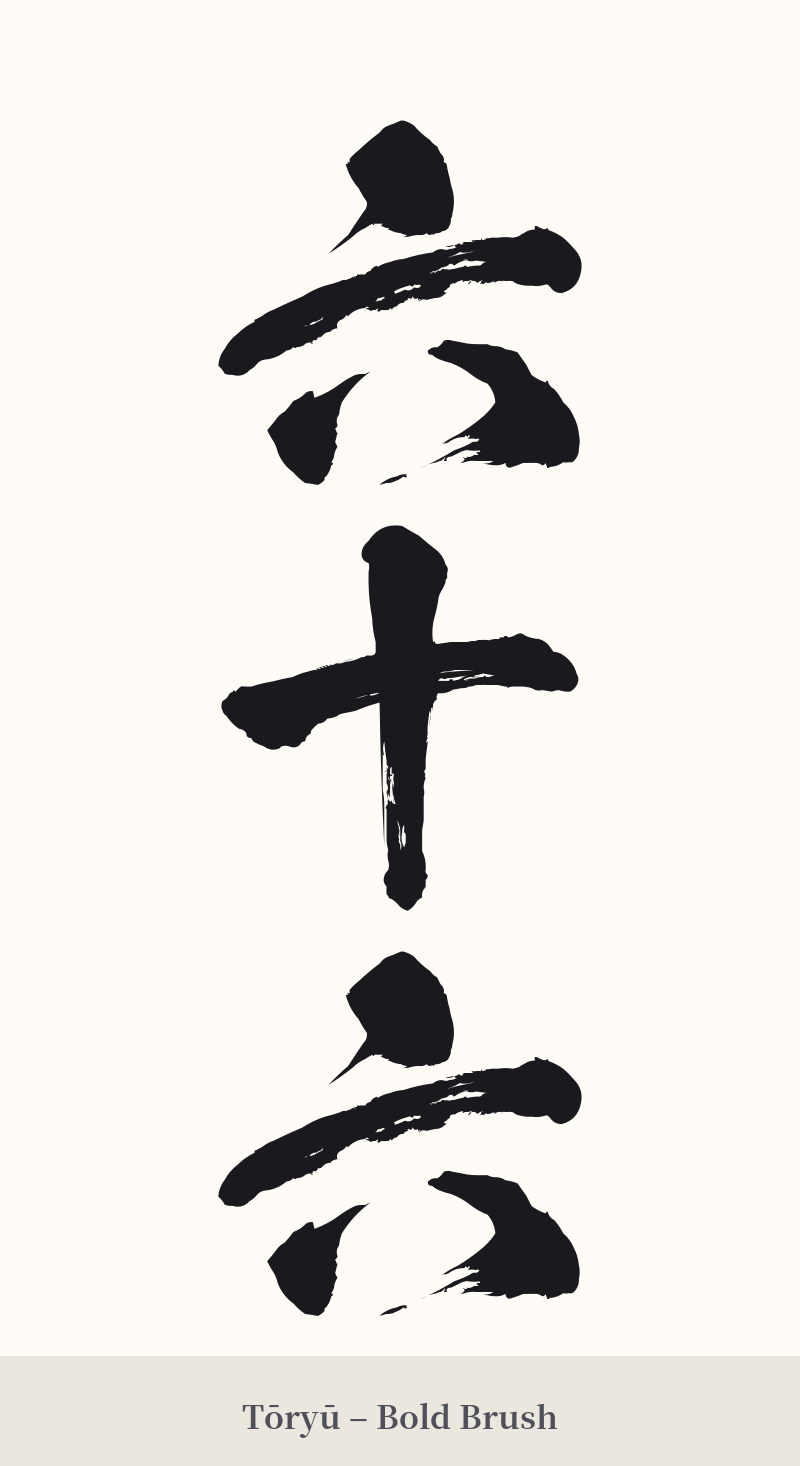
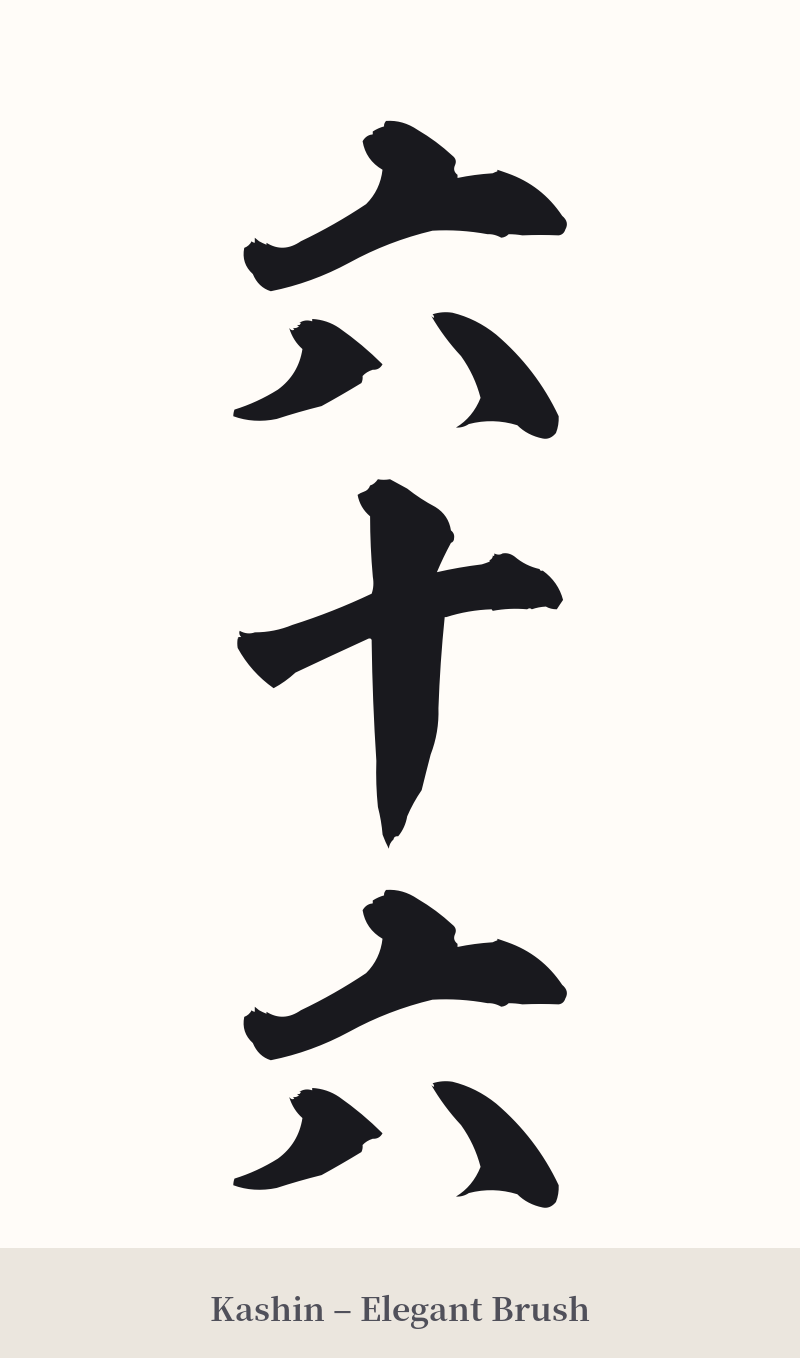
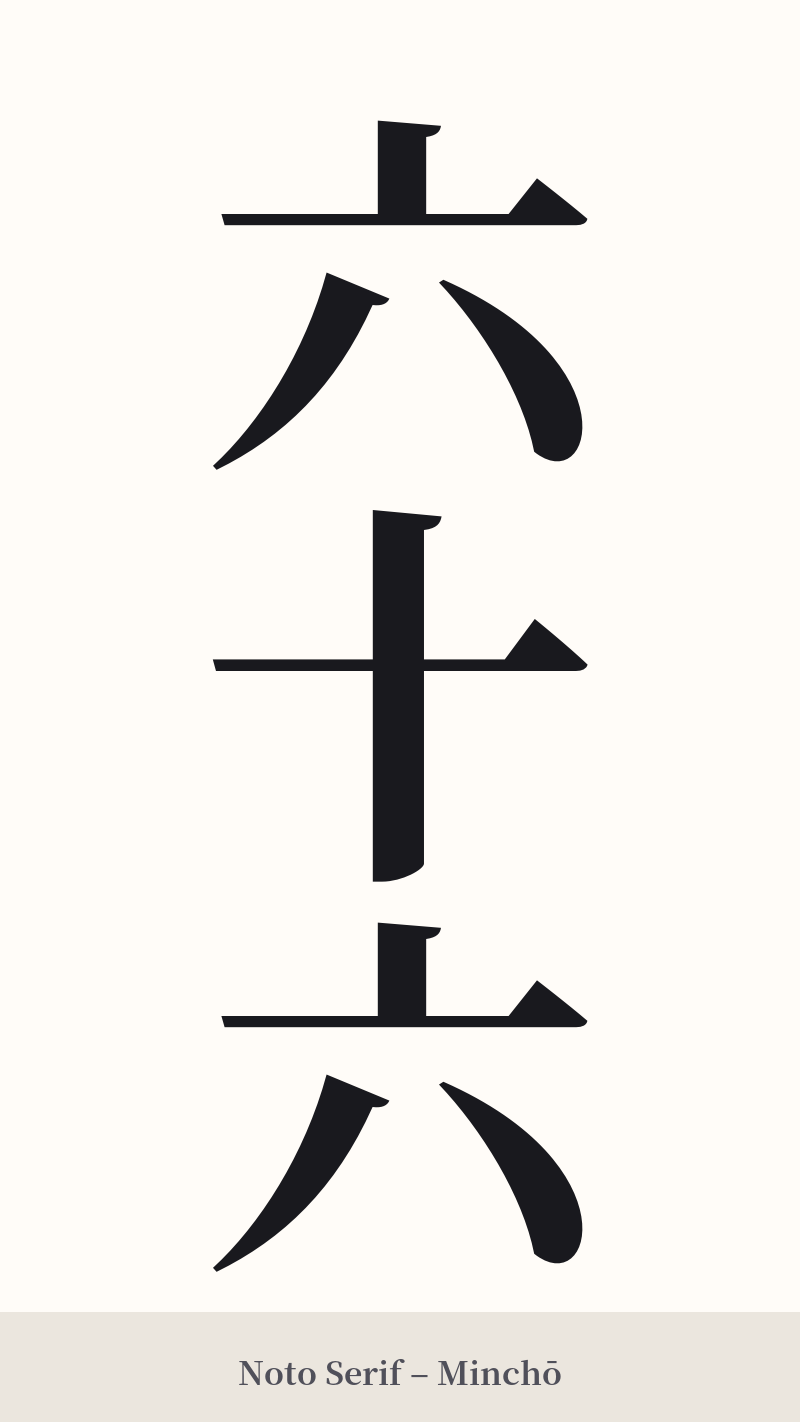
🖌️ Font Styles for 六十六
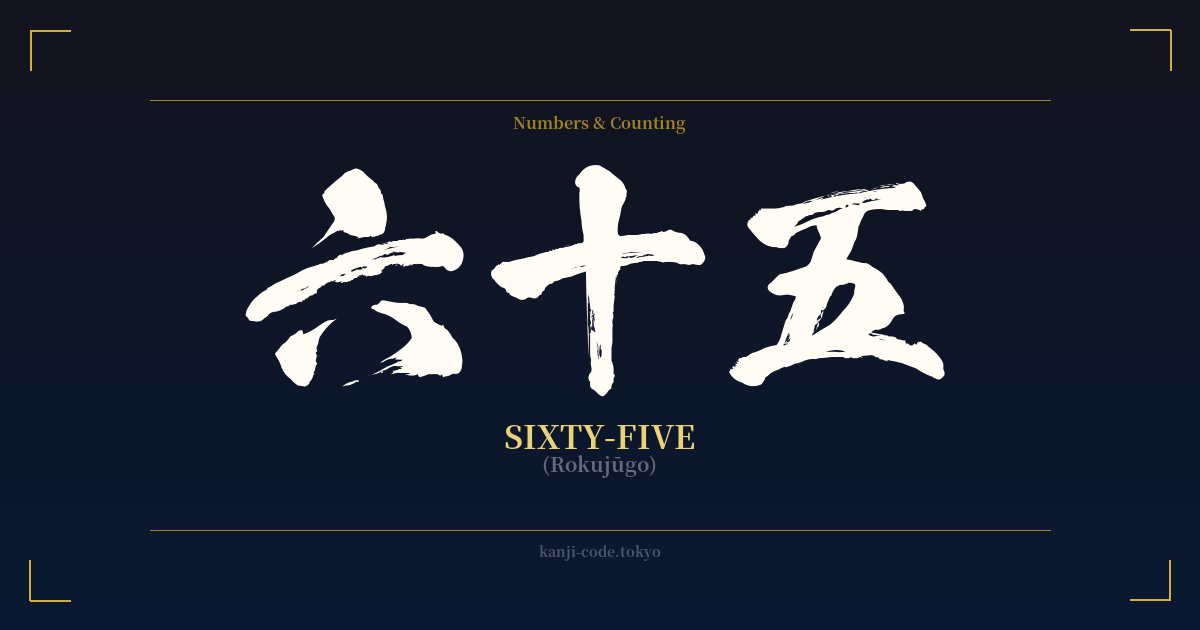
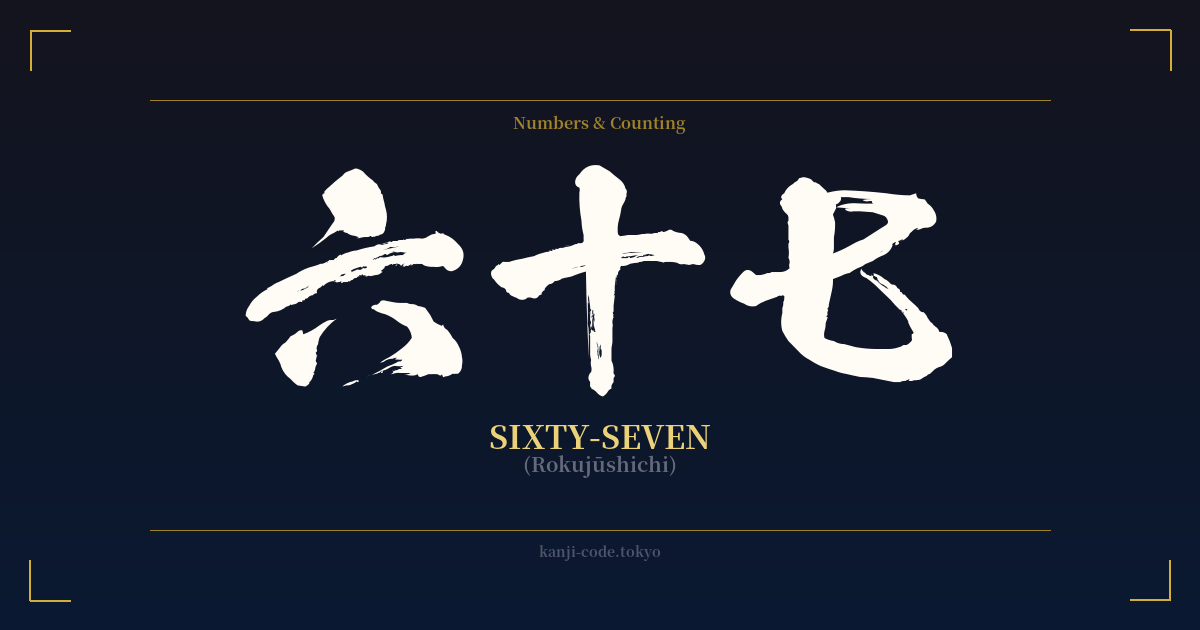
The same kanji can look dramatically different depending on the calligraphy style. Choose a font that matches the mood you want for your tattoo or design.
🎨 Tattoo Suitability
📐 Tattoo Design Guide
The design of 六十六 offers a pleasing symmetry due to the repetition of the character 六 (roku). This balance can be a central feature of the tattoo.
– Placement: Because of its simple and linear nature, it works well in both vertical and horizontal orientations. A vertical arrangement on the forearm, spine, or along the bicep can create an elegant and traditional look. For a more subtle tattoo, a small horizontal placement on the wrist, ankle, or behind the ear is effective.
– Font Style: The choice of font dramatically changes the feel. A bold, angular Kaisho (block script) or Gothic style will give it a modern, solid appearance. Conversely, a flowing Gyosho (semi-cursive) or Sosho (cursive) script can lend it an artistic, classic calligraphic flair, connecting the three characters into a single, fluid motion.
– Visual Tips: Consider playing with the relative sizes of the characters. You could make the central 十 (jū) character slightly smaller or more stylized to emphasize the two flanking 六 characters. A minimalist design with clean lines would highlight its numerical purity, while a brushstroke effect with ink splatters could give it a more dynamic and expressive quality.
Comments