✍️ 一 (Ichi) — Cultural Context
The kanji 一 (Ichi) is the first character learned by Japanese children and the simplest in form, yet it holds a universe of meaning. On the surface, it is the number one, the starting point of all counting. Its origin is a direct pictograph of a single horizontal finger or a counting rod, a beautifully simple representation of a fundamental concept.
However, its significance extends far beyond mere mathematics. In East Asian philosophy, particularly Taoism and Zen Buddhism, 一 is the seed of all existence. It represents the primordial state of unity before the world divided into yin and yang, heaven and earth, and the myriad of other dualities. It is the origin, the singularity from which everything emerges. This idea captures a profound sense of wholeness and interconnectedness.
This philosophical weight is reflected in many aspects of Japanese culture. The famous concept of 'ichi-go ichi-e' (一期一会), which translates to 'one time, one meeting,' elevates this idea to a principle for living. It teaches that every encounter and every moment is a unique, unrepeatable event that should be cherished. This phrase, originating from the world of the tea ceremony, reminds us to be fully present, as this exact moment will never come again.
In martial arts, the concept of 'one' is also central. It can refer to the first, foundational stance or kata, but also to a state of unified mind, body, and spirit. Achieving this state of 'one-ness' is the goal of many years of training, where action becomes effortless and intuitive. Similarly, in shodō (calligraphy), the single stroke of 一 is often the first and most challenging one to master. An entire lifetime of practice can be seen in the quality of that single line—its balance, energy, and spirit.
The kanji appears in common expressions like 'Nippon ichi' (日本一), meaning 'the best in Japan,' showcasing its use to denote supremacy and being number one. From the starting line to the ultimate goal, a new beginning to a state of complete unity, the humble character 一 encapsulates a powerful and deeply resonant philosophy.
🖌️ Font Styles for 一
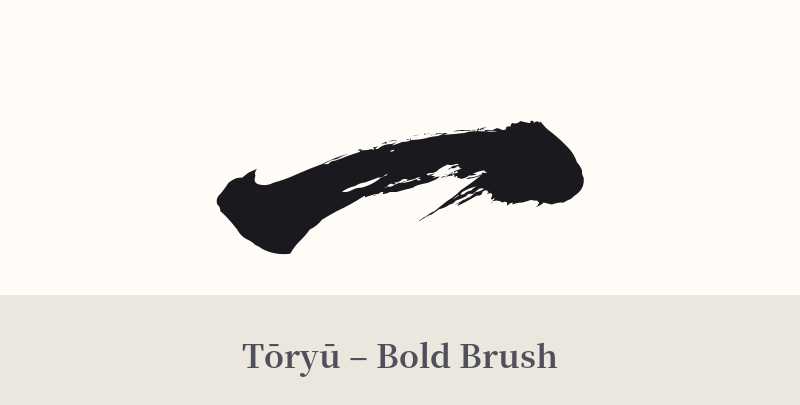
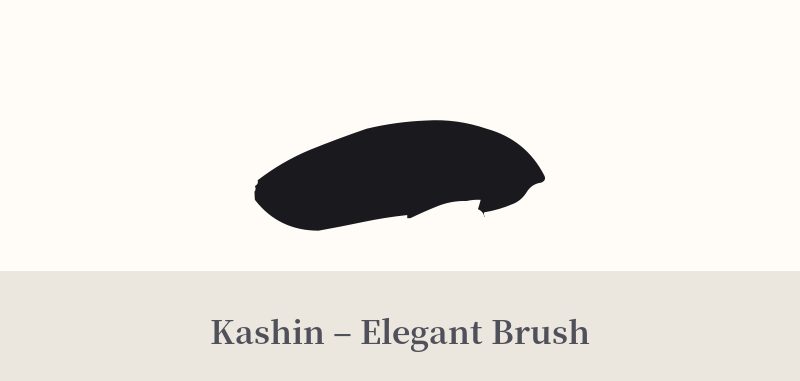
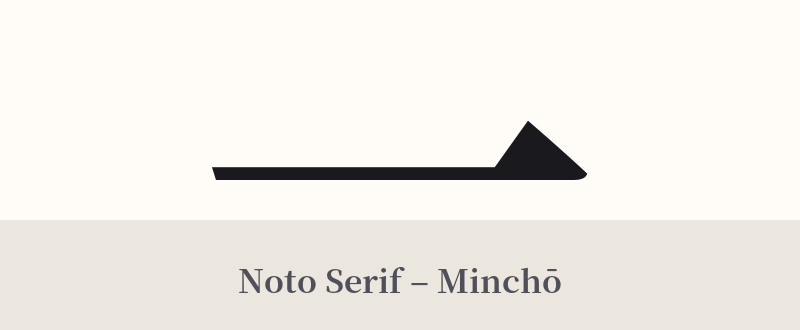
The same kanji can look dramatically different depending on the calligraphy style. Choose a font that matches the mood you want for your tattoo or design.
🎨 Tattoo Suitability
📐 Tattoo Design Guide
The beauty of a tattoo featuring 一 lies in its deliberate simplicity. The key is to ensure it looks intentional and artistic, not like an accidental mark.
– Placement: Its minimalist nature suits small, subtle placements like the wrist, behind the ear, on a finger, or the ankle. For a bolder statement, a large, expressive brushstroke on the forearm or along the spine can have a dramatic impact.
– Font Style: Style is everything for this kanji. Avoid standard computer fonts. A calligraphic approach is almost essential. Consider a dynamic, flowing 'gyōsho' (semi-cursive) or 'sōsho' (cursive) style to give the stroke energy and life. A clean, solid 'kaisho' (block) style can work if you want to emphasize its architectural, fundamental nature.
– Visual Tips: Think about the texture of the ink. A 'dry brush' effect (kasure) can add a sense of speed and spirit. You could also integrate it as a horizon line within a larger Japanese-style landscape or as a component of an 'ensō' (Zen circle) to deepen its philosophical meaning.
Comments