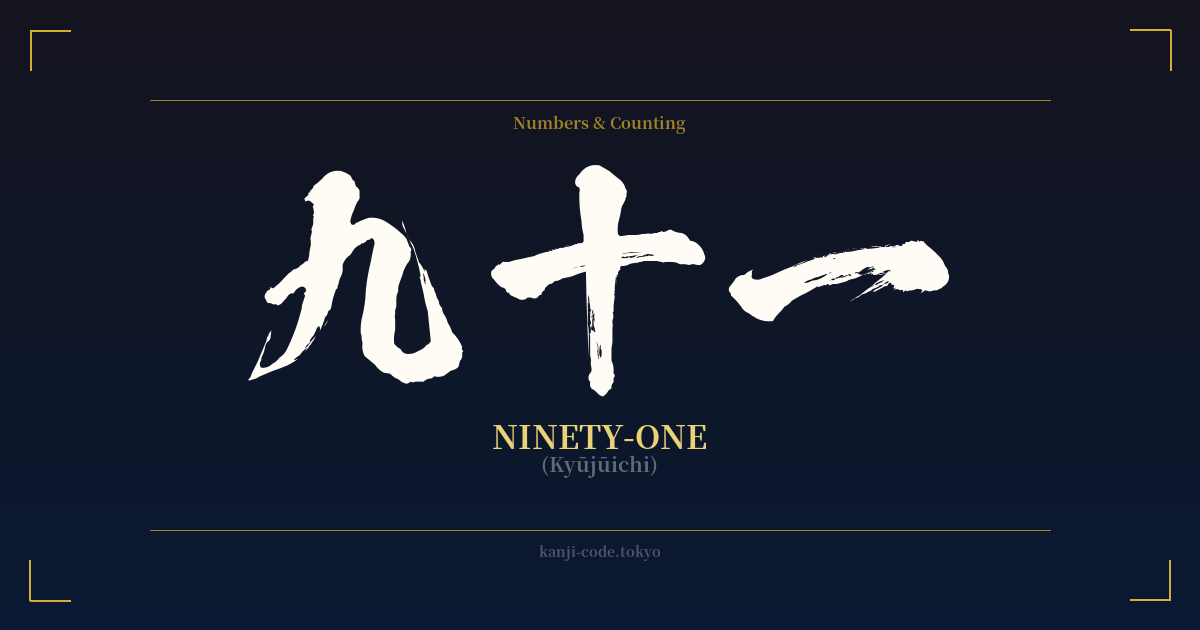
✍️ 九十一 (Kyūjūichi) — Cultural Context
The Japanese word for ninety-one, 九十一 (Kyūjūichi), is a perfect example of the logical and systematic nature of the Japanese numbering system. It is not a single concept but a compound word constructed with beautiful simplicity: 九 (kyū) for nine, 十 (jū) for ten, and 一 (ichi) for one. The structure literally reads as "nine-tens-one," a straightforward mathematical formula embedded directly into the language.
This construction method, inherited from ancient Chinese, allows for the expression of any number using a small set of characters. Unlike the unique words for eleven and twelve in English, Japanese continues its pattern consistently: 十一 (jūichi) for eleven (ten-one), 十二 (jūni) for twelve (ten-two), and so on. This makes learning to count in Japanese a very logical process once the first ten numbers are mastered.
While the number ninety-one itself does not carry specific cultural symbolism or superstitions in the way numbers like four (associated with death) or nine (associated with suffering, as 'ku' can mean 'pain') sometimes do, the characters themselves are fundamental. 九, 十, and 一 are among the first kanji taught to Japanese children. They are simple, elegant, and form the building blocks of a vast and complex writing system.
The character 九 (kyū) is sometimes viewed with caution due to its phonetic similarity to 苦 (ku), meaning suffering or hardship. However, in the context of a larger number like ninety-one, this negative connotation is completely lost. The focus shifts entirely to its numerical value.
In Japanese culture, age milestones are often celebrated with special names. For example, the 88th birthday is the 'rice anniversary' (米寿, beiju). While ninety-one doesn't have its own special designation, it falls within the period of celebrating great longevity (長寿, chōju). A person of this age would be highly respected, seen as a holder of wisdom and experience. Therefore, while 九十一 is just a number, it can be associated with the broader cultural values of respect for elders and the appreciation of a long life.
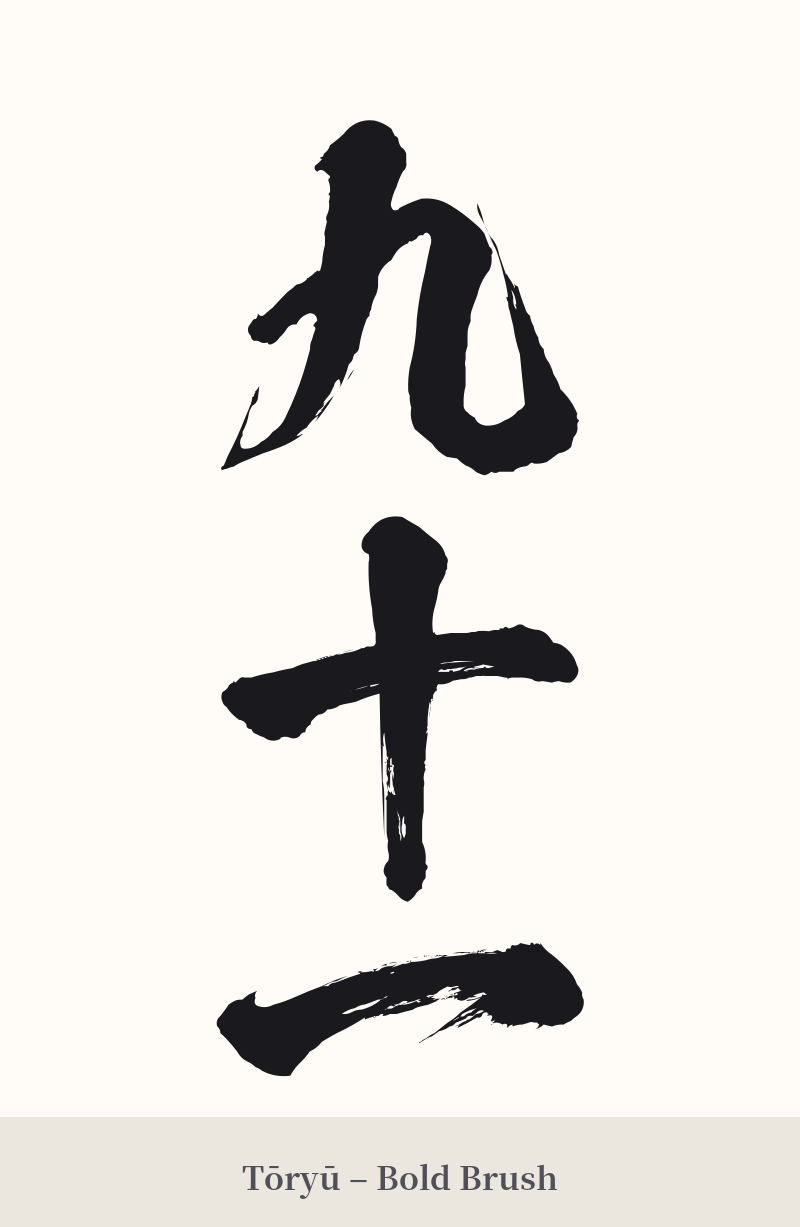
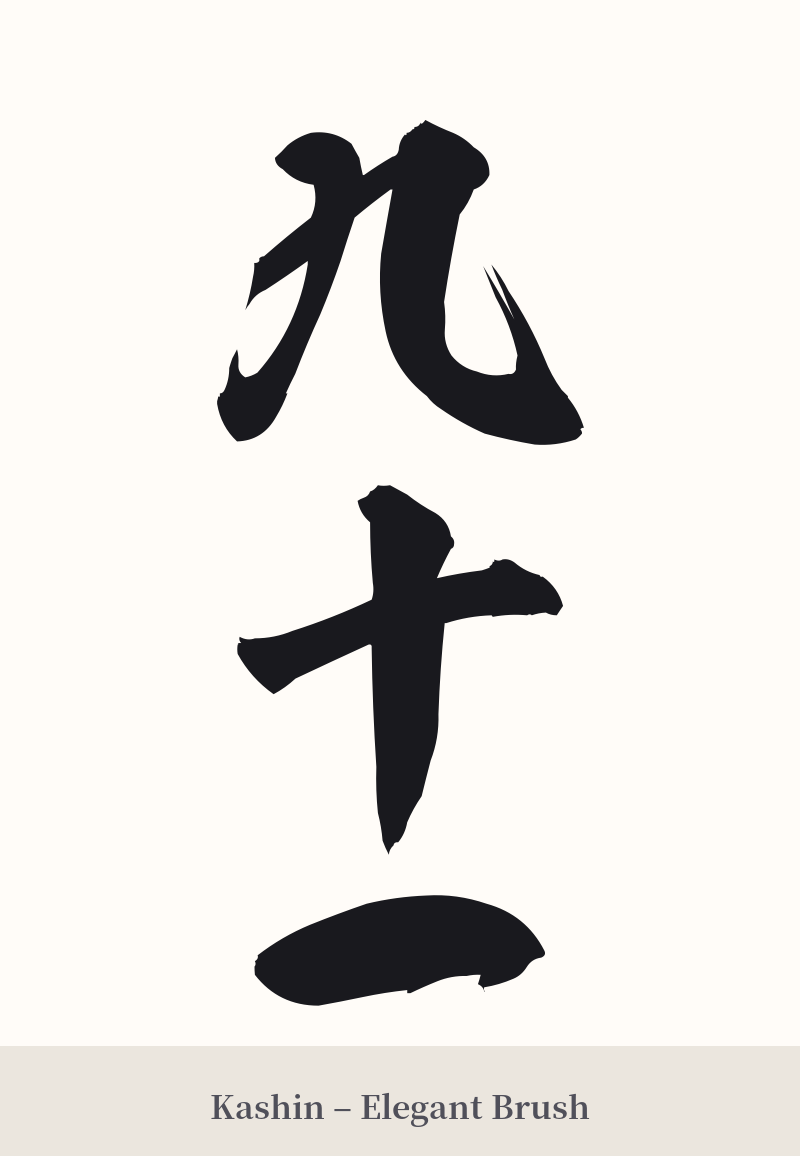
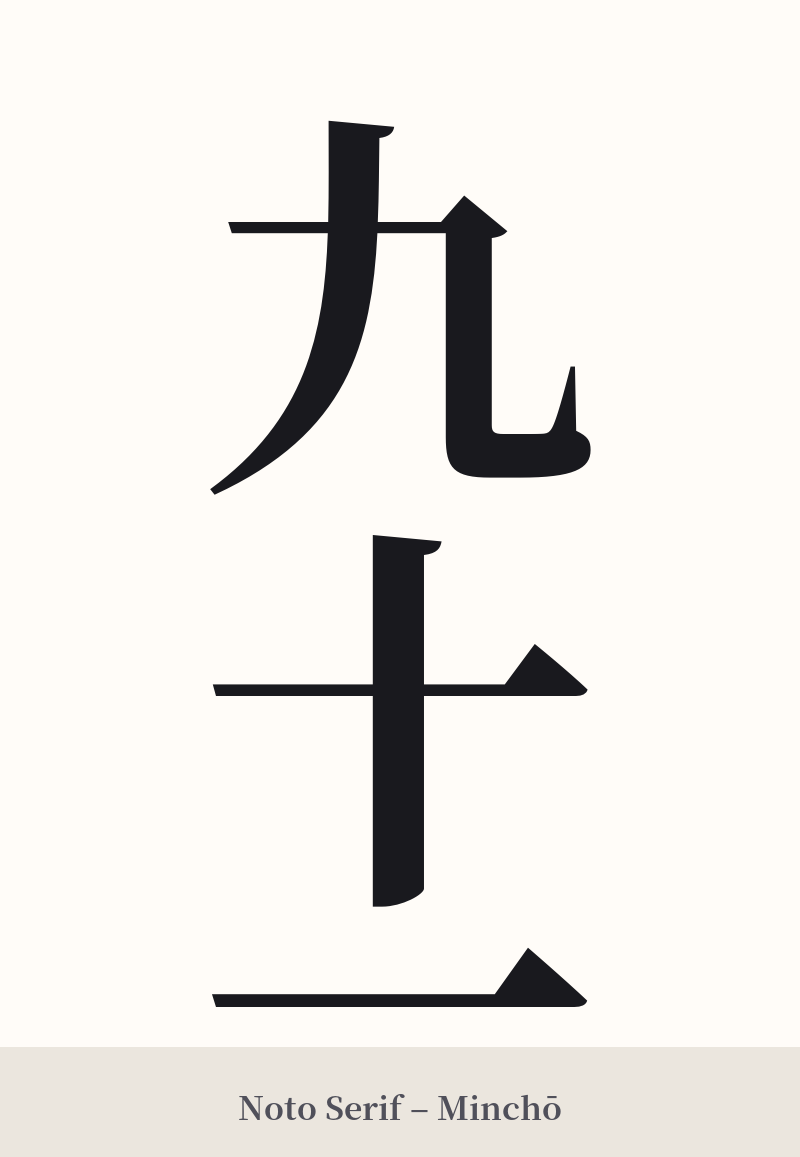
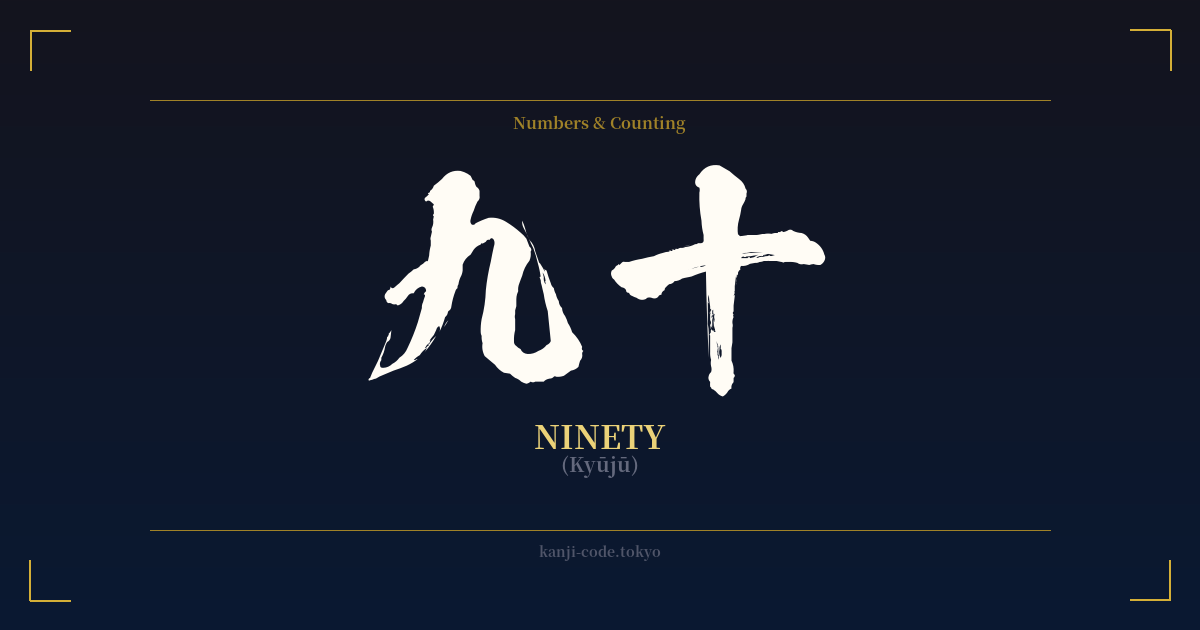
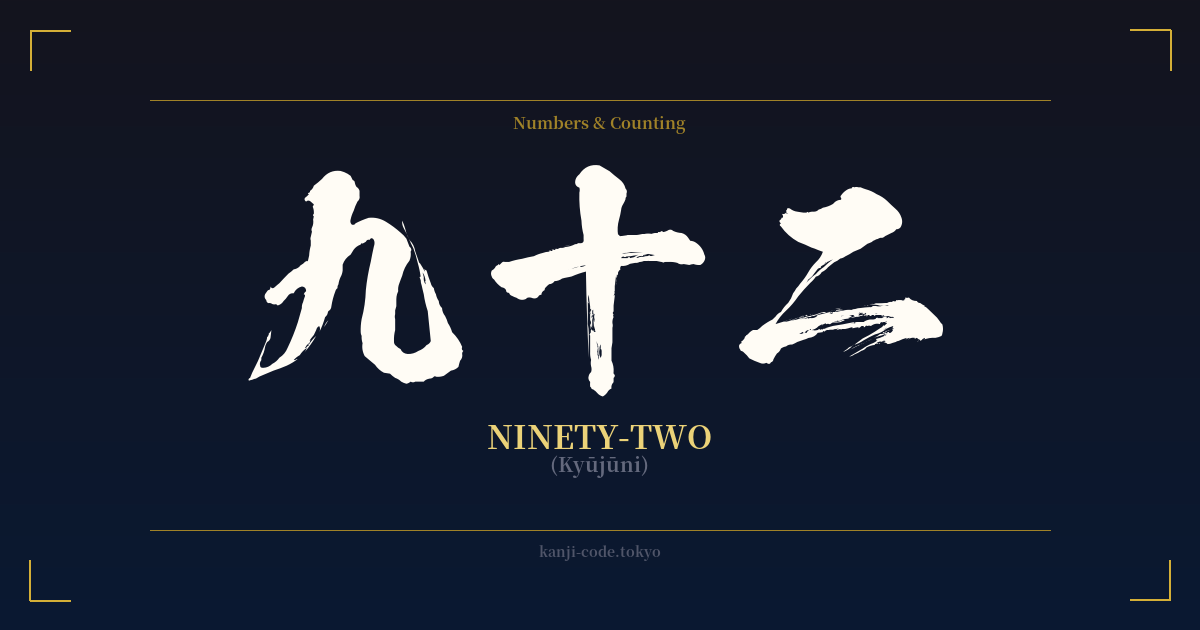
🖌️ Font Styles for 九十一
The same kanji can look dramatically different depending on the calligraphy style. Choose a font that matches the mood you want for your tattoo or design.
🎨 Tattoo Suitability
📐 Tattoo Design Guide
A tattoo of 九十一 relies on clean execution and thoughtful placement due to the simplicity of its characters.
– Placement: This design works best in a vertical orientation, which is the traditional way of writing in Japanese. Consider narrow, linear parts of the body like the forearm, along the spine, the side of the calf, or next to the sternum. A small, discreet placement on the wrist or ankle can also be effective.
– Style: A bold, blocky font like a Gothic or Kaisho style can give these simple characters a sense of weight and presence. Conversely, a fluid, cursive script like Sōsho can link the three characters together into a single, graceful brushstroke, adding an artistic flair that elevates it beyond just a number.
– Visual Tips: Because the characters are so basic, consider the negative space around them. A skilled tattoo artist can use spacing to create a balanced and aesthetically pleasing composition. You could also incorporate it as a subtle element within a larger piece, such as a date on a scroll or a detail in a Japanese-style landscape.
Comments