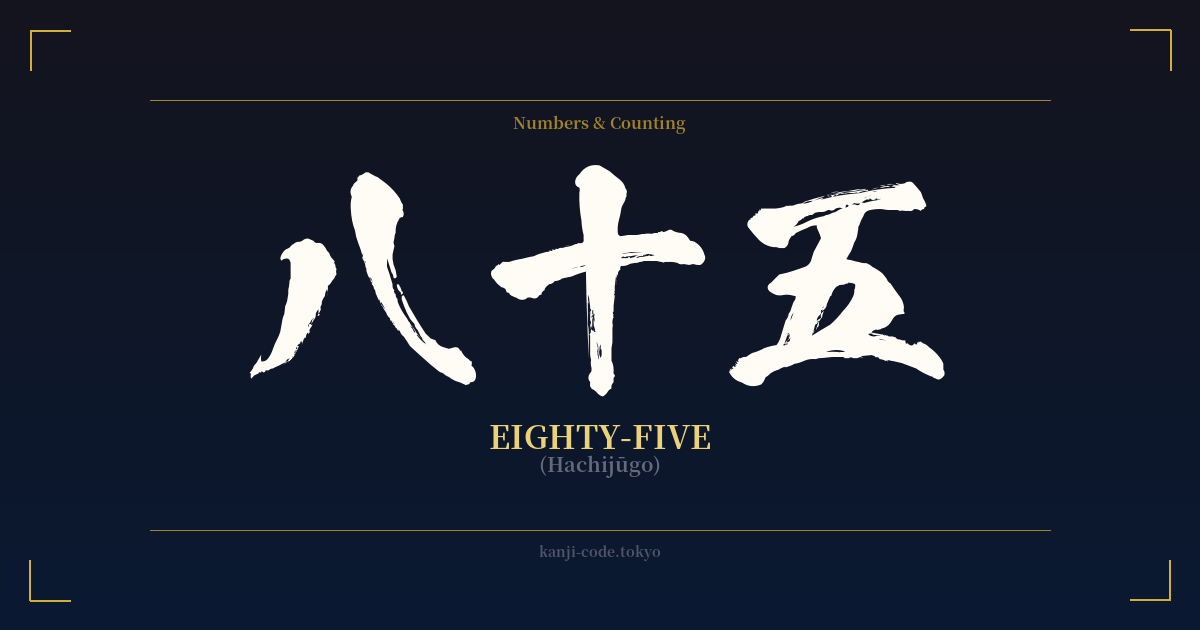
✍️ 八十五 (Hachijūgo) — Cultural Context
The Japanese word for eighty-five, 八十五 (Hachijūgo), is a straightforward construction that reveals the logic of the kanji number system. It is read as 'hachi' (八, eight) 'jū' (十, ten) 'go' (五, five), which literally translates to 'eight tens plus five.' This multiplicative and additive structure is a hallmark of East Asian numbering and provides a clear, logical way to represent any number.
While Arabic numerals (85) are dominant in modern, everyday Japanese life for things like prices and phone numbers, kanji numerals, known as 'kansūji' (漢数字), retain a significant and respected place. You will find them in formal documents, legal certificates, traditional invitations, and artistic works like calligraphy. They are also standard for vertical text, preserving a classic aesthetic that connects to centuries of Japanese literary and cultural history.
Individually, the characters within Hachijūgo carry their own subtle weight. The character 八 (hachi) for 'eight' is widely considered a lucky number in Japan. This is because its shape widens at the bottom, a form called 'suehirogari' (末広がり), which suggests growing prosperity and a bright future. This positive association with the number eight lends a subtly fortunate air to any number containing it, including eighty-five.
The number five, 五 (go), is also significant, often linked to the Five Elements (五行, Gogyō) of wood, fire, earth, metal, and water in East Asian philosophy. This framework was historically used to explain a wide array of phenomena, from cosmic cycles to interactions within the human body.
In the context of age, eighty-five is a significant milestone in a country celebrated for its longevity. While it doesn't have a specific, named celebration like 'kiju' (喜寿, 77th birthday) or 'beiju' (米寿, 88th birthday), reaching this age is a testament to a long and full life. Therefore, 八十五 can represent a specific year, a cherished age, or simply a number that holds deep personal significance, written in a form that honors tradition and aesthetic beauty.
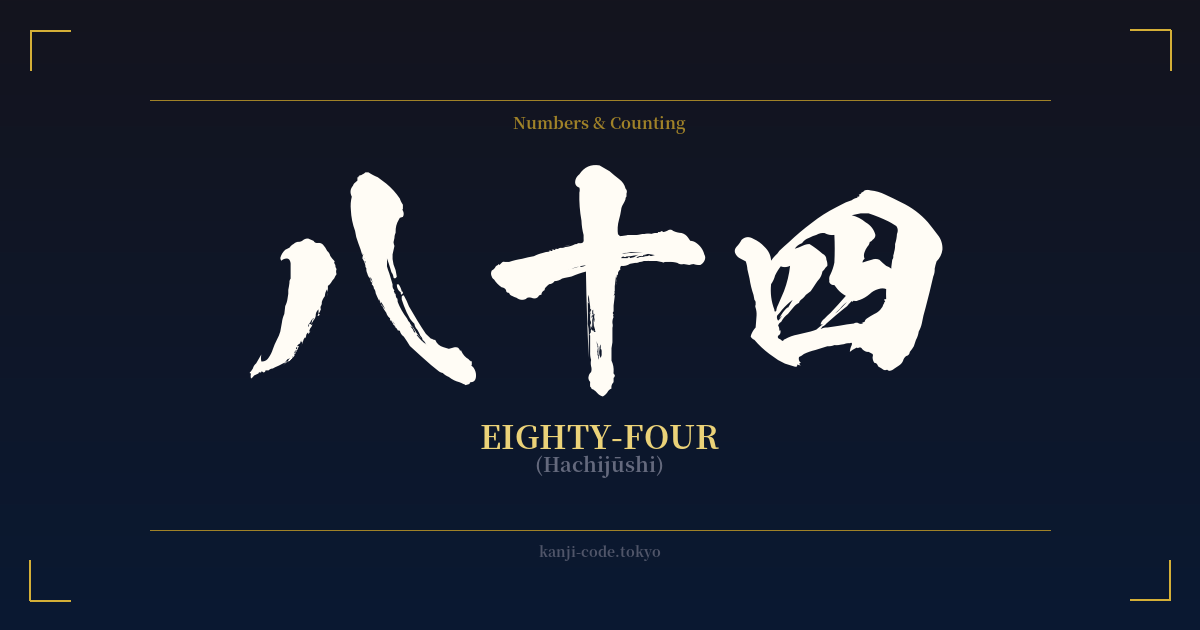
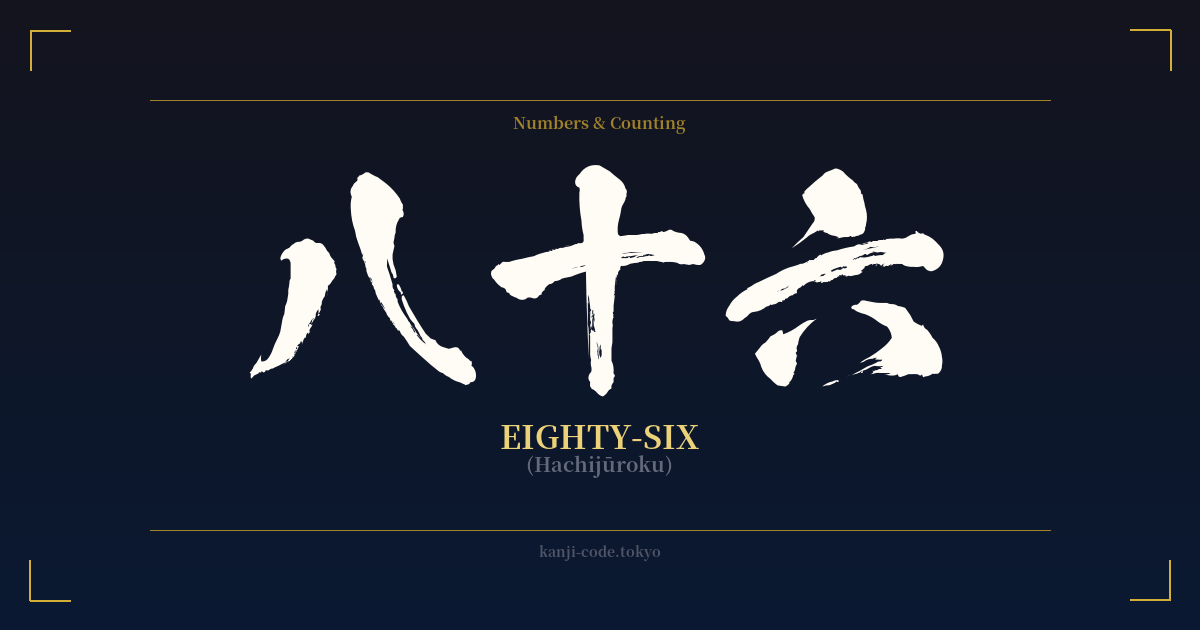
🖌️ Font Styles for 八十五
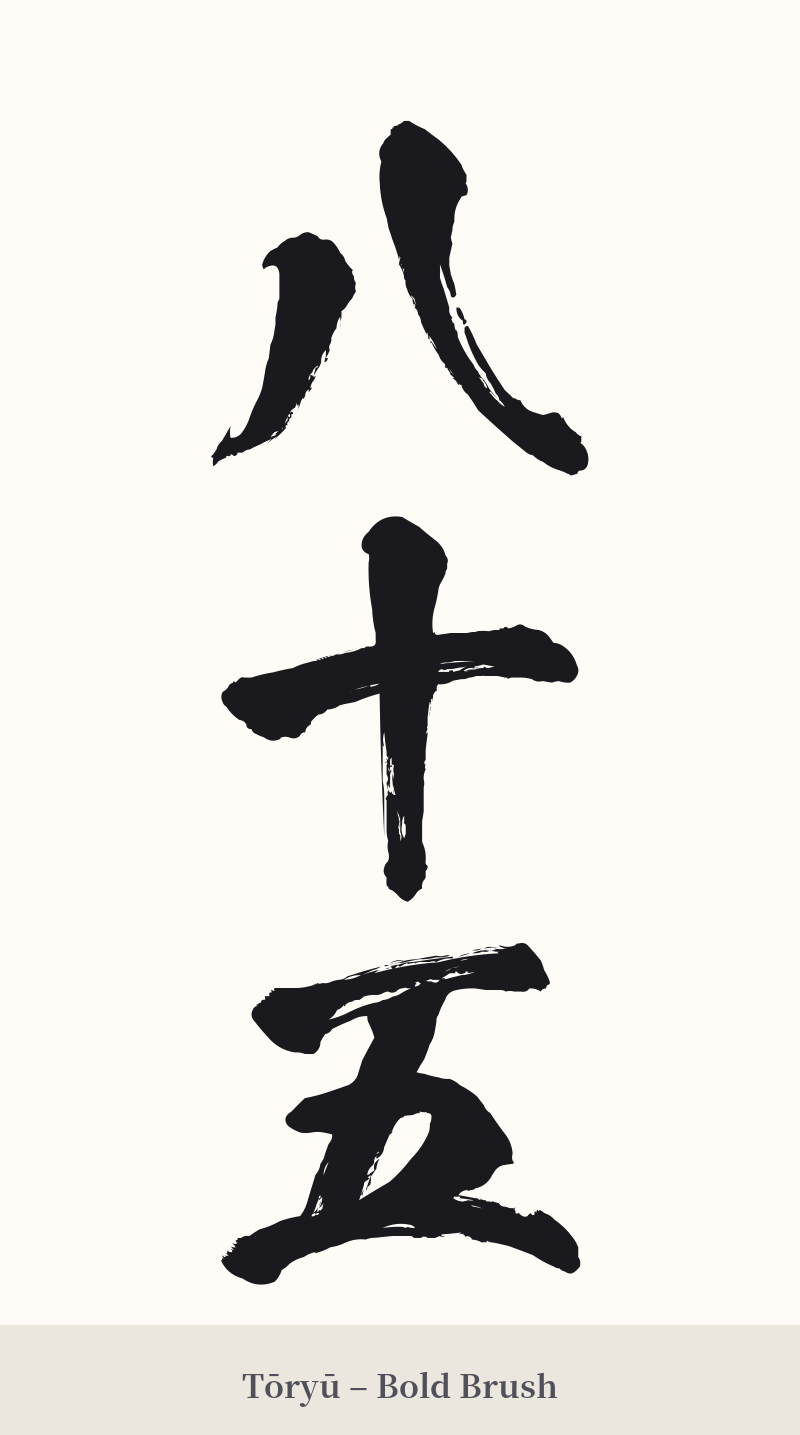
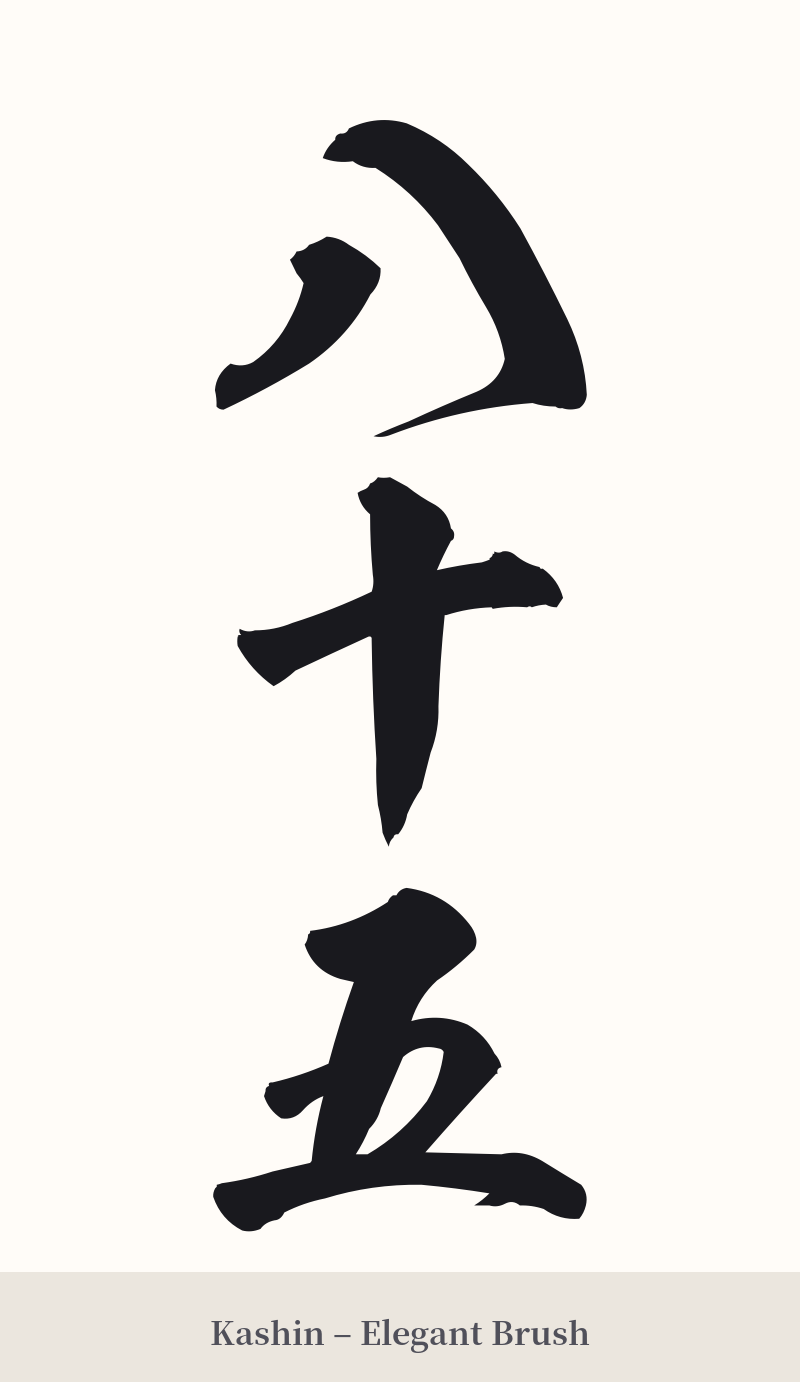
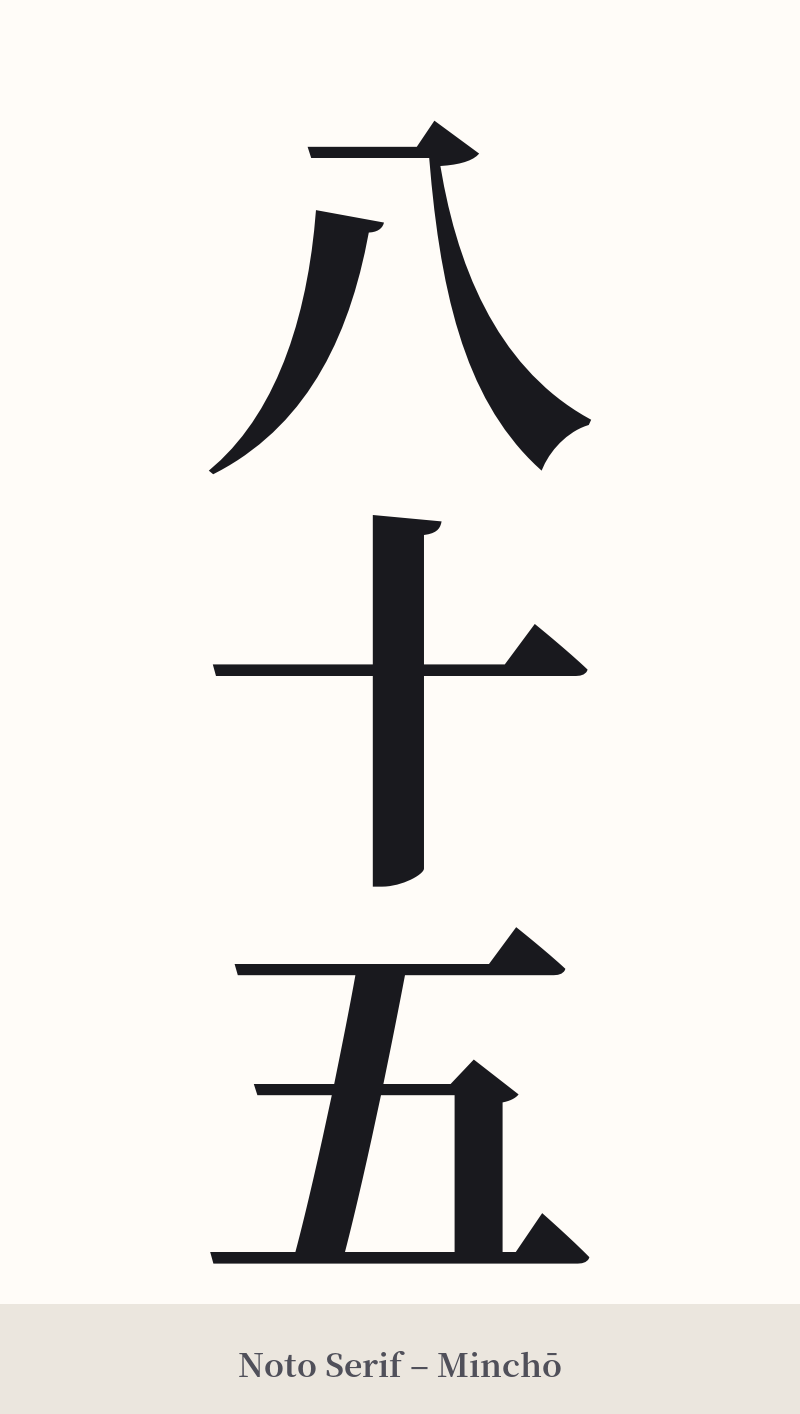
The same kanji can look dramatically different depending on the calligraphy style. Choose a font that matches the mood you want for your tattoo or design.
🎨 Tattoo Suitability
📐 Tattoo Design Guide
For a tattoo of 八十五, the composition of the three characters offers some interesting design possibilities. A vertical arrangement is the most traditional and visually striking choice, aligning with classic Japanese script. This layout works exceptionally well on the spine, forearm, or along the side of the calf or ribs.
A horizontal layout is also a valid option, suitable for placement across the chest, upper back, or collarbone. Regardless of orientation, the spacing between the characters is key to achieving a balanced and harmonious design.
Here are some style suggestions: – Kaisho (Block Script): For a clean, formal, and highly legible look. This style emphasizes the simple, strong strokes of each character. – Gyōsho (Semi-Cursive Script): This style introduces a sense of movement and flow, connecting the characters slightly and adding an artistic, handwritten feel. – Mincho (Serif Style): A classic, print-like style that offers elegance and readability, similar to a Times New Roman font in English.
To add personal context, consider incorporating a small, complementary element. For example, if it represents a birth year, a subtle design of the corresponding zodiac animal could be woven into the background. If it honors a person, an element they loved, like a specific flower, could be placed near the kanji.
Comments